
Even so, I have noticed one thing, at least, that is good. It is good for people to eat, drink, and enjoy their work under the sun during the short life God has given them, and to accept their lot in life. And it is a good thing to receive wealth from God and the good health to enjoy it. To enjoy your work and accept your lot in life—this is indeed a gift from God. [Ecclesiastes 5:18-19 (NLT)]
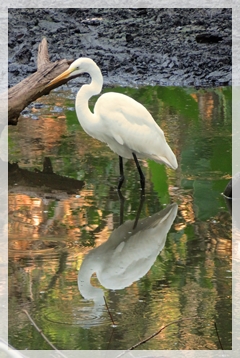 From the viewing platform at the marsh, I watched a Cooper’s hawk soar high in the sky. When I turned to leave, I looked down and saw several white egret feathers on the ground below. Whether it was the hawk, a raccoon, or some other predator, the park had one less egret in the pond. Those beautiful white feathers were a stark reminder of how precarious life is, not just for wild birds, but for us all. I was reminded of Ecclesiastes: “For people and animals share the same fate—both breathe and both must die.” [3:19]
Beginning with the words, “Everything is meaningless,” much of Ecclesiastes expresses disappointment, discontent, and a cynical world-weariness. The world is a fallen place where life is unfair: good happens to the bad and bad befalls the good. The future is unknown and filled with uncertainties and satisfaction is not guaranteed. We can strive for a goal and never reach it or attain the goal and discover it wasn’t worth the effort. The pursuit of pleasure, possessions, wealth, achievements, wisdom, or power comes to nothing. As disheartening as the author’s words are, I’m not sure we can really argue with them. Life is capricious and frequently makes no sense and the same destiny—death—awaits both the righteous and wicked. Sadly, sometimes, our efforts really do feel like an exercise in futility.
Yet, hidden in those sobering verses are nuggets of beauty and comfort. Just because life is hard and its meaning is hard to find doesn’t mean life is meaningless. Granted, some seasons of life are perplexing, challenging, or downright unpleasant but, as much as we wish we could control or understand them, they are beyond human control and understanding. The seasons of life are not in our hands but God’s. Rather than knowledge and comprehension of His plan, however, God gives us sort of a consolation prize: the ability to find enjoyment in life. While we can’t control the seasons, we can accept and find contentment in them.
Those feathers on the ground were a reminder to live life with gusto—to accept and enjoy whatever we’ve been given—to seize the day! Yet, Ecclesiastes is not an “eat, drink, and be merry because tomorrow you die!” promotion of hedonism. Woven throughout its verses is one more theme—that of fearing God. We can’t find the meaning to life apart from God and we certainly can’t live life on our own terms. The enjoyment of life neither permits us to disobey God not does it exempt us from His law. Telling us to enjoy life, Ecclesiastes also tells us to fear (i.e., obey, revere, love, serve, honor and worship) God while doing so!
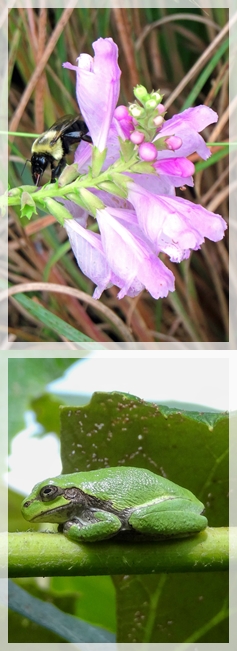 We’re sure to notice God in the Grand Canyon, the multitude of stars in the night sky, or when watching two million wildebeest, zebra and gazelles migrate through the Serengeti. We sense Him in extraordinary or exotic things like the peacock’s splendid tail, Devil’s Tower, or spectacular sunsets and sunrises. But do we notice Him in the commonplace and unremarkable?
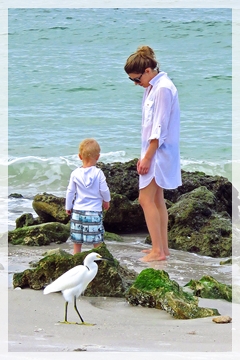 The weatherman declared it to be “one of the ten best days of summer” and I thought of his words throughout the day. How many of those ten days have we already had this summer? What if, not knowing it was one of the ten best days, I missed it? Could I have been blinded to its beauty by the routine obligations, boring chores, petty annoyances, and minor frustrations of everyday life?
 For ever since the world was created, people have seen the earth and sky. Through everything God made, they can clearly see his invisible qualities—his eternal power and divine nature. So they have no excuse for not knowing God. [Romans 1:20 (NLT)]
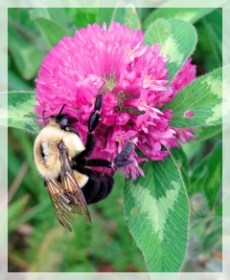 butterfly flitted among the blossoms and a marmot peeked out from behind a rock. So as to not spook the horses or spoil the day for my fellow riders, I silently sang the chorus to All Things Bright and Beautiful.
 Upon retirement, many people consider their productive years over. Having been a CEO in a major corporation, a friend’s father felt worthless without his corporate identity. Prior to retirement, he could call any number of powerful people and get a meeting simply because of his position but, without his title, he felt like a nonentity. His previous business triumphs couldn’t sustain him and he saw no victories in the future. Unfortunately, many seniors who found their identity in their career, corporate title or paycheck are at loose ends when retirement comes along. Some of my friends who were homemakers aren’t much different from those in the business world. It’s just that they found their identity in motherhood and their self-esteem in their children’s achievements. Now, with an empty nest and adult children living their own lives far away, they feel unnecessary. Like my friend’s father, they are looking back at who and what they’ve been rather than forward to who and what they can be.
