
God sent a man, John the Baptist, to tell about the light so that everyone might believe because of his testimony. John himself was not the light; he was simply a witness to tell about the light. The one who is the true light, who gives light to everyone, was coming into the world. [John 1:6-9 (NLT)]
 “I didn’t know Van was racing,” I said as he skied through the gates and sped across the finish line. “He isn’t,” explained his wife. “He’s just a forerunner.” While the focus is on the racers at a ski race, there wouldn’t be any race without the forerunners. Before the race begins, forerunners ski the course, set the line, allow the officials to test their systems, and assess course conditions. While proficient enough to race the course well, they are not in the competition. Although it’s an honor to be a forerunner, forerunners don’t get a number, nobody knows their names, and only the judges care about their times. It’s the races’ winners who get the accolades. Understanding that the race is not theirs to run, forerunners are happy just to prepare the way!
After 400 years of silence from God’s prophets, John the Baptist appeared as the forerunner for Jesus. Like prophets before him, he called for the people to repent and turn back to God. Linking the Old Testament and the New, John also prepared the way for the coming Messiah. Denying that he was the Messiah, John quoted the words of Isaiah 40:3 saying, “I am a voice shouting in the wilderness, ‘Clear the way for the Lord’s coming!’” John knew his qualifications were to prepare the way, not to be the Way. When he saw the Holy Spirit descend upon Jesus after His baptism, John knew whose way he’d been preparing and testified that Jesus was “the chosen One of God.” [John 1:34]
After acting as forerunner, John condemned Herod for marrying his brother’s wife which resulted in his imprisonment. Having heard about all that Jesus was doing, John sent his disciples to openly ask if He were the Messiah. Had John started to doubt? Let’s not forget the expectations people (even John) had of the Messiah: a political and military prince who would slay Israel’s enemies, not a Prince of Peace. Having prophesied that the Messiah would inflict punishment upon the wicked, did John wonder why, if Jesus were the Messiah, he’d done nothing to punish the Romans or free him from Herod’s prison?
At first glance, Jesus’ answer to John’s disciples seems evasive: “Tell them what you have seen—the blind see, the lame walk, the lepers are cured, the deaf hear, the dead are raised to life, and the Good News is being preached to the poor.” [Matthew 11:4-5] But, to anyone as familiar with Isaiah’s prophecies as John would have been, it was a straightforward answer in the affirmative. Isaiah had prophesied that the Messiah would do those very things [Isaiah 35:5-6,61:1-2] and Jesus had done them all. I have no doubt that, upon hearing that answer, John no longer questioned the identity of Jesus. Having prepared the way for the one true Messiah, His task as forerunner was over; it was up to Jesus to complete the race!
 Yesterday’s devotion about Mary made me wonder about Joseph. Other than having the right lineage, why did God chose this carpenter to raise His one and only Son? Mary and Joseph were betrothed and engagement in 1st century Palestine was a serious commitment. A legally binding relationship, betrothal usually lasted ten to twelve months. Although the bride continued to live at home and the couple did not have marital relations, their engagement ended only through death or a divorce-like proceeding.
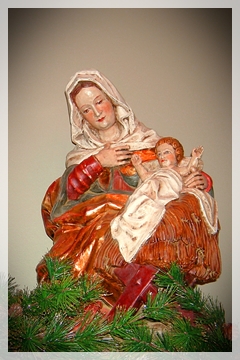 Ignoring the fact that most of us in the room couldn’t qualify as virgins, are well-past child-bearing age, and our genealogies don’t link us to the tribe of Judah and the line of David, the pastor leading our women’s Bible study asked if we were the kind of women God would chose to give birth to His son.
 You must have the same attitude that Christ Jesus had. Though he was God, he did not think of equality with God as something to cling to. Instead, he gave up his divine privileges; he took the humble position of a slave and was born as a human being. [Philippians 2:5-7 (NLT)]
 Around this time of year, I frequently return to Bedford Falls and get reacquainted with the conflicted George Bailey, the money-grubbing Mr. Potter, and Angel 2nd Class, Clarence Odbody. This year’s version of It’s a Wonderful Life was somewhat different. Rather than seeing the movie, I attended a theatrical production set in a New York City radio station in the 1940s. The well-known story unfolded as if it were a live radio broadcast. Just five actors took on all of the roles (along with producing the various sound effects required for a radio show). In spite of the unusual adaptation, the production remained true to the original movie’s message.
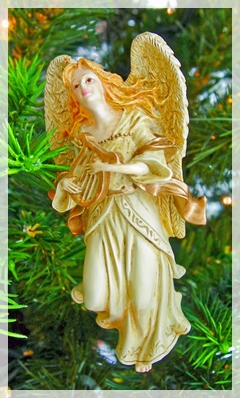 It’s no wonder that the angel Gabriel told Mary not to be afraid. Angels were not an everyday occurrence and, when they arrived, lives were changed. As God’s messengers, angels sometimes brought good news, offered protection, or comforted people, but they also brought warnings and executed God’s judgment. Although angels rescued Lot, they also warned of Sodom’s destruction! Balaam received a stern warning from a sword-bearing angel, David wrote of destroying angels, and 2 Samuel tells of an angel nearly destroying Jerusalem. Mary’s initial confusion and concern at seeing an angel is understandable. When reassuring the girl, Gabriel tells her she is “highly favored” by God; he’s not brought bad news, but good. Nevertheless, she knows her life is going to change; she just doesn’t know how!
 Devotions of the Heart