
Enter his gates with thanksgiving; go into his courts with praise. Give thanks to him and praise his name. For the Lord is good. His unfailing love continues forever, and his faithfulness continues to each generation. [Psalm 100: 4-5 (NLT)]
 When an irrevocable law was signed that prohibited praying to anyone but King Darius, Daniel prayed! Knowing he’d be thrown into a den of lions for doing so, the devout man went home, opened the windows, and prayed to God just as he always had done. Rather than starting with a fervent plea for God’s help, however, Daniel began with a prayer of thanks. His prayer of thanksgiving showed Daniel’s faith in a good God who was present in all circumstances!
Back in the 1630s, in the midst of the Thirty Years’ War when all of Europe was in turmoil, a Lutheran minister named Martin Rinckart also understood the importance of thanking God in all circumstances. Life seemed hopeless, especially in the walled city of Eilenburg where Rinckart lived. Refugees overcrowded the city, people were starving, and the city was surrounded by enemy soldiers. Poverty, famine and disease reigned. Mercenary soldiers committed atrocities, looted, and extorted tribute. Rinckart had to quarter soldiers in his house and endure their plundering of his possessions and stocks of grain. Diseases like typhus, dysentery, and scurvy already were widespread when the plague took control and devastated the population in 1637. And we think we have it tough in 2020!
Rinkart faithfully served the sick and dying. As the last living pastor in town, he performed as many as fifty funerals a day and buried over 4,400 townspeople, including his own wife. It was during this horrific time, one of the darkest in Europe’s history, that Rinckart counted his blessings and wrote a beautiful family prayer of thanksgiving. We know that joyful prayer as the popular Thanksgiving hymn Now Thank We All Our God. Martin Rinckart, like Daniel, offered thanks to God in the midst of challenging circumstances. Can we do anything less?
I saw a cartoon in which the heavy-set husband, after looking down at his skimpy plate of dieter’s salad, looked up at his wife and said, “You better say grace this time. If I do it, God will know I’m lying.” Unlike Daniel and Martin Rinckart, most of us are like him: blind to the blessings of life and deficient in our thanks to God for those blessings, however great or small. Today, as we celebrate our national day of thanks, let us remember that every day should be a day of giving thanks—even if, instead of sweet potatoes, stuffing, turkey, and pumpkin pie, our plates have only lettuce, carrots and celery!
Now thank we all our God, with heart and hands and voices,
who wondrous things has done, in whom this world rejoices;
who from our mothers’ arms has blessed us on our way
with countless gifts of love, and still is ours today.
O may this bounteous God through all our life be near us,
with ever joyful hearts and blessed peace to cheer us;
and keep us still in grace, and guide us when perplexed;
and free us from all ills, in this world and the next.
All praise and thanks to God the Father now be given;
the Son, and him who reigns with them in highest heaven;
the one eternal God, whom earth and heaven adore;
for thus it was, is now, and shall be evermore. [Martin Rinckart)]
 Avoid foolish controversies, arguments about genealogies, quarrels, and fights about Moses’ Teachings. This is useless and worthless. [Titus 3:9 (GW)]
 One of the countless questions we have about this pandemic is how God could allow church doors to close throughout the world. 2020 is not the first time the doors to His house have been shut. In 586 BC, the Temple doors closed for the Jews when Judah fell to Babylon; Jerusalem was laid to waste and the Temple destroyed. Its doors didn’t open again until the exiles returned and completed the second Temple in 515 BC. Destroyed by the Romans in 70 AD, all that remains of that Temple is a small portion of an external supporting wall on the Temple Mount.
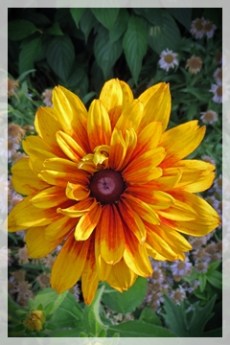 October brings Columbus Day sales, pumpkins, corn mazes, Halloween candy, jack-o-lanterns, and the first Christmas items in the stores. On the second Sunday of the month, it also brings us Clergy Appreciation Day. Although we should let our pastors know how much we appreciate them all year long, we probably don’t. We’re more likely to complain about a sermon, the choice of songs, the temperature of the sanctuary, or the sound system than we are to compliment, encourage or thank our ministers. If we haven’t expressed gratitude to our clergy men and women, this coming Sunday is the time to do so.
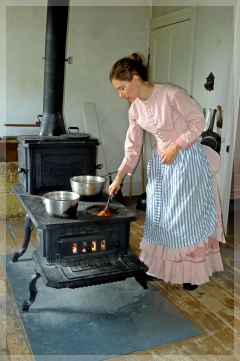 Labor Day was my least favorite holiday when I was a girl (and not just because school started the next day)! For the Smith family, Labor Day meant work. We spent the entire day helping my father as he climbed up and down a ladder to exchange the screens (that had been mounted the previous Memorial Day) with the external storm windows. It was several years before I understood that Labor Day was not a special day dedicated to this yearly ritual of washing windows, lugging screens and windows to and from the garage, and otherwise spending my last day of summer vacation working. Energy efficiency and fuel bills were of no interest to me and, selfishly, it never occurred to me that my father probably didn’t enjoy the holiday ritual any more than did his children. I certainly never thought to thank him for working so hard to provide us with the house (and storm windows) that kept us safe and warm all winter long!
 Tomorrow, as we commemorate our nation’s birthday, the celebration will be a little different. Beaches are closed and the brat fests, chicken roasts, band concerts, parades, fireworks, neighborhood picnics, rodeos, and ice cream socials typical of this national holiday have been cancelled. Friends and family won’t be joining us to light sparklers, have a water balloon fight or baseball game, catch fireflies, eat popsicles and watermelon, or enjoy s’mores around a campfire.
 Devotions of the Heart