
Look here, you who say, “Today or tomorrow we are going to a certain town and will stay there a year. We will do business there and make a profit.” How do you know what your life will be like tomorrow? Your life is like the morning fog—it’s here a little while, then it’s gone. [James 4:13-14 (NLT)]
Several years ago, a young woman with Parkinson’s told me, “Every day I wake up, I realize that I’m the best I ever will be and it’s only downhill from here.” Rather than complaining, she was explaining how that knowledge made her determined to seize and delight in each day. Unlike her, I’m not suffering from a degenerative disease (other than age); nevertheless, her words continue to haunt me. No matter how healthy or happy we may (or may not) be today, we have no guarantee that tomorrow will be any better. Life is precarious and our tomorrows are uncertain. Yet, we so often squander the hours and days we’re given.
We regularly called a friend whose remaining time was counted in weeks. Having exhausted all treatment options, he was painfully aware of being on a steep downhill run. Like the woman with Parkinson’s, however, he refused to let that knowledge steal his joy in the present. In fact, his awareness of life’s fragility seemed to give him more appreciation of every moment with which God blessed him. Thankful for every morning he saw, he was determined to make that day his best one by rejoicing in its simplest gifts. Of course, being a man of faith, he knew that death does not have the final word and had no fear of what lay ahead of him. Nevertheless, until that time came (as it did last week), he continued to seize the day with all the joy and gusto he could muster.
A new year is fast approaching and, as I started making plans for 2023, I thought about the uncertainty of our tomorrows, not just for my friend, but for all of us. Why do we waste a single breath with anger, regret, resentment, or complaint? Why do we fritter away even five seconds in self-pity or worry when they should be spent in thankfulness and joy? Why do we see the day’s imperfections with twenty/twenty vision when we’re blind to the day’s blessings? The old saying, “Today is the first day of the rest of your life!” is only partially true. We all have expiration dates and today well could be the last day of our lives here on earth. Shouldn’t we make it the best one we’ll have?
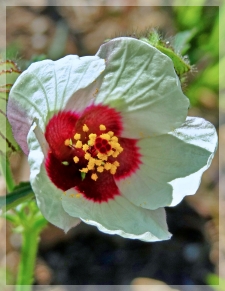
Perhaps we can learn from the Hibiscus trionum. Called “Flower-of-an-Hour,” each flower blooms during a single sunny day and remains open only a few hours. Nevertheless, the flower makes the most of its brief time by turning to the sun, getting pollinated, providing pollen and nectar for bees and butterflies, and sharing its leaves with caterpillars and rabbits. Why don’t we make the most of our time in the sun? It shouldn’t take cancer or Parkinson’s to make us realize that today is the best day of our lives! It is the day the Lord has made—the precious day the Lord has given us in this precarious world—and we should rejoice in each and every moment of it!
Father, forgive us when we fail to make the most of the days with which you have generously blessed us. Help us to seize today with joy and thanksgiving and be glad in it. No matter what the future may bring, may each day be our best one ever!
The past, the present and the future are really one: they are today. [Harriet Beecher Stowe]
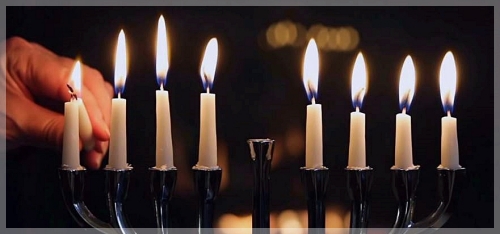
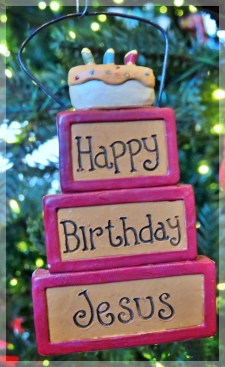
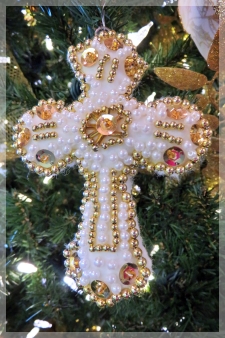 Today is the 25th of Kislev on the Hebrew calendar: the first of the eight days of Hanukkah. Last night, our Jewish brothers and sisters lit the first of the Hanukkah candles. Hanukkah isn’t a Jewish version of Christmas and it’s no more about dreidels (spinning tops), gelt (foil wrapped chocolate coins), potato latkes, or gifts than Christmas is about presents, decorated trees, holiday lights, or Santa. Just as Scripture doesn’t require celebrating Christ’s birthday, it doesn’t require Hanukkah’s observance. Nevertheless, because they both recognize events of great significance to Christians or Jews, these holidays continue to be celebrated throughout the world.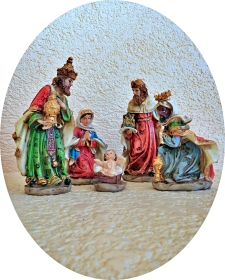

 Devotions of the Heart