OH COME, IMMANUEL (1) – PROMISES MADE

Rejoice, O people of Zion! Shout in triumph, O people of Jerusalem! Look, your king is coming to you. … I will destroy all the weapons used in battle, and your king will bring peace to the nations. His realm will stretch from sea to sea and from the Euphrates River to the ends of the earth. [Zechariah 9:9,10 (NLT)]

O come, O come, Immanuel, and ransom captive Israel
that mourns in lonely exile here until the Son of God appear.
Rejoice! Rejoice! Immanuel shall come to you, O Israel.

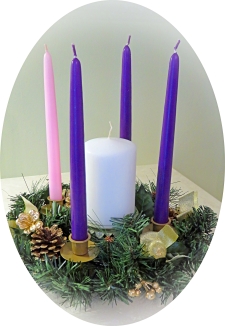
Advent wreathYesterday was the first Sunday in Advent—a season when Christians throughout the world prepare for the coming of Christ. For most of my life, I attended liturgical churches where, on each of the four Sundays in this season, we’d sing “Oh, Come, Oh Come, Immanuel” as the Advent candles were lit. Although this song is sung by 21st century Christians, its words easily could have been sung by 1st century Jews. Immanuel means “God with us” and, after centuries of being subject to pagan nations, they yearned for God to come and ransom their captive land.

They certainly wondered when God would fulfill the promise made to David 1,000 years earlier. Found in 2 Samuel 7, God promised David a secure homeland for the people of Israel; assured him of a never-ending dynasty; that one of his descendants would build God a house and sit on the royal throne; and that the descendant would have a Father/son relationship with God. God’s promise ended with these words: “Your house and your kingdom will continue before me for all time, and your throne will be secure forever.”

“Forever” meant the promise was eternal and absolute. With no restrictions placed upon the promise’s fulfillment, it didn’t depend on the obedience of David or Israel. This promise rested solely on God’s faithfulness and it was this promise that became the basis for Israel’s hope of a Messiah—the anointed one who would deliver Israel from God’s enemies.

No timeline for the fulfillment of God’s promise was given and, in the thousand years that followed, Israel was anything but free of enemies and opposition. The nation divided, its two kingdoms fought one another, the northern kingdom was exiled to Assyria, the southern to Babylon, and David’s earthly dynasty ended.

When the exiles returned after Persia defeated Babylon, no heir of David sat on the throne and Judah was just a tiny part of Persia’s vast empire. The Old Testament leaves Jewish history around 432 BC in the books of Ezra and Nehemiah with the Temple rebuilt and Jerusalem’s walls reconstructed and closes with the prophetic voices of Zechariah and Malachi.

Prophesying about Israel’s future, Zechariah spoke of a coming king and the restoration of God’s people. God promised, “I will strengthen Judah and save Israel; I will restore them because of my compassion. It will be as though I had never rejected them, for I am the Lord their God, who will hear their cries.” [10:6] The prophet Malachi relayed God’s promise of two messengers. The first would prepare the way for the Lord and the second, the one for whom the people longed, would be the messenger of the covenant—the Lord Himself.

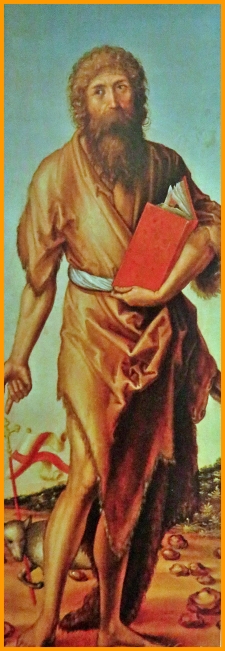
Because only one page in our Bibles separates the book of Malachi from that of Matthew, we may not realize that about 500 years pass in the turn of that page. There were nearly five centuries of silence from God and His prophets until we hear a voice like that of Elijah, in the Judean wilderness, preparing the way of the Lord.

Look! I am sending my messenger, and he will prepare the way before me. Then the Lord you are seeking will suddenly come to his Temple. The messenger of the covenant, whom you look for so eagerly, is surely coming. [Malachi 3:1 (NLT)]

Listen! It’s the voice of someone shouting, “Clear the way through the wilderness for the Lord! Make a straight highway through the wasteland for our God!” [Isaiah 40:3 (NLT)]

Copyright ©2023 jsjdevotions. All rights reserved.


UNCLEAN – Mark 5 (Part 2)

“But this is the new covenant I will make with the people of Israel after those days,” says the Lord. “I will put my instructions deep within them, and I will write them on their hearts. I will be their God, and they will be my people.” [Jeremiah 31:33-34 (NLT)]

little blue heronThe book of Leviticus outlined several things that could make someone ceremonially or ritually unclean. These things included bodily discharges, touching a corpse, and skin infections, as well as contact with any unclean person or thing. By Jesus’ day, even entering a Gentile’s home made someone unclean. Anything and anyone an unclean person touched became unclean and, anyone who touched them or what they touched also became unclean.

People deemed unclean were barred from participating in worship, offering sacrifices, and having access to the Temple. Because ritual impurity was contagious, anyone unclean had to remain separated from the community. Purification ceremonies were required before returning to a state of ritual cleanness and they varied with the severity of the uncleanness. Because uncleanness could come from normal bodily functions or factors beyond their control, even devout Jews became unclean at some time. Nevertheless, people didn’t deliberately put themselves in situations that would make them unclean. Jesus was the exception to the rule!

Along with their miraculous restoration, the three people Jesus healed in Mark 5 have something else in common—their ritual uncleanness. Living among the dead in the burial caves made the demoniac unclean. Since pigs fed on the hillside near him, he also was unclean because of contact with them. Considering the demoniac’s wild behavior, he probably was soiled by his or the pigs’ feces or urine which also made him ritually unclean (as well as filthy). Jesus, however, didn’t see an unclean Gentile demoniac; he saw a child of God who desperately needed to be freed from Satan’s control!

While Jesus was on the way to Jairus’ home to heal the man’s daughter, He was approached by a woman who had been hemorrhaging for twelve years. Because her bodily discharge made her ritually unclean, she was a pariah who shouldn’t have been out in public. Just by touching Jesus’ robe, she would have passed her uncleanness to Him but, rather than rebuke the woman for her action, He called her “Daughter,” commended her faith, and healed her.

While Jesus was speaking to the bleeding woman, messengers arrived to tell Jairus his daughter was dead. Undeterred, Jesus continued to the man’s home and went into the room where the dead girl lay. Even though He could raise the dead with just a word (as He did with Lazarus), Jesus deliberately held the child’s hand before telling her to get up.  Although having direct contact with a corpse made Him ritually unclean, the moment He took her hand, she transformed from an unclean dead body into a living child.

Those weren’t the only times Jesus put His concern for people before ritual purity. He offered to go to the Roman centurion’s home to heal the man’s servant even though entering a Gentile’s home would make him ceremonially unclean. When Jesus returned to the Gerasenes, he had no qualms about laying hands on a Gentile deaf man. Perhaps the most shocking of Jesus’ actions is found in Mark 1 when a leper kneeling before Him asked to be made clean. In an amazing display of compassion, Jesus deliberately reached out and touched the man to heal him. Rather than being made unclean by the leper, the leper was made clean by Jesus’ touch!

Ritual impurity made people unfit to be in the presence of God. Although many of the things Jesus did would have made a normal Israelite impure, we never read of Him undergoing any sort of purification ritual. Jesus, however, wasn’t an ordinary Israelite. He didn’t need to be purified to enter into the presence of God; He was God! Rather than becoming polluted by touching the unclean, Jesus transformed their impurity to purity because His holiness was contagious! In the New Covenant, people’s purity no longer depends on external regulations; it now depends on the cleansing power of Jesus Christ. His purity is greater than our impurity! Thank you, Lord.

So then, my brothers and sisters, we have boldness to go into the sanctuary through the blood of Jesus. He has inaugurated a brand new, living path through the curtain (that is, his earthly body). We have a high priest who is over God’s house. Let us therefore come to worship, with a true heart, in complete assurance of faith, with our hearts sprinkled clean from an evil conscience and our bodies washed with pure water. [Hebrews 10:19-22 (NTE)]

Copyright ©2023 jsjdevotions. All rights reserved.


PRAYING FOR BENIN

Don’t let anyone capture you with empty philosophies and high-sounding nonsense that come from human thinking and from the spiritual powers of this world, rather than from Christ. For in Christ lives all the fullness of God in a human body. So you also are complete through your union with Christ, who is the head over every ruler and authority. [Colossians 2:8-10 (NLT)]

voodoo dollWithout a globe, I allowed a random number to decide the nation for which I’d pray this week. Number 19 was Benin and I’m embarrassed to admit knowing nothing about this narrow strip of land in West Africa between Nigeria and Togo. These three nations once were part of the kingdom of Dahomey and it was in Dahomey that the ancient practice of voudon/vodun/vodou (commonly called voodoo) began. Now a republic, Benin is a severely underdeveloped nation, rife with corruption, where the life expectancy for men is just 60! A little over 40% of the population are Christian, nearly 30% Muslim, about 17% practice voodoo, and another 10% follow other indigenous/animistic religions. As a side note, ARDA (The Association for Religion Data Archives) stated that many of those identifying as Christian also practice voodoo.

Since my limited knowledge of voodoo comes from bad movies with zombies, hexes, and pins stuck into dolls, I did some research. The voodoo of movies and fiction bears little resemblance to real voudon beliefs or practices. Rich with proverbs, songs, and folklore, voudon includes belief in a universal energy, many spirits, a soul that can leave the body during dreams, spirit possession, and folk medicine. Nevertheless, even without the gruesome zombies, voodoo (no matter how you spell it) is incompatible with Christianity.

Voudon came to the New World with enslaved West Africans and is the only traditional African religion to survive here. While it’s the primary religion of a little over 2% of the Haitian population, ARDA noted that a much larger number of people identifying themselves as Christian continue to practice it. ARDA also found that a number of Christians in the Dominican Republic secretly practice witchcraft (brujería) or voodoo.

Converting isn’t easy and it’s not just voudon practitioners who have difficulty completely abandoning their culture’s traditions for Christianity. I had a Japanese friend who struggled to find a way to honor her ancestors without praying to them as she’d done for decades before converting.

Back in Paul’s day, the Colossians had difficulty preventing their new faith in Christ from becoming a mixed religion combining Christianity with elements of their Jewish roots and the popular philosophical movement of Gnosticism. What they ended up with were human traditions, circumcision, a requirement to observe both the Sabbath and the annual and monthly Jewish holy days along with dietary laws, the worship of angels, and even self-abasement—none of which were compatible with Christianity.

Rather than voodoo or Gnosticism, it’s belief in things like Kabbalah, tarot reading, astrology, manifesting, reincarnation, the spiritual energy of objects, psychic mediums, channeling, and crystals that have found their way into American Christians. Often called “new age,” there’s nothing new about them. While they may seem “spiritual” or self-affirming, they cut us off from God’s divine sovereignty, power, and purpose. Nevertheless, in 2018, Pew Research found that 61% of Americans identifying as Christian also believed in at least one of these things: reincarnation, astrology, psychics, or that spiritual energy can be in physical things.

Christianity doesn’t come with an ala carte menu. We don’t get to pick and choose individual dishes according to our preferences, make substitutions, or add a few extra sides because they’re intriguing, trendy, or promise earthly rewards. Christianity comes with a table d’hôte or prix fixe menu. Additions or substitutions aren’t allowed because the menu was set by God and Christ is all-sufficient.

Salvation is offered to everyone but, in Matthew 7, Jesus warned us that God’s gate isn’t wide enough for the addition of other beliefs! He continued with his caution when He said that some who expected to enter the Kingdom wouldn’t be allowed entrance; a similar warning is found in Luke 13. Those who identify as Christian but also follow voodoo or other non-Scriptural beliefs probably expect to enter through that narrow gate. I suspect they are mistaken and will find it shut tight.

As I prayed for Benin, I also prayed for all people who’ve combined false doctrine or pagan practices with their belief in Jesus. May they know and understand that the broad road leading to the wide gate is the road to destruction!

He replied, “Work hard to enter the narrow door to God’s Kingdom, for many will try to enter but will fail. When the master of the house has locked the door, it will be too late. You will stand outside knocking and pleading, ‘Lord, open the door for us!’ But he will reply, ‘I don’t know you or where you come from.’ Then you will say, ‘But we ate and drank with you, and you taught in our streets.’ And he will reply, ‘I tell you, I don’t know you or where you come from. Get away from me, all you who do evil.’” [Luke 13:24-27 (NLT)]

Copyright ©2023 jsjdevotions. All rights reserved.

BATTLE PLANS

O our God, won’t you stop them? We are powerless against this mighty army that is about to attack us. We do not know what to do, but we are looking to you for help. [2 Chronicles 20:12 (NLT)]

rabbitYosemite Sam, the cartoon arch enemy of Bugs Bunny, used to exclaim “Jumpin’ Jehosophat!” I was an adult before learning that Jehosophat was the fourth king of the southern kingdom of Judah. It’s ironic that the king said to be jumping in Sam’s pseudo-swear is best known for standing still in 2 Chronicles!

Judah had been invaded by the armies of Moab, Ammon, and some of the Meunites. Surprised by the invasion and terrified of their powerful enemies, they turned to God. After ordering a nationwide fast, Jehoshaphat called the people to prayer in the Temple courtyard. Acknowledging God’s power and might, his prayer recalled God’s covenant relationship with His chosen people, admitted they were powerless against such foes, and asked for the nation’s deliverance. A Levite named Jahaziel relayed the Lord’s response. Telling the people not to be afraid, God assured them the battle was His, not theirs, and the battle would be won without any of them lifting a sword. They were to take their battle positions, stand still, and watch the Lord’s victory. Worship and praise followed this amazing pronouncement.

Nevertheless, as enthusiastic as Judah was that day, I wonder how confident they were the following morning when they marched into battle. Would they become easy targets as their army, clearly outnumbered, stood unmoving in front of their formidable foes? Perhaps Jehoshaphat heard some grumbling about this perplexing battle strategy because he stopped and reassured the men, “Believe in the Lord your God, and you will be able to stand firm. Believe in his prophets, and you will succeed.”

Jehoshaphat appointed a chorus to walk ahead of the army and sing praises to the Lord: “Give thanks to the Lord; his faithful love endures forever!” As the choir’s voices rose, the Lord caused the armies of Moab and Ammon to turn against the Meunites, after which they attacked one another. By the time Judah’s army arrived, not one of their enemies had survived the melee; all they had to do was pick up the spoils of war. As God promised, the enemy was defeated without Judah lifting a sword.

While we’re not likely to encounter an enemy army, we do encounter difficulties, temptations, and challenges every day. In essence, Jehoshaphat’s prayer was a simple one: “We are powerless, Lord—you must fight for us!”  Are we as willing to admit our weakness and turn to God at the outset of trouble or do we wait until we’re in the midst of a losing battle before calling on Him?

The hardest part, however, comes in trusting God’s plan. Jehoshaphat wasn’t the only one to be given an unconventional battle strategy by the Lord—God told Joshua to circle a fortified city for seven days, Gideon to severely limit his army, Amaziah to dismiss the trained mercenaries he’d hired, and David to wait for a sound in the trees before attacking. Yet, it was by trusting God’s inexplicable plan that all were victorious. Let’s face it, God’s way is often contrary to what we’d normally expect—turn the other cheek, love your enemies, bless those that curse you, forgive seventy times seven, and find strength in our weakness. Nevertheless, God’s way must be our way!

Jehoshaphat and his army trusted so much in God’s plan that they thanked Him for victory before the battle began. Their praise came before their victory, not because they thought God would keep his promise but because they knew He would! The previous day, the moment God said the battle was His, the Moabites, Ammonites, and Meunites were vanquished; they just didn’t know it then! Let us march into our daily battles as did the Judeans—trusting God and singing, “Give thanks to the Lord; his faithful love endures forever!”

This is what the Lord says: Do not be afraid! Don’t be discouraged by this mighty army, for the battle is not yours, but God’s. … Do not be afraid or discouraged. Go out against them tomorrow, for the Lord is with you! [2 [Chronicles 20:15b,17b (NLT)]

Copyright ©2023 jsjdevotions. All rights reserved.

CONVERSATIONS WITH ESHA (2) – ONLY ONE WAY

Enter by the narrow gate. For the gate is wide and the way is easy that leads to destruction, and those who enter by it are many. For the gate is narrow and the way is hard that leads to life, and those who find it are few. [Matthew 7:13-14 (ESV)]

one wayLike Christians, Hindus believe that, when the body dies, the soul does not. Unlike Christians, however, Hindus believe that, after death, the soul lives on in an astral body until it is reborn in another physical body. This cycle is continually repeated until the soul reaches a certain state of perfection (moksha) and is released from the bondage of birth and death. At that time, like a drop of water that eventually merges into the ocean, the soul will finally merge into God and become one with its creator. Of course, once absorbed by the sea, the drop would cease to exist.

Rather than being absorbed into the Supreme Being, when Christians die, their souls immediately enter into God’s presence and, at the resurrection of believers, their new bodies will be raised and reunited with their souls. Non-believers, however, do not end well and the parable of the rich man and Lazarus makes it clear that they don’t get to return to earth for another go-around. If there’s any doubt, Hebrews 9:27 tell us that, “each person is destined to die once and after that comes judgment.”

In spite of Hinduism’s belief in reincarnation and moksha, perhaps the biggest difference between my friend Esha’s religion and Christianity is that, while she finds Christianity a valid religion, as a Christian, I cannot say the same for Hinduism. Today, Esha used an analogy to explain the universalism of Hinduism. Just as we can get into Disney World from all directions and eight different entrances, she believes there are many equally acceptable routes and gateways to God. Instead of all roads leading to Rome, all roads lead to God. I respectfully disagreed but recalled her analogy later that day when sending a friend directions to my house.

While people can come to my community from all directions, they can enter from only one road, must go in through one gate, and are required to have their name on a list to be admitted. That’s a little more like the one way and narrow gate of Christianity. Esha is correct that Disney World has several entrances, but Jesus made it clear that there only is one entrance into heaven and getting to that entrance depends on taking the right road. Fortunately, God allows U-turns. Just because we started on the wrong path doesn’t mean we have to end in the wrong place.

Nevertheless, there’s a sense of urgency in Jesus’ words in today’s verse. The verb form for the word translated as “enter” was what scholars call the “aorist imperative.” It was used for urgent, positive, one-time commands (which is why some translations say “stive to enter”). Jesus was emphatically telling people not to procrastinate or sight-see before getting on the right road. No one knows when their engine will fail or Jesus will return. While Hinduism maintains that people get multiple opportunities to do life right, Jesus tells us we have only one life in which to get on the right road!

All religions are not paths to the same end for the simple reason that religions with distinct mutually exclusive doctrines like Christianity, Hinduism, Buddhism, and Islam cannot all be valid! Either Jesus was right when He claimed to be the only path to God or He was wrong! While it sounds like spiritual elitism to say that Christianity is the only way, it’s more like simple arithmetic—there can’t be two right answers! Where there is contradiction, there is error.

Christ’s narrow gate has nothing to do with bigotry, discrimination, or a rating system of people or works. When it comes to entering His Kingdom, the gate isn’t wide enough to accommodate any other philosophy or belief; there’s no wiggle room. The narrow gate has one very specific requirement for entrance—faith in Jesus Christ! That’s the only way to get one’s name on the entrance list. With only one correct road, one narrow gate, and one Lord and Savior, Christianity is exclusive. Nevertheless, because the path to eternal life is open to anyone who asks and believes, Christianity is inclusive! All are invited; sadly, not all will enter.

Which way are you going? What road are you on?

Since no man is excluded from calling upon God, the gate of salvation is open to all. There is nothing else to hinder us from entering, but our own unbelief. [John Calvin]

Jesus said to him, “I am the way, and the truth, and the life. No one comes to the Father except through me. [John 14:6 (ESV)]

There is salvation in no one else! God has given no other name under heaven by which we must be saved. [Acts 4:12 (ESV)]

Copyright ©2023 jsjdevotions. All rights reserved.

NEHEMIAH’S PRAYER (Nehemiah – Part 1)

When I heard this, I sat down and wept. In fact, for days I mourned, fasted, and prayed to the God of heaven. Then I said, “O Lord, God of heaven, the great and awesome God who keeps his covenant of unfailing love with those who love him and obey his commands, listen to my prayer!” [Nehemiah 1:4-5 (NLT)]

sourthern fogfruitThe books of Ezra and Nehemiah tell of the reconstruction of Jerusalem. Nearly fifty years after Jerusalem was destroyed, the first of the exiled Jews returned to the ruined city. Although his brother Hanani returned to Judah, Nehemiah, who served Persia’s King Artaxerxes as cup-bearer, didn’t. While his job included ensuring the safety of the king’s food and drink, Nehemiah was more bodyguard than waiter. In constant contact with the king, he served as both confidant and companion to Artaxerxes. He carried the king’s signet ring and possibly served as his chief financial officer.

When Hanani returned from Jerusalem to visit, Nehemiah casually asked how the exiles were doing in the city. When his brother replied that Jerusalem’s walls still were in shambles and without any gates, Nehemiah was distraught. Without its walls, Jerusalem’s residents (and the Temple’s treasures) were vulnerable to attack by gangs, bandits, and wild animals. Worse, having remained in ruins for over 140 years, Jerusalem’s broken walls signaled a defeated and weak people. After hearing his brother’s distressing report, Nehemiah spent days mourning, fasting, and praying.

Nehemiah’s prayer is beautiful in its simplicity. Reminding God of His unfailing love for His people, the cupbearer humbly asked God to hear his prayer. After confessing both the sins of Israel as well as those of his family and himself, he repeated God’s promise to Moses that He’d restore the people when they returned to Him. [Deut.1-4] Nehemiah asked God to hear his prayer and the prayer of those “who delight in honoring you” and closed by asking the Lord to grant him the king’s favor. What Nehemiah didn’t do was tell God how Jerusalem’s problem should be solved. He simply laid his burden on God, claimed God’s promises, and let God get to work!

It was three months later that Nehemiah’s downcast demeanor caused the king to ask what was troubling him. Although terrified to answer, the cupbearer told the king he was sad because Jerusalem’s walls remained in ruins. Nehemiah was frightened for good reason. A sorrowful expression in the king’s presence was considered an insult to him and, several years earlier, Artaxerxes ordered Jerusalem’s reconstruction to stop. [Ezra 4:21] The king’s response, however, was to ask what he could do. After praying again, Nehemiah responded that he’d like to go to Judah and rebuild the city’s walls. When his request was granted, Nehemiah went all in and requested the king’s financial, political, and military support in Jerusalem’s rebuilding.

Without a doubt, Nehemiah was a man of action. Once in Jerusalem, he rebuilt the city’s walls in 52 days (when it took 22 years for the Temple’s restoration). Nevertheless, he waited three months before speaking to the king. Although Scripture doesn’t tell us what Nehemiah did during that time, I imagine he spent it in prayer while patiently waiting for the God-appointed time to take action.

By working on God’s timeline rather than his own, Nehemiah had a well formulated plan, knew how much time was needed, and what materials and help he needed. If he’d impetuously spoken to the king immediately upon hearing about the city walls, things wouldn’t have gone so well. Without God having softened the king’s heart, the cupbearer might have been punished for his disrespect in daring to look sad, his insubordination in expecting the king to reverse a previous decree, and his impudence in asking the king to fund the project!

Although Nehemiah’s prayer tells us he knew the king’s favor was essential to any solution, I suspect he didn’t know that he’d be the one to lead the rebuilding effort when he first prayed. Nehemiah saw Jerusalem’s need but, rather than devise his own plan, he relied on “the gracious hand of God” to fulfill that need. Moreover, when the time came, he willingly accepted God’s call to leave a cushy job in the king’s palace to serve as a construction foreman in a land he’d never seen! If we want God’s will to be done on earth, like Nehemiah, we must let Him devise the plan and be available for His use!

With a prayer to the God of heaven, I replied, “If it please the king, and if you are pleased with me, your servant, send me to Judah to rebuild the city where my ancestors are buried.”… And the king granted these requests, because the gracious hand of God was on me. [Nehemiah 2:4b-5,8b (NLT)]

Copyright ©2023 jsjdevotions. All rights reserved.