OH COME, IMMANUEL (5) – THE SECOND ADVENT

The Lord of Heaven’s Armies says, “The day of judgment is coming, burning like a furnace. On that day the arrogant and the wicked will be burned up like straw. They will be consumed—roots, branches, and all. But for you who fear my name, the Sun of Righteousness will rise with healing in his wings. And you will go free, leaping with joy like calves let out to pasture. On the day when I act, you will tread upon the wicked as if they were dust under your feet,” says the Lord of Heaven’s Armies. [Malachi 4:1-3 (NLT)]

In the first Advent, Jesus came as a suffering servant in a manger. In His second Advent, Jesus will return in righteousness as the conquering King who makes all things right. His return means the final destruction of sin, injustice, hate, disease, death, decay and evil. Our God, however, is one of both mercy and judgement and Malachi’s promise of the Messiah included a warning about the coming day of judgment.

Jesus spoke of this coming judgment when He likened the division between believers and unbelievers to a shepherd who separates the sheep from the goats. True believers, however, don’t need to cower in fear at the prospect of judgment. Clothed in His righteousness, they will stand before Jesus forgiven of every single sin. As the faithful, they are the righteous sheep and destined for eternal life in the kingdom. The goats, however, are those who refuse to believe and they are destined for eternal punishment.

The early church thought Jesus would return within their lifetimes but 2,000 years have passed and He still hasn’t returned. Peter explained the delay: “A day is like a thousand years to the Lord, and a thousand years is like a day. The Lord isn’t really being slow about his promise, as some people think. No, he is being patient for your sake. He does not want anyone to be destroyed, but wants everyone to repent.” [2 Peter: 8-9]

Nevertheless, the day will come when Jesus returns to judge the living and the dead. He told us that we must be ready for that day. Just as a thief strikes an unsuspecting house by surprise, Jesus will catch an unbelieving world the same way. On that day, Almighty God will assess everyone according to their soul’s status and, when that happens, there will be no opportunity for last-minute repentance or bargaining.

It is in Christ’s return that we see the promises of God fully come to pass – promises to be with His people – promises that all things will be made new – promises of peace and security – promises of the full enjoyment of all that life was meant to be.

“God’s home is now among his people!” prophesied John in Revelation 21. “He will live with them, and they will be his people. God himself will be with them. He will wipe every tear from their eyes, and there will be no more death or sorrow or crying or pain. All these things are gone forever.” [21:3-4]

This season of Advent is more than a time of preparation to celebrate Christmas; it is a time of preparation to focus our hearts, wills, and minds on Christ’s return—not as the end of the world—but as the beginning of the life as God intended it to be lived—a time when peace and justice will prevail and there will be no death, sorrow, or tears.

2,000 years ago, the people of Judah longed for the promised Messiah and, recognizing mankind’s need for a savior, God answered their prayer with Jesus. As Christians in the 21st century, we long for Messiah’s return and, someday, God will make good on that promise, as well.

The question to ask ourselves during this season isn’t whether we’re ready for Christmas. The question we should be asking is whether we’re ready for that glorious day when Jesus returns.
“Men of Galilee,” they said, “why are you standing here staring into heaven? Jesus has been taken from you into heaven, but someday he will return from heaven in the same way you saw him go!” [Acts 1:11 (NLT)]

Don’t let your hearts be troubled. Trust in God, and trust also in me. There is more than enough room in my Father’s home. If this were not so, would I have told you that I am going to prepare a place for you? When everything is ready, I will come and get you, so that you will always be with me where I am. [John 14:1-3 (NLT)]

Copyright ©2023 jsjdevotions. All rights reserved.

OH COME, IMMANUEL (4) – HE WILL RETURN

As my vision continued that night, I saw someone like a son of man coming with the clouds of heaven. He approached the Ancient One and was led into his presence. He was given authority, honor, and sovereignty over all the nations of the world, so that people of every race and nation and language would obey him. His rule is eternal—it will never end. His kingdom will never be destroyed. [Daniel 7:13-14 (NLT)]

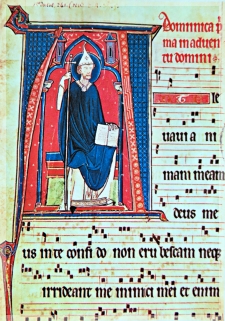
13th-century music manuscript

I began this series by saying that the Jews of the 1st century easily could have sung the words “O come, O come, Immanuel, and ransom captive Israel,” but those words weren’t sung by Jews. They were chanted in Latin over 1,200 years ago by Benedictine monks. In the 1800s, their words were translated into English, the verses rearranged, and the new version set to the melody of a 15th century French requiem mass processional.

The monk’s original version had seven verses and a verse a day was sung in the week before Christmas. Calling for God to come, each verse referred to a Messianic name found in the Hebrew Scriptures: Wisdom, Adonai (the Hebrew word for God), Root of Jesse, Key of David, Dayspring, King of the Gentiles, and Immanuel.

This Gregorian chant, however, was as much about the future as it was about the past. While celebrating our Savior’s birth, it also prepared the monks’ hearts for the day Jesus would return. You see, the first letter of each of the Latin names of God formed an acrostic. When put together in order, they spelled SARCORE but, when put together backwards, they spell Ero cras, which, in Latin, means “I shall be with you tomorrow.” While declaring the first Advent, this hymn is an urgent prayer expressing mankind’s longing for the second Advent when Jesus returns.

Scripture is neither vague nor equivocal on the promise of Christ’s return. His return is a major theme in the prophecy of both Old and New Testaments. 23 of the 27 New Testament books reference His return as do 17 books of the Hebrew Scriptures. According to Bible teacher David Jeremiah, references to Christ’s second coming outnumber references to His first by eight to one!

Jesus Himself promised His return. In Matthew 24:30-31, He spoke of a time people would, “see the Son of Man coming on the clouds of heaven with power and great glory. And he will send out his angels with the mighty blast of a trumpet, and they will gather his chosen ones from all over the world—from the farthest ends of the earth and heaven.”

On the night of His betrayal, Jesus promised His disciples, “I will come back and take you to be with me that you also may be where I am.” [John 14:3] After His ascension into heaven, two angels told the disciples, “This same Jesus, who has been taken from you into heaven, will come back in the same way you have seen him go into heaven.” [Acts 1:11]

Advent is far more than a time to look forward to celebrating Messiah’s birth and prepare for Christmas. It is as much a time to look forward to and prepare for Christ’s return! Many people missed His first coming but no one will miss His second!

And there will be strange signs in the sun, moon, and stars. And here on earth the nations will be in turmoil, perplexed by the roaring seas and strange tides. People will be terrified at what they see coming upon the earth, for the powers in the heavens will be shaken. Then everyone will see the Son of Man coming on a cloud with power and great glory. So when all these things begin to happen, stand and look up, for your salvation is near! [Luke 21:25-28 (NLT)]

Copyright ©2023 jsjdevotions. All rights reserved.

OH COME, IMMANUEL (3) – THE FIRST ADVENT

Listen! It’s the voice of someone shouting, “Clear the way through the wilderness for the Lord! Make a straight highway through the wasteland for our God! [Isaiah 40:3 (NLT)]

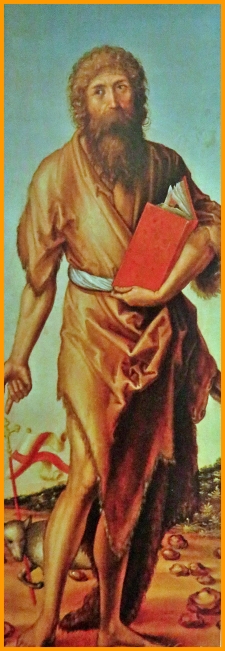
John the Baptist [Georg Pencz (1500-1550)]

Conquered and oppressed for centuries, the 1st century Jews were despondent. From its beginning in Genesis to its end in Malachi, their Scriptures were filled with prophecies of Israel’s deliverance and some 500 verses pointed to, described, or referenced the coming Messiah. Where was the descendant of David who would reward the righteous and punish the wicked? 1,000 years had passed since God’s covenant with David and 2,000 since His covenant with Abraham but God’s chosen people still weren’t free from their enemies and oppression. The Jews of Palestine easily could have sung the words, “Oh come, oh come, Immanuel, and ransom captive Israel.”  Where was he?

Where was the Messenger prophesied by both Malachi and Isaiah—the one who would prepare the way of the Lord and tell the towns of Judea. “Here is your God!”? And, where was the Messenger of the covenant?

The first Advent or coming of the Messiah occurred quietly the night Jesus was born in Bethlehem and only a few shepherds and some pagan astrologers took notice. When the first Messenger’s voice was heard, it was that of John the Baptist. Calling the people of Judah to repent, John told them the time of the promised “Messiah” was at hand. The promised Messiah, however, was not what the people expected.

Except for the 79 troubled years under the Hasmoneans, Judah had been governed by foreign Gentiles for over 600 years. It’s understandable that they longed for a king who would redeem them from foreign rule—a king who would sit on an earthly throne. But, with Jesus, the world got a king who redeemed them from sin and sits on a heavenly throne. Judah, however, wanted someone to liberate them from foreign rule, not sin! They were looking for the Lion of the tribe of Judah, not the Lamb of God and, because they expected a conqueror, they didn’t recognize the suffering servant God promised in Isaiah 53.

With that first advent or coming, God made a new covenant with His people—one prophesied in Jeremiah: “But this is the new covenant I will make with the people of Israel after those days…. I will put my instructions deep within them, and I will write them on their hearts. I will be their God, and they will be my people.…. And I will forgive their wickedness, and I will never again remember their sins.” [Jeremiah 31:33-34 (NLT)]

Jesus confirmed this new covenant while eating with His disciples in the upper room at His last Passover when, “He took a cup of wine and gave thanks to God for it. He gave it to them and said, ‘Each of you drink from it, for this is my blood, which confirms the covenant between God and his people. It is poured out as a sacrifice to forgive the sins of many.’” [Matthew 26:26-28]

In this new covenant, we receive the forgiveness of sins and God’s empowering Spirit to help us live lives full of self-giving (rather than self-serving) love. Jesus paid the ransom only God could pay and, by his death and resurrection, He freed us forever from Satan’s tyranny. Because the shedding of His blood paid our debt and purchased our forgiveness, we are secure as God’s adopted children. As the light of the world, Jesus banished hopelessness, rescued us from hell and unlocked the doors to heaven.

Our redemption only began when Jesus brought His light into the world. Death, disease, decay, and calamity remain and our enemy Satan continues to prowl. Jesus’ work is not finished and there still are Messianic prophecies to fulfill.

My servant grew up in the Lord’s presence like a tender green shoot, like a root in dry ground. There was nothing beautiful or majestic about his appearance, nothing to attract us to him. He was despised and rejected—a man of sorrows, acquainted with deepest grief. We turned our backs on him and looked the other way. He was despised, and we did not care. [Isaiah 53:2-3 (NLT)]

Copyright ©2023 jsjdevotions. All rights reserved.

OH COME, IMMANUEL (2) – THE SILENT YEARS

The Spirit of the Sovereign Lord is upon me, for the Lord has anointed me to bring good news to the poor. He has sent me to comfort the brokenhearted and to proclaim that captives will be released and prisoners will be freed. He has sent me to tell those who mourn that the time of the Lord’s favor has come, and with it, the day of God’s anger against their enemies. [Isaiah 61:1-2 (NLT)]

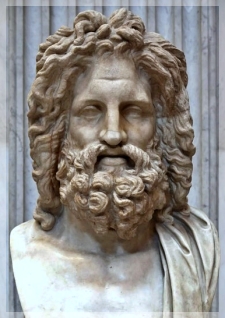
Greek god Zeus

While the Bible is silent about the centuries separating the Hebrew Scriptures from the New Testament, history is not. During those hundreds of years, Judah suffered. Although they were allowed to worship Jehovah under Persian rule, the pagan nation ruled them, required their political obedience, and demanded exorbitant taxes to support its king, court, armies, and self-serving foreign governors. When Persia weakened and fell to Alexander the Great in 331 BC, Judah simply traded one set of foreign rulers for another.

When Alexander died, the Greek Empire was divided among his generals. Ptolemy the 1st and his descendants ended up controlling the Jews. Under Ptolemaic rule, as long they maintained order and paid their taxes, Judeans were free to worship and Judaism thrived. Nevertheless, Judah was an occupied country and, for twenty years, the people were caught in a violent cross-fire between the Ptolemies and their rivals, the Syrian Seleucids. When the Seleucids defeated the Ptolemies, the Jews ended up with rulers who mercilessly persecuted them. The Temple was robbed, Jerusalem’s walls destroyed, Scripture burned, sacrifices to Jehovah banned, circumcision outlawed, Jews were forced to eat pork, and observing the Sabbath and feast days was prohibited. Statues of Greek gods and idols were placed in every town and those who refused to worship them were put to death.

The Jews must have wondered what became of God’s covenant with David as well as the one He made with Abraham promising that Israel would be a great nation, that He’d bless Abraham’s descendants and curse his enemies, and that Canaan would belong to his descendants. God even confirmed that same promise to Isaac and Jacob. But now, Israel’s promised homeland belonged to Greece and they were ruled and persecuted by their enemies. If anything, Abraham’s descendants were the ones cursed. Was Jehovah a liar?

When the Seleucid ruler, Antiochus Epiphanes, rededicated the Temple to Zeus and sacrificed a pig on the altar, Judah finally rebelled and a guerilla army was formed. Three years after the Temple’s desecration, the Syrians were defeated and the Temple recaptured and rededicated. Tonight is the first night of Hannukah which celebrates the eight-day miracle following that event. Even though the Temple was reclaimed, Judah remained a Syrian province and fighting continued between Syrian and Jewish forces for twenty more years.

Eventually, the constant fighting between the various Greek city-states weakened the Greek Empire and Judah’s independence was realized in 142 BC. Simon Maccabee became head of state and the Hasmonean dynasty was established. For the first time since the fall of Jerusalem in 586, a Jew sat on the throne but the prophecies hadn’t been fulfilled. He wasn’t from the tribe of Judah and David’s lineage, his realm didn’t extend from sea to sea, and peace did not reign. The Hasmoneans’ time in power was troubled by corruption, political infighting, terrorism, and violent clashes between the Pharisees and Sadducees. The nation became divided and weak.

After the Roman general Pompey defeated the Greeks, he had no trouble extending control over the divided nation of Judah and, in 63 BC, Rome conquered Jerusalem. Once again God’s chosen people were subservient to a foreign power. When the New Testament opens, rather than a descendant of David’s, it was Herod the Great, a descendant of Esau, who sat on the throne!

The people of Judah wondered when Jehovah would fulfill His promises. Would the time of His favor ever come? When would His anointed king avenge His people?

It is I, the Lord, announcing your salvation! It is I, the Lord, who has the power to save! … For the time has come for me to avenge my people, to ransom them from their oppressors. [Isaiah 63:1,4 (NLT)]

Copyright ©2023 jsjdevotions. All rights reserved.

OH COME, IMMANUEL (1) – PROMISES MADE

Rejoice, O people of Zion! Shout in triumph, O people of Jerusalem! Look, your king is coming to you. … I will destroy all the weapons used in battle, and your king will bring peace to the nations. His realm will stretch from sea to sea and from the Euphrates River to the ends of the earth. [Zechariah 9:9,10 (NLT)]

O come, O come, Immanuel, and ransom captive Israel
that mourns in lonely exile here until the Son of God appear.
Rejoice! Rejoice! Immanuel shall come to you, O Israel.

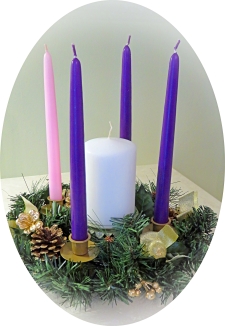
Advent wreathYesterday was the first Sunday in Advent—a season when Christians throughout the world prepare for the coming of Christ. For most of my life, I attended liturgical churches where, on each of the four Sundays in this season, we’d sing “Oh, Come, Oh Come, Immanuel” as the Advent candles were lit. Although this song is sung by 21st century Christians, its words easily could have been sung by 1st century Jews. Immanuel means “God with us” and, after centuries of being subject to pagan nations, they yearned for God to come and ransom their captive land.

They certainly wondered when God would fulfill the promise made to David 1,000 years earlier. Found in 2 Samuel 7, God promised David a secure homeland for the people of Israel; assured him of a never-ending dynasty; that one of his descendants would build God a house and sit on the royal throne; and that the descendant would have a Father/son relationship with God. God’s promise ended with these words: “Your house and your kingdom will continue before me for all time, and your throne will be secure forever.”

“Forever” meant the promise was eternal and absolute. With no restrictions placed upon the promise’s fulfillment, it didn’t depend on the obedience of David or Israel. This promise rested solely on God’s faithfulness and it was this promise that became the basis for Israel’s hope of a Messiah—the anointed one who would deliver Israel from God’s enemies.

No timeline for the fulfillment of God’s promise was given and, in the thousand years that followed, Israel was anything but free of enemies and opposition. The nation divided, its two kingdoms fought one another, the northern kingdom was exiled to Assyria, the southern to Babylon, and David’s earthly dynasty ended.

When the exiles returned after Persia defeated Babylon, no heir of David sat on the throne and Judah was just a tiny part of Persia’s vast empire. The Old Testament leaves Jewish history around 432 BC in the books of Ezra and Nehemiah with the Temple rebuilt and Jerusalem’s walls reconstructed and closes with the prophetic voices of Zechariah and Malachi.

Prophesying about Israel’s future, Zechariah spoke of a coming king and the restoration of God’s people. God promised, “I will strengthen Judah and save Israel; I will restore them because of my compassion. It will be as though I had never rejected them, for I am the Lord their God, who will hear their cries.” [10:6] The prophet Malachi relayed God’s promise of two messengers. The first would prepare the way for the Lord and the second, the one for whom the people longed, would be the messenger of the covenant—the Lord Himself.

Because only one page in our Bibles separates the book of Malachi from that of Matthew, we may not realize that about 500 years pass in the turn of that page. There were nearly five centuries of silence from God and His prophets until we hear a voice like that of Elijah, in the Judean wilderness, preparing the way of the Lord.

Look! I am sending my messenger, and he will prepare the way before me. Then the Lord you are seeking will suddenly come to his Temple. The messenger of the covenant, whom you look for so eagerly, is surely coming. [Malachi 3:1 (NLT)]

Listen! It’s the voice of someone shouting, “Clear the way through the wilderness for the Lord! Make a straight highway through the wasteland for our God!” [Isaiah 40:3 (NLT)]

Copyright ©2023 jsjdevotions. All rights reserved.


UNCLEAN – Mark 5 (Part 2)

“But this is the new covenant I will make with the people of Israel after those days,” says the Lord. “I will put my instructions deep within them, and I will write them on their hearts. I will be their God, and they will be my people.” [Jeremiah 31:33-34 (NLT)]

little blue heronThe book of Leviticus outlined several things that could make someone ceremonially or ritually unclean. These things included bodily discharges, touching a corpse, and skin infections, as well as contact with any unclean person or thing. By Jesus’ day, even entering a Gentile’s home made someone unclean. Anything and anyone an unclean person touched became unclean and, anyone who touched them or what they touched also became unclean.

People deemed unclean were barred from participating in worship, offering sacrifices, and having access to the Temple. Because ritual impurity was contagious, anyone unclean had to remain separated from the community. Purification ceremonies were required before returning to a state of ritual cleanness and they varied with the severity of the uncleanness. Because uncleanness could come from normal bodily functions or factors beyond their control, even devout Jews became unclean at some time. Nevertheless, people didn’t deliberately put themselves in situations that would make them unclean. Jesus was the exception to the rule!

Along with their miraculous restoration, the three people Jesus healed in Mark 5 have something else in common—their ritual uncleanness. Living among the dead in the burial caves made the demoniac unclean. Since pigs fed on the hillside near him, he also was unclean because of contact with them. Considering the demoniac’s wild behavior, he probably was soiled by his or the pigs’ feces or urine which also made him ritually unclean (as well as filthy). Jesus, however, didn’t see an unclean Gentile demoniac; he saw a child of God who desperately needed to be freed from Satan’s control!

While Jesus was on the way to Jairus’ home to heal the man’s daughter, He was approached by a woman who had been hemorrhaging for twelve years. Because her bodily discharge made her ritually unclean, she was a pariah who shouldn’t have been out in public. Just by touching Jesus’ robe, she would have passed her uncleanness to Him but, rather than rebuke the woman for her action, He called her “Daughter,” commended her faith, and healed her.

While Jesus was speaking to the bleeding woman, messengers arrived to tell Jairus his daughter was dead. Undeterred, Jesus continued to the man’s home and went into the room where the dead girl lay. Even though He could raise the dead with just a word (as He did with Lazarus), Jesus deliberately held the child’s hand before telling her to get up.  Although having direct contact with a corpse made Him ritually unclean, the moment He took her hand, she transformed from an unclean dead body into a living child.

Those weren’t the only times Jesus put His concern for people before ritual purity. He offered to go to the Roman centurion’s home to heal the man’s servant even though entering a Gentile’s home would make him ceremonially unclean. When Jesus returned to the Gerasenes, he had no qualms about laying hands on a Gentile deaf man. Perhaps the most shocking of Jesus’ actions is found in Mark 1 when a leper kneeling before Him asked to be made clean. In an amazing display of compassion, Jesus deliberately reached out and touched the man to heal him. Rather than being made unclean by the leper, the leper was made clean by Jesus’ touch!

Ritual impurity made people unfit to be in the presence of God. Although many of the things Jesus did would have made a normal Israelite impure, we never read of Him undergoing any sort of purification ritual. Jesus, however, wasn’t an ordinary Israelite. He didn’t need to be purified to enter into the presence of God; He was God! Rather than becoming polluted by touching the unclean, Jesus transformed their impurity to purity because His holiness was contagious! In the New Covenant, people’s purity no longer depends on external regulations; it now depends on the cleansing power of Jesus Christ. His purity is greater than our impurity! Thank you, Lord.

So then, my brothers and sisters, we have boldness to go into the sanctuary through the blood of Jesus. He has inaugurated a brand new, living path through the curtain (that is, his earthly body). We have a high priest who is over God’s house. Let us therefore come to worship, with a true heart, in complete assurance of faith, with our hearts sprinkled clean from an evil conscience and our bodies washed with pure water. [Hebrews 10:19-22 (NTE)]

Copyright ©2023 jsjdevotions. All rights reserved.