
No trial has overtaken you that is not faced by others. And God is faithful: He will not let you be tried beyond what you are able to bear, but with the trial will also provide a way out so that you may be able to endure it. [1 Corinthians 10:13 (NET)]
 From today’s verse, you might think I’m going to say that God will never give us more than we can bear. That Christianese sentiment, however, comes from 1 Corinthians 10 and is about temptation, not difficulties and afflictions. The belief that God will never give us any burden or challenge we can’t bear puts the emphasis on us and our strength rather than where it should be—on God and His power! In 2 Corinthians, Paul wrote of being so burdened beyond his strength that he despaired of even living. Clearly, there will be times in our lives when we will be given far more than we can possibly bear by ourselves.
Florida is pretty much flat as a pancake and my husband and I can hike and bike long distances with little or no effort. We thought we were nearly invincible until we returned to the rolling hills of the Midwest and the mountain trails of our beloved Rockies. As I trudged up my first steep hill, I was sure God made it longer and higher in my absence; all I wanted was for someone to carry me!
Although I’ve been working on getting stronger since returning north, God’s spiritual training is quite different from physical training. Unlike a cross-country coach, God doesn’t train us on steeper and steeper hills so we can eventually run up them without needing to stop and catch our breath. He keeps challenging us with uphill climbs so that we learn to trust Him to raise us up. We’re not supposed to be lifting the heavy weight of life’s burdens; that’s God’s job. When we encounter the steep grades, he doesn’t expect us to climb them by ourselves; he wants us to learn to let Him empower us. Our faith isn’t demonstrated by how strong we are but by how readily we recognize that we’re too weak to ascend life’s hills and peaks by ourselves. Our faith is revealed by our willingness to trust God enough to let Him bear our burdens, lift us over the barriers, and get us up the mountains.
Without topographical challenges, I’d overestimated my fitness and strength until my first trek from the lake up to our house (100 paces and every one of them uphill) left me exhausted. When we live in a spiritual flatland with no challenges, we tend to overrate our strength as well. Mistakenly, we think we’re strong enough to conquer life’s trials on our own and stop depending on God’s power. He regularly gives us hills, not to get us powerful enough to climb them alone but to have faith enough to give every uphill climb to Him. We’ll then realize that it is our faith, not our strength, that carries and sustains us.
Thank you, God, for the challenges of life, not because they strengthen us enough to go it alone, but because they strengthen our trust and dependence on you.
 Yesterday, I wrote about unfounded fears. Although I’m a bit of a nervous flyer, I’d rather travel than stay home, so I pray and fly. While I’m a little nervous about heights, I’d rather ride than hike up the mountain, so I pray and ride the lifts. Since my little Ziggy-like guy can easily capture my irrational fears, they rarely plague me. It’s not fear of external things like plane crashes or gondola accidents, however, that disturb me. Instead, it’s the fear that happens when I focus on me instead of God. Will I be wounded, bothered, abandoned or tested? What if I don’t succeed, reach my goal, or make a good impression? Will I be welcome? What if I make a mistake?
 Jehovah Rapha, the “Lord who Heals You,” was the name of God proclaimed to the Israelites through Moses at Marah. Indeed, a God who could make the blind see, the lame walk, the lepers clean and raise Lazarus from the dead can heal any physical ailment.
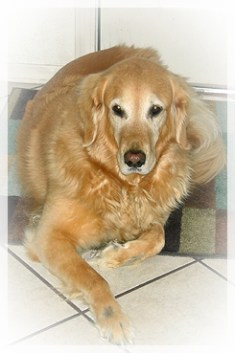 We’d taken my daughter and grand-daughter to a magic show and both my husband and grand had participated in two rather impressive illusions. On the way home, we three adults tried to figure out how each trick had been done. We explored various scenarios that might explain how the $50 bill with my husband’s signature on it ended up in the middle of an uncut orange, in a paper bag, and in a locked box that was in another locked box across the stage. We also tried to figure out how the magician used an elaborate series of mathematical calculations to know the age of our grand’s dog in dog years. (The dog, not there and being 105 in dog years, was most definitely not your average dog.) While we pondered various scenarios, my grand piped up, “Stop trying to figure it out. It was magic!” While it was an entertaining show, we know it wasn’t magic; it was just a carefully orchestrated and well-executed series of tricks. Nevertheless, we continued to want to know how each had been done. There is something about us all that wants to make sense of that which makes no sense. Sometimes, however, that can’t be done.
 Devotions of the Heart