
On that day life-giving waters will flow out from Jerusalem, half toward the Dead Sea and half toward the Mediterranean, flowing continuously in both summer and winter. And the Lord will be king over all the earth. On that day there will be one Lord—his name alone will be worshiped. [Zechariah 14:8-9 (NLT)]
Is anyone thirsty? Come and drink—even if you have no money! Come, take your choice of wine or milk—it’s all free! … Seek the Lord while you can find him. Call on him now while he is near. [Isaiah 55:1,6 (NLT)]
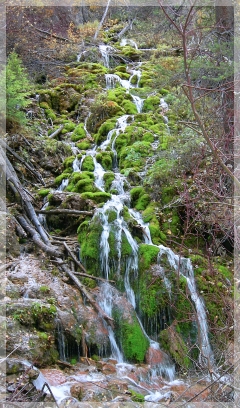 Living in a country where clean water readily flows out of a faucet, we don’t fully understand the concept of “living water” or mayim chaim. Ancient Israel was an arid land where fresh water was precious. Because it only rained a few months of the year, rain was stored in cisterns and grew stagnant. In contrast, living water came directly from God either by rain or a natural spring. Unlike sea water and the hypersaline Dead Sea, which looked refreshing but were poisonous and made the surrounding land barren, mayim chaim brought life. Throughout Scripture, “living water” was associated with God.
During the harvest festival of the Feast of Booths (Hag Sukkot), the Jews were called to remember God’s providential care for them during the forty years of wandering in the wilderness before coming to the Promised Land. God commanded Israel to observe this festival by leaving their homes and living in temporary shelters (sukkot) as they had done during the exodus.
By the time of Jesus, several rituals had been added to enrich the celebration. As a way of remembering the water God supplied when Moses struck the rock with his staff, the Hoshana Rabbah (meaning “please save”) was performed on the last day of the feast. With great ceremony, the priests filled a golden container with water from the pool of Siloam, brought it to the Temple, and circled the altar seven times. Prophecies from Ezekiel 47 and Zechariah 14 were read and, after three trumpet blasts, the priests poured out the water. The water spilling onto the ground signified God’s salvation through water and the prophets’ promises that, in the time of restoration, rivers of living water would flow from the temple and Jerusalem. As the water poured down, words from Psalm 18:25-26 were chanted: “Please Lord, save us …. Bless the one who comes in the name of the Lord.”
It was on the last day of Sukkot, when the courts of the Temple would have been packed with people, that Jesus stood and shouted to the crowds: “Anyone who is thirsty may come to me! Anyone who believes in me may come and drink! For the Scriptures declare, ‘Rivers of living water will flow from his heart.’”[John 7:37-38] Whether Jesus spoke while the priests poured out the water, during the chanting of “Save Us,” or while people dismantled their shelters, we don’t know but the connection between this ceremony and Jesus’ declaration that He was the living water caused a tremendous disturbance. Referring to the Spirit and eternal life rather than drinking water, Jesus was claiming to be the Messiah.
Some of those who heard Jesus’s words thought Him to be the Messiah. Others, knowing the prophecies but not knowing His birthplace, argued Jesus couldn’t be the Messiah since He wasn’t born in Bethlehem. Some believed Him to be a prophet and others wanted Him arrested for blasphemy. Indeed, if Jesus hadn’t been the Messiah, His words would have been blasphemous.
When Jesus spoke that day, He was repeating God’s invitation to salvation found in Isaiah 55. By saying that rivers of living water flowed from Him, Jesus’ words fulfilled all that the Festival of Booths signified. As the mayim chaim, Jesus would satisfy people’s thirst for God.
 “Haven’t they ever seen this show? They’re sure to fail!” I exclaimed as we watched the two chefs attempt to make panna cotta in the final round of Chopped. An Italian dessert made of sweetened cream, gelatin, and flavorings, panna cotta usually requires a minimum of four hours to set. In spite of chefs using quick process gelatin, liquid nitrogen, or the blast chiller to speed things up, I don’t think there’s ever been a successful panna cotta on the show. In fact, Chopped judge chef Alex Guarnaschelli calls panna cotta “Chopped suicide!” Nevertheless, these two chefs were sure they would be the ones who could pull it off in the allotted 30-minutes. As expected, instead of ending up with a dessert resembling a Jell-O mold made with cream, they both served something more like melted ice cream. I wondered what made them think they were that much better than any of the other chefs in the twelve years the show has aired. Apparently, competitive chefs tend to be a little short in the humility department!
 Thinking of Jesus’ first miracle caused me to consider His other miracles. Along with general accounts of Him healing people in Capernaum, Gennesaret, and Jerusalem, the gospels mention 35 specific miracles He performed. When we consider the way Jesus healed the blind, His miracles seem almost tailor-made for the people blessed by them. John tells us that Jesus healed one blind man by mixing His spittle with dirt, rubbing the resulting mud over the man’s eyes, and telling the man to wash in the pool of Siloam. Mark tells of another occasion when Jesus took a blind man by the hand and led him out of the village. Surely, they talked but we don’t know about what. Jesus then spit on the man’s eyes and laid His hands on him. Although the man regained his sight, he didn’t understand what he saw so Jesus did it again. Was that one miracle done in two parts or could it have been two miracles: one to restore the man’s sight and the second so he could comprehend what he saw? Another time, Jesus skipped the spit and merely touched two blind men to restore their sight. Then we have the healing of Bartimaeus: Jesus immediately restored His sight without spit, mud, washing, or touch.
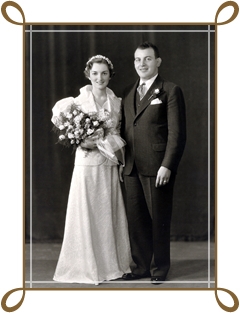 That Jesus chose Cana for His first public miracle and turned water into wine may not be as random as it first seems. By providing wine for the wedding, Jesus took on the bridegroom’s role which foreshadowed things to come.
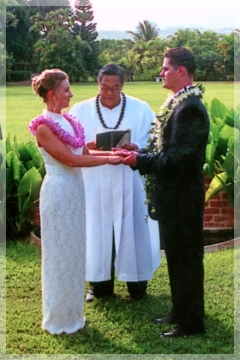 When the catering manager pulled me aside and said we had a problem, my mind rushed through various scenarios that could turn our daughter’s wedding into a fiasco. When he admitted not having the wine I’d ordered weeks earlier, I got nervous but, when he offered to substitute a better wine at a lower price, I heaved a sigh of relief and recalled another wedding when the guests unexpectedly got better wine! This happened 18 years ago but I still remember it whenever I read about Jesus’ miracle at Cana. The guests at our daughter’s wedding had no idea why they enjoyed such good wine and neither did the guests at that wedding 2,000 years ago.

