PREFECT TIMING

God makes everything happen at the right time. Yet none of us can ever fully understand all he has done, and he puts questions in our minds about the past and the future. [Ecclesiastes 3:11 (CEV)]

Big Cypress Fox SquirrelSaturday mornings we usually walk through a nearby park that is home to a unique subspecies of squirrel found here in southwest Florida: the Big Cypress fox squirrel (or BCFS for short). Larger than a common gray squirrel, the BCFS has a black head and back, buff sides and belly, white ears and nose, and a long bushy tail.

We’re always on the lookout for these black-masked critters, but they are cautious and secretive and it had been two years since spotting one. Thinking the endangered rodent no longer inhabits the park, I’d given up hope of seeing one again. Recently, while trying to focus my camera on some holly berries, the shaking branches above them caused me to look up. A large BCFS was staring down at me and even stayed long enough for a photo! Our brief encounter was exactly what I needed to lift my spirits after several discouraging weeks. As I thanked God for the “Aha!” moment, I pondered how God’s timing is both unpredictable and perfect.

I’m not sure David thought God’s timing perfect while spending fifteen years on the run hiding from Saul and his army and I suppose the Israelites questioned God’s timing as they waited 400 years in Egypt and 40 more in the desert before entering the land promised to them. Joseph may have questioned God’s timing during the years he spent as a slave in prison before becoming Pharaoh’s second in command. Sarah and Abraham waited twenty-five years between God’s promise of a son and Isaac’s birth and, after waiting decades, Zechariah and Elizabeth had given up any hope of a child when she became pregnant with John. I look at my prayer list and see that God often seems painfully slow. Nevertheless, the squirrel’s unexpected appearance reminded me that God is present whether or not we see Him. Rather than losing hope, we must trust in His perfect timing.

Rather than providing photo ops, the squirrels’ lives revolve around berries, seeds, nuts, one another, and avoiding predators. They’ve been in the park all the time but, because my timing isn’t perfect, I missed seeing them. God’s timing, however, always is perfect. Like the squirrels, His purpose is not to satisfy or entertain us. God wants to teach us to trust Him as we grow more like Christ. While we may not always understand or appreciate His timing, the appearance of that BCFS was a reminder that faith in God means faith in His presence, plan, and timetable.

If the Lord Jehovah makes us wait, let us do so with our whole hearts; for blessed are all they that wait for Him. He is worth waiting for. The waiting itself is beneficial to us: it tries faith, exercises patience, trains submission, and endears the blessing when it comes. The Lord’s people have always been a waiting people. [Charles Spurgeon]

The Lord says: “My thoughts and my ways are not like yours. Just as the heavens are higher than the earth, my thoughts and my ways are higher than yours. [Isaiah 55:8-9 (CEV)] 

Dear friends, don’t forget that for the Lord one day is the same as a thousand years, and a thousand years is the same as one day. [2 Peter 3:8 (CEV)]

Copyright ©2021 jsjdevotions. All rights reserved.

ANOTHER SONG OF MOSES

Take to heart all the words of warning I have given you today. Pass them on as a command to your children so they will obey every word of these instructions. These instructions are not empty words—they are your life! By obeying them you will enjoy a long life in the land you will occupy when you cross the Jordan River. [Deuteronomy 32:46-47 (NLT)]

queen anne's laceYesterday I wrote about the Song at the Sea or Song of Moses found in Exodus 15. There is another psalm known as the Song of Moses. Found in Deuteronomy 32, it was sung forty years after that first one, when the Israelites were again preparing to enter Canaan. With Moses’ death imminent, God had appointed Joshua as the nation’s new leader. Knowing that the people would turn their back on Him once in Canaan, the Lord met with Moses and dictated the words to this song. God’s words were ones of warning and Moses was to teach this song to the Israelites as a reminder of the consequences of disobedience.

Starting with praise for their “glorious God…a faithful God who does no wrong” [32:4], it moved into a brief history of the people and God’s faithfulness in bringing them out of bondage. Taking a prophetic turn, it then spoke of Israel’s future ingratitude, idolatry and apostasy, God’s resulting anger that “blazes forth like fire and burns to the depth of the grave,” [32:22] and the judgments of abandonment, disasters, famine, and terror that would be inflicted on Israel by their enemies because of their sin.

Even though the song ends on a note of hope, with God promising vengeance on Israel’s enemies and salvation for his people, it’s a grim prophecy and one we know comes true. We know that God’s clear warnings in this song were not heeded any more than His promise of victory in the first song was believed. We know of Israel’s idolatry and alliances with pagan nations, the divided kingdom, the northern kingdom’s defeat and removal to Assyria, and Judah’s fall and exile to Babylon. We know that, when the Jews finally return to Jerusalem, they are ruled by a foreign nation and that the temple will be destroyed and Judah cease to exist in 70 AD. We know that nearly two thousand years will pass before Israel again is a nation.

God is not like a sadistic teacher who springs a final exam on us without warning. Throughout Scripture, like a good parent, He’s warned his children about disobedience and its consequences. Will we heed His words? Will we learn from those who’ve walked before us?

Be careful then, dear brothers and sisters. Make sure that your own hearts are not evil and unbelieving, turning you away from the living God. You must warn each other every day, while it is still “today,” so that none of you will be deceived by sin and hardened against God. For if we are faithful to the end, trusting God just as firmly as when we first believed, we will share in all that belongs to Christ. Remember what it says: “Today when you hear his voice, don’t harden your hearts as Israel did when they rebelled.” [Hebrews 3:12-15 (NLT)]

Copyright ©2021 jsjdevotions. All rights reserved.

THE SONG OF MOSES

I will sing to the Lord, for he has triumphed gloriously; he has hurled both horse and rider into the sea. The Lord is my strength and my song; he has given me victory. This is my God, and I will praise him—my father’s God, and I will exalt him! The Lord is a warrior; Yahweh is his name! [Exodus 15:1-3 (NLT)]

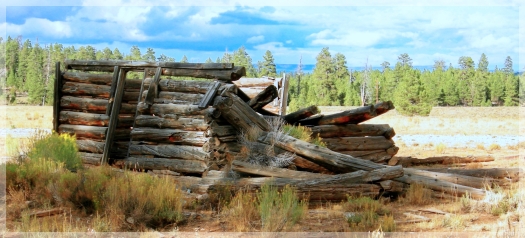
Capitol Reef - UtahFollowing the Israelites’ successful passage through the Red Sea and the destruction of Pharaoh’s army, we find Moses and the people singing a song of deliverance and praise in Exodus 15. This beautiful and powerful psalm vividly describes the warrior God Yahweh hurling Pharaoh’s chariots and army into the sea. This is Moses’ song but he doesn’t figure in the account at all. A paean to the supremacy and unrivaled power of Jehovah, all of the glory is given to God.
This psalm, however, doesn’t stop at Israel’s rescue from Egypt; looking ahead, it warns God’s enemies with its prediction of Israel’s successful entrance into the Promised Land. This is a victory song of both past and future divine deliverance with its promise that the Canaanites would “melt away” as terror and fear fell on them. Following this song, Miriam led the women as they danced and sang of God’s triumph. The confident words of their songs were quickly forgotten when, several months later, the fearful people, ignoring God’s promise of victory, rebelled and refused to enter the Promised Land. Walking through the sea on dry ground, witnessing the destruction of Pharaoh’s army, and having sung of God’s power and promised victory in Canaan were but a distant memory.

This psalm may be the oldest recorded song in history. With its expression of faith in God and recognition of Him as both protector and warrior, it could be considered the founding song of Israel. Jews know it as the Song at the Sea or Shirat Hayam. Recited every day at morning prayers, it has become a focal point of Jewish tradition and liturgy.

Many Christians know this psalm as the Song of Moses. It’s found in Roman Catholic, Eastern Orthodox, and other Christian liturgies at the Easter vigil when the history of salvation is recounted. Just as the exodus story defines Israel’s history, it also defines ours. Like the Israelites, we have been redeemed from slavery, not to Egypt, but to sin. Like the Israelites, we passed through the water, not of the Red Sea, but the water of baptism. Like the Israelites we have a redeemer who redeemed us in the past and will give us victory in the future. For both Jews and Christians, it is a song sung by people redeemed from slavery to the redeemer about their redemption. The difference is that the Jews are still awaiting the Messiah while we know that He has come!

The Song of Moses is the first song in the Bible and we find reference to it in the last song found in Revelation 15. Moses’ song was sung at the Red Sea and this one is sung in heaven at what appears to be a crystal sea. The first one, the song of Moses, celebrates God’s deliverance of His people from Egypt; the second one, the Song of the Lamb, celebrates God’s deliverance of His people from sin.

And they were singing the song of Moses, the servant of God, and the song of the Lamb: “Great and marvelous are your works, O Lord God, the Almighty. Just and true are your ways, O King of the nations. Who will not fear you, Lord, and glorify your name? For you alone are holy. All nations will come and worship before you, for your righteous deeds have been revealed.” [Revelation 15:3-4 (NLT)]

Copyright ©2021 jsjdevotions. All rights reserved.

RESTORATIONS

Bryce - UtahSince you have heard about Jesus and have learned the truth that comes from him, throw off your old sinful nature and your former way of life, which is corrupted by lust and deception. Instead, let the Spirit renew your thoughts and attitudes. Put on your new nature, created to be like God—truly righteous and holy. [Ephesians 4:21-24 (NLT)]

Having worked in a garage as a teen, my husband enjoys those shows in which cars or motorcycles are renovated, restored or customized. Either the mechanics seek a wreck in the hope of restoring it to turn a tidy profit or a car’s owner brings in a vehicle for a rebuild. Derelict vintage cars and cycles are restored to their original glory in some of the shows while, in other programs, vehicles are upgraded and modified in truly remarkable ways

Turning rust-buckets into pristine collector cars of beauty or ordinary cars into extraordinary muscle machines is a little like what God does with us. Rather than just a little body work like buffing out a scratch, pin-striping, or filling a ding with Bondo, God does complete restorations like the ones done on shows like Fast N’ Loud or Counting Cars (only without the tattoos). Whether we know it or not, we’re as damaged as the rare E-type 1964 Jaguar left to rust in a barn for over forty years. Purchased for fifty thousand pounds, once restored, it was sold for four times that price. God, however, doesn’t have to buy us because Jesus already paid the price for us. Moreover, God isn’t concerned with turning a profit. Out of love for us, He does a complete overhaul, not to make us appear new, but to actually make us new!

As the original manufacturer, you can be sure God uses only OEM parts rather than aftermarket or recycled ones. No soul is too damaged, no job too hard and God won’t stop at something like a simple honesty fix when He sees a tough patience issue. He’ll get out His heavenly tool kit to work on a selfishness adjustment, replace the foolishness with godly wisdom, file down that vanity, and then get to work on that persistent case of pigheadedness. Even a pesky obedience problem can’t deter Him from His holy work. He’s not going to stop until we’re completely rebuilt.

When we accept Christ, we’re reborn or regenerated and taken from spiritual death to life. A momentary act, regeneration is the exclusive work of God. It’s like towing a broken-down car out of the junk heap and into the shop. The restoration part is called sanctification. TV’s restoration specialists usually have a deadline in which to complete their work but God’s sanctification work is never done; it’s a process that lasts a lifetime.

There is, however, another major difference between the car restorer and God. The mechanic doesn’t need the cooperation of the car to do his work. Sanctification, however, is a joint effort between God and us. We must do our part to mature and become more like Christ. As God continues His work in us through the Holy Spirit, we are strengthened in our continual struggle against sin. Because this process of putting away sin and putting on godliness never ends, we won’t be leaving God’s garage any time soon. It is only when we return to our rightful owner at Christ’s resurrection that we will be completely restored.

The Christian life requires hard work. Our sanctification is a process wherein we are coworkers with God. We have the promise of God’s assistance in our labor, but His divine help does not annul our responsibility to work. [R.C. Sproul]

Work hard to show the results of your salvation, obeying God with deep reverence and fear. For God is working in you, giving you the desire and the power to do what pleases him. [Philippians 2:12-13 (NLT)]

Copyright ©2021 jsjdevotions. All rights reserved.

THE BACK BURNER

For everything there is a season, a time for every activity under heaven. … Yet God has made everything beautiful for its own time. He has planted eternity in the human heart, but even so, people cannot see the whole scope of God’s work from beginning to end. [Ecclesiastes 3:1,11 (NLT)]

red-bellied turtleWhen we spent winters in the mountains, our early morning walk took us by a gourmet restaurant. Occasionally, we’d get a whiff of a delectable mouth-watering aroma as we passed. What we smelled was a large pot of roasted beef and veal bones that had simmered on the back burner overnight. In this day and age of microwaves, Instant Pots, mixes and prepared foods, it’s difficult to understand a chef simmering stock for over 12 hours to concentrate it into a rich demi-glace. That, however, is how the restaurant’s chef gets the flavorful base she uses in her delicious sauces.

Sometimes prayer is like making stir-fry: put the ingredients in a hot wok, stir, and get quick results. Other times, prayer is more like making a demi-glace. We put it all together and then let it do a slow simmer on the back burner with just an occasional check to skim off the fat or impurities. Back-burner prayers are those far-reaching ones that take a long time coming, like the restoration of a ruptured relationship, the salvation of a child, a loved one’s sobriety, or a prodigal’s return.

When we put our prayers at a low simmer on the back burner, we trust God to do the work. As tempted as we are to fret, panic, meddle or intervene, God really doesn’t need us to keeping lifting the lid, stirring the pot, or adding ingredients. In fact, if we were making a demi-glace, our stirring would just slow things down by making the stock cloudy and greasy. The same thing usually happens when we try to do God’s job for Him!

I think of Sarah. Rather than leaving God’s promise of a child to simmer on the back burner until the time was right, she decided to stir the pot by giving Hagar to Abraham. Her interference didn’t turn out well for anyone! On the other hand, David, who’d been a teen when anointed king by Samuel, spent at least fifteen years waiting for the crown. Twice during that time he passed up the opportunity to speed things along by killing King Saul. Instead, he chose to trust in God’s timing saying, ”Surely the Lord will strike Saul down someday, or he will die of old age or in battle.” [2 Samuel 26:10]

God answers our prayers the moment we speak them; it’s just that we don’t immediately know His answer. It could be “Yes!” or, if what we asked isn’t in His will, “No!” After all, God might have something better in store for us! Sometimes, however, God’s answer is, “Not right now!” Those prayers go on the back burner to simmer until God’s time is right (or He tells us, “No!”)

Putting prayers on the back burner doesn’t mean we stop praying them any more than putting that stock pot on the back burner means the chef turned off the stove or forgot about it. It simply means that we have given our prayer over to the fullness of God’s time.

Persistent praying never faints or grows weary. It is never discouraged. It never yields to cowardice. It is motivated and sustained by a hope that knows no despair, and a faith that will not let go. Persistent praying has patience to wait and strength to continue. It never prepares itself to quit praying, and it refuses to get up from its knees until an answer is received. [E. M. Bounds]

Now all glory to God, who is able, through his mighty power at work within us, to accomplish infinitely more than we might ask or think. [Ephesians 3:20 (NLT)]

Copyright ©2021 jsjdevotions. All rights reserved.

LAMB OF GOD

He was oppressed and treated harshly, yet he never said a word. He was led like a lamb to the slaughter. And as a sheep is silent before the shearers, he did not open his mouth. [Isaiah 53:7 (NLT)]

The next day John saw Jesus coming toward him and said, “Look! The Lamb of God who takes away the sin of the world!” [John 1:29 (NLT)]

lamb of godAs I put away our various nativity sets until next December, I noticed they all include at least one lamb. Since shepherds came to see Jesus, it’s logical there would be a lamb or two in most depictions of Christmas. Nevertheless, as I packed up the figures, I thought about the shepherds and sheep visiting the child who was both the Good Shepherd and the Lamb of God. That Jesus took on both roles is a bit of a paradox. The shepherd may have watched over the sheep but, in the end, his lambs were destined to be slaughtered for food or ritual sacrifice.

Nowadays, the whole concept of animal sacrifice seems alien and primitive to us but lambs were sacrificed to God as far back as Abel. Israel’s history as a nation began that first Passover in Egypt when they smeared lamb’s blood on the doorframes of each house. The sacrifice of a lamb as atonement for sin appears frequently in the Hebrew Bible and, of the 151 Old Testament references to lambs in my NLT, 125 are about their sacrifice to God. By Jesus’ time, the priests in the temple sacrificed a lamb every morning and night, on every Sabbath, and at the feasts of the New Moon, Trumpets, Tabernacles, Pentecost, Passover, along with other occasions. The purpose of these animal sacrifices was sanctification (to purify the people from sin), righteousness (to obtain right standing with God), and forgiveness. Being a perfect lamb without blemish did not bode well for a lamb and being the sinless Lamb of God who would take away the sin of the world did not foreshadow a good ending for Jesus. Yet, “Lamb of God” is what John the Baptist called Him.

John’s words pointed to Jesus as being the perfect sacrifice for mankind’s sins but I don’t think he grasped the full implication of those words. Until the very end, even Jesus’ own disciples didn’t understand that being the Lamb of God meant that Jesus would willingly submit and go “like a lamb to the slaughter” to suffer and die on the cross. There was however, only one way the Lamb could take away the sin of the world. For the one perfect and final sacrifice to remove man’s guilt and open the way to God, the Lamb’s blood had to be shed and His life relinquished.

Earlier I mentioned that being both the Good Shepherd and Lamb of God seems a bit of a paradox—that the one who cares for the flock couldn’t also be the sacrificial lamb. Jesus, however, turns our expectations upside down. In His world, the week are strong, the first must be last, we reign by serving, the greatest is the least, and we find our lives by losing them. Jesus is both the Good Shepherd and the Lamb of God because, “The good shepherd sacrifices his life for the sheep. …I am the good shepherd; I know my own sheep, and they know me, just as my Father knows me and I know the Father. So I sacrifice my life for the sheep.” [John 10:11,14-15]

Next December, when we set out our nativity sets and place the shepherd and lamb around the crèche, let us remember that, as the Good Shepherd, Jesus tends, protects and guides us and, as the Lamb of God, He defeated Satan by dying on the cross and taking away the sins of the world. The Lamb, however, is more than a sacrificial victim. In Revelation, John describes the victorious and very much alive Lamb, enthroned with God, serving as judge of God’s opponents, and praised by all creation!

For you know that God paid a ransom to save you from the empty life you inherited from your ancestors. And it was not paid with mere gold or silver, which lose their value. It was the precious blood of Christ, the sinless, spotless Lamb of God. [1 Peter 1:18-19 (NLT)]

And they sang in a mighty chorus: “Worthy is the Lamb who was slaughtered—to receive power and riches and wisdom and strength and honor and glory and blessing.” And then I heard every creature in heaven and on earth and under the earth and in the sea. They sang: “Blessing and honor and glory and power belong to the one sitting on the throne and to the Lamb forever and ever.”  [Revelation 6:12-13 (NLT)]

Copyright ©2021 jsjdevotions. All rights reserved.