
Now an angel of the Lord said to Philip, “Rise and go toward the south to the road that goes down from Jerusalem to Gaza.” This is a desert place. And he rose and went. And there was an Ethiopian, a eunuch, a court official of Candace, queen of the Ethiopians, who was in charge of all her treasure. [Acts 8:26-27 (ESV)]
 Once day, the Holy Spirit told Philip to go south and then down the desert road between Jerusalem and Gaza. Although Scripture leads us to assume that Philip’s fortuitous encounter with the Ethiopian eunuch quickly followed, a look at the map tells us otherwise. At the time, Philip was in Samaria and, before he could walk the road from Jerusalem to Gaza, he had a 42-mile uphill trek south to Jerusalem before turning southwest onto the 50-mile stretch of road leading to Gaza, the southernmost of the five chief Philistine cities in southwest Palestine and the last settlement before the desert waste stretching away to Egypt. The trip to Jerusalem probably took at least two days and we don’t know how far down the Gaza Road he walked before the Apostle discovered his God-ordained task and met the treasurer of Ethiopia. In actuality, Philip was on this mission for several days before he knew why he’d been sent.
While most translations say the eunuch was from Ethiopia, he was not from the nation we know as Ethiopia. He was from a territory called Cush in the Old Testament and Nubia (meaning black) by the Romans. Present day Ethiopia (once called Abyssinia) is southeast of the ancient Nubia. This large kingdom was located in today’s southern Egypt and northern Sudan, an area considered by the Romans and Greeks to be the outer limits of the known world or “the end of the earth.” Referring to the dark skin of its inhabitants, the Greeks called any place south of Egypt Aithiopia, meaning the land of the “Burnt-Faced People.” When Wycliffe translated the Greek into English in 1382, he called this land Ethiopia and, until the late 1800s, Ethiopia was a general term referring to any of Black Africa.
The Ethiopian man was the Secretary of the Treasury/Chancellor Exchequer for Candace (Kandake in some translations). Rather than a given name, Candance was the title given to the queen mother. Her son, the king, was considered the child of the sun. As such, he was considered too holy to get involved in secular matters so the queen mother ruled the kingdom on his behalf. The Ethiopian is referred to as a eunuch because it was common in the ancient world to castrate trusted male servants in the royal household. It kept them out of the royal harem (or queen’s bed) and, since they were incapable of setting up a dynasty of their own, castration prevented them from plotting to overthrow the government.
Finally, this Philip is not the one from Bethsaida—the one who brought his friend Nathanael to Jesus and was one of the twelve apostles. This Philip is one of the seven men selected as deacons for the Jerusalem church. Following the martyrdom of Stephen and the persecution of Jesus’ followers, Scripture tells us that all the believers (“except the apostles”) fled Jerusalem and scattered. The deacon Philip went north to Samaria where he found his true calling—that of evangelist.
In Samaria, Philip “proclaimed Christ” and brought so many to believe in Jesus that “there was much joy in that city.” [Acts 8:8] Then, out of the blue, the Spirit told him to leave his thriving ministry in Samaria and start to Gaza. Did Philip question God’s reasoning? If he did, imagine his questions and the Spirit’s answers. Where exactly am I going? You don’t need to know. How will I know when I get there? I’ll tell you. What am I supposed to do? You’ll know when the time comes. How long will I be gone? As long as it takes. When do I leave? Now! We don’t know if Philip asked any of those questions but we do know that, when the Spirit said “Go!” he obeyed.
While it made no earthly sense for Philip to leave a successful ministry, it made sense to God because He’d arranged a divine appointment between Philip and the Ethiopian. God knew about the hunger for the Word of God that lay in the man’s heart and knew that Philip was the perfect choice to help fill it. People like Stephen, Peter and John brought the Gospel to Jerusalem and Judea. Philip took it to Samaria and, after he met with the Ethiopian, the Gospel would reach the last geographical sphere mentioned in the Great Commission—Ethiopia—the end of the earth!
Think of what we could do for the Lord if, like Philip, we went when the Spirit said, “Go!”
The Lord of all creation has ordained that he would do his work through us. Our seeking the Spirit’s guidance and obeying what he wants us to do and say is the way he works to bless the world. [Lloyd Ogilvie]
But you will receive power when the Holy Spirit has come upon you, and you will be my witnesses in Jerusalem and in all Judea and Samaria, and to the end of the earth. [Acts 1:8 (ESV)]
Copyright ©2022 jsjdevotions. All rights reserved
 The book of Daniel begins with the arrival of the first set of Judean captives in 605 BC and the first six chapters describe the events occurring in Babylon until around 536 and the beginning of the Persian empire. In contrast, chapters seven through twelve are filled with visions and dreams. As part of the Jewish and Christian canon, the traditional view is that this book is a factual recounting of Daniel’s life and a record of supernatural predictions written during the late 6th century BC. Skeptics, however, call its author a fraud and the book fiction because of the mention of Belshazzar as the last king of Babylon, Darius the Mede as the one who took over Babylon, and the incredible accuracy of Daniel’s fulfilled prophecies. They claim that the book had to have been written (or amended) 400 years later in the 2nd century BC by someone claiming to be Daniel.
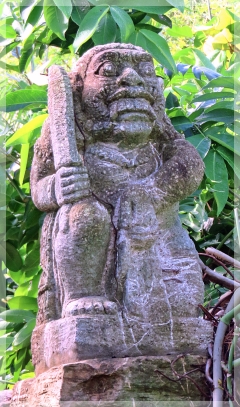 The Israelites were surrounded by various pagan peoples who worshipped foreign deities. Baal ruled over Canaan and Phoenicia, Chemosh over Moab, and Marduk/Bel and Nebo over Babylonia. The Philistines’ had Dagon and the Ammonites worshipped Molech. These gods usually had a domain over which they ruled. For example, Baal’s domain was rain, storms, and the harvest. Moab’s Chemosh presided over war and mountains. As patron deity of Babylon, Marduk/Bel was supposed to protect the city and rule over storms while Nebo’s purview was wisdom and science. The Philistines’ chief god Dagon presided over death, the afterlife, war, and agriculture while Ammon’s Molech reigned over the underworld, which may explain his association with child sacrifice in the Old Testament.
 In 538 BC, in fulfillment of Isaiah’s prophecy, Persia’s King Cyrus issued a proclamation allowing the first group of Judean exiles to return home with the purpose of rebuilding the Temple and inhabiting Jerusalem. In fulfillment of another prophecy, he then did what to any other conqueror would be unthinkable by returning the “plunder of tyrants”: 2,499 gold and silver sacred utensils taken by King Nebuchadnezzar when he ransacked the Temple. Cyrus permitted those who returned to take any wealth they’d accumulated during exile and encouraged those choosing to remain in Babylon to support their returning brethren with gifts, supplies, and food offerings. As a result, a total of 5,400 articles of gold and silver were taken back to Judah with the exiles.
 By the time of Isaiah, the Neo-Assyrian empire was the largest one the world had known. Famed for their incredible military strength, tactics, and ruthlessness, the Assyrians were a thorn in the side of both Israel and Judah and both kingdoms lived in fear of them. Assyria’s defeat of Samaria in 722 meant the end of the northern kingdom of Israel and Assyria remained a threat to Judah in the years that followed.
 When talking with my husband about the story of Jonah, he said that the fish story was a “little too hard to swallow”— too incredible to believe. Miracles! The Bible is full of them and, since they are supernatural events, they’re all hard to accept as true. Improbability is the nature of miracles. Along with the fish saving Jonah, the story is filled with other miracles: the immediate calming of the storm once Jonah was thrown in the sea, the deliverance of the prophet from the fish safely onto the beach, Nineveh’s immediate repentance, the appointment of the plant, worm and scorching east wind as teaching tools, and even God’s revelation of Himself directly to Jonah! Yet, if we believe the Bible is God-breathed and without error, we don’t have the privilege of picking and choosing which miracles we will believe and which ones we won’t. We have only one choice to make—all or none!
 Devotions of the Heart