UNEXPECTED DESTINATIONS

But I am trusting you, O Lord, saying, “You are my God!” My future is in your hands. [Psalm 31:14-15a (NLT)]

Sometimes God doesn’t give you what you want not because you don’t deserve it but because you deserve better. [Anonymous Internet wisdom]
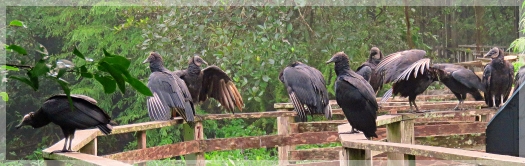
black vultures - corkscrew swampBecause the nearby bird sanctuary/swamp gets its water from rainfall, the size of its lakes fluctuates substantially with the seasons. During the dry seasons of winter and spring, the swamp’s lakes gradually recede until the summer rains begin. When this annual dry-down occurs in springtime, the wading birds congregate in the shallow lakes. With the fish having no place to hide the shallow water, it’s as easy as catching fish in a rain barrel for the birds!

Anticipating a feeding frenzy as the swamp’s wading birds gathered in the receding lakes, we went out to the bird sanctuary. The dry-down happened faster than we expected. Instead of a shallow lake covered with water lettuce, we found only mud. Rather than a plethora of egrets, herons, wood storks, and roseate spoonbills, we encountered dozens of black vultures enjoying the remains of the stinking fish in the muck! What we got certainly wasn’t what we wanted or expected.

Since vultures are known for projectile vomiting if startled or threatened, I admit to some trepidation as I walked between the perched birds on the boardwalk. Nevertheless, seeing all those vultures was an amazing experience. In spite of our initial disappointment, we were thankful for the opportunity to witness nature’s clean-up crew at work.

In spite of our best-laid plans, we don’t always get what we pray for or expect. Emily Perl Kingsley, a mother of a child with a disability, wrote a beautiful essay titled “Welcome to Holland” in which she likens having a child with a disability to someone planning a fabulous trip to Italy. After months of eager expectation, however, she discovers the flight plan unexpectedly changed and she’s landed in Holland. Even though there’s nothing wrong with Holland, it’s not Italy! Admitting the pain in losing her longed-for destination, Kingsley adds, “But, if you spend your life mourning the fact that you didn’t get to Italy, you may never be free to enjoy the very special, the very lovely things….about Holland.”

Unlike Kingsley, I’ve never arrived in Holland after expecting to touch down in Italy. Nevertheless, like her, God has changed my flight plans mid-air and I’ve landed in unplanned-for destinations. Sometimes, God’s plan is even better than we imagined and He takes us to Paris or Madrid when all we prayed for was St. Louis or Minneapolis! On the other hand, sometimes God’s plan takes us places we never wanted to visit—Al-Anon meetings, hospital rooms, nursing homes, grave sites, divorce court, or even Holland. Either way, God’s answer to our prayers is the right one—even though it’s different and unexpected. Trusting in God’s infinite love and wisdom, let us accept God’s plan with joy. Whether it’s vultures instead of roseate spoonbills, Keukenhof Gardens instead of the Colosseum, Edam cheese instead of pizza, or a special needs child instead of an honor student, may we seek to appreciate everything in our present situation and be thankful for our many blessings.

It’s just a different place. It’s slower-paced than Italy, less flashy than Italy. But after you’ve been there for a while and you catch your breath, you look around…. and you begin to notice that Holland has windmills….and Holland has tulips. Holland even has Rembrandts. [Emily Perl Kingsley]
I pray that God, the source of hope, will fill you completely with joy and peace because you trust in him. Then you will overflow with confident hope through the power of the Holy Spirit. [Romans 15:13 (NLT)]

Copyright ©2023 jsjdevotions. All rights reserved.

YEAST AND THE KINGDOM (Yeast – Part 1)

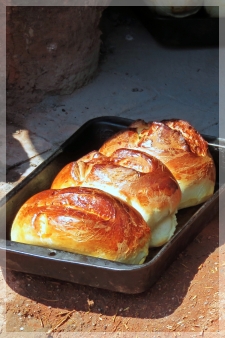
Jesus also used this illustration: “The Kingdom of Heaven is like the yeast a woman used in making bread. Even though she put only a little yeast in three measures of flour, it permeated every part of the dough.” [Matthew 13:33 (NLT)]

Immediately after the Parable of the Mustard Seed, Jesus compared the Kingdom of Heaven to the yeast a woman added to “three measures of flour” when making bread. While “measures” seems vague, the original word used wasn’t. It was seah (about a peck and a half of flour) and three seahs were over 167 cups (nearly 50 pounds) of flour. This was an enormous amount of flour for just “a little yeast” and, as He did in the previous parable, Jesus used hyperbole to emphasize the power of something very small. The question in this parable is whether the yeast is a metaphor for a bad or a good thing.


This is the first mention of leavening in the New Testament but, by the 1st century, yeast had come to represent sin. Sticking to yeast’s traditional symbolism, some commentators liken the story’s yeast to false doctrine that can sneak into the Kingdom and see this parable as a warning about the dangerous power of false teaching in the Church. Enekrupsen is the Greek word used to describe the woman’s action in adding the yeast and this is its only use in Scripture. From egkruptó, which literally meant to bury within, enekrupsen has been translated with different meanings. Some translate it as hid or concealed (which implies she did something sneaky and devious in adding yeast) while others merely translate it as put, blended, or mixed in. Since enekrupsen is used both ways in other Greek literature, we can’t be sure which correctly communicates Jesus’ meaning. Considering that bread was being made, it seems that burying yeast in the dough would be expected rather than sneaky.

I find it hard to interpret this parable in a way that associates anything sinful or evil with the Kingdom of Heaven. Although His listeners may have expected yeast’s power to represent something bad, Jesus’ parables rarely fit his listeners’ expectations. When they anticipated one thing, He usually gave them another! That a Levite and priest had failed their fellow Jew while a hated Samaritan was the hero of one parable was as surprising as a beggar ending up in Abraham’s bosom at a heavenly banquet when the rich man ended up tormented in Hades. Jesus threw society’s expectations out the window when telling of a father who’d been offended and hurt by his wastrel son. Upon the boy’s return, rather than rejecting him as the law required, the father ran to welcome him home, restored him to the family, and even had a festive celebration in the boy’s honor. Equally unexpected was the story of vineyard workers getting the same pay regardless of how long they worked and the prayers of a tax collector being heard when the Pharisee’s were not.

I agree with the commentators who take this parable at face value. Believing Jesus simply is speaking of the pervasiveness and power of yeast, they see this analogy as a continuation of the lesson in the mustard seed parable. Rather than a corrupting influence, the leaven, like the mustard seed, illustrates that great things can come from small beginnings. Yeast is even smaller than the tiny mustard seed and yet both are powerful enough to expand and effect change. While both parables illustrate the extensive growth of the Kingdom, the second parable emphasizes the Kingdom’s transformative power. Just as yeast changes dough, the Kingdom will transform the world! In both parables, the message is clear—the Messianic Kingdom comes from small beginnings, operates quietly, but has the power to accomplish great things! That God’s Kingdom would start from small and humble beginnings to grow and change a much larger entity (the world) would have been reassuring news to Jesus’ small band of disciples.

Like the Kingdom of Heaven, yeast is a living organism. Like the Holy Spirit, yeast is invisible once in the dough and yet its effect, like that of the Spirit, becomes obvious as it permeates the mixture. Just as leavened dough grows from inside out, the Kingdom moves from our hearts into our actions and from our actions into the world. Yeast transforms what it mixes with and, as we are transformed, we transform those with whom we interact. Just as yeast needs certain conditions to grow, so does the Kingdom and, just as there are 1,500 different kinds of yeast, God’s Kingdom is made up of a wide assortment of people. Yeast is found everywhere—from the bottom of the ocean to the Arctic and from flower nectar to the lining of our stomachs—and God’s Kingdom should be as pervasive! Indeed, the Kingdom of Heaven is alive, it’s everywhere, it takes attention and patience to grow, and it transforms all it touches.

What Jesus’ listeners probably didn’t understand was that the Kingdom already had arrived. But, like a tiny mustard seed, a bit of yeast, or a baby in a manger, it entered the world quietly without fanfare. Like a small yellow flower, a lump of dough, or an itinerant rabbi from Nazareth, the Kingdom didn’t look that impressive at first. Appearances, however, can be misleading. Like a mustard seed that grows 1,440 times its original size or the more than fifty loaves of bread leavened by that bit of yeast, the Kingdom will increase and prevail. In the end, when Christ returns as a conquering king, no one will be able to miss its arrival. Until then, like a small amount of yeast, God’s Kingdom will transform the hearts and lives of all it touches! May we always remember that little things become great when God is at work!

When the dough is leavened, then to the oven with it; trials and afflictions commonly attend this change; but thus saints are fitted to be bread for our Master’s table. [Matthew Henry]

I will build my church, and all the powers of hell will not conquer it. [Matthew 16:18 (NLT)]

MUSTARD

black mustard - Brassica nigra
The Kingdom of Heaven is like a mustard seed planted in a field. It is the smallest of all seeds, but it becomes the largest of garden plants; it grows into a tree, and birds come and make nests in its branches. [Matthew 13:31-32 (NLT)]

Following the Parable of the Four Soils and the Parable of the Weeds, Jesus told a third parable of growth by comparing the Kingdom of Heaven to a mustard seed. I know little about farming and soil but I’m familiar with black mustard, (Brassica nigra), the kind of mustard grown in Palestine in Jesus’ day. Its clusters of bright yellow flowers are a common sight in the meadows, thickets, vacant lots, and fallow fields in my home state of Illinois.

Both times Jesus mentioned the mustard seed, He referred to its small size. When comparing the size of our faith to that of a mustard seed, He told us even if our faith were as small as a mustard seed that, “Nothing would be impossible.” When comparing the Kingdom of Heaven to a mustard seed, He called it the “smallest of all seeds.” Having admired the mustard seed charm my sister had on her bracelet, I questioned His statement. While it was small, I knew other seeds are even smaller. Surely the One who was there at creation’s beginning knew that the almost dust-like seeds of orchids and begonias are smaller. Additionally, while the mustard plant can grow as tall as 10 to 12 feet, it’s not a tree!

Jesus, however, wasn’t teaching botany, He was telling a parable and hyperbole (an exaggerated statement not taken literally that’s used to emphasize a point) was a common technique in rabbinic teaching. Jesus used it when speaking of recognizing a speck in our neighbor’s eye but not seeing the log in ours, Pharisees straining the gnats out of their water while drinking a camel, and trying to put a camel through a needle. When we look at the original Greek, however, we find less exaggeration. Jesus refers to the mustard seed as the smallest seed which a man sows in his field. While not the smallest seed in existence, mustard was the smallest seed that would have been sown in a Palestinian field. Jesus says it grows larger than a lachanōn (a garden herb or vegetable) and, indeed, black mustard does seem like a tree when compared to most herbs! That a seed measuring less than a tenth of an inch can grow 1,440 times its original size into a 12-foot plant in just one season is impressive and that was His point!

While most of America’s farmers consider this pervasive plant a noxious weed, it’s been cultivated as a crop for thousands of years in the Holy Land. Its seeds were powdered or made into a paste for medicinal and culinary purposes. Unlike most of us, Jesus’ listeners were familiar with mustard’s characteristics. As I describe those qualities, consider how they might apply to God’s Kingdom here on earth.

With its narrow clusters of small yellow flowers, mustard isn’t a showy flower—one might even call it a humble little thing. Nevertheless, a golden field of mustard is a thing of beauty. For a variety of scientific reasons, black mustard has a competitive advantage over most other plants. It’s one of the first plants to spring up after a fire and can out-compete anything else growing in the same field. It produces thousands of seeds every season and mustard’s long-lasting seeds can survive underground for as long as 50 years. An annual, while it dies at the end of a season, it regenerates at the next rainy season.

Although mustard was welcome as a cash crop in Palestine, because of its characteristics, black mustard is considered invasive in 44 of the 48 contiguous states. Nevertheless, in spite of the Midwest’s farmers’ persistent efforts to eradicate it, black mustard returns every year. Nature Collective describes it as “an ornery guest that refuses to take the hint.” In spite of persecution from Jewish leaders and Rome, the early church was just as defiant, determined, and persistent as black mustard!

Jesus’ listeners would have been familiar with the plant’s beauty and ability to self-seed, lay down a deep root system, and grow almost anywhere, along with mustard’s knack of surviving and thriving in less-than-ideal conditions. Jesus’ point was that from small and humble beginnings, the Kingdom of Heaven—Jesus’ domain as Messiah—would gradually grow into a large and beautiful entity. Once seeded, nothing seems to stop mustard and the same goes for the Kingdom!

May our faith be as persistent, hardy, determined, steadfast, and as difficult to destroy as the mustard seed!

“You don’t have enough faith,” Jesus told them. “I tell you the truth, if you had faith even as small as a mustard seed, you could say to this mountain, ‘Move from here to there,’ and it would move. Nothing would be impossible.” [Matthew 17:20 (NLT)]

Copyright ©2023 jsjdevotions. All rights reserved.

THE WEEDS

Just as the weeds are sorted out and burned in the fire, so it will be at the end of the world. The Son of Man will send his angels, and they will remove from his Kingdom everything that causes sin and all who do evil. And the angels will throw them into the fiery furnace, where there will be weeping and gnashing of teeth. Then the righteous will shine like the sun in their Father’s Kingdom. Anyone with ears to hear should listen and understand! [Matthew 13:40-43 (NLT)]

thistleFollowing the Parable of the Sower and the Soils, Jesus told another parable about the coming of the Kingdom. In the Parable of the Weeds, after the farmer plants wheat, his enemy sows weeds in the same field. Jesus’ hearers would have known the weed likely was darnel. Called wheat’s “evil twin,” it looks and behaves much like wheat. When wheat is consumed it gives life but, when darnel is consumed, this inedible look-alike causes nausea and even death. Sowing weeds in a field was an act of sabotage and Roman law specifically prohibited doing so with darnel. When nations went to war, agricultural vandalism was a common practice. Olive trees were cut down, grape vines destroyed, and fields were salted so nothing would grow.
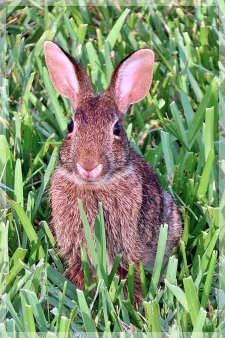
When the farmer’s workers ask to pull out the weeds, they are told to wait. Because both the weeds and wheat are deeply rooted, pulling up the weeds would uproot the wheat, as well. Not wanting to destroy the good by removing the bad, the farmer decides to wait until harvest time when the weeds can be better identified and separated without damaging the wheat. At that time, the wheat will be put in the barn but the weeds will be burned.

While the farmer in the Parable of the Soils represents those who share the gospel, the farmer in this parable is Jesus. The field is the world and the enemy is Satan, whose strategy is to invade, infiltrate, penetrate, and take control of the field. Even though he knows he’s lost the war, Satan wants to inflict as much damage as possible until his final defeat. Christ’s followers are the wheat and, even though they look much like wheat, the weeds are unbelievers. The harvest comes near the end of the age when the angels will come with their sickles and winnowing forks to bring in the harvest. While the righteous will come into the Kingdom, the sons of the evil one will be punished and thrown into the fires of hell.

Focusing on the final judgment, the parable tells us that what seems uncertain now will be unmistakable at the end of the age and God’s enemies will be removed! This parable repeats the good news of the Parable of the Soils: in spite of opposition and interference from its enemy, God’s Kingdom will prevail! If there is any doubt in your mind, just read the book of Revelation. Sickness, famine, war, hatred, pestilence, hypocrisy, natural disaster, genocide, abuse, violence, idolatry, deception, calamity, and even noxious weeds do not have the last word—Jesus Christ does!

I’ve read the last page of the Bible, it’s all going to turn out all right. [Billy Graham]

I heard a loud shout from the throne, saying, “Look, God’s home is now among his people! He will live with them, and they will be his people. God himself will be with them. He will wipe every tear from their eyes, and there will be no more death or sorrow or crying or pain. All these things are gone forever.”… And he also said, “It is finished! I am the Alpha and the Omega—the Beginning and the End. To all who are thirsty I will give freely from the springs of the water of life. All who are victorious will inherit all these blessings, and I will be their God, and they will be my children.” [Revelation 21:3-4,6-7 (NLT)]

Copyright ©2023 jsjdevotions. All rights reserved.

MISSING EASTER

Then when Judas, his betrayer, saw that Jesus was condemned, he changed his mind and brought back the thirty pieces of silver to the chief priests and the elders, saying, “I have sinned by betraying innocent blood.” They said, “What is that to us? See to it yourself.” And throwing down the pieces of silver into the temple, he departed, and he went and hanged himself. [Matthew 27:3-5 (ESV)]

Do not abandon yourselves to despair. We are the Easter people and hallelujah is our song. [Pope John Paul II]

rabbitJudas wasn’t the only one who betrayed Jesus that Thursday night. With his three denials, Peter also betrayed our Lord. Both men were filled with remorse but neither man could undo what had been done. One never lost faith and hung in there; the other lost faith and hung himself. One stayed around for the resurrection to see the living Christ and to experience Jesus’ forgiveness; the other missed his opportunity for redemption when he gave up all hope. One became the humble willing servant of the Lord and the rock of the church; the other one’s name lives on in ignominy and is synonymous with betrayal and treason.
Judas betrayed the Lord for thirty pieces of silver (the same amount paid to compensate the master of a slave who was gored to death by an ox). Did Judas think that by returning the money he could undo what was done? By no longer profiting from his treachery, did Judas think he’d be free from guilt? I often wonder what would have happened had Judas waited a few more days. Jesus forgave Peter. If Judas had waited and truly repented, would Jesus have forgiven him as He did Peter? While Judas’ sin was great, it was not unforgivable! But Judas missed Easter by killing himself in despair and disgrace.

As for the leading priests and elders—they didn’t care about Jesus’ innocence. Giving no thought to the wrong they committed, they debated what to do with this blood money. By Jesus’ day, Deuteronomy’s law that a temple offering earned from prostitution was detestable to the Lord was applied to any money gained illicitly. Although these “holy” men had no problem orchestrating an innocent man’s murder with money from the Temple treasury, as sticklers for the law, they wouldn’t return the now tainted money to the treasury. Did they think using the silver to purchase a defiled piece of property in the Hinnom Valley would diminish their guilt? Referred to as a garbage dump in Jeremiah 19, this land had been desecrated by idol worship. The field became known as Aceldama (meaning “field of blood”) and was used to bury strangers who died while visiting Jerusalem.

Like Judas, the leading priests and elders missed Easter. Although they were the ones most qualified to recognize Jesus’ fulfillment of the Messianic prophecies, they refused to see what was right before them—both before and after Golgotha. When the tomb was found empty, rather than consider the meaning of such a miracle, they denied its truth and bribed the guards to say the disciples stole Jesus’ body.

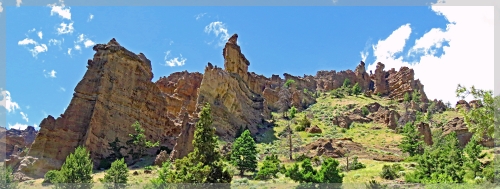
Did you miss Easter yesterday? I don’t mean the Easter Bunny or the brightly decorated baskets, colored eggs, chocolate rabbits, elaborate brunch, jelly beans, lilies, ham dinner, or Peeps. Did you miss the significance of Easter—the message of love, forgiveness, hope, and salvation? Judas and Jerusalem’s religious leaders certainly did. They missed the first Easter and all of the possibilities it brought.

If you missed the resurrection message of Easter, there’s still hope. While it’s too late for Judas and Jerusalem’s leaders, it’s not too late for you. There’s no need to wallow in guilt or remorse. Today can be your Easter! Today, the Holy Spirit can bring about your very own resurrection. The redemption of Easter can be experienced any day of the year!

Our old history ends with the cross; our new history begins with the resurrection. [Watchman Nee]

Jesus said to her, “I am the resurrection and the life. Whoever believes in me, though he die, yet shall he live, and everyone who lives and believes in me shall never die. [John 11:25-26 (ESV)]

Copyright ©2023 jsjdevotions. All rights reserved.

JEHOVAH-NISSI (Rephidim – Part 1)

But you have raised a banner for those who fear you—a rallying point in the face of attack. Now rescue your beloved people. Answer and save us by your power. [Psalm 60:4-5 (NLT)]

May he grant your heart’s desires and make all your plans succeed. May we shout for joy when we hear of your victory and raise a victory banner in the name of our God. [Psalm 20:4-5 (NLT)]

The Amalekites were a warlike nomadic tribe who frequently raided settlements to carry off plundered goods. About six weeks into the Israelites’ exodus from Egypt, these marauders made an unprovoked attack on the weary refugees while they camped at Rephidim. Moses commissioned Joshua to lead an army against their enemies the following morning. Joshua’s army, however, wasn’t made up of soldiers! Facing the veteran warriors of Amalek were men who less than two months earlier had been enslaved brick makers and field laborers! Worse, this unseasoned army was led by a general as inexperienced as were they. Nevertheless, Israel’s men set out to battle while Moses, his brother Aaron, and a man named Hur (who Jewish tradition believes was married to Miriam and brother-in-law to Moses) climbed to the top of a nearby hill to watch. As Israel fought their powerful foes, Moses extended his arms and held out his staff for all to see.

When going into battle, opposing armies would carry banners or standards that served as rallying points before battle, encouraged the warriors as they fought, and announced when the battle was won. Representing their tribe or leader, the banners usually depicted animals, birds, or pagan gods. Made of fabric, wood, or metal, they were fastened onto a long pole or staff so they could be seen from a distance. Marauders like the Amalekites probably had such a banner. The Israelites, however, weren’t an experienced army and had no flag or standard under which to rally.

Moses’ staff was the closest thing Israel had to a banner. Although it looked like an ordinary shepherd’s tool, to the Israelites it symbolized God’s intervention. Through God’s power, it had transformed into a snake, turned water into blood, produced hail, and infested Egypt with frogs, gnats, flies, and locusts. When Moses raised it over the Red Sea, the waters parted and, when Moses struck a rock with it, water gushed out. That staff, associated with God’s miracles, became Israel’s banner. As long it remained in sight, Israel’s novice army believed God was with them and victory was possible. That symbol of God’s faithfulness, presence, and power remained in the men’s sight on the hilltop until Israel was victorious over the army of Amalek.

After their victory, Moses built a memorial altar and called it Yahweh-Nissi (Jehovah-Nissi), which meant “The Lord is Our Banner.” By not calling it “The Staff is Our Banner” or “Our Banner Brought Us Victory,” it was clear that Moses knew it wasn’t the staff, Joshua’s battle strategy, or Israel’s military might that defeated the Amalekites. The name Yahweh-Nissi acknowledged that it was God’s presence and power that gave them their triumph. God, and God alone, was the author of their victory.

Indeed, the Lord is our banner. Unlike the Israelites, we’re not being attacked by an army of marauding warriors but, like them, the enemy attacks us every day with desire, discontent, despair, anger, and guilt. We face our battles under God’s banner—one of encouragement, courage, hope, love, faith, power, and might. If we keep our eyes focused on the Lord, victory is ours. Because of Yahweh-Nissi, we don’t have to fight our battles on our own strength – we have His!

In that day the heir to David’s throne will be a banner of salvation to all the world. The nations will rally to him, and the land where he lives will be a glorious place. [Isaiah 11:10 (NLT)]

Copyright ©2023 jsjdevotions. All rights reserved.