My dear family, when you find yourselves tumbling into various trials and tribulations, learn to look at it with complete joy, because you know that, when your faith is put to the test, what comes out is patience. What’s more, you must let patience have its complete effect, so that you may be complete and whole, not falling short in anything. [James 1:2-4 (NTE)]
 By the end of the phone call, tears were rolling down my cheeks; yet another loved one is seriously ill. Given my age and that of my friends, I shouldn’t be surprised; we are nearing our expiration dates so receiving news of someone’s illness or death is becoming my new normal.
As I added this new name to my lengthy prayer list, I considered the new normal for those on it: chemo, radiation, weekly blood work, reconstructive surgery, chronic pain, widowhood, Parkinson’s, financial troubles, Alzheimer’s, the challenges of staying sober, and the demands of 24/7 care giving. Their normal certainly isn’t one they would have chosen deliberately.
Then I thought about the new normal to which all of us are adjusting because of COVID-19: social distancing, elbow bumps and toe taps, streaming church services, travel restrictions, hand sanitizers and bleach wipes, phone calls and emails instead of meeting over coffee, broken supply chains, cancellations, working from home, lay-offs, school closings and on-line classes, along with hoarding, shortages, and price gouging! None of us are immune to COVID-19 and many of the people I know and love will be touched by it. Things will get worse before they get better and there will be more tears before this ends.
COVID-19 has disrupted all of our lives and, while we have little control over the virus, we do have control over navigating our new normal. The eight bottles of tequila in one woman’s cart told me how she’s planning on doing it! Three women in Australia got into a brawl over a cart of toilet paper while, in Italy, a man’s inadvertent brush against another erupted into a fist fight that ended only when the police and an ambulance arrived. Don’t let that be us! While we can’t discount the threat, our new normal must not be one of anger, violence, alcohol, fear, complaint, drugs, denial, depression, paranoia, panic, or anxiety.
Let us remember that we have a God who loves us. Life isn’t perfect, but it hasn’t been perfect since Eden! Nevertheless, life is doable, not on our strength, but through God’s power. Coronavirus (like pain, disappointment and loss) is just another one of those unwelcome gifts that come with life in a fallen world. Like Job, we will never know the “Why” of it but, as Christ followers, we know in whose hands we rest.
Jesus told us trouble was inevitable; no one gets a free pass. Nevertheless, a pastor friend often says, “It’s all good.” In itself, COVID-19 isn’t good any more than are cancer or the death of a child. Nevertheless, it’s “all good” because God, in His infinite wisdom and love, will bring good out of it. We may not see it, we don’t always like it, and rarely do we understand it, but it is all for good. While we may have tears, R.C. Sproul reminds us, “For believers, there are no tragedies!”
Because of Christ, we have victory over sin and Satan; Romans 8:28 assures us that we also have victory over our circumstances. Let us stand on God’s promises and boldly navigate the next several weeks while praising, thanking, praying, walking in faith, and bringing light into the darkness (while frequently washing our hands)! Let the joy of the Lord be our strength in this new normal.
We know, in fact, that God works all things together for good to those who love him, who are called according to his purpose. [Romans 8:28 (NTE)]
For this reason we don’t lose heart. Even if our outer humanity is decaying, our inner humanity is being renewed day by day. This slight momentary trouble of ours is working to produce a weight of glory, passing and surpassing everything, lasting for ever; for we don’t look at the things that can be seen, but at the things that can’t be seen. After all, the things you can see are here today and gone tomorrow; but the things you can’t see are everlasting. [2 Corinthians 4:16-18 (NTE)]
Copyright ©2020 jsjdevotions. All rights reserved.

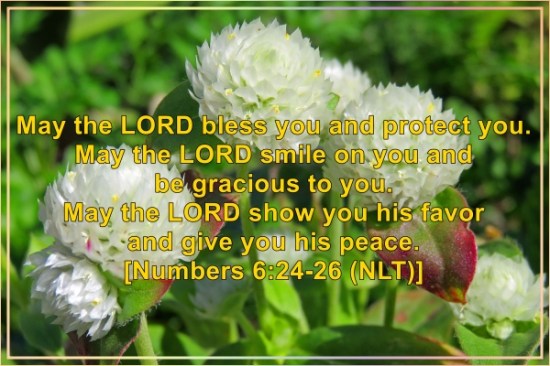 By accident, this morning’s devotion was published yesterday afternoon. Rather than post another this morning, I thought I’d share words written by others. The first is a request by Bishop Jeff Clements of the Northern Illinois Synod of the ELCA calling his flock to pray together at noon each day until May 13 about this global pandemic. We certainly don’t need to be Lutherans to join in his prayer. Whether you do it right now, at noon, or tonight, please stop and take a moment to pray (and continue to pray daily), not only for your own church family and denomination, but also for our sisters and brothers throughout this troubled world.
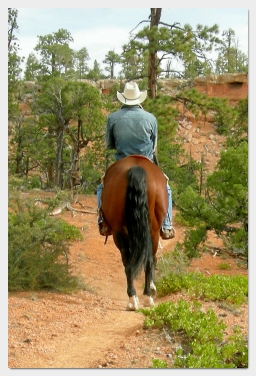 In A Gentle Thunder, author Max Lucado compares the hero of the Bible, the shepherd, with the hero of the American west, the cowboy. They both herd livestock, their home is the range, and they sleep under the stars. The difference, says Lucado, is that the shepherd knows and loves his sheep because he leads them to be shorn. The cowboy, however, doesn’t get attached to his cattle because he’s leading them to slaughter! While several cowboys drive a herd of cattle and know one another’s names, just one shepherd leads a flock of sheep and it is their names that he knows!
 While summer is hurricane season here in Florida, early spring is “sinkhole season.” For most property owners, a sinkhole is little more than a headache but, for some, it means the loss of their homes and possibly their lives. Seven weeks ago, two families north of here lost their homes and belongings as the earth collapsed beneath them, leaving a chasm at least 40-feet wide and 60-feet long. Back in 2013, a man went to sleep and literally disappeared as he, his bed and then his entire bedroom vanished into the earth; his body was never recovered.
 I couldn’t tell if my vague sense of unrest was because something was missing or there was something I needed to do. I couldn’t articulate it but I knew it was there and, as the days went by, the sense of disquiet continued. I simply asked God to reveal whatever was troubling me; perplexed, I didn’t know what else to pray. Fortunately, the Holy Spirit did!
 I can’t understand why a young mother lies on her deathbed when an elderly Alzheimer’s victim whose mind is long gone remains in this world. I will never comprehend why one person suffers a debilitating disease for years and another person breezes through life with nary an ache or pain. I wonder how a young family can be wiped out in a car accident when the drunk driver who caused the crash survives without a scratch. I will never grasp why some people are in such despair that they take their lives while others bravely fight to take each breath. I don’t know why one child is born with multiple birth defects when his sibling is the picture of perfect health or why one child is abused and another one is cherished. Life often seems incredibly unfair!
