
For the sin of this one man, Adam, caused death to rule over many. But even greater is God’s wonderful grace and his gift of righteousness, for all who receive it will live in triumph over sin and death through this one man, Jesus Christ. … So just as sin ruled over all people and brought them to death, now God’s wonderful grace rules instead, giving us right standing with God and resulting in eternal life through Jesus Christ our Lord. [Romans 5:17,21 (NLT)]
Tears are a tribute to our deceased friends. When the body is sown, it must be watered. But we must not sorrow as those that have no hope; for we have a good hope through grace both concerning them and concerning ourselves. [Matthew Henry]
 Monday’s devotion (“No Words of Comfort”) originally was published back in 2018. It came to mind because my son-in-law recently died. His death was sudden and unexpected and, when my daughter told me, I was sure I’d misunderstood her words. Not Mike! Still a young man in the prime of his life; it couldn’t be, but it was! Just as we all know we’re going to die someday, we know the people we love will die. It’s just that we expect those deaths to be on our timeline. But they’re not—they’re on God’s. The only guarantee that comes with life on earth is that it will end!
Because we are believers, as was Mike, there was no need for sentimental drivel or faulty theology at Mike’s Celebration of Life. Instead, there were the reassuring words and promises of the New Testament. As Christians, even though we mourned our loss, we could celebrate the life that had been lived and the eternal life that lay ahead. Rather than saying “Good-by” to Mike, it was more like wishing him, “Bon voyage!”
That Mike’s life goes on, however, doesn’t mean we don’t want him back here with us! Being Christ followers doesn’t mean we don’t hurt or mourn nor does it mean we aren’t angry at God for His timing. Like C.S. Lewis, we even questioned if God is a “Cosmic Sadist” who pulls the rug from under us just when life gets really good! We may be people of faith but we’re human and grief, like learning to walk, is a process that involves falls, bumps, and bruises along the way. As David did in the Psalms, we pray honest prayers and freely bring God our pain, queries, anger, and grief. He’s a big God and can handle our questions and lament.
Our anchor in grief is our faith; it keeps us from drifting away in the storm. Hope is where we find our strength. It’s what allows us to face the future—to look to the uncertainty and challenges of the tomorrows ahead and not be afraid. As for love: love comes from God and we are thankful for the years God gave Mike to us—for the love Mike gave us and for the opportunity to know and love him. Death can’t take away our love; Mike remains in our memories and our love endures.
We all grieve for Mike and for the future we expected. Even though an enormous gap now exists in the lives of my daughter and grand, there is a sense of peace surrounding us all. Yes, we mourn our loss and my daughter continues to feel as if a part of her body has been amputated. Nevertheless, we have peace in our heartache because Scripture tells us where Mike is and where we’ll eventually be. Not only do we know how the story ends, but we also know that Jesus, the man who wept at Lazarus’ grave, has not abandoned us. He walks with us in our grief. Our words of comfort are found in Jesus and His promises. They are what enable my daughter to say, “God so graciously gave me Mike. Through His wisdom he took him back home and He will graciously give me healing in my pain. God is faithful.”
 We were discussing when and how we came to believe in the existence of God. Those who’d been brought up in families of faith said there never was a time they weren’t aware of God’s presence. Others spoke of believing in God because He is visible in His creation—in flowers, majestic mountains, birds, sunrises and sunsets, the vastness of space, or the miracle of birth. One came to believe in God while attending Vacation Bible School with a neighbor and another met God through a campus ministry. After apologizing in advance for “grossing” us out, one woman shared her experience while in medical school.
 Back in 1957 (long before PETA existed), Curt Richter, a professor at Johns Hopkins, conducted a series of cruel and inhumane experiments to demonstrate the power of hope and resilience in overcoming difficult situations. In this case, the difficult situation was rats being put in a bucket of water with no means of escape and timing how long it took them to drown. After two preliminary experiments, Richter hypothesized that introducing hope to the rats would increase their survival times.
 Occasionally, I’ll spot a partially open moonflower (Ipomoea alba) during an early morning walk at the park. While the Moonflower’s cousin the Morning Glory opens wide to welcome the sunlight, the Moonflower prefers darkness. It’s only when the sun sets that it opens to a large trumpet-shaped bloom. Rather than competing during the day with brightly colored flowers for pollinators like bees and butterflies, Moonflowers enjoy pollinators like bats and moths at night. As the morning sun rises, the Moonflower again rejects the light and rolls up into itself.
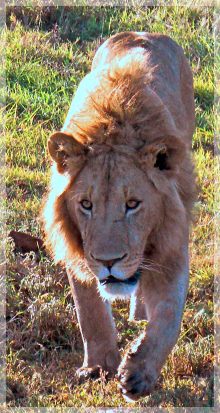 Some of the lesser-known heroes of the Bible are found in the lists of David’s mightiest men. Among his warriors, David’s mighty Three had the most authority, influence, and leadership. Their leader was Jashobeam, a man who once used his spear to kill 800 warriors in a single battle. Next in rank was Eleazar who remained with David in battle when the rest of the troops fled. He killed Philistines until he no longer could lift his sword. The third of the Three was Shammah. After being attacked in a field by the Philistines, the troops fled. Shammah alone remained to defend it and bring victory to Israel. These three were so devoted to David that, when he expressed a desire for fresh water from Bethlehem, they risked their lives to break through enemy lines to get some for him. David’s Three were among the best of the best when it came to valor, courage, and allegiance.
 Devotions of the Heart