THE HOLY TEMPLE (Cornerstone – part 3)

Therefore, this is what the Sovereign Lord says: “Look! I am placing a foundation stone in Jerusalem, a firm and tested stone. It is a precious cornerstone that is safe to build on. Whoever believes need never be shaken. [Isaiah 28:16 (NLT)]

Together, we are his house, built on the foundation of the apostles and the prophets. And the cornerstone is Christ Jesus himself. We are carefully joined together in him, becoming a holy temple for the Lord. Through him you Gentiles are also being made part of this dwelling where God lives by his Spirit. [Ephesians 2:20-22 (NLT)]
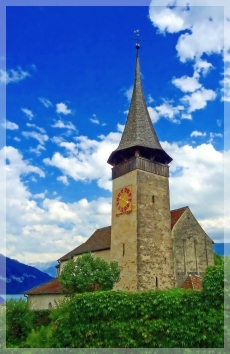
church of st. columba The cornerstone metaphor continues into the New Testament with both Paul and Peter referring to Jesus as the cornerstone of our faith. Nowadays, cornerstones are structurally unneeded and a growing number of commercial buildings no longer have them. Symbolic rather than functional, many serve as time capsules holding material relevant to the building and the year it was built. Because commercial buildings so frequently change hands, even the custom of inscribing the building’s name on a cornerstone is disappearing. The latest practice is a freestanding cornerstone/time capsule resting on a pedestal placed in a prominent part of the building. That way, a new stone can replace the old one every time the building’s owner changes.

While cornerstones may be superfluous to a modern structure, there is nothing superfluous about Jesus as our cornerstone. Moreover, He can’t be exchanged for a newer version or sold to the highest bidder. While buildings may change owners, our owner remains God and we are both His children and His servants. Our cornerstone does not serve as a time capsule of 1st century Judah; Jesus is our living stone and as relevant today as He was 2,000 years ago.

Both Paul and Peter carry the building metaphor further by calling us the stones in God’s temple. Unlike the temple in Jerusalem, this isn’t an earthly building with walls and a roof. Nevertheless, it has a cornerstone in Jesus. Since a cornerstone connects two different walls, the metaphor illustrates how Jesus connected both Gentiles and Jews into one cohesive church.

Peter likens us to living stones and Paul says we are built on the foundation of the apostles and prophets. Let that image sink in for a moment and consider those foundation stones: people like John the Baptist, Paul, Peter, and John. Others in that foundation are less famous but no less essential: people like Lydia, the cloth merchant who housed Paul; Tabitha (Dorcas), the generous seamstress who came back from the dead; the eloquent Apollos, one of the first Christian apologists; the devoted Mary Magdalene; Aquila and Priscilla, the tentmakers who opened their home to Paul; the generous Phoebe, a deacon at the church in Cenchreae; Silas, who sang with Paul when they were prisoners; and Paul’s fellow missionary, Barnabas. Through the centuries, others were added to the structure: defender of the Trinity, Athanasius; Martin Luther, the father of the Reformation; theologian and philosopher, Augustine of Hippo; the martyred Archbishop of Canterbury, Thomas Beckett; Bible translators John Wycliffe and Martin Tyndale; Pilgrim’s Progress author John Bunyan; reformer John Calvin; founder of Methodism, John Wesley; and the “Saint of Auschwitz,” Polish priest Maximilian Kolbe. Set beside these well-known Christians are people whose names we wouldn’t recognize; nevertheless, they too are the stones of the church. Think about it—people just like us are being set into this same edifice with the likes of apologist C.S. Lewis, humanitarian Mother Teresa, Olympian Eric Liddell, evangelist Billy Graham, and the “Prince of Preachers” Charles Spurgeon! We are living stones being mortared into place, shoulder to shoulder, with the apostles and prophets who went before us! We are the temple of God and its cornerstone is Jesus Christ!
You are coming to Christ, who is the living cornerstone of God’s temple. He was rejected by people, but he was chosen by God for great honor. And you are living stones that God is building into his spiritual temple. What’s more, you are his holy priests. Through the mediation of Jesus Christ, you offer spiritual sacrifices that please God. As the Scriptures say, “I am placing a cornerstone in Jerusalem, chosen for great honor, and anyone who trusts in him will never be disgraced.” [1 Peter 2:4-6 (NLT)]

Copyright ©2021 jsjdevotions. All rights reserved.

CORNERSTONE, TENT PEG, AND BOW (Cornerstone – part 2)

From Judah will come the cornerstone, the tent peg, the bow for battle, and all the rulers. [Zechariah 10:4 (NLT)]

elephant toe - utahIn the Old Testament, “cornerstone” as a metaphor for the Messiah is found in Psalms, Isaiah, and Zechariah. In Zechariah 10, the prophet describes Israel’s need for purification because of their idolatry, fortune-tellers, and false prophets. Holding the nation’s leaders responsible for these transgressions, Zechariah says the people are like lost sheep without a shepherd. Proclaiming the arrival of the ”Lord of Heaven’s Armies” who will look after the flock, the prophet says he’ll come from Judah and describes him as a cornerstone, tent peg, and battle bow.
Nowadays, cornerstones are more ornamental or commemorative than functional. In the first century, however, the cornerstone was the first squared stone in the foundation of any structure. Determining the position of the rest of the foundation, every other stone in the wall was aligned to it and a properly set (or true) cornerstone was essential to the structural integrity of any building. The Messiah as cornerstone would be the first and most important stone in God’s Kingdom and would provide a reliable and firm foundation for His people.

While cornerstone is a familiar Messianic metaphor, tent peg and bow are not. At first, the image of the Messiah as a tent peg seems strange but, if you’ve ever pitched a tent, you know its purpose. Pounded into the ground, tent pegs are fastened to the ropes holding up the tent and must be set securely or the tent will sag, rip, or even collapse. Even today’s freestanding dome tents need tent pegs or stakes to keep them from blowing away in the wind. The tent peg is as important to a tent’s stability as a cornerstone was to a building’s. Just as the peg fastened the tent to the ground and kept it from collapsing, so the Messiah’s rule would secure Israel to Himself and keep His people upright.

The third metaphor is that of a battle bow: an offensive weapon symbolic of military power. As God’s warrior, the Messiah would fight to save His people. Whether it would be a physical or a spiritual battle is less clear. The bow, however, is associated with more than warfare; it is connected with God’s power in judgment and speaks of a Messiah who would deliver judgment.

We then come to the fourth term in this short verse: rulers. The original Hebrew had no punctuation and it’s unclear if this is a metaphor. Some commentators believe it refers to the Messiah and means that He will be the rulers of rulers. Many others disagree because the word translated as ruler was nagas which wasn’t used for a rightful king. It meant tyrants, taskmasters, or oppressors. Rather than a metaphor for the Messiah, they interpret this to mean that the Messiah would defeat every oppressor of His people. In either case, the people of Judah interpreted Zechariah’s words to mean the Messiah would wage physical war on the nations that oppressed them. The Messiah, however, wasn’t about an earthly kingdom and earthly oppressors. As Judah’s cornerstone, tent peg, and battle bow, the Messiah would wage war on the nation’s true enemy and oppressor—the tyrant Satan and sin. The Messiah would strengthen His people and, in His might, they would find salvation!

I will strengthen Judah and save Israel; I will restore them because of my compassion. It will be as though I had never rejected them, for I am the Lord their God, who will hear their cries. … By my power I will make my people strong, and by my authority they will go wherever they wish. I, the Lord, have spoken! [Zechariah 10:6,12 (NLT)]

Copyright ©2021 jsjdevotions. All rights reserved.

THE STONE THE BUILDERS REJECTED (Cornerstone – part 1)

The stone that the builders rejected has now become the cornerstone. This is the Lord’s doing, and it is wonderful to see. [Psalm 118:22-23 (NLT)]

Meiringen-Turm der Burg RestiAfter telling the Parable of the Two Sons, Jesus told one about the Evil Farmers. As parables go, it’s pretty easy to follow. The landowner (God) builds a vineyard (Israel), sets up a protective wall (the Law), and leases it to tenant farmers (religious leaders). When he sends his emissaries (faithful priests and prophets) to collect his rent, the farmers ignored, mistreated and even killed them. The landowner, thinking the farmers would respect his son (Jesus), sends him to the vineyard. Wanting the estate for themselves, the farmers murder him. When Jesus asked his listeners (who were the chief priest and elders) what the landowner would do to the famers when he returns to his land, they responded that he’d kill the tenants and lease the vineyard to new farmers who would honor him with his share of the crop.

It was then that Jesus asked his audience if they were familiar with today’s verse from Psalm 118: “The stone that the builders rejected has now become the cornerstone.” When we encounter the word cornerstone in the Bible, there is some disagreement as to whether it is referring to a cornerstone—the first stone in a building and part of the foundation—or a capstone—the last stone that completes a building. The Hebrew literally means head of a corner so the exact meaning is unclear. Since Jesus is the Alpha and Omega—the first and last—perhaps both meanings apply. He is both the foundation upon which the church is built and the capstone which crowns the whole.

Regardless, in this context, the transition from a metaphor about a vineyard and evil farmers to one of architecture seems odd. Then again, we’re not first century Jews who would have been familiar both with Psalm 118 and the ancient rabbinic legend about the stone the builders rejected. When the first temple was being built, the stones were carefully cut at a quarry several miles away from Jerusalem. Although each stone was shaped to fit perfectly into place at the temple, the story is that the first stone to arrive didn’t seem to fit anywhere. Oddly shaped, the builders tossed it aside where people stumbled over it and weeds grew around it. When construction was nearly complete, it was time to place the final stone, the great lintel, in place over the doorway to the inner sanctuary of the tabernacle. Supported by scaffolding until then, once the capstone was placed, it would stand by itself. The builders, however, could not find the necessary stone. When they sent to the quarry for it, they were told they’d already received it. It was only then that they remembered the stone the builders had rejected. Retrieved from the weeds, it slid perfectly into place. As the capstone of the Temple, it held all the other stones in their proper position.

Just in case the religious leaders missed His point, Jesus told them that, like the vineyard, the Kingdom of God would be given to a new nation who would produce proper fruit. Changing metaphors back to the stone, He warned, “Anyone who stumbles over that stone will be broken to pieces, and it will crush anyone it falls on.” [Matthew 21:44] Until I learned the legend of the rejected stone, this verse troubled me—how could someone trip over a stone that also could fall on him? That rejected stone, however, could do both!

In this exchange, Jesus was telling the religious leaders that He was both the landowner’s son and the stone rejected by the builders—the very ones who should have recognized Him. His final words were a clear warning that the Kingdom of God could not be built without Him. Those who didn’t build on His truth would stumble over it and break while those who tried to pull it down would be crushed by it and destroyed!

For Jesus is the one referred to in the Scriptures, where it says, “The stone that you builders rejected has now become the cornerstone.” There is salvation in no one else! God has given no other name under heaven by which we must be saved.” [Acts 4:11-12 (NLT)]

Copyright ©2021 jsjdevotions. All rights reserved.

WHAT WILL YOU DO FOR THE NEXT SIX WEEKS? (Ash Wednesday)

That is why the Lord says, “Turn to me now, while there is time. Give me your hearts. Come with fasting, weeping, and mourning. Don’t tear your clothing in your grief, but tear your hearts instead.” Return to the Lord your God, for he is merciful and compassionate, slow to get angry and filled with unfailing love. [Joel 2:12-13 (NLT)]

monarch butterflyAlthough its customs and rituals have changed over time, Lent has been observed in some way by believers for centuries. In the early years of the church, the days leading up to Easter were a time of fasting and prayer in preparation for Easter baptisms and as penance for those who’d been excluded from communion. Irenaus of Lyons (c.130-200) wrote of such a season that lasted only a few days (or forty hours) and commemorated what was believed to be the duration of Christ’s time in the tomb. By the mid-third century, Bishop Dionysius spoke of a six-day fast practiced by the devout in Alexandria and, according to the Byzantine historian Socrates, the Roman Christians kept a pre-Easter fast of three weeks.
It wasn’t until the Council at Nicaea in 325 that the observance of Lent formally began. Starting six Sundays (42 days) before Easter, it ended on Holy Thursday eve. Even though people fasted on Good Friday and Holy Saturday, those days were not considered part of Lent. Whether this Lenten observance was initially intended just for those preparing for baptism or for everyone is unclear but the whole church adopted the practice in some way or another.

Even in the early church, Sunday (as a sort of mini-Easter celebrating the victory of the resurrection) was considered a feast day. In the 6th century, finding it inappropriate to fast on a feast day, Pope Gregory the Great declared that there should be no fasting on the six Sundays of Lent. This, however, cut the Lenten observance back to 34 days and the people wanted to reenact the forty days Jesus spent in the wilderness. Eventually, to make up for the missing Sundays, four more days were added to the beginning of Lent (now starting on Ash Wednesday) and the two fasting days of Good Friday and Holy Saturday were added to the end of the season, making Lent forty days long. Although fasting from food was the emphasis in the beginning, new practices evolved over time and the concept of personal sacrifice eventually became Lent’s focus. In preparation for Easter and crossing denominational lines, Lent has now become a season of self-examination, penitence, self-denial, and spiritual growth.

Lent, like Christmas and Easter, is without scriptural basis. Man-made, not God-ordained, it is a matter of choice as to if and how we keep this season. If we choose to observe Lent, we shouldn’t think of Lent’s self-denial or fasting as a second chance to keep our failed New Year’s diet resolutions. Moreover, no Lenten practice should be thought of as a way to earn salvation or score brownie points with God. We are saved by God’s grace through faith, not works! Pastor Eric Ferris reminds us that, “You could observe 1,000 Lents and it won’t ever accomplish in your life what the cross of Jesus has.”

The purpose of Lent is self-reflection, self-denial, repentance, and seeking to live more for Christ and less for self. Rather than asking what we’re going to give up for Lent, the better questions would be ones like, “What can I do to draw nearer to God?” and “How can I grow more like Christ?” Asking the questions, of course, is not enough; the next step is doing those things! In preparation for Easter, what will you do for the next six weeks?

Search me, O God, and know my heart; test me and know my anxious thoughts. Point out anything in me that offends you, and lead me along the path of everlasting life. [Psalm 139:23-24 (NLT)]

Teach me to do your will, for you are my God. May your gracious Spirit lead me forward on a firm footing. [Psalm 143:10 (NLT)]

Copyright ©2021 jsjdevotions. All rights reserved.

THE SENDING

“There’s a great harvest out there,” he said to them, “but there aren’t many workers. So plead with the harvest-master to send out workers for the harvest.” [Luke 10:2 (NTE)]

concord grapesWhat is the most important moment in your Sunday service? If your church follows a liturgy, perhaps it is the confession, absolution, or thanksgiving. Singing praise music, hearing an inspiring sermon or sharing in the Lord’s Supper may be the highlight of your worship. Reciting the Creed, saying the Lord’s Prayer, greeting one another, communal prayer—all are important parts of the day’s worship service but are they the most important part of it? I wonder if the holiest moment of our Sunday morning occurs when the service is over and we leave the sanctuary (or turn off the computer) and go into the world. When the service has concluded, instead of our obligation to God being over for the week, could it just be starting? Could the next six days and twenty-three hours be more critical than that hour or so we spent at church?

Our God is a God of sending—Jesus was sent to us and now He sends us into the world. When we stop for brunch at First Watch, make a purchase at Home Depot, or chat with people at the dog park, we are His workers sent into the fields to harvest. When we’re cut off in traffic, vie for a parking spot at the mall, our neighbor needs a favor, or customer service fails to serve, we remain His workers and Jesus is to be heard in our voices and seen in our actions.

When Jesus chose those seventy-two disciples to spread the word, He spoke of the lack of available workers. Here in the U.S., the Pew Research Center found that the number of adults identifying themselves as Christian was 65% of the population. Even though that percentage dropped from 78% in 2007, we’re still left with about 168 million potential workers. With an estimated 2.5 billion Christians worldwide, perhaps the problem isn’t a shortage of workers but rather a shortage of commitment to do God’s work. Fields ripe for harvest are everywhere we go—the office, grocery store, golf course, beach, hiking trail, yoga class, and post office. Are we willing to go where He sends us and do what He calls us to do? Granted, in this day and age of social distancing, working the harvest might look a little different than it did a year ago but, if we ask God for opportunities to be His witness, He will provide them.

If we had the cure for cancer, would we remain silent, only tell a select few, or shout it from the rooftop? As Christians, we have knowledge of something even more precious than cancer’s cure—we have the cure for death and it’s found in Jesus! Are we going to remain silent or will we spread the good news? This Sunday, when we’re released from church (or our on-line worship service), it’s not like being released from school for spring break or summer vacation. We may be dismissed from church but we are not dismissed from serving God. As a chosen people and a royal priesthood, the most important part of our week is just beginning.

But you are a “chosen race; a royal priesthood”; a holy nation; a people for God’s possession. Your purpose is to announce the virtuous deeds of the one who called you out of darkness into his amazing light. [1 Peter 2:9 (NTE)]

Jesus said to them again. “As the father has sent me, so I’m sending you.” [John 20:21 (NTE)]

Copyright ©2021 jsjdevotions. All rights reserved.

THE TWELFTH DAY OF CHRISTMAS

So the Word became human and made his home among us. He was full of unfailing love and faithfulness. And we have seen his glory, the glory of the Father’s one and only Son. [John 1:14 (NLT)]

nativity

Today is the Feast of Epiphany, the twelfth day of Christmas. For me, this is the day the holiday CDs return to the back of the cabinet and the last of our holiday decorations disappear. The tree is stripped, disassembled, and crammed in its box and the ornaments, stockings, nativity scenes, and Christmas books returned to their plastic tubs. Once everything is packed up, we’ll haul the boxes back to the storage unit where they will remain until next November. Except for some left-over Christmas candy and a few spritz cookies, the only remnants of Christmas will be a few needles from the tree and bits of sparkle from the holiday flower arrangements that will elude my vacuum for weeks.

Although the outer trapping of Christmas will vanish, we must never let the message of Christmas depart from our lives. Christmas didn’t come in a box from Amazon; it came with a baby in a manger. Yet, Christmas really isn’t about a baby; it’s about a God whose greatness was reduced to a microscopic fertilized egg and born of a virgin. Christmas isn’t about a wreath hanging on the door or Christmas cards and carols; it’s about the love and sacrifice that led to Jesus hanging on a cross. It’s more than the Grinch, Santa, Rudolph, or Scrooge because it says that God’s love for us was so great that he laid aside His divine privileges to live and die as a man. Christmas isn’t about brightly colored lights or holiday candles; it’s about the light of the world. Christmas lasts more than twelve days because that baby’s name was Immanuel (meaning God with us). Jesus was with us then, as a man, and He continues to be with us today, as the Holy Spirit.

A few years ago, after everything Christmassy had been crated and stowed, I discovered one small figure of Mary, Joseph, and Jesus that I’d forgotten to put away. Rather than pack it up, I moved it to my desk where it remains regardless of the season. The outer trappings of Christmas won’t return for another eleven months but that carving of the holy family reminds me that Christmas doesn’t end on January 6. The message of Christmas must remain in our hearts all year long.

May you have the gladness of Christmas which is hope; The spirit of Christmas which is peace; The heart of Christmas which is love. (Ada V. Hendricks)

Though he was God, he did not think of equality with God as something to cling to. Instead, he gave up his divine privileges; he took the humble position of a slave and was born as a human being. When he appeared in human form, he humbled himself in obedience to God and died a criminal’s death on a cross. Therefore, God elevated him to the place of highest honor and gave him the name above all other names, that at the name of Jesus every knee should bow, in heaven and on earth and under the earth, and every tongue declare that Jesus Christ is Lord, to the glory of God the Father. [Philippians 2:6-11 (NLT)]

Copyright ©2021 jsjdevotions. All rights reserved.