DEFYING NATURE

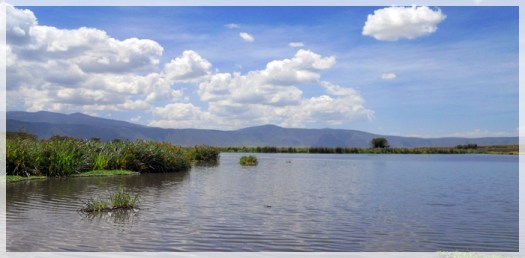
ngorongoro crater

At the blast of your breath, the waters piled up! The surging waters stood straight like a wall; in the heart of the sea the deep waters became hard. … The finest of Pharaoh’s officers are drowned in the Red Sea. The deep waters gushed over them; they sank to the bottom like a stone. [Exodus 15:8,4-5 (NLT)]

Skeptics love questioning the miracle of the Red Sea. Either they provide a natural explanation or deny it ever happened. Unfortunately, sometimes we even find believers doing the same thing. A miracle is usually defined as something that violates the laws of nature, but God wrote those laws! “Miracles are not contrary to nature,” said Augustine, “but only contrary to what we know about nature.” As Christians, we base our faith on a miracle—the resurrection of Jesus—so a belief in God’s powerful ability to defy nature’s laws is essential to our faith.

How can the waters part for the Israelites and then come surging down on the pursuing Egyptians? For decades, scientists have tried to find a natural explanation using various computer models. In spite of Moses giving a good description of where their crossing occurred, land and water are not static and the topography of the area has shifted over 3,500 years. Not knowing exactly where it happened, many suggest that, instead of it being the Red Sea, the crossing actually took place further north in a shallow lake called the Reed Sea. They explain that a wind temporarily drained this shallow marshy area just enough to allow the Israelites to safely cross. The Hebrew word used to describe the seabed was yahbashah which means dry land, not the muck or mud of a damp marsh. Moreover, while the Egyptians with their heavy chariots might have gotten bogged down in the mire, that can’t explain how an entire army was drowned in a few feet of water.

Other skeptics have argued that a volcano or earthquake north of Egypt produced a tidal wave or tsunami that parted the Red Sea. A tidal wave happens suddenly which hardly supports Moses’ description of the gradual retreat of the waters during the night or the fortuitous return of the waters in time to drown the Egyptians.

Scientists also have estimated that a steady 63 mph wind from the east could have swept the water back to the western shore to create a land bridge. Winds of just 45 mph make driving hazardous and can knock down a person weighing 100 pounds. A wind of 63 mph would make the crossing nearly impossible. Moreover, Moses described two walls of water, one on each side. I’m not a scientist but two opposing walls of water would seem to imply winds blowing in opposite directions and I can’t see how anyone could get anywhere in that kind of crosswind! When considering the width of the path required for about two million Israelites (along with sheep, goats, and cattle) to cross a seabed in just part of one night, it needed to be at least one mile wide. It’s hard to believe that any natural wind could do that.

Even if some of these explanations are partially or totally correct, there is no explanation for what would seem to be the most amazing coincidence in all of history: that the Israelites arrived at some body of water at the exact moment a tsunami or gale force winds occurred that caused the waters to recede, that the land remained dry just long enough for them to cross, and that the waters gushed back at precisely the moment the Egyptians were in the seabed! That so-called coincidence would require the miraculous power of Almighty God!

Scientists admit they can’t explain everything but even a valid scientific or medical explanation doesn’t negate a belief in the hand of God. While her doctors might say that Pearl’s recovery from metastasized cancer is a result of oncology advances, they originally thought she’d not live a year. While John’s doctors could say his ability to walk after having his pelvis crushed is the result of their skills as orthopedic surgeons, they initially thought he wouldn’t live, let alone walk! I know how thoroughly Pearl’s body was attacked by cancer and I’ve seen John’s x-rays; I have no doubt that without our prayers and God’s intervention, modern medicine would have failed them both. In spite of a medical explanation for their recoveries, they are nothing short of miraculous.

Skeptics and atheists have trouble believing in miracles because a belief in miracles necessitates believing in the hand of someone or something that can cause them: God. I’ve seen His wonderful work firsthand; our God is a God of miracles and that’s explanation enough for me!
I will meditate on your majestic, glorious splendor and your wonderful miracles. [Psalm 145:5 (NLT)]

He does great things too marvelous to understand. He performs countless miracles. [Job 9:10 (NLT)]

Copyright ©2018 jsjdevotions. All rights reserved.

REMEMBER

We were crushed and overwhelmed beyond our ability to endure, and we thought we would never live through it. In fact, we expected to die. But as a result, we stopped relying on ourselves and learned to rely only on God, who raises the dead. And he did rescue us from mortal danger, and he will rescue us again. We have placed our confidence in him, and he will continue to rescue us. [2 Corinthians 1:8-10 (NLT)]

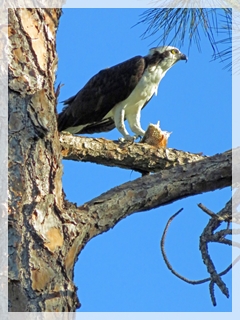
osprey600 war chariots and at least 1,200 soldiers were fast approaching and the Israelites were trapped between the mountains and the Red Sea. Panicking, they immediately blamed Moses for their predicament. No longer regarding Moses as the man who freed them from years of suffering slavery, he was now the fool who’d led them to certain death in the wilderness. In despair, the Israelites second-guessed their decision to leave Egypt. Facing such a formidable army and sure they were to die, the miseries of slavery now appealed to them. Ungrateful, unarmed, on foot, and with no place to turn, they lost heart. Failing to recall God’s powerful hand in releasing them from Pharaoh’s tyranny just a few weeks earlier, they immediately conceded defeat.
Have you ever felt like the Israelites: between a rock and a hard place, with no place to turn? When that happens, we usually do what they did: panic, find someone to blame, lose heart and want to quit because the circumstances seem greater than our God. Assuring the people that God would fight for them, Moses said, “Watch the Lord rescue you today.” I’m not sure he had any idea how the Lord planned on doing that but Moses trusted the God he knew for a solution he didn’t know.

Following God’s instructions, Moses raised his hand over the waters, the Red Sea parted as blowing winds turned the sea into dry land, and the Israelites walked across the seabed. Although we know that all the Israelites safely made it across, they didn’t know that’s what would happen! Can you imagine the faith it took when the first of them stepped onto the dry seabed with a wall of water positioned on each side? Were they fearful the waves would come rushing at them without warning? Did they literally run for their lives as they crossed? We know the rest of the story: Pharaoh and his army gave chase, their chariots got stuck, Moses raised his hand once again, the waters surged over the Egyptians and none of them survived.

Seeing God’s tremendous power, the Israelites were filled with awe and again put their faith in Moses and the Lord. What a great ending to their story, but we know it doesn’t end there. That won’t be the last time they complain, the last time they think slavery in Egypt a better option than freedom in the Promised Land, the last time they rebel against Moses’ leadership, or the last time they stop having faith in the Lord. Sadly, it won’t be the last time they forget God’s faithfulness, power and might!

Sometimes God brings us to what seems to be an impossible situation: to that spot between a rock and a hard place or an army and the deep blue sea. Those barriers are put before us so that we have nowhere to turn but to God. While He may not have parted the Red Sea for us, there have been many times that He’s led us safely through a whole sea of troubles. Unlike the Israelites, may we never forget His power and faithfulness in those trying times. Let us always be willing to trust our unknown future to our known God.

And I said, “This is my fate; the Most High has turned his hand against me.” But then I recall all you have done, O Lord; I remember your wonderful deeds of long ago. They are constantly in my thoughts. I cannot stop thinking about your mighty works. [Psalm 77:10-12 (NLT)]

Copyright ©2019 jsjdevotions. All rights reserved.

THE CRÈCHE AND THE CROSS

For this is how God loved the world: He gave his one and only Son, so that everyone who believes in him will not perish but have eternal life. God sent his Son into the world not to judge the world, but to save the world through him. [John 3 16-17 (NLT)]

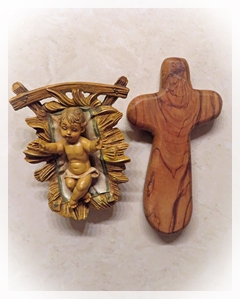
creche and crossPew Research reports that while 90% of Americans celebrate Christmas, more than half of them celebrate it only as a cultural holiday! While they’ll decorate their house with lights and wreaths, trim a tree, send cards, and exchange gifts, Christmas is just an excuse for good food, parties, family gatherings, and presents. While they’re not indifferent to Santa, gifts, merriment, or decorations, like the people of 1st century Palestine, they are indifferent to the Christ child. The shepherds saw the star and sought the babe in the manger and a caravan from the East brought Him gifts, but we don’t read of any townspeople visiting Joseph and Mary. What of the priests and scribes who told Herod where the Messiah would be born? They knew the prophecies but didn’t join the Magi in their quest to find the One who would fulfill those prophecies. Lowly shepherds and men from a faraway land recognized Jesus as the Messiah but most of God’s chosen people ignored the greatest event in all of history.
Some people react to Christmas with antipathy; like Herod, they hate its message. Rather than join the magi and seek the newborn King of the Jews, the enraged Herod slaughtered all of the male babies around Bethlehem in an attempt to kill the king! The “bah humbuggers” are like the atheist who erected a 10-foot 300-pound pentagram just 20-feet from a nativity scene in a Boca Raton park in 2016. Non-believers don’t want a King who might knock them off their pedestals any more than Herod wanted one who could knock him off his throne. They’re uncomfortable with the concepts of sin, salvation, love, sacrifice, obedience and forgiveness that surround Christmas. Then again, maybe they dislike this day simply because Christmas reminds them of the emptiness of their lives.

Some people respond to Christmas as did the angels, shepherds, magi, Simeon, and Anna: with worship. Tonight and tomorrow, people around the world will raise their voices in praise and thanksgiving, light candles, sing carols, kneel in prayer, lift their hands in worship, and share bread and wine at communion. Some will come and adore Him tonight but won’t return to church until next Christmas. But others will ponder the events of this night, as did Mary. They will allow the Christ child to enter into their hearts and lives and affect their every thought, word, and action for the rest of their lives. After extinguishing the Christmas Eve candles, they will continue to let their lights shine all year long. They are the ones who know that God came as a baby and lay in a manger so that He could suffer, die on the cross as a common criminal, and pay the penalty for mankind’s sins. They know that the crèche is meaningless without the cross!

Let us behold, the Lamb of God who takes away the sin of the world!

But Mary kept all these things in her heart and thought about them often. The shepherds went back to their flocks, glorifying and praising God for all they had heard and seen. It was just as the angel had told them. [Luke 2:19b-20 (NLT)]

Copyright ©2019 jsjdevotions. All rights reserved.

THE FORERUNNER

God sent a man, John the Baptist, to tell about the light so that everyone might believe because of his testimony. John himself was not the light; he was simply a witness to tell about the light. The one who is the true light, who gives light to everyone, was coming into the world. [John 1:6-9 (NLT)]

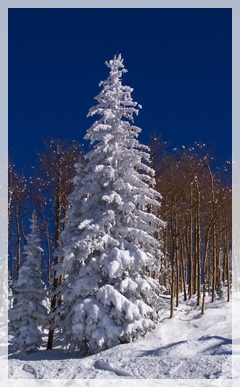
Steamboat Ski“I didn’t know Van was racing,” I said as he skied through the gates and sped across the finish line. “He isn’t,” explained his wife. “He’s just a forerunner.” While the focus is on the racers at a ski race, there wouldn’t be any race without the forerunners. Before the race begins, forerunners ski the course, set the line, allow the officials to test their systems, and assess course conditions. While proficient enough to race the course well, they are not in the competition. Although it’s an honor to be a forerunner, forerunners don’t get a number, nobody knows their names, and only the judges care about their times. It’s the races’ winners who get the accolades. Understanding that the race is not theirs to run, forerunners are happy just to prepare the way!

After 400 years of silence from God’s prophets, John the Baptist appeared as the forerunner for Jesus. Like prophets before him, he called for the people to repent and turn back to God. Linking the Old Testament and the New, John also prepared the way for the coming Messiah. Denying that he was the Messiah, John quoted the words of Isaiah 40:3 saying, “I am a voice shouting in the wilderness, ‘Clear the way for the Lord’s coming!’” John knew his qualifications were to prepare the way, not to be the Way. When he saw the Holy Spirit descend upon Jesus after His baptism, John knew whose way he’d been preparing and testified that Jesus was “the chosen One of God.” [John 1:34]

After acting as forerunner, John condemned Herod for marrying his brother’s wife which resulted in his imprisonment. Having heard about all that Jesus was doing, John sent his disciples to openly ask if He were the Messiah. Had John started to doubt? Let’s not forget the expectations people (even John) had of the Messiah: a political and military prince who would slay Israel’s enemies, not a Prince of Peace. Having prophesied that the Messiah would inflict punishment upon the wicked, did John wonder why, if Jesus were the Messiah, he’d done nothing to punish the Romans or free him from Herod’s prison?

At first glance, Jesus’ answer to John’s disciples seems evasive: “Tell them what you have seen—the blind see, the lame walk, the lepers are cured, the deaf hear, the dead are raised to life, and the Good News is being preached to the poor.” [Matthew 11:4-5] But, to anyone as familiar with Isaiah’s prophecies as John would have been, it was a straightforward answer in the affirmative. Isaiah had prophesied that the Messiah would do those very things [Isaiah 35:5-6,61:1-2] and Jesus had done them all. I have no doubt that, upon hearing that answer, John no longer questioned the identity of Jesus. Having prepared the way for the one true Messiah, His task as forerunner was over; it was up to Jesus to complete the race!

Listen! It’s the voice of someone shouting, “Clear the way through the wilderness for the Lord! Make a straight highway through the wasteland for our God! Fill in the valleys, and level the mountains and hills. Straighten the curves, and smooth out the rough places. Then the glory of the Lord will be revealed, and all people will see it together. The Lord has spoken!” [Is. 40:3-5 (NLT)]

Copyright ©2019 jsjdevotions. All rights reserved.

A RIGHTEOUS MAN

Joseph, to whom she was engaged, was a righteous man and did not want to disgrace her publicly, so he decided to break the engagement quietly. [Matthew 1:19 (NLT)]

Joseph Yesterday’s devotion about Mary made me wonder about Joseph. Other than having the right lineage, why did God chose this carpenter to raise His one and only Son? Mary and Joseph were betrothed and engagement in 1st century Palestine was a serious commitment. A legally binding relationship, betrothal usually lasted ten to twelve months. Although the bride continued to live at home and the couple did not have marital relations, their engagement ended only through death or a divorce-like proceeding.
We have no idea when or how Mary told Joseph she was pregnant. Having gone to stay with Elizabeth just a few days after the annunciation, we assume she told him of her pregnancy after returning to Nazareth. The conversation couldn’t have been pleasant. We’re never told that Joseph was angry but it’s hard to think he wasn’t upset and perplexed by this turn of events. His fiancée went away for three months and returned pregnant! No matter how Mary explained it, there was no way she could prove its truth. Her story made no sense so Joseph assumed Mary had been unfaithful to him.

Betrothal was a sacred relationship and the law required a man to divorce an unfaithful fiancée. Joseph was a righteous man, a man who abided by the law; he was obligated to end the engagement by divorcing Mary. Although the Torah demanded stoning an adulterous woman, people couldn’t be executed without Roman permission. Instead, Jewish tradition called for any divorce on adulterous grounds to take place publicly. Mary would have stood in the public square to answer questions about her unfaithfulness while the townspeople watched and judged. Making Mary’s pregnancy public knowledge would have been a fitting punishment for her suspected betrayal, preserved Joseph’s reputation as a righteous man, and freed him of any responsibility for Mary’s child.

It would have been easy for Joseph to wreak revenge on his unfaithful bride, but he didn’t. While he wanted to do the right thing, which was divorce the woman he believed adulterous, he wanted to do it so that she wouldn’t suffer. Joseph decided on a “writ of divorcement” which could be done quietly in the presence of a few witnesses. The equivalent of “irreconcilable differences” or no-fault divorce, it would have allowed Mary the freedom to marry someone else. Once her pregnancy became public knowledge, however, Joseph’s reputation would suffer since he would be suspected of being the father. Nevertheless, because he loved Mary more than he wanted revenge or people’s respect, Joseph put her needs first.

Not a rash man, Joseph took no action immediately. While considering his plan of action, an angel appeared to him and reaffirmed Mary’s story that the child she was carrying was conceived by the Holy Spirit. Joseph now had a third option: marry the girl! But, by marrying her, Joseph assumed responsibility for the pregnancy, shared in Mary’s shame, gave the village fodder for gossip, became the legal father of Jesus, and accepted responsibility for a child who wasn’t his.

Although we don’t know much about Joseph, we know all we need to know: he was a man of integrity who valued God more than other people’s opinions of him. In spite of the consequences, he immediately obeyed God and took Mary as his wife. What kind of man was Joseph? A godly man is my answer. He displayed the character of God we find in Exodus 34 when the Lord passed in front of Moses: “merciful and gracious, slow to anger, and abounding in steadfast love and faithfulness.” That’s the sort of man God chose to act as father to his boy!

“Joseph, son of David,” the angel said, “do not be afraid to take Mary as your wife. For the child within her was conceived by the Holy Spirit. And she will have a son, and you are to name him Jesus, for he will save his people from their sins.” All of this occurred to fulfill the Lord’s message through his prophet:  “Look! The virgin will conceive a child! She will give birth to a son, and they will call him Immanuel, which means ‘God is with us.’” When Joseph woke up, he did as the angel of the Lord commanded and took Mary as his wife. [Matthew 1:20-24 (NLT)]

Copyright ©2019 jsjdevotions. All rights reserved.

A HANDMAID’S HEART

And Mary said, “Behold, I am the handmaid of the Lord; let it be to me according to your word.” And the angel departed from her. [Luke 1:38 (RSV)]

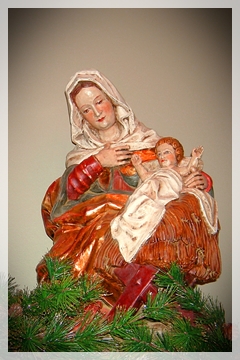
Mary - ChristmasIgnoring the fact that most of us in the room couldn’t qualify as virgins, are well-past child-bearing age, and our genealogies don’t link us to the tribe of Judah and the line of David, the pastor leading our women’s Bible study asked if we were the kind of women God would chose to give birth to His son.

Aside from being young, virginal, and of the right lineage, what kind of woman was Mary? At first glance, she seems little different than any other young girl in the obscure village of Nazareth. There is no mention of her having wealth, exceptional beauty, or social status. Looking like any other peasant girl, she seems unsuitable for a job as mother of God. What about Mary set her apart from every other girl in Palestine who met the lineage and virtue requirements?

Rather than looking at outward appearance, God looks into hearts; while we don’t know about Mary’s physical beauty, her character must have been exceptionally beautiful. Faithful, obedient and humble, she was filled with love for God. She risked her entire future when she submitted to Him. In many translations, Mary calls herself the “Lord’s servant.” The original Greek, however, was doule, which means bondmaid, female slave or handmaid. A doule wasn’t hired help who could quit when she wanted. She was someone who surrendered completely to her Master’s will.

I thought about the pastor’s question. Had I fit the physical and lineage requirements, would God have chosen me to bear His son? He wouldn’t have given me a second look when I was Mary’s age—I was far too willful, rebellious, selfish and unsure of myself to ever call myself a servant to anyone, even God! Even if the woman I am today fit the physical and lineage requirements, God wouldn’t consider me. It’s not that He wouldn’t trust me to feed, comfort, teach, love, guide, encourage, and protect His Son; I’d qualify in the mothering department. It’s that submission thing; I don’t think I’d freely surrender my will to His and God will not force Himself upon anyone. Mary had enough faith to yield her will to God but, even with 72 years of experiencing God’s faithfulness under my belt, I’m not sure I have the heart of a handmaiden. Humble and complete submission to the Master’s will does not come easily. “Thy will be done,” are some of the hardest words to pray and truly mean.

Both Mary and Jesus submitted to God’s divine will; should we do anything less? Father, forgive us for choosing our will over Yours. Give us a handmaid’s heart.

And he withdrew from them about a stone’s throw, and knelt down and prayed, “Father, if thou art willing, remove this cup from me; nevertheless not my will, but thine, be done.” [Luke 22:41-42 (RSV)]

Pray then like this: Our Father who art in heaven, Hallowed be thy name. Thy kingdom come, Thy will be done, On earth as it is in heaven. [Matthew 6:9-10 (RSV)]

Copyright ©2019 jsjdevotions. All rights reserved.