THORNS AND THISTLES (Soil – Part 3)

Other seed fell among thorns that grew up and choked out the tender plants so they produced no grain. [Mark 4:7]

nodding - musk thistleSome of the farmer’s seeds fell among the thorns (probably what we’d call thistles). Prolific seed producers, thorny plants like thistles can grow in the harshest environment. While they may have been cut down and no longer were visible to the farmer, their seeds and roots remained. With their deep roots, thistles are masters of survival and can flourish in adverse conditions. Stealing the moisture and sunlight from the plants around them, they stunt their growth and, if allowed to grow, can overtake a field.

The farmer’s seed was good, it took root, and started to grow but, because of the thistles, it never developed into maturity. The thistles represent the material concerns of the world—the cares, riches and pleasures that distract us from God’s word and, like a thistle’s roots, are deeply seated in our hearts. Rather than robbing us of water, sunlight, and nutrients, they stunt our growth by keeping us from God’s living water, the light of Christ, and the nourishment of His church. The busyness, distractions, and cares of life; the challenges of work and tending a family; the pursuit of wealth; the desire for possessions, status, amusement, contentment, and even revenge: all of these distract us from letting God’s Word bear fruit in our lives.

The faith of Judas was like a field with thistles. He heard the word and followed Jesus as a faithful disciple and yet he betrayed our Lord. We never know exactly why. Perhaps, it was simply for riches. John tells us he was a thief who stole from the disciples’ purse and we know he received money for his betrayal. Judas also may have been distracted by politics and a desire to be among the elite when Jesus defeated the Romans. Disillusionment may have set in when he realized that wouldn’t happen. Whatever it was, like a field of thistles, those distractions allowed Satan to enter him

In God’s perfect plan, there were no weeds and He didn’t mean for thorns or thistles to be in hearts, either. Weeds and sin both came with the fall. Ridding a field of thistles and other weeds is nearly impossible but, with diligence and hard work, it can be done. It takes continual inspection of the field and, once spotted, the weeds must be eradicated. The questions we must ask are simple ones. What are the thistles or thorns in my life? What is holding me back? What is keeping me from bearing His fruit? Is my faith genuine?
Examine yourselves to see if your faith is genuine. Test yourselves. Surely you know that Jesus Christ is among you; if not, you have failed the test of genuine faith. [2 Corinthians 13:5 (NLT)]

When the ground soaks up the falling rain and bears a good crop for the farmer, it has God’s blessing. But if a field bears thorns and thistles, it is useless. The farmer will soon condemn that field and burn it. [Hebrews 6:7-8 (NLT)]

Copyright ©2020 jsjdevotions. All rights reserved.

ROCKY SOIL (Soil – Part 2)

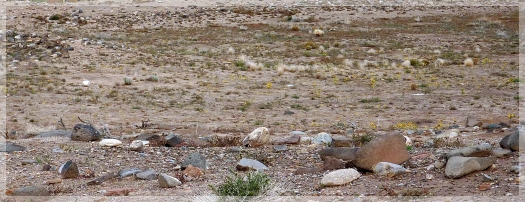
rocky soilOther seed fell among rocks. It began to grow, but the plant soon wilted and died for lack of moisture. [Luke 8:6 (NLT)]
If sinners take up religion in a fair day, they will lay it down in a foul day. They are willing to go to seas, but on condition there are no storms. They think too much of wearing a thorn, though it is borrowed from Christ’s crown. [D.L. Moody]

In the parable of the four soils, some of the farmer’s seed falls among the rocks. Again, this is not the farmer’s fault. Much of the soil of Israel and Judah was rocky and only a thin layer of topsoil covered the limestone base. While seeds might germinate, the seedlings would have weak root systems. Any moisture falling on such shallow soil evaporates quickly and, with roots unable to penetrate the stone, the sprouts soon wither and die. Just as the seed that fell on the pathway could be snatched away, it’s easy for the enemy to pull such weak seedlings out of the soil.

The rocky soil represents a shallow and impulsive faith—a faith based on emotions rather than a conscious decision to trust God with all things. We must never mistake outward fervor (in others or ourselves) as evidence of conversion. This is a “fair-weather faith” that answers the altar call with joy but disappears at the first sign of difficulty, service, or sacrifice. Superficial, it’s more about being religious than being obedient or devoted to God. This shallow response is what Dietrich Bonhoeffer might call “cheap grace…forgiveness without repentance, baptism without discipline, communion without confession, and grace without discipleship or the cross.” The Apostle James called it “dead” or “useless” faith because it goes through the motions without growing or producing fruit. With no depth of understanding, it is vulnerable and easily deceived.

Although human emotion can’t sustain our faith, with enough effort rocky soil can be broken up and shallow faith can deepen. When we deliberately choose to yield our lives to God’s plow and allow His Word to penetrate deep into our hearts, our faith can flourish and survive both drought and flood!

So you see, faith by itself isn’t enough. Unless it produces good deeds, it is dead and useless. … You say you have faith, for you believe that there is one God. Good for you! Even the demons believe this, and they tremble in terror. How foolish! Can’t you see that faith without good deeds is useless? [James 2:17,19-20 (NLT)]

But blessed are those who trust in the Lord and have made the Lord their hope and confidence. They are like trees planted along a riverbank, with roots that reach deep into the water. Such trees are not bothered by the heat or worried by long months of drought. Their leaves stay green, and they never stop producing fruit. [Jeremiah 17:7-8 (NLT)]

Copyright ©2020 jsjdevotions. All rights reserved.

HARD HEARTS (Soil – Part 1)

A farmer went out to plant his seed. As he scattered it across his field, some seed fell on a footpath, where it was stepped on, and the birds ate it. [Luke 8:5 (NLT)]

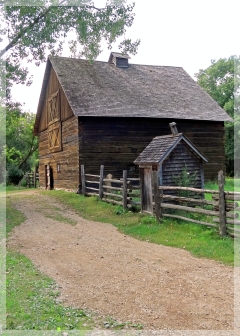
old world wisconsinIn the gospels of Matthew, Mark and Luke, we find Jesus telling the parable of the four soils in which the farmer’s seed falls on four types of ground and yields four different results. Although the same good seed is sown over the entire field, only one kind of soil will yield a good crop. Jesus isn’t giving a lesson about agricultural practices; the seed that is sown is God’s word and the soils represent the different responses we have to God’s word. The lessons taught are both for the sowers—those who teach, preach, or witness—and for the soil—the people who hear the Word.

Some of the farmer’s seed falls along a footpath. There the soil is packed down so hard that the seed can’t take root. At first, it seems like the farmer is at fault, but he was doing what farmers did at the time—sowing before plowing. In Jesus’ day, farmers’ plots were small and adjacent to one another’s plots. Wanting to avoid stepping on growing plants, there were pathways between the fields used by the farmers. As the farmer walked along the path, he’d scatter seeds with a broad sweeping motion of his hand. Inevitably, some seed would land on the footpath between the fields. Heavily used and neither plowed nor fertilized, its soil was hard packed and nothing would grow on it.

 It’s not enough for the word to be heard any more than it is for seed to fall on hard ground. In Scripture, faith and belief are products of the heart. Just as seed must germinate to grow, the Word must be accepted, but a hard heart, like hardened soil, cannot receive God’s word. Instead of birds, it is Satan who snatches the Word away.

We know what makes a footpath hard but what hardens hearts? I think of Herod Antipas who married his half-brother’s wife (forbidden by Mosaic Law). When John the Baptist denounced Herod’s illegal marriage, Herod arrested and imprisoned the prophet at his wife’s urging. Scripture, however, tells us that Herod respected John and liked to listen to him but, not wanting to recognize his own sin and repent, Herod didn’t allow John’s word to change him. Unrepentant sin caused both Herod’s and Herodias’ hearts to harden enough that John died a gruesome death.

In Pharaoh’s case, it was pride and arrogance that hardened his heart to the powerful God of the Israelites. It was setbacks and disappointments that hardened the heart of the Israelites when camping at Meribah. Ignoring God’s previous provision, the ungrateful people quarreled with Moses over the lack of water. Hearts can harden in times of prosperity, as well. God sent Jeremiah, Ezekiel, Hosea, and Zechariah to warn Israel and Judah about their hard hearts and the coming of God’s judgment but they didn’t change their ways. Distractions like fear and blame can cause hearts to harden enough for Satan to snatch away God’s word. Twice Scripture describes the hearts of the disciples as being “too hard to take it in” when they failed to let Jesus’ miracles of abundant provision grow into faith in His power. [Mark 6:52,8:17]

Hardened hearts dull our ability to perceive and understand God’s message, blind us to the value of the gospel, and keep us both ignorant of God and alienated from Him. As hearers of the Word, we must not let the enemy harden our hearts and, as sowers, we must keep spreading the seed; whether or not it is accepted is up to the soil! The good news, however, is that even the hardest soil can be broken and even the hardest heart can be softened.

Hardness of heart evidences itself by light views of sin; partial acknowledgment and confession of it; pride and conceit; ingratitude; unconcern about the word and ordinances of God; inattention to divine providences; stifling convictions of conscience; shunning reproof; presumption, and general ignorance of divine things. [Matthew George Easton]

Their minds are full of darkness; they wander far from the life God gives because they have closed their minds and hardened their hearts against him. [Ephesians 4:18 (NLT)]

Copyright ©2020 jsjdevotions. All rights reserved.

MORE QUALIFIED THAN WE THINK

For I can do everything through Christ, who gives me strength. [Philippians 4:13 (NLT)]

great blue heronAlthough it was noon during the heat of the day when most people would be resting, the woman came to the well for water. Perhaps, because she’d been married five times and was living with a man not her husband, the other women in the village made it clear that she wasn’t welcome in the early morning or late evening when they gathered there. Nevertheless, it was with this woman that Jesus had the longest one-on-one conversation recorded in Scripture. It was to this Samaritan woman that Jesus revealed He was the Living Water she so desperately needed.

Throughout Scripture, we find God using those who seem least qualified to do His work. An unnamed woman of questionable character became His first evangelist in Samaria and a Gentile man so possessed by demons that he’d been chained and shackled in a cave was chosen to evangelize in the Decapolis. Abraham, a coward who twice gave his wife to other men to save himself, was God’s unlikely choice to be the father of all nations and his wife Sarah, an infertile old woman, was chosen to be the mother of those nations. God chose an old man with a speech impediment to demand that Pharaoh let His people go and a shepherd boy with a slingshot to fell a giant and lead a nation. A man so afraid of the Midianites that he hid in his winepress while threshing wheat and called his clan the weakest and himself the least of them, was chosen by God to defeat Israel’s oppressors. Chosen to spread the gospel to all nations was a Pharisee who hated Christ’s followers and silently watched while Stephen was stoned by an angry mob. A prostitute, a widow who masqueraded as a prostitute, a hated Moabite, an adulteress, and an unwed teen from an insignificant village were chosen as part of His Son’s family tree. To bear witness to the empty tomb, God chose women: people who couldn’t even testify in court!

Were any of these people qualified for the role they were called to play? Probably not, but that didn’t matter because God will qualify the ones he calls. Can we fell giants with a slingshot or lead an outnumbered army to victory? Probably not…unless God calls us to do that very thing! When we answer His call, He will equip the unequipped, enable the unable, strengthen the weak, embolden the meek, empower the powerless, encourage the discouraged, and do the extraordinary with the ordinary.

Now may the God of peace… equip you with all you need for doing his will. May he produce in you, through the power of Jesus Christ, every good thing that is pleasing to him. All glory to him forever and ever! Amen. [Hebrews 13:20,21 (NLT)]

He said, “My grace is all you need. My power works best in weakness.” So now I am glad to boast about my weaknesses, so that the power of Christ can work through me. That’s why I take pleasure in my weaknesses, and in the insults, hardships, persecutions, and troubles that I suffer for Christ. For when I am weak, then I am strong. [2 Corinthians 12:9-10 (NLT)]

Copyright ©2020 jsjdevotions. All rights reserved.

FORTITUDE

Let’s not get tired of doing what is good, for at the right time we will reap a harvest—if we do not give up. [Galatians 6:9 (ISV)]

Consider it pure joy, my brothers, when you are involved in various trials, because you know that the testing of your faith produces endurance. But you must let endurance have its full effect, so that you may be mature and complete, lacking nothing. [James 1:2-4 (ISV)]

Moraine Lake - CanadaYesterday, I wrote about the sin of sloth, a sort of spiritual weariness; fortitude is considered its contrasting virtue. Taken captive in 605 BC and forced to trudge the 500 miles from Jerusalem to Babylon, Daniel is an example of fortitude. He lost his home, family, name, language, culture, nation, and possibly his manhood but the one thing he never lost was his faith in God. From the moment he arrived in Babylon, Daniel refused to compromise his principles by refusing to defile himself with prohibited food. Sixty-six years later, he was still determined to stay true to God. In spite of knowing he would be thrown to the lions for his actions, he ignored the law prohibiting praying to anyone but King Darius. Instead, Daniel opened his windows and, as he’d “always done,” prayed to the one true God while offering thanks and asking for God’s help. [Daniel 6:10-11]
A pastor friend was in her fifties when God called her to the ministry. After completing her Lutheran seminary studies and internship, she met all the additional ordination requirements except one: she needed “a call” or placement in a Lutheran church. Although she’d received a call and felt confident it was God’s plan, a problem remained. Caught in a sort of “catch-22,” the call was from a Methodist church for an ordained minister but she couldn’t be ordained without accepting a call from a Lutheran church! Urging her to be patient, the bishop assured her that the Methodists and Lutherans soon would come to a “full communion” agreement so her position with the Methodists would qualify as the required call. The wheels of bureaucracy moved slowly and the Bishop’s promise of “soon” dragged into years. While she worked in Christian education for the Methodist church, my friend was not yet ordained and her dream of becoming a pastor had been put on indefinite hold. In God’s time, however, the Lutherans and Methodists became full communion partners which, among other things, meant they could exchange clergy. Four years after her seminary graduation, my pastor friend was ordained by a Lutheran bishop in the Methodist church. It would have been faster to leave the right church (but “wrong” denomination) in search of the “right” denomination (but wrong church), but she didn’t. Instead, she exhibited fortitude by trusting God and staying where He put her.

Fortitude is not a word we use much today. The Roman Catholic Catechism calls it “the moral virtue that ensures firmness in difficulties and constancy in the pursuit of the good. It strengthens the resolve to resist temptations and to overcome obstacles in the moral life.” Our spiritual backbone, fortitude is a combination of endurance, courage, perseverance, strength, and faith. Simply put, fortitude is the grace God gives us when we so desperately need it.

As did my pastor friend several years ago, we’re probably asking, “How long?” We’re not the first ones to ask that question. It had to have been asked multiple times when a few years of refuge in Egypt turned into 400 years and slavery, an 11 day trek across the desert stretched into 40 years, 15 difficult years passed between David’s anointing and his kingship, Job’s suffering seemed to have no end, and Judah’s Babylonian captivity lasted 70 years. Rather than wondering, “How long?” let us pray as did Daniel: by offering thanksgiving and asking for God’s help. May God clothe us with fortitude and fortify us with His strength.

She clothes herself with fortitude, and fortifies her arms with strength. [Proverbs 31:17 (ISV)]

Copyright ©2020 jsjdevotions. All rights reserved.

HE HAS FAITH IN US!

And I’ve got something to tell you, too: you are Peter, the rock, and on this rock I will build my church, and the gates of hell won’t overpower it. [Matthew 16:18 (NTE)]

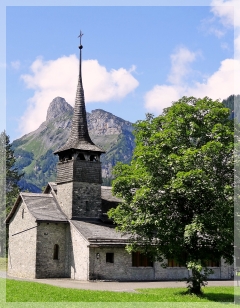
Kandersteg - SwitzerlandAfter Simon Peter professed his belief in Jesus as the Messiah, the Lord declared that he would be known from then on as Peter (Petros) meaning rock (petra). Yet, a short time later, the Rock became a stumbling block when he resisted all that being the Messiah required: Jesus’ suffering and death. When studying the man our Lord chose to lead His church, we find Peter had enough faith to climb out of the boat but not enough faith to trust Jesus when the wind started to blow. Impetuous, Peter immediately wanted to memorialize the Transfiguration rather than learn from it. Presumptuous, he hastily spoke for Jesus regarding paying tax to Caesar. Rash, he used his sword to wound the high priest’s slave. He resisted Jesus when the Lord knelt with a wash pan at his feet and, after boldly declaring his commitment to Jesus, denied him three times within a few hours! Yet, it was to this man that Jesus entrusted the job of shepherd and the task of feeding His sheep!

The rest of the disciples were no better. Along with Peter, they thought Jesus was talking about bread when He warned them about the yeast of the Pharisees, argued with one another about who among them was the greatest, fell asleep when asked to pray, abandoned Jesus following His arrest, and returned to fishing after the crucifixion.

Not a one was a scholar, aristocrat, or priest. Yet, it was to these common ordinary men, men who had sinned and who were likely to sin again, men who had failed Jesus while He was flesh and blood, to whom Jesus entrusted His church! Although the only thing extraordinary about the disciples was their faith in Jesus, He charged them with the Great Commission: the future of His church. Have you ever wondered at the tremendous faith Jesus showed in the disciples 2,000 years ago? Legions of angels could have spread the Good News wider and faster than any mortal and yet Jesus had faith that His band of ordinary men would obey His command and succeed!

Christ’s followers continue to be as unremarkable and flawed as were Peter, John and the rest of the disciples. Nevertheless, Jesus continues to have faith in us. It is through the power of His Holy Spirit that we carry on the good work begun by those first believers. Let us continue to have faith in the God who has such great faith in us!

A dozen ignorant peasants proclaiming a crucified Jew as the founder of a new faith; bearing as the symbol of their worship an instrument which was the sign of ignominy, slavery and crime; preaching what must have seemed an absurd doctrine of humility, patient suffering and love to enemies – graces undreamed of before; demanding what must have seemed an absurd worship for one who had died like a malefactor and a slave, and making what must have seemed an absurd promise of everlasting life through one who had himself died, and that between two thieves. [“The Divine Origin of the Bible” by B.B. Warfield]

Jesus came towards them and addressed them. “All authority in heaven and on earth,” he said, “has been given to me! So you must go and make all the nations into disciples. Baptize them in the name of the father, and of the son, and of the holy spirit. Teach them to observe everything I have commanded you. And look: I am with you, every single day, to the very end of the age.” [Matthew 28:18-20 (NTE)]

Copyright ©2020 jsjdevotions. All rights reserved.