
Give me understanding and I will obey your instructions; I will put them into practice with all my heart. Make me walk along the path of your commands, for that is where my happiness is found. [Psalm 119:34-36 (NLT)]

Today we celebrate the adoption of the Declaration of Independence 246 years ago—when American colonists shed the tyranny of Great Britain and King George III to form the United States of America. Among the unalienable rights cited in this historic document are “life, liberty, and the pursuit of happiness.” During this long holiday weekend, Americans have been busy enjoying life, celebrating liberty, and pursuing happiness with a variety of activities that, among other things, probably include parties, picnics, flags, fireworks, parades, sparklers, and carnivals along with beaches, pools or sprinklers, and hot dogs, burgers, potato salad, and ice cream!
“The pursuit of happiness,” however, had a different meaning back in 1776 than it does today. When our Founding Fathers wrote of pursuing happiness, they weren’t thinking about 4th of July fireworks, fun, and games. Rather than a temporary emotion, they were thinking of a state of being and envisioning the kind of happiness that comes from having a government in which people can participate, their voices are heard, they can control their destiny, justice prevails, talents are nurtured, people can work and move ahead, the nation is tranquil, and its borders are defended. Pursuing happiness in 1776 wasn’t about self-gratification; it was about an individual’s contribution to society. As Supreme Court Justice Anthony Kennedy explained, “For them, happiness meant that feeling of self-worth and dignity you acquire by contributing to your community and to its civic life.”
Unfortunately, a prevalent attitude in our nation today focuses on individual needs and desires and the pursuit of happiness is interpreted as meaning, “Do whatever makes you happy!” We might want to exercise some caution when pursuing happiness while focusing only on ourselves. It didn’t end well in Eden when Adam and Eve decided to pursue happiness by eating the forbidden fruit nor did focusing on their own desires work for David or Sampson. A hungry Esau pursued happiness with a hearty bowl of stew and his brother pursued it by deceiving Isaac. Achan pursued happiness by keeping plunder from Jericho as did Saul when he kept the best spoils from Agag. Sarah foolishly pursued happiness by giving Hagar to Abraham and, like many of us, Noah sought happiness in too much wine. Yet, none of those pursuits brought happiness. In spite of his wisdom, Solomon pursued happiness by accumulating massive amounts of silver and gold, 700 wives, and 300 concubines and yet his words in Ecclesiastes are not those of a happy man. As Thomas Jefferson said, “It is neither wealth nor splendor; but tranquility and occupation which give you happiness.”
While we live in a free country and God has given us free will, we need to be sure we don’t ever use our freedom to fall into another kind of tyranny—a tyranny much worse than that of King George III—the tyranny of sin.
There are two freedoms—the false, where man is free to do what he likes; the true, where he is free to do what he ought. [Charles Kingsley]
 Anyone who listens to my teaching and follows it is wise, like a person who builds a house on solid rock. Though the rain comes in torrents and the floodwaters rise and the winds beat against that house, it won’t collapse because it is built on bedrock. But anyone who hears my teaching and doesn’t obey it is foolish, like a person who builds a house on sand. When the rains and floods come and the winds beat against that house, it will collapse with a mighty crash. [Matthew 7:24-27 (NLT)]
 Although Jesus performed many miracles, when compared to the illusions performed by various well-known magicians, they aren’t all that impressive. Jesus emerged from the tomb on the third day but David Blaine buried himself alive in a plexiglass coffin under a 3-ton water-filled tank for seven days and nights! Calling Lazarus out of the tomb after several days was impressive but only his family and some mourners were there to see it. When David Blaine emerged from the 6-ton block of ice in which he’d been encased for over 63 hours, thousands in Times Square were there and even more watched it on television. Granted, Blaine fell short of his 72-hour goal but the man knows how to draw crowds! Couldn’t Jesus have done something similar?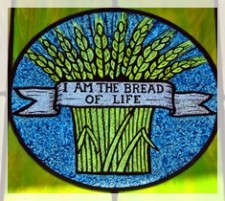
 Matthew and Mark tell of a second time Jesus fed a multitude. Jesus had been north of Galilee in Tyre and Sidon before going south to the Sea of Galilee and on to the region of the Ten Towns or Decapolis. Once there, a huge crowd assembled and set up camp around Jesus as He healed and preached. After three days on the hillside, the crowd ran out of provisions and Jesus voiced His concern. Just like the first time they were faced with a hungry crowd, the disciples don’t know what to do, even though the solution was standing right in front of them. After they found seven loaves and a few fish, Jesus miraculously turned that into a feast for 4,000 men (plus women and children) with seven large reed baskets of food remaining!
 Other than His resurrection, the feeding of the 5,000 is the only one of Jesus’ miracles recorded in all four gospels. Wanting some quiet time, Jesus and the disciples went by boat to a remote area near Bethsaida. Because the crowd followed them, Jesus spent the rest of day healing and teaching. When the disciples asked Jesus to send the people home so they could eat, Jesus said to feed them. All four accounts agree that only five loaves and two fish were available, that 5,000 men (along with women and children) ate as much as they wanted, and that the left-overs filled a dozen wicker hand-baskets.
 Devotions of the Heart