Just as the weeds are sorted out and burned in the fire, so it will be at the end of the world. The Son of Man will send his angels, and they will remove from his Kingdom everything that causes sin and all who do evil. And the angels will throw them into the fiery furnace, where there will be weeping and gnashing of teeth. Then the righteous will shine like the sun in their Father’s Kingdom. Anyone with ears to hear should listen and understand! [Matthew 13:40-43 (NLT)]
 Following the Parable of the Sower and the Soils, Jesus told another parable about the coming of the Kingdom. In the Parable of the Weeds, after the farmer plants wheat, his enemy sows weeds in the same field. Jesus’ hearers would have known the weed likely was darnel. Called wheat’s “evil twin,” it looks and behaves much like wheat. When wheat is consumed it gives life but, when darnel is consumed, this inedible look-alike causes nausea and even death. Sowing weeds in a field was an act of sabotage and Roman law specifically prohibited doing so with darnel. When nations went to war, agricultural vandalism was a common practice. Olive trees were cut down, grape vines destroyed, and fields were salted so nothing would grow.
When the farmer’s workers ask to pull out the weeds, they are told to wait. Because both the weeds and wheat are deeply rooted, pulling up the weeds would uproot the wheat, as well. Not wanting to destroy the good by removing the bad, the farmer decides to wait until harvest time when the weeds can be better identified and separated without damaging the wheat. At that time, the wheat will be put in the barn but the weeds will be burned.
While the farmer in the Parable of the Soils represents those who share the gospel, the farmer in this parable is Jesus. The field is the world and the enemy is Satan, whose strategy is to invade, infiltrate, penetrate, and take control of the field. Even though he knows he’s lost the war, Satan wants to inflict as much damage as possible until his final defeat. Christ’s followers are the wheat and, even though they look much like wheat, the weeds are unbelievers. The harvest comes near the end of the age when the angels will come with their sickles and winnowing forks to bring in the harvest. While the righteous will come into the Kingdom, the sons of the evil one will be punished and thrown into the fires of hell.
Focusing on the final judgment, the parable tells us that what seems uncertain now will be unmistakable at the end of the age and God’s enemies will be removed! This parable repeats the good news of the Parable of the Soils: in spite of opposition and interference from its enemy, God’s Kingdom will prevail! If there is any doubt in your mind, just read the book of Revelation. Sickness, famine, war, hatred, pestilence, hypocrisy, natural disaster, genocide, abuse, violence, idolatry, deception, calamity, and even noxious weeds do not have the last word—Jesus Christ does!
I’ve read the last page of the Bible, it’s all going to turn out all right. [Billy Graham]
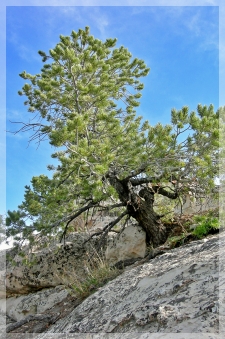 The Synoptic gospels (Matthew, Mark, and Luke) all repeat Jesus’ parable of the Sower and the Soils. As the farmer sows his seeds, some lands on the packed soil along the footpath. The birds steal the seeds so nothing takes root. Some seeds land on a thin layer of dirt over underlying rock. Although the seeds quickly sprout, without deep roots, they wither and die. Other seeds land among the thistles and thorns. Although they take root, the fast-growing weeds crowd them out. Only the seeds that fall on fertile soil take firm root, grow into maturity, and bear fruit. Rather than teaching Agriculture 101, by comparing those soils to the various ways God’s message is received, Jesus was teaching about evangelism.
 By now, the visiting family has returned home; the jelly beans, Peeps, and chocolate eggs have been eaten; the Easter lily has wilted; the baskets and bunny décor are back in their boxes; and the hardboiled eggs are long gone. While Easter has been put away for another year, its message didn’t end with the resurrection.
 Judas wasn’t the only one who betrayed Jesus that Thursday night. With his three denials, Peter also betrayed our Lord. Both men were filled with remorse but neither man could undo what had been done. One never lost faith and hung in there; the other lost faith and hung himself. One stayed around for the resurrection to see the living Christ and to experience Jesus’ forgiveness; the other missed his opportunity for redemption when he gave up all hope. One became the humble willing servant of the Lord and the rock of the church; the other one’s name lives on in ignominy and is synonymous with betrayal and treason.
 There is a fancy term for how God the Son, Jesus, took on human form and yet remained God: hypostatic union. Sounding like why my socks cling to my t-shirts in the dryer, knowing the term doesn’t help us understand it. I’m not sure anyone can wholly comprehend how Jesus always existed and yet was conceived by the Holy Spirit, born of Mary, and became man. When pondering Christ’s incarnation, I can’t help but think of an old ad for Certs Mints. Since they were both a breath mint and a candy mint, their commercials ended with the catch phrase: “Certs is two, two, two mints in one!” Fully man and fully God at the same time, Jesus, like Certs, had two distinct natures in one.