
Then his master summoned him and said to him, “You wicked servant! I forgave you all that debt because you pleaded with me. And should not you have had mercy on your fellow servant, as I had mercy on you?” And in anger his master delivered him to the jailers, until he should pay all his debt. So also my heavenly Father will do to every one of you, if you do not forgive your brother from your heart. [Matthew 18:32-35 (ESV)]
 At first, it seems that the “Parable of the Unforgiving Servant” should be called the “Parable of the Forgiven Servant.” After all, the king forgave his servant’s debt of 10,000 talents—the equivalent of billions of dollars. While the first part of the parable illustrates the value and extravagance of God’s forgiveness, it takes a dark turn in the second part when illustrating the reciprocal nature of His forgiveness—something the servant learned the hard way!
After leaving the king, the forgiven servant went to a fellow servant who owed him 100 denarii and demanded payment. Representing 100 days’ wages, this was a sizeable sum. Nevertheless, unlike the first servant’s massive debt to the king, it feasibly could be repaid in time. Just as his creditor had done with the king, this servant begged for patience and promised repayment. That the debtor was a fellow servant and an equal didn’t matter to his creditor. Moreover, the money he’d loaned hadn’t even been his—it had been money taken from the king! Unlike the king, however, this unforgiving servant had no mercy and put his debtor in prison until the debt was fully paid!
Wickedly, the unforgiving servant wrongly demanded more from his fellow worker than the king had asked of him. By throwing his debtor into jail, he acted as if he were more worthy of justice and repayment than was the king. Distressed at the man’s hard-heartedness, the other servants reported his behavior to the king. Enraged that his servant had not appreciated the gift of mercy he’d received by forgiving another servant in the way he’d been forgiven, the king sent the unforgiving man to prison to be tortured until his debt was paid.
Before trying too hard to read extra meaning into this parable, let’s put it in context. Peter had just asked Jesus how often he should forgive someone who sinned against him. While Jewish tradition valued forgiveness, the rabbis held that someone would be forgiven for the same transgression only three times. So, when Peter suggested forgiving seven times, the disciple probably thought he was being generous. When Jesus replied that he was to forgive seventy times seven, He wasn’t suggesting keeping count to 490 before quitting. His point was not to keep count at all! After all, if God stopped forgiving us at the 491st time we disrespected our parents, gossiped, lost patience with our children, lied, cursed, or failed to honor His name, we’d be goners! God is holding us to His standard and it was to illustrate the reciprocal nature of forgiveness that Jesus told this story.
If we take a good look at the king’s servant, we see that he never fully understood or appreciated the king’s mercy. When he promised the king that, with patience, he would repay the debt, he was delusional. The debt represented over 164 years of labor without a break! Although repayment was an impossibility, the servant never admitted his inability to pay such an enormous sum. His refusal to release a fellow servant’s debt shows that he neither understood nor appreciated his own forgiveness. The unforgiving man’s punishment makes it clear such unforgiveness is not what our King wants from His servants! He calls us to forgive with a heart of gratitude for the forgiveness that has been given to us. A person who sees the enormity of their own sins and appreciates the largess and forgiveness of his Savior will, in turn, be magnanimous and generous in bestowing forgiveness upon others.
The second servant’s debt was one six-hundred-thousandth of the amount owed by the unforgiving servant. Just as his debt to his co-worker pales in comparison to the unforgiving servant’s debt to the king, whatever wrongs (real or imagined) we have suffered from our fellow servants pale in comparison to the countless ways we sin against our King every day of our lives! Jesus taught the disciples to pray, “and forgive us our debts, as we also have forgiven our debtors,” and this parable tells us we are to forgive our debtors as our King has forgiven us!
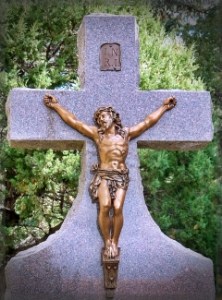 Jesus told several parables about the Kingdom of Heaven and, in Matthew 18, He compared it to a king who wanted to bring his accounts up to date with the servants who owed him money. The parable is pretty straight-forward; the king symbolizes God, the servant each one of us, and the debt our sins. One servant owed the king ten thousand talents but was unable to pay. There were serious consequences for not paying debts so the king ordered that the servant’s home and possessions be sold off and that the man and his family be sold into slavery until the debt was paid.
 The Israelites were camped on the east side of the Jordan River, in view of Canaan, when Moses addressed them. After spending the last forty years as nomads in the wilderness of the Sinai Peninsula, can you imagine their excitement at the thought of finally having a place to call their own and their eagerness for a new beginning in a new land? There must have been some apprehension, as well. They weren’t naïve; they knew there would be conflict, battles, and even loss before Canaan was conquered.
 Along the road to the Serengeti, somewhere near the Olduvai Gorge in Tanzania, is a crescent-shaped sand dune. Measuring about 30-feet in height and 328-feet long along its curves, it is known as the Shifting Sands. Rich in iron and highly magnetized, the sand sticks to itself when tossed in the air. When the wind blows, its particles fall back on the dune rather than get carried away by the breeze. The dune, however, is constantly on the move as the prevailing winds slowly move the entire thing across the land. Moving about 50-feet a year, it’s believed that the Shifting Sands have been traveling the savannah for more than three thousand years, sometimes changing both shape and direction. Of course, the dune moves so gradually that you don’t see its motion. Nevertheless, stakes in the ground indicate its location in previous years.
 I imagine the shepherds probably were more concerned with making it through the night warm, safe, and without losing any sheep than they were with the eventual arrival of the promised Messiah. They certainly never expected an angel to appear to announce His birth nor did they anticipate a host of angels singing God’s praises. Nevertheless, it was shepherds who received the good news that a child was born—a child who would be their Savior, Messiah, and Lord.
 Devotions of the Heart