WHAT PRONOUN?

God replied to Moses, “I AM WHO I AM.  Say this to the people of Israel: I AM has sent me to you.” [Exodus 3:14 (NLT)]

“I am the Alpha and the Omega—the beginning and the end,” says the Lord God. “I am the one who is, who always was, and who is still to come—the Almighty One.” [Revelation 1:8 (NLT)]

As Christianity Today aptly points out, “Changing gender norms, new social media platforms, and deepening class divisions have led to a renewed conflict over language.” As a writer, I have more than enough opportunities to intentionally or unintentionally offend with my words and, as a reader, you have plenty of opportunities to criticize my choice of words. As a Christian, I want to speak with love and in such a way that doesn’t isolate any race, gender, religion, sexuality or ethnic background so I try to use inclusive language and avoid words that might be thought of as exclusionary of any group. Nevertheless, I’m not always successful. While I understand using “police officer” instead of “policeman,” other words are more problematic and not so easily changed.

Moreover, eventually we need a pronoun and most pronouns are gender specific. In 2012, the Swedes started using hen, a gender neutral pronoun that can replace the gender specific hon (she) and han (he). We don’t have that option in English. Our pronouns take the gender of the noun they replace and substituting every “his” and “her” with “his or her” or “his/her” is cumbersome at best. Using “they,” “them” or “their” for a singular person when gender is unknown can be misleading and goes against rules of grammar I learned as a girl!

When referring to Jesus, it’s easy to know the correct pronoun because Scripture makes it clear—the Savior presented Himself on earth as a man. With God and the Holy Spirit, it’s not so clear cut. Regardless of who is referring to God or if it’s written in Hebrew, Aramaic, or Greek, male pronouns are used for God in Scripture. Since God chose to reveal Himself to us as a man when He clothed Himself in flesh and Jesus made about 160 references to God as father (not parent), does that make God male? What about the Holy Spirit? Although the Greek word for spirit (pneuma) was gender neutral, the Holy Spirit is referred to as masculine throughout the New Testament. Is the Spirit male, as well?

God is God: the great I AM—the Alpha and Omega—the beginning and the end! Although God is a person—with intellect, emotion, motivation, insight and a will—a person who can communicate, create, and have relationships—God is spirit. Without flesh, bones, and the limitations of a physical body, God has no gender—neither male nor female. Like God, the Holy Spirit is both a person and a spirit and, as such, is genderless, as well. Without a gender, there are no perfect pronouns for either God or the Holy Spirit. The Lord is not an “it” nor is the Holy Spirit a “they.”

Although some women writers refer to God as “she,” lacking a better solution and, in deference to Scripture’s original writers, I will continue to refer to God and the Holy Spirit as “He.” I understand that being referred to by the right pronoun can be pivotal to a person’s identity, but I doubt it is crucial for God. Something tells me that God is far more interested in having us talk about Him (or Her) and pray to Him (or Her) than what pronouns we use when doing it.
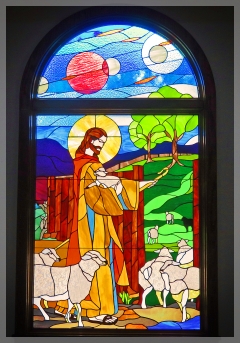

For God is Spirit, so those who worship him must worship in spirit and in truth.” [John 4:24 (NLT)]

Copyright ©2021 jsjdevotions. All rights reserved.

SABBATH CONFLICTS

What can we bring to the Lord? Should we bring him burnt offerings? … No, O people, the Lord has told you what is good, and this is what he requires of you: to do what is right, to love mercy, and to walk humbly with your God. [Micah 6:6a,8 (NLT)]

In the Holy Place of the Tabernacle, there was a table on which the showbread was placed. Consisting of twelve loaves of unleavened bread stacked in two columns, it remained on the table for a week. When new loaves replaced it, the showbread was removed and eaten by the priests in the sanctuary. Because it was holy, no one other than a priest could eat it. Nevertheless, when David and his hungry men arrived in the town of Nob where the Tabernacle was located, Ahimelech the priest gave them the previous week’s showbread once he was assured the men were ceremonially clean. Having no other food for the famished men, the priest understood that feeding them was more essential than compliance with the ceremonial law. He knew the laws of compassion, mercy and love took precedence over ritual.

A thousand years later, Jesus and his disciples were walking through a grain field on the Sabbath when the hungry men picked some heads of grain and ate them. The Pharisees charged them with breaking the law, but not because they were picking grain in someone else’s field. It was perfectly permissible to do what they’d done any other day of the week but they’d done it on the Sabbath! Although harvesting grain was one of the thirty-nine categories of forbidden work on this day of rest, it’s not as if they were reaping sheaves of grain! Actually, the hungry men were doing no more work than someone feeding himself at a table. Moreover, Jewish tradition prohibited fasting on the Sabbath.

That subtle difference, however, was lost on the Pharisees who couldn’t see beyond the technicalities of the law. After Jesus reminded them of the story of David and the sacred loaves, He pointed out that they clearly didn’t understand God’s words in Micah about preferring mercy to sacrifices and that compassion was as important as the Law. Declaring Himself Lord over the Sabbath, Jesus then claimed authority over how the Sabbath was to be observed. To the Pharisees, however, His words were heresy.

Soon after, the Pharisees continued to exhibit their lack of mercy when they condemned Jesus for healing a man on the Sabbath. Jesus exposed their inconsistency by asking if they could save an animal on the Sabbath and then pointing out that a man was more valuable than a sheep. The laws of the Sabbath were never meant to release people from the need for mercy, whether to feed the hungry or relieve the misery of the afflicted.

Jesus regularly came into conflict with the Pharisees regarding the Sabbath but His issue wasn’t with the Sabbath; it was with the Pharisees. God didn’t create the Sabbath before making man! After creating humanity, God knew people would need a rest from the burden of work so He created the Sabbath for them. “The Sabbath,” Jesus explained, “was made to meet the needs of the people, and not the people to meet the requirements of the Sabbath.”

While this sacred day of rest and worship should have been viewed as a gift from God, by Jesus’ day, it had been complicated with an extensive list of restrictions (along with a variety of devious ways to skirt them). The Pharisees, however, had built their lives around rules and regulations and when Jesus questioned their authority, they called a meeting to plot His death. They didn’t understand that our God is a God of love not ritual, a God of people not regulations, a God who asks us to do is what is right, love mercy, and walk humbly with Him.

And I know it is important to love him with all my heart and all my understanding and all my strength, and to love my neighbor as myself. This is more important than to offer all of the burnt offerings and sacrifices required in the law.” [Mark 12:33 (NLT)]

Copyright ©2021 jsjdevotions. All rights reserved.

WHAT DOES GOD WANT?

Listen to the Lord, you leaders of Sodom. Listen to the law of our God, people of Gomorrah. “What makes you think I want all your sacrifices?” says the Lord. “I am sick of your burnt offerings of rams and the fat of fattened cattle. I get no pleasure from the blood of bulls and lambs and goats.” [Isaiah 1:10-11 (NLT)]

Although Hosea and Micah told Israel that God rejected their insincere sacrifices, when Isaiah addressed the people of Judah as the wicked Gentile cities of Sodom and Gomorrah, the vehemence of God’s words was unmistakable. The prophets’ words did not mean that God was rejecting the sacrificial system but that He found their offerings and sacrifices meaningless because of the people’s depravity, hypocrisy, and superficial worship.

Sacrifices and offerings of incense, grain and animals were an essential part of the Israelites’ rituals at the time. They were made as a way of praising God, showing dedication to Him, in thanksgiving for His many gifts, as a way of asking forgiveness, and as atonement for sins. Most of Leviticus is dedicated to the conduct of sacrifices and Numbers includes additional requirements concerning offerings. Yet, some 600 years after being given those regulations, the prophets told the people that God did not want their sacrifices and burnt offerings because, without faith in and love for Him, their offerings were meaningless.

Since we no longer make burnt sacrifices at our altars, what do those prophets’ words mean to us? To me, it means that it is not enough to simply go to church, sing in the choir, usher, recite Bible verses, teach Sunday school, bring treats, participate in a small group, or be diligent about our financial offerings to the church. God wants more!

As a girl, in confirmation class, I learned that the sacraments were “an outward and visible sign of an inner and spiritual grace.” The prophets’ words tell us that, no matter what the “outward and visible sign” may be, without an “inner and spiritual grace” it is meaningless. Even being dunked in a baptismal tank or regularly taking Communion are nothing more than empty rituals if our hearts and souls are not committed to God. Just as God wanted changed lives rather than bulls, lambs, and goats from the Israelites, He wants more from us than simply going through the motions of being a Christian.

God doesn’t want us just to know His word; He wants us to live it. He doesn’t want us just to know about Him, He wants us to know Him. He doesn’t want us going through the motions; He wants us! Rather than lip service; He wants our hearts. He must be an essential part of our lives. God wants us to serve Him not just with our bodies, but with our hearts and souls.  The prophets told the Israelites what God wanted; we should listen to them!

I want you to show love, not offer sacrifices. I want you to know me more than I want burnt offerings. [Hosea 6:6 (NLT)]

Wash yourselves and be clean! Get your sins out of my sight. Give up your evil ways. Learn to do good. Seek justice. Help the oppressed. Defend the cause of orphans. Fight for the rights of widows. [Isaiah 1:16-17 (NLT)]

Copyright ©2021 jsjdevotions. All rights reserved.

REBOOTING

But let us who live in the light be clearheaded, protected by the armor of faith and love, and wearing as our helmet the confidence of our salvation. [1 Thessalonians 5:8 (NLT)]

After a security update, I was prompted to restart my computer. Although I didn’t want to stop writing for a reboot, malicious software—whether a virus, spyware, rootkit, ransom ware, Trojan horse, or whatever the latest threat is—can range from being merely troublesome to incredibly destructive, so I willingly stopped my work.

While waiting for the installation process to finish and my computer to restart, it occurred to me how much I’d like a similar program installed in my life. The damage done by cybercriminals and malware is nothing when compared to the devastation Satan can wreak on our lives. Instead of protecting us from attacks on our devices, an anti-sin program would have a firewall to protect us from external threats to our spiritual well-being. Once installed, it would warn us about potential trouble spots and regularly scan our thoughts to keep any sinful ones from sneaking in.

Mercifully, God has already provided an excellent anti-sin program and firewall in the armor of God. Like any computer program, however, it requires a reboot—the life changing one of accepting Jesus. And, like our computers, without regular updating, it becomes vulnerable to the latest threats. Our anti-sin program requires an on-going relationship with God and, if we’re not connected to His Holy Spirit, there’s no chance of defeating the enemy.

But, just as a computer’s anti-virus program can’t defend against the bad judgment of its user, neither can our anti-sin program. It’s not God’s fault when we sin—we have only ourselves to blame for our poor choices. Both computers and people are fallible and there will be times we get bugs in our software or, worse, simply crash. Since I’m technically challenged, when I run into computer problems, I call my tech savvy son-in-law (whose first advice usually is to reboot)! When it’s a spiritual problem, if we ask the Holy Spirit to show us what isn’t working properly and how to fix it, we can be sure He will. He’ll offer excellent tech support involving things like confession, repentance, prayer, Scripture, study, fellowship, and service.

To make it perform more efficiently, my computer regularly cleans out unnecessary files and then asks me to complete the process with a restart. Just as those useless files on my computer need to be eliminated to make room for new data, there’s a fair amount of rubbish in our minds—things like guilt, shame, anxiety, anger, and resentment—that should be discarded to make room for the good news of the gospel. Don’t be surprised if a reboot is required!

A final word: Be strong in the Lord and in his mighty power. Put on all of God’s armor so that you will be able to stand firm against all strategies of the devil. For we are not fighting against flesh-and-blood enemies, but against evil rulers and authorities of the unseen world, against mighty powers in this dark world, and against evil spirits in the heavenly places. [Ephesians 6:10-12 (NLT)]

Copyright ©2021 jsjdevotions. All rights reserved.

HE HAS HIS PURPOSE

“Why doesn’t the Almighty bring the wicked to judgment? Why must the godly wait for him in vain? … Then the Lord answered Job from the whirlwind: “Who is this that questions my wisdom with such ignorant words? … You are God’s critic, but do you have the answers?” [Job 24:1,38:1-2,40:2b (NLT)]

Like Job, Richard Wurmbrand suffered unspeakably horrific circumstances and certainly had reason to ponder God’s purpose in his troubles. An evangelical minister in Romania, he endured more than eight years of Communist imprisonment and torture before being released. He immediately returned to his underground church ministry, was re-arrested, and sentenced to another 25 years in prison. After six more years of imprisonment, Wurmbrand was freed under an amnesty program and again returned to his ministry. When the Communist regime accepted a $10,000 ransom for him, Wurmbrand left his homeland and became a voice for persecuted Christians. When testifying before a U.S. Senate Subcommittee in 1966, he stripped to the waist to show the 18 deep scars that covered his torso—undeniable evidence of the brutal torture he and others endured at the hands of their Communist captors.

In his 100 Prison Meditations, Wurmbrand, who knew suffering first-hand, tells a story about Moses, who was meditating near a well. When a traveler stopped to drink from the well, the man failed to notice his purse fall onto the ground. After his departure, a second man came along. Spotting the purse, he picked it up, and went on his way. Later, a third wayfarer arrived who, after drinking from the well, took a nap in the shade.

When the first man discovered his purse was missing, he returned to get it at the well. Upon seeing the sleeping man, he woke him and demanded his money. When the third man pled his innocence, the first man became furious and killed him.

Speaking to God, Moses explained that it was times like that, when evil and injustice seemed to reign, that caused men not to believe in the Almighty. “Why,” he asked, “should the first man, who merely lost his purse, become a murderer?  Why should the second man get a purse full of gold without having worked for it? And why should the third completely innocent man be slain?”

God responded that once, and only once, He would give an explanation for all that happened. God explained that the first man was the son of a thief and the purse he lost was filled with gold stolen from the father of the second man. By taking the purse, the second man only took what was rightfully his. The third man, while innocent of stealing the purse, was a murderer who’d gotten away with his crime and had finally received the punishment he deserved. God finished His explanation by saying, “In the future, believe that there is sense and righteousness in what transpires even when you do not understand.”

For those of us who’ve never endured the misfortunes of Job or Wurmbrand, it’s easy to say that all things work for good until, of course, the things that happen are terrible! Nevertheless, Wurmbrand’s story came from a man who suffered in a horrific way because of his faith and knew first-hand how unfair and painful life can be. He also knew that all things are not good—there is nothing good about torture, oppression, slave labor camps or persecution. Nevertheless, Wurmbrand also knew that God, in His own time and own way, can take bad things and mix them together in such a way that they bring about something better—a better that is not dependent upon man’s understanding.

Rather than ask why, as did Job, let us believe in a God who loves us, who is at large and in charge, who has His reasons for all that happens, and who will achieve His purpose. “And what is that purpose?” we ask. Pastor Adrian Rogers answers, “To make us like Jesus. To be conformed to the image of His Son. There is no higher good than to be like the Lord Jesus Christ.”

And we know that God causes everything to work together for the good of those who love God and are called according to his purpose for them. [Romans 8:28 (NLT)]

Copyright ©2021 jsjdevotions. All rights reserved.

LOOK DEEPER

But the Lord said to Samuel, “Do not look on his appearance or on the height of his stature, because I have rejected him. For the Lord sees not as man sees: man looks on the outward appearance, but the Lord looks on the heart.” [1 Samuel 16:7 (ESV)]

carolina wrenYesterday, when writing about the lack of physical descriptions of Jesus, I realized how rarely Scripture describes anyone. Granted, we know that Goliath was huge, Saul was tall, Ehud was left-handed, Samson had long hair, Esau was hairy, Zacchaeus was short, that Sarah, Esther, and Rachel were beautiful, and that Leah was not. Those brief descriptions, however, were necessary to explain the narrative. Other than their ages, for example, we know nothing about the appearance of Noah, Abraham, or Moses and we don’t even know the ages of any of the disciples! Appearance, however, isn’t important to God.

1 Samuel 9:2 describes Saul as “the most handsome man in Israel—head and shoulders taller than anyone else in the land.” Looking kingly, however, isn’t qualification enough to be a king. After removing Saul’s kingship because of his disloyalty and disobedience, God sent Samuel to Jesse’s house to find and anoint Israel’s new king. Once there, the prophet took one look at Jesse’s impressive-looking eldest son Eliab and was sure he found the new monarch. When God rejected Eliab, Jesse lined up the rest of his sons and Samuel continued on down the line. Going about this selection process as would a casting director—by choosing someone who looked regal—Samuel seemed to have forgotten that Israel already had a king who looked the part. What they needed was someone worthy of the role.

When God rejected all seven of Jesse’s boys, Samuel asked if there were any more. He learned of the young David out herding animals in the fields. This youngest son was so far down the family’s pecking order that his father hadn’t even summoned him to the feast but Samuel insisted on sending for him. Although David is described as being pleasant looking, with beautiful eyes and a ruddy complexion, a young shepherd boy (no matter how handsome) doesn’t sound much like king material, but God told Samuel, “This is the one.”

God explained to Samuel that He doesn’t look at a man’s appearance; He looks at a man’s heart. With his pink-cheeks and beautiful eyes David may not have looked the part, but he had the makings of a king because he was what God wanted: a man after God’s heart. [13:14] While people see what a person appears to be, God sees who that person actually is!

In spite of our best efforts not to do so, like Samuel, we tend to categorize people by their looks and often allow age, physique, beauty, ethnicity, clothing, wealth, grooming, or style to outweigh substance. If God doesn’t judge people by appearance, I wonder why we so often do. Unlike God, we can’t immediately see what’s in a person’s heart but, when we estimate a person’s worth by his exterior, we often miss the opportunity to ever see into his interior! God calls us to live by faith rather than sight; perhaps we should apply those words to the way we view our fellow travelers on this planet. Let us remember Isaiah’s description of Jesus—the Messiah who had “nothing beautiful or majestic about his appearance, nothing to attract us to him.” [53:2] That man was God’s son! If we saw Him on the streets today, would we write Him off as readily Jesse did his own son?

For he grew up before him like a young plant, and like a root out of dry ground; he had no form or majesty that we should look at him, and no beauty that we should desire him. He was despised and rejected by men, a man of sorrows and acquainted with grief; and as one from whom men hide their faces he was despised, and we esteemed him not. [Isaiah 53:2-3 (ESV)]

Copyright ©2021 jsjdevotions. All rights reserved.