
Now at this time Jesus went off to the mountain to pray, and He spent the whole night in prayer to God. When day came, He called His disciples and selected twelve of them, whom He also named apostles (special messengers, personally chosen representatives): Simon, whom He also named Peter, and his brother Andrew; and [the brothers] James and John; and Philip, and Bartholomew [also called Nathanael]; and Matthew (Levi, the tax collector) and Thomas; and James the son of Alphaeus, and Simon who was called the Zealot; Judas [also called Thaddaeus] the son of James, and Judas Iscariot, who became a traitor [to the Lord]. [Luke 6:12-16 (AMP)]
 We know Jesus prayed all night before choosing His Apostles. What made Him select those twelve men for His inner circle? Perhaps Andrew and John, having previously been disciples of John the Baptizer, were primed for the arrival of the Messiah but why did Jesus choose Andrew’s brother Simon/Peter and John’s brother James? Jesus called John and James the “Sons of Thunder,” implying they were bold, rash, and quick to anger. Why would Jesus choose them rather than men more even-tempered and less impetuous? For that matter, why four fishermen instead of students of the Torah? You don’t have to know how to cast a net to go fishing for people!
Smelling better than a fishermen but carrying the odor of corruption with him, as a tax collector, Matthew was forbidden to testify in court. Nevertheless, he was chosen to testify for Christ! Why did Jesus select Simon the Zealot? Zealots were agitators who wanted to overthrow the Roman government. Did Jesus need a radical activist in His entourage? A zealot’s sworn enemies were people like Matthew—Jews who collaborated with Rome. Yet, Jesus selected them both!
At least Jesus’ choice of Bartholomew (also called Nathanael) made more sense; Jesus called him “a man of integrity” when they first met. That Thomas was a twin or Philip came from Bethsaida hardly seem reasons for their selection. While we know both James’ (known as ”the younger” or “the lesser”) and Judas/Thaddaeus’ fathers’ names and that that Judas Iscariot was from Karioth, we don’t know why Jesus chose them either.
While Acts tells us the remaining eleven set qualifications for Judas Iscariot’s replacement, we don’t know why Jesus chose this odd assortment of men to be His inner circle of twelve. None of them were theologians or scholars; most probably were fishermen. Other than Matthew’s record keeping skills, it’s hard to see any special skills they brought to Jesus’ ministry. After all, you don’t have to know how to cast a net to go fishing for people! Why these nobodies rather than someone noteworthy or well-known? While it was prayer that determined Jesus’ selection, what about these twelve caused God to select them as the core of Christ’s church?
Twelve men, remarkably unexceptional—twelve men just like you and me. Jesus, however, wasn’t looking at their CVs; He was looking at their hearts! Rather than expertise, experience, or accomplishments, He was looking for possibility. He didn’t care who they’d been or what they’d done in the past; what mattered was who they could become and what they could do in the future. Jesus provided them with all they needed to become the people they needed to be.
The Apostles didn’t have funding, organization, church buildings, choir, websites, apps, hymnals, or even the New Testament and yet, that first Pentecost, the remaining eleven and Matthias (who replaced Judas) brought 3,000 into the new church through the power of the Holy Spirit. Because they believed in the risen Christ, twelve ordinary men accomplished the extraordinary through the power of the Holy Spirit. Just think what we could do if only we would try!
 Jeremiah told the exiles to work and pray for their captors. He explained that it was the shalom (well-being, peace, health, success, safety, and welfare) of their captors that they would ensure Judah’s shalom. For a people who’d been torn from their homeland and Temple, I expect it was difficult to understand how seeking Babylon’s prosperity would help them; but, it did!
 Jeremiah’s instructions to work and pray for the welfare of Babylon was a unique and completely unprecedented concept in the ancient world. Rather than praying for retaliation and Babylon’s collapse, God commanded them to pray for their Babylonian captors and work for the peace and prosperity of the land! Rather than rebels and a source of trouble and insurrection, the exiles were to become reliable and valuable members of the community. It seems they took God’s command to heart.
 Jeremiah 29 consists of two letters written by the prophet to the exiles in Babylon. The first (29:1-28) was sent to the recently deported elders, priests, and prophets as well as to King Jehoiachin, his mother, and the officials, craftsmen, and artisans who’d been taken as Nebuchadnezzar’s captives several years earlier. Countering the message of the false prophets promising a quick return to Jerusalem from Babylon, Jeremiah bluntly told the exiles that Israel’s captivity would last seventy years. This was unwelcome news and, preferring to believe comforting lies rather than the painful truth, people accused Jeremiah of being crazy and a false prophet. The second letter in this chapter addresses one of his accusers.
 When writing about the Annunciation of our Lord, I came upon some articles by women who take offense at the story of Jesus’ conception. Interpreting Mary’s response as involuntary, they picture the angel Gabriel’s visit to Mary as some weird sort of supernatural rape. This is inconsistent both with Scripture and God as we know Him. The Archangel didn’t say, “Surprise, you’re pregnant!” and leave nor did he physically impregnate her. Read the words as reported by Luke; Gabriel told Mary what would happen, not what had already occurred. It was only after Mary asked how the angel’s words would be fulfilled and Gabriel explained that the Holy Spirit would make it possible that she accepted God’s invitation to motherhood. It was then that the miraculous power of God—the “Most High”—came upon her.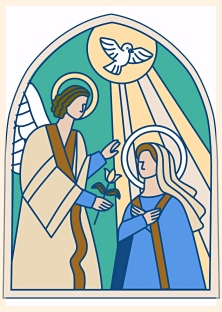
 Devotions of the Heart