SNAP IN OUR CELERY

Now that I am old and gray, do not abandon me, O God. Let me proclaim your power to this new generation, your mighty miracles to all who come after me. [Psalm 71:18 (NLT)]

pansyEvery year, Britain’s The Oldie magazine celebrates the achievements of the “older generation’ by granting their “Oldie of the Year Awards.” According to the magazine’s founder, Richard Ingrams, it’s not enough for someone simply to be an “elderly achiever”—you also must show that you still have “snap in your celery.” This year, wanting to recognize Queen Elizabeth II for her leadership during the pandemic, the magazine offered her the honor of being their “Oldie of the Year.” The 95-year-old monarch, however, politely declined saying, “Her Majesty believes you are as old as you feel, as such The Queen does not believe she meets the relevant criteria to be able to accept, and hopes you will find a more worthy recipient.” What a great attitude; there’s a woman who still has snap in her celery!

What defines “old?” Is it a matter of years or mind? When we spent our winters in Colorado, we often saw Banana George (aka George Blair) in his signature yellow jumpsuit shredding the slopes on his yellow snowboard. In his eighties and early nineties at the time, George didn’t even learn to snowboard until he was 75. This stunt water skier and star of the Cypress Gardens water show was 40 before he even learned how to water ski! At 46, George started barefoot water skiing and became famous for skiing on one foot while holding the tow rope between his teeth (a feat he continued doing until he was 79)! George continued water skiing and snowboarding until he was 92 when, suffering from the devastating effects associated with Lewy Body Dementia, he reluctantly put away his water skis and snowboard. When speaking of George, his wife said, “He wanted to make people happy, so he did all these things and made everybody happy.” Banana George certainly had “snap in his celery!”

It’s easy for us “seniors” to consider youth a prerequisite for serving God and even easier for the younger generation to think of us as “over the hill.” After all, David was about seventeen when he defeated Goliath and Daniel and his three friends were in their mid-teens when they boldly refused to eat the king’s food. Shadrach, Meshach and Abednego were no more than thirty when they bravely chose a fiery furnace over worshiping Nebuchadnezzar’s statue. Samuel was just a lad when he readily answered God’s call, Jeremiah was only 17 when he became a prophet, Esther was barely out of her teens when she saved a nation, and Mary was barely in her teens when she chose to become mother to the Messiah. It’s believed that Timothy was around 20 when he joined Silas and Paul on the Apostle’s second tour through Asia Minor and less than 40 when he took charge of the church at Ephesus.

Youth, however, is not a requirement for doing God’s work. Abraham was 75 when he left Haran and headed for Canaan. 80 when he led the Israelites out of Egypt, Moses guided them for another 40 years. When they led the Israelites across the Jordan, we know that Caleb was 79 and Joshua was about the same age. Moreover, contrary to popular belief (and most Sunday school coloring pages), Daniel was not a young man when he faced those lions. 66 years had passed since his arrival in Babylon and, by the time he was thrown to the lions, Daniel was around 82! At that age, we’d expect a stroke or heart attack to finish him off before the hungry beasts could. Nevertheless, Daniel survived and continued to record his prophetic visions for at least three more years. Along with their faith in God, these men had snap in their celery!

We probably won’t be nominated as the “Oldie of the Year” or water ski and snowboard until our nineties but, like Queen Elizabeth and “Banana” George, we can continue to have a passion for life. Moreover, like those Biblical “oldies” we can have a passion for serving the Lord. Since none of us are old by God’s standards (after all, He’s older than time itself), our age should be determined by attitude rather than years. As Author Erma Bombeck once said, “When I stand before God at the end of my life, I would hope that I would not have a single bit of talent left and could say, ‘I used everything you gave me.’” May we all endeavor to keep the snap in our celery!

Here is the test to find whether your mission on earth is finished: If you’re alive, it isn’t. [Richard Bach]
Though our bodies are dying, our spirits are being renewed every day. For our present troubles are small and won’t last very long. Yet they produce for us a glory that vastly outweighs them and will last forever! [2 Corinthians 4:16b-17 (NLT)]

Copyright ©2021 jsjdevotions. All rights reserved.

THE ESCAPE ROOM

Two people are better off than one, for they can help each other succeed. If one person falls, the other can reach out and help. But someone who falls alone is in real trouble. Likewise, two people lying close together can keep each other warm. But how can one be warm alone? A person standing alone can be attacked and defeated, but two can stand back-to-back and conquer. Three are even better, for a triple-braided cord is not easily broken. [Ecclesiastes 4:9-12 (NLT)]

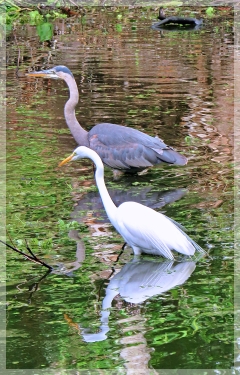
great egret - great blue heronWhen visiting our daughter’s family in New Mexico one October, stormy weather caused us to switch from the pumpkin patch/corn maze outing to an escape room attempt. With just an hour to solve a mystery and “escape,” we entered into a room filled with assorted puzzles, locks, props, and gadgets. Knowing we had to discover clues and complete a series of clever puzzles, we novices decided to divide and conquer. Each person worked on a different task speaking to their individual strengths. I worked on word puzzles while others worked on number challenges, dexterity puzzles, combination locks, or searched for hidden clues.

Silently working on our individual tasks, we missed important clues like the picture of randomly placed fruit. Had we counted the six apples, four lemons, two pineapples, and eight limes, we would have known the four numbers we needed to open a combination lock! Thinking the content of a letter was important, we missed seeing that it was an acrostic with the first letter of each line spelling the clue!

Wanting to prove our stellar problem-solving skills, we hesitated to ask our game guide for help. It wasn’t until we consulted her, talked with one another, and started working as a team that we made any headway. With less than five minutes left, we finally unlocked the kitchen door—only to find that it led into another locked room with even more hidden clues! Our guide is the one who finally released us. Even though we held a up sign saying “epic fail” in our post-game photo, we learned some valuable lessons about life.

Sure that we were as smart as the game master and wanting to get bragging rights for completing it on our own, rather than asking for help, we wasted time spinning our wheels and getting nowhere. Isn’t that what we do with God by only going to Him when all else fails? After all, if we do it by ourselves, we get the glory but, when we ask for God’s help, He gets the glory! Paul, however, tells us that God’s power works best in weakness: “So now I am glad to boast about my weaknesses, so that the power of Christ can work through me. … For when I am weak, then I am strong.” [2 Corinthians 12:9-10]

Ignoring the wise words of Ecclesiastes, rather than help one another, we divided to do our own thing. No one, however, makes it through an escape room alone—it’s a team effort and so is life! Escape rooms require collaboration, cooperation, communication, and listening to one another (even when the idea seems crazy); so does life in Christ.

Although we each had our own particular gift set and abilities—it wasn’t until we appreciated the gifts of others that we made any headway. Being the shortest one in the room, my grand saw a code on the baseboard that we bigger people missed. Even though she wasn’t good with letters or numbers, she spotted what turned out to be the most important clue! No one’s gift is more or less valuable when it’s a team effort. Isn’t that what Paul is telling us in 1 Corinthians 12?

The final lesson we learned was a simple one—don’t be afraid to lose. Failure—even an epic one like ours—is an inevitable part of playing any game so it’s best to embrace the game rather than the outcome. As for our life in Christ—we too will experience failure. With the exception of Jesus, no one else in Scripture did life perfectly. Nevertheless, because we believe in Jesus, we know the eventual outcome is a win. In the meantime, let us find joy in our journey, regardless of its challenges and difficulties.

The human body has many parts, but the many parts make up one whole body. So it is with the body of Christ. … But we have all been baptized into one body by one Spirit, and we all share the same Spirit. Yes, the body has many different parts, not just one part. If the foot says, “I am not a part of the body because I am not a hand,” that does not make it any less a part of the body. And if the ear says, “I am not part of the body because I am not an eye,” would that make it any less a part of the body? If the whole body were an eye, how would you hear? Or if your whole body were an ear, how would you smell anything? But our bodies have many parts, and God has put each part just where he wants it. How strange a body would be if it had only one part! 20 Yes, there are many parts, but only one body. The eye can never say to the hand, “I don’t need you.” The head can’t say to the feet, “I don’t need you.” In fact, some parts of the body that seem weakest and least important are actually the most necessary. [1 Corinthians 12:12-22 (NLT)]

Copyright ©2021 jsjdevotions. All rights reserved.

LOST IN THE MAZE, AGAIN

All of us like sheep, have strayed away. We have left God’s paths to follow our own. [Isaiah 53:6a (NLT)

blue morning gloryIn the years that followed our first maze experience, we continued the pumpkin patch/corn maze tradition but at a farm with a smaller and easier maze. While there were no arrows on stakes to assist the totally confused, there was a larger and better map. Since my daughter and husband have a far better sense of direction than do I, they carried the map and led the rest of us through the maze.

When grazing, sheep like to keep at least four or five other sheep in eyesight and I’m no different. As long as the family remained in view, I paid no attention to where we were. On one outing, after noticing some deep blue morning glories, I stopped to take photos. Spotting a butterfly near the flowers, I briefly turned away from the family to follow it down the trail. When I turned around, my family was nowhere in sight. With no map and in a labyrinth of corn stalks, I was totally lost. Every path seemed to be a dead end and, having left my phone in the car, I couldn’t even make a call! As I wandered in what I hoped was the right direction, I grew anxious. Eventually, I heard someone call my name. Looking up, I saw my family standing on a high viewing platform in the middle of the corn field. From their vantage point, they managed to guide me through the maze until I rejoined them.

Until I got lost in that maze, I’d often wondered about Jesus’ parable of the Good Shepherd. If the shepherd was properly shepherding his flock, how did that one sheep get lost? Now I know! By guiding the flock, the shepherd was doing his job and, by obediently following their shepherd, the rest of the flock were doing theirs. But, that one lost lamb wasn’t paying attention to either shepherd or flock. Perhaps it stopped for some tasty red clover and, after spotting a field of pink vetch, had wandered over for a nibble of it. Maybe, like me, it followed a butterfly and, before the lamb knew what happened, it was all alone. It didn’t mean to stray; it just stopped following the flock and paying attention to the shepherd. Once on its own, the lamb was vulnerable to attack. Fortunately, the good shepherd went looking for it just as my family looked for me.

It’s incredibly easy to lose our way, not just in mazes and pastures, but in the complicated, bewildering, and often perilous world in which we live. Knowing that predators go after the lone sheep that wanders from the herd, our Shepherd has given us His flock—the people of His Church. Unfortunately, instead of morning glories or butterflies, we can get distracted by anything from busyness to boredom, success to defeat, or prosperity to poverty. We don’t mean to stray from the Shepherd’s flock but things like ambition, popularity, self-importance, doubt, worry, discontent, anger, guilt, or disappointment easily can sidetrack us. We start to wander and, before we know it, we’re lost and vulnerable to the enemy’s attack. Fortunately, we don’t need a phone to call our Good Shepherd; a simple prayer is all it takes.

Staying connected with other people of faith—people who follow the Shepherd and will guide us when we’re lost, encourage us when we’re overwhelmed, and correct us when we make a wrong turn—is vital for our survival. As I discovered in the corn maze, it’s best to stay close to the people who have the map and know where they’re going! On the other hand, as members of His flock, it’s important to notice when one of His sheep goes missing.

After he has gathered his own flock, he walks ahead of them, and they follow him because they know his voice. They will listen to my voice, and there will be one flock with one shepherd. … My sheep listen to my voice; I know them, and they follow me.  [John 10:4,16b,27 (NLT)]

Copyright ©2021 jsjdevotions. All rights reserved.

LOST IN THE MAZE

Your word is a lamp to guide my feet and a light for my path. [Psalm 119:105 (NLT)]

scarecrowAlthough we usually visit my daughter’s family in New Mexico in October, my broken ankle canceled our plans. The only bright spot in the cancelation is that I won’t have to participate in the dreaded family tradition of navigating through the corn maze at the pumpkin farm! I say “dreaded” because I’m so directionally challenged that I’d have trouble finding my way out of a box. Actually, after our first outing, I’m surprised any of us ever again ventured into another corn maze.
For our first venture, we chose what was reported to be the best (and largest) maze in the area—a 16-acre corn field that had been transformed into an intricately designed labyrinth. Although we had a small map, we soon became convinced that it was for an entirely different maze. Between the trail’s fiendish twists and turns and its 6-foot walls of corn stalks, we soon were totally lost. We had no idea where we were, let alone where we’d been or where we were going. Hot, thirsty, and tired, the little ones started to whine and complain and we adults weren’t much better. What was supposed to be a fun family outing was turning into a miserable afternoon.

While pausing to finish the last of our water, my husband happened to glance down at the stakes placed along the pathways. Connected by twine, they kept people from taking shortcuts or straying off the convoluted trail into the corn. Seeing that some stakes had a barely noticeable tiny arrow drawn on their  ends, we tried following the markings. Finding that they never led us into dead ends or left us walking in circles, we continued following those arrows all the way to the exit. Even though the solution to our problem was right in front of us, in our frustration, we hadn’t seen it.

While wandering through that maze, we were like a flock of sheep without a shepherd—and a flock without a shepherd is just a herd of lost sheep (maybe even dead ones since they’ve been known to follow one another off cliffs or into deep water)! While we may be smarter than sheep, like them, we need guidance and our Shepherd is the Lord. While it’s easier to follow His lead when all is going well and the path seems straightforward, it grows more difficult when the path He’s laid out for us is a complicated or challenging one. In God’s world, however, there are no shortcuts and sometimes we have to navigate through what seems a hopeless maze. Think of the convoluted routes taken by the Apostle Paul on his four mission trips, the less than straightforward route to Canaan God gave Moses, and the many years and challenges encountered by David before he became king. The paths on which God placed them were filled with twists, turns, and even a few dead ends.

Although our Shepherd will never abandon us, it sometimes seems as if He has. Feeling hopelessly lost, we find ourselves unsure of where to go or what to do as we wander through a maze of difficulties or major decisions. Rather than tiny arrows drawn on wooden stakes, God guides us through our journey with His word. Without it, we can find ourselves as lost as my family was in that corn field. Whether the path God puts us on is a complex maze or a straightforward four-lane freeway, He has provided us with all the guidance we need in Scripture. Far more accurate than our useless map and easier to understand than those arrows, His word can be trusted to lead us through our troubles to hope, safety, sustenance, strength, and peace.

 All Scripture is inspired by God and is useful to teach us what is true and to make us realize what is wrong in our lives. It corrects us when we are wrong and teaches us to do what is right. God uses it to prepare and equip his people to do every good work. [2 Timothy 3:16-17 (NLT)]

Copyright ©2021 jsjdevotions. All rights reserved.

THE APOLOGY

She fell at his feet and said, “I accept all blame in this matter, my lord. Please listen to what I have to say.” [1 Samuel 25:24 (NLT)]

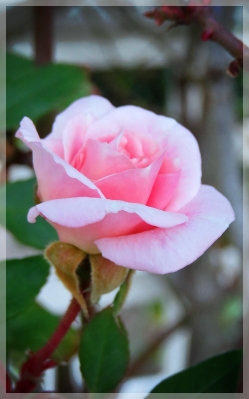
roseWhile visiting my son last summer, I was walking in his neighborhood when a car raced out of a blind driveway and, without even slowing to look for cars or people, sped down the street. If I hadn’t paused briefly by the gate to get a flower photo, I would have had an intimate encounter with the vehicle. After thanking God that I hadn’t become road kill, I continued down the road and turned onto the walking path. I was a little disconcerted when a car approached and stopped but, when the driver lowered his window and called out to me, I realized it was the driver of the speeding car. After offering an earnest apology, he explained he’d been late for a meeting but added that his tardiness was no excuse for his recklessness. Ashamed of his behavior, he’d returned to make sure I was OK. Assuring him I was fine, I wished him well. I was both shocked and touched by the unexpected apology. While unnecessary, it was much appreciated since I knew the driver probably lost another ten minutes by turning around to find me and apologize.
The story of David, Nabal, and Abigail highlights the importance of apologies. David and his men were hiding from King Saul in the wilderness when they came across Nabal’s shepherds and flock of sheep. Rather than stealing any animals for themselves (as might be expected by a hungry army), David’s men formed a line of protection around the flock so that no harm would come to them or the shepherds.

When sheep shearing time arrived, David sent ten men to Nabal to request provisions for David’s troops. This was not an inappropriate request. By accepting David’s protection, Nabal’s shepherds had obligated their master to make provision for the men. With 3,000 sheep and 1,000 goats, Nabal was a wealthy man and some of that wealth was because David’s men had guarded it! Moreover, Israelite law and tradition demanded that hospitality be offered to travelers. While an honorable man would have met his obligations, Nabal (whose name meant “fool”) lived up to his name and refused the request with rudeness and contempt. When the men reported Nabal’s boorish response, the angry David gathered 400 of his men and set out to kill every man in Nabal’s household.

In the meantime, a servant reported his master’s rashness in offending David to Nabal’s wife Abigail. Knowing an apology can do a lot to diffuse a difficult situation, the wise woman quickly packed up an enormous quantity of food and wine and went to meet David. After humbly apologizing for her husband’s boorish behavior, she offered the provisions to David’s men. Considering Nabal’s personality, this probably was not the first time Abigail had to apologize for her husband’s foolish and offensive conduct. Her heartfelt apology averted the senseless tragedy that would have occurred had David carried through his attack. Upon learning of his wife’s generosity, Nabal suffered a stroke and died ten days later. In what could be called poetic justice, David ended up marrying the lovely and wise widow.

An apology isn’t just saying we’re sorry, especially when, as often is the case, it includes justification for our poor behavior. A true apology is like the driver’s and Abigail’s. It is offered with a humble heart, admits being in the wrong, expresses regret, and makes restitution for any offense. “Blessed are the peacemakers,” said Jesus; one of the ways we make peace is with an apology!

Never ruin an apology with an excuse. [Benjamin Franklin]

Fools make fun of guilt, but the godly acknowledge it and seek reconciliation. [Proverbs 14:9 (NLT)]

Turn away from evil and do good. Search for peace, and work to maintain it. [Psalm 34:14 (NLT)]

Copyright ©2021 jsjdevotions. All rights reserved.

HEEDING THE SIGNS

sandhill cranesSo you, too, must keep watch! For you don’t know what day your Lord is coming. [Matthew 24: 42 (NLT)]

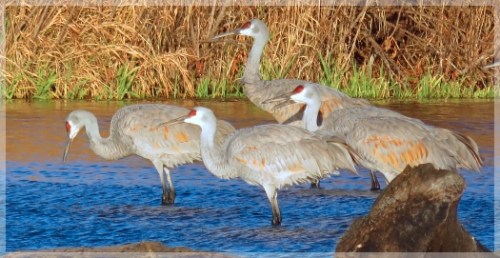
Yesterday, when writing about the migratory birds’ staging area near our northern home, I remembered the year they weren’t in a rush to depart. Autumn that year had been unseasonably mild with temperatures hovering in the 60s and we’d returned north in November to celebrate my mother-in-law’s birthday. The day we headed out to the park, however, the weather had taken a sharp turn toward winter. The day’s high of 37° occurred before sunrise and the season’s first snowfall was expected that night. While walking through the park that cold fall day, we were surprised to see hundreds of Sandhill Cranes and Canada Geese still in the marsh. Apparently, the mild fall weather and still plentiful food caused them to recklessly delay their departure south. The marsh soon would freeze and food would be scarce, not just in the park, but all along their migration route. Seemingly oblivious to the danger, the birds were like the people of Noah’s day or the inhabitants of Sodom and Gomorrah—having a rollicking good time right up until disaster rained down on them. By the time they realized what was happening, it was too late! I hoped it wouldn’t be that way with the birds.

Looking at the upheaval of the last two years, many are reaching for their Bibles and wondering if we’re seeing signs of the apocalypse. We read of death by “the sword and famine and disease and wild animals,” in Revelation 6:8. Luke 21:9-10 records Jesus speaking of wars, insurrections, earthquakes, famines, plagues, and “terrifying things.” As much as that sounds like today, it probably sounds a great deal like much of mankind’s troubled history. Our century is not the only one troubled by pandemics, conflict, catastrophe, natural disasters, violence, scarcity, and loss. Jesus, however, said that no one (not even He) knows the day or hour of His return. Nevertheless, just as the sudden drop in temperature and wintery wind warned those birds of winter’s approach, these could be warning signs of things to come and the Bible tells us to be vigilant.

As with the flood and Sodom’s destruction, swift and sudden judgment will accompany Jesus’ return. Jesus compared His second coming to the surprise arrival of a thief in the night and both believers and unbelievers won’t know when that thief will appear. While unbelievers have good reason to fear that day, Christians don’t. To carry the thief metaphor further, we aren’t afraid of the thief because we’re well insured. Our acceptance of Jesus gives us assurance of salvation; our sins are mercifully forgiven and we have everlasting life. We’ve read the book and know how the story ends!

When we returned to the park two days later, the marsh was frozen but the birds were gone. They’d seen the signs and made the right decision; unbelievers should do the same.

Live as if Christ is coming in the next 10 minutes. Plan as if He is not coming for 1,000 years. [Roger Barrier]

Since everything around us is going to be destroyed like this, what holy and godly lives you should live, looking forward to the day of God and hurrying it along. On that day, he will set the heavens on fire, and the elements will melt away in the flames. But we are looking forward to the new heavens and new earth he has promised, a world filled with God’s righteousness. And so, dear friends, while you are waiting for these things to happen, make every effort to be found living peaceful lives that are pure and blameless in his sight. [2 Peter 3:11-14 (NLT)]

Copyright ©2021 jsjdevotions. All rights reserved.