
When Jesus had received the sour wine, he said, “It is finished,” and he bowed his head and gave up his spirit. [John 19:30 (ESV)]
 It’s been said that Leonardo da Vinci’s last words were, “I have offended God and mankind because my work did not reach the quality it should have.” A scientist, painter, architect, mathematician, musician, sculptor, geologist, botanist, historian, cartographer, and inventor, da Vinci was a true Renaissance man and it’s difficult to understand how he could feel he failed God or anyone else.
I hope my last words won’t be as depressing as da Vinci’s or as foolish as those of Major General John Sedgwick who, just moments before he was shot and killed during the Civil War, said, “They couldn’t hit an elephant at this distance!” I’d like to think my last words will be as faith-filled as those of blues singer Bessie Smith’s, “I’m going, but I’m going in the name of the Lord!” or Harriet Tubman’s, “Give my love to the churches. Tell the women to stand firm. I go to prepare a place for you.” Nevertheless, my words probably will be as mundane Elvis Presley’s, “I’m going to the bathroom to read.”
While Nostradamus correctly predicted his death when he said, “Tomorrow, at sunrise, I shall no longer be here,” most of us won’t know when the words we speak will be our last ones. Jesus, however, knew his earthly life was ending when He spoke from the cross. He’d been hanging there for several hours and the weight of his body pulling down on his arms meant he could barely breathe. John tells us Jesus said, “It is finished!” and then died. After hearing those words, can you imagine the heartbreak of His followers? This was Jesus, the man who calmed storms, fed thousands, and healed lepers! This was the promised Messiah! How could it be finished? Everything His disciples believed and hoped for was gone! Was this how their story would end?
Last words, however, aren’t always what they seem. Jesus’ words and the crucifixion were only the end of the first act. What the disciples didn’t understand on that dark Friday afternoon was that the story was just getting started. Three days later, the resurrection opened the second act. Forty days after His resurrection, the second act closed with Jesus’ ascension into heaven. Although He spoke to the disciples and blessed them before His departure, Matthew, Mark, Luke, and John included different portions of Jesus’ final words. Nevertheless, His message was the same: our sins are forgiven, we are to go out into the world and make disciples, and the power of the Holy Spirit is promised. When Jesus physically left the disciples with His ascension into heaven, the second act ended, but the words He spoke were not His final ones. Because He promised both His presence and His return, we know there’s more to come!
The third act began with the Spirit’s presence on Pentecost and continued when Jesus spoke to Saul on the road to Damascus and revealed Himself to John on Patmos. While probably less dramatic than Paul’s encounter and less graphic than John’s, the Lord continues to speak to us today through His living word (the Bible), prayer, and in the Holy Spirit’s beautiful whisper. The only last words to be spoken in the third act will be ours when we depart the stage—whether they are as mundane as those of Elvis or as memorable as da Vinci’s. Nevertheless, when the curtain closes for us, the story still is not over!
The glorious fourth act begins when we come home to Jesus and hear His voice again. This final act has no ending and there will be no last words spoken. It never is finished and the curtain never will fall!
Let not your hearts be troubled. Believe in God; believe also in me. In my Father’s house are many rooms. If it were not so, would I have told you that I go to prepare a place for you? And if I go and prepare a place for you, I will come again and will take you to myself, that where I am you may be also. [John 14:1-3 (ESV)]
Truly, truly, I say to you, an hour is coming, and is now here, when the dead will hear the voice of the Son of God, and those who hear will live. [John 5:25 (ESV)]
Copyright ©2024 jsjdevotions. All rights reserved.
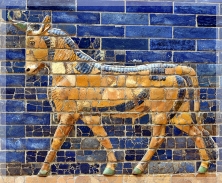 Some believers insist that unicorns actually existed because they are mentioned nine times in the Old Testament. Claiming the Bible is completely without error, they insist that you must believe the same thing—including the unicorns! On the other hand, some people disparage believers and discount all of Scripture because of those same unicorns! Do we blindly believe or do we “throw out the baby with the bathwater” because of one word?
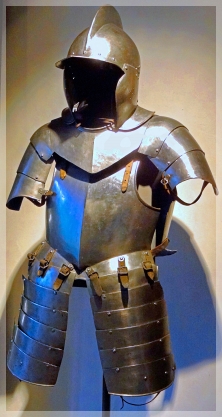 Back in in 1586, during the Eighty Years’ War, Sir Philip Sidney was fighting for the Protestant cause against the Spanish when he noticed another soldier was without leg armor. Believing that he shouldn’t be better protected than his men, Sidney gave the man his cuisses (armor that covered the thigh). During the Battle of Zutphen, Sidney was fatally wounded in his thigh during the final charge and, three weeks later, he died of gangrene from the injury. While heroic, his death was avoidable if the man had worn his complete set of armor!
 God’s armor includes the belt of truth, the breastplate of righteousness, the shoes of the gospel of peace, the shield of faith, and the helmet of salvation. No soldier, however, would go into battle without a weapon. While a soldier might go into battle without armor as did David when he met Goliath, he’d never go without a weapon. The young shepherd’s weapon was a handful of stones but the Christian’s weapon is the “sword of the Spirit, which is the word of God.”
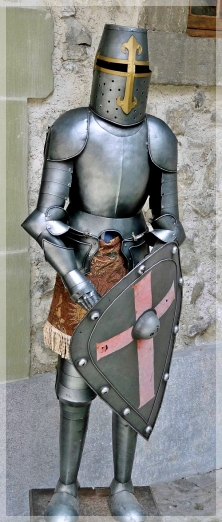 As a young child, I loved singing “Onward, Christian Soldiers” in Sunday school. My enthusiasm for the hymn waned as I grew older and learned about the evil and horrors of the Crusades and the World, Korean, and Vietnam wars. With its mention of war, soldiers, mighty armies, battles, and foes, the hymn seemed to glorify war. Even though the martial imagery comes from Biblical texts, the hymn’s combination of soldiers marching into battle and Jesus (the Prince of Peace) has caused controversy and some denominations have eliminated it from their hymnals.
 Described as a “preaching genius…like no other preacher you have ever heard,” the late Rev. Fred Craddock was well-known for including stories in his sermons. He told one that took place during the early 60s in a diner in the deep South. Although the white Craddock sat in a booth and was served with courtesy and consideration, he silently watched the diner’s manager treat a Black man at the counter with rudeness, disdain, and open contempt. Although offended by the man’s racist behavior, Craddock remained silent. It was when he walked out of the diner after finishing his meal that the preacher heard a rooster crow. A signal of his betrayal, the crowing told the preacher that, by ignoring one of the “least of these”, he’d ignored Jesus! His silence was as much a betrayal of the Lord as were Peter’s denials!
 Devotions of the Heart