THE SHEMA (Part 2)

The tassels will help you remember that you must obey all my commands and be holy to your God. I am the Lord your God who brought you out of the land of Egypt that I might be your God. I am the Lord your God! [Numbers 15:40-41 (NLT)]

great blue heronIn its entirety, the Shema consists of three sections: Deuteronomy 6:4–9, Deuteronomy 11:13–2, and Numbers 15:37–41. The second paragraph of the Shema repeats the first one’s commands regarding the binding of God’s words to hands and forehead, writing them on the doorways and gates, teaching them to the children, and talking about them throughout the day. The primary theme of this paragraph, however, is that the promised land and the people’s enjoyment of it depended on their faithfulness to God. As long as they loved God and served Him with heart and soul, the people and land would be blessed but, if they turned aside to serve other gods, God’s wrath would result and things would not go well for the people or their land. In this warning, that is repeated again and again throughout the Old Testament, we see the fundamental Jewish belief that reward and punishment are based on the fulfillment of God’s commandments.

The third section of the Shema required the wearing of tassels or fringes (tzitzit) on the hems of clothing. Like the tefillin and mezuzot commanded in the first two sections, the fringes were a visual reminder to obey the commandments and “be holy to your God.” The final command of this last section was to remember the Exodus and that it was the Lord who brought them out of Egypt.

It was a Biblical commandment to recite the Shema twice a day. Morning and night, the Israelites were to acknowledge the one God, who they were to love with heart, soul, and strength, and whose commandments they were to keep. Twice a day, they were reminded to impress God’s word on the next generation and, twice a day, they repeated God’s warning that things would not go well if they abandoned Him or turned to other gods. So, what went wrong? Did the Israelites put so much emphasis on performing rituals—repeating these words twice a day, putting on their tefillin, measuring the length of their tzitzit, and placing their mezuzot—that they forgot the rituals’ meanings? Did they let rituals replace loving God with their heart, soul, and strength? Were they so intent on doing the right thing that they forgot to be the right people? Did they start trusting in themselves rather than God?

God gave the Israelites a simple command—love the Lord alone, with heart, soul, and strength—and He gave them an equally simple choice—a blessing or a curse. He makes the same offer to us. The blessing, however, isn’t a reward; it’s a result. When we revere God, love Him fully, and put His word into practice, life will go well for us because God’s way is the right way and the right way is blessed. Like the blessing, the curse is the result of our choice and is found in the life we choose. A life lived without God is a cursed one. Even with tefillin on their arms and heads, mezuzot on their doorposts, tassels on their hems, and the continued repetition of the Shema’s words, the Israelites forgot the Lord and went their own way; let us not make the same mistake.
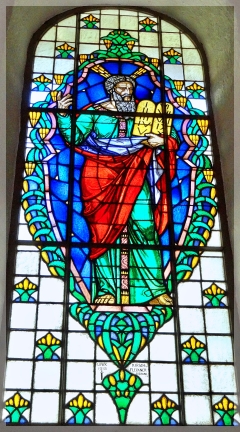
Today I have given you the choice between life and death, between blessings and curses. Now I call on heaven and earth to witness the choice you make. Oh, that you would choose life, so that you and your descendants might live! You can make this choice by loving the Lord your God, obeying him, and committing yourself firmly to him. This is the key to your life. [Deuteronomy 30:19-20 (NLT)]

Copyright ©2021 jsjdevotions. All rights reserved.

THE SHEMA (Part 1)

Hear, O Israel: The Lord our God, the Lord is one. You shall love the Lord your God with all your heart and with all your soul and with all your might. And these words that I command you today shall be on your heart. You shall teach them diligently to your children, and shall talk of them when you sit in your house, and when you walk by the way, and when you lie down, and when you rise. You shall bind them as a sign on your hand, and they shall be as frontlets between your eyes. You shall write them on the doorposts of your house and on your gates. [Deuteronomy 6:4-9 (ESV)]

Meiringen-MichaelskircheMy morning’s reading took me to Deuteronomy 6 and the words that Jesus cited as the first, and most important commandment. Known as the Shema and found in verses 4 through 9, it is the essential declaration of the Jewish faith. Its name comes from the first Hebrew word of the verse, shema, which means “hear.” Observant Jews recite its words twice a day (morning and evening), on the Sabbath and religious holidays, and as the last words before death. The Shema is so entrenched in Judaism that a story is told about Rabbi Yitzhak Herzog who, in 1946, went searching for Jewish children who’d been hidden by Christians during the Holocaust. As he walked through European convents, monasteries, and orphanages, the rabbi would start to recite the Shema. He easily found the Jewish children because they immediately joined in saying the sacred words.
The Shema’s first words sum up the essence of Judaism—there is only one true God and He is Israel’s God. During the time of the Temple, a second line was inserted into the Shema. After the priest recited, “Hear, O Israel: The Lord our God, the Lord is one,” the congregation replied, “Blessed be the name of the glory of His kingdom forever and ever.” In acknowledgement that this phrase is not part of the original Scripture, it usually is said in an undertone. The rest of the original prayer then follows.

When Moses passed these words along to the Israelites, they had spent centuries surrounded by people who worshipped many gods. The Shema’s daily repetition impressed upon them that love, obedience, and faithfulness to their one true God was the only way to live. These words may have been passed to the Jews some 3,500 years ago but its message holds true for all of God’s children—there is one true God and He is ours!

The rest of the original Shema details how that belief in the one true God is to be lived and its words continue to apply to Christians as well as Jews. We are to love Him with our whole being, teach his word to the next generation, make His words part of our daily conversation, and impress His word into all aspects of our lives.

In verses 8 and 9, we find the command to bind the God’s words to our hands, foreheads, doorposts, and gates. Taking the words literally, Jews wore black leather boxes (tefillin) containing scripture on their heads and arms and placed mezuzot, containing part of the Shema, on their doorposts. Observant Jews continue to do so today.

Even when taking those instructions figuratively, it’s not difficult to understand what is meant by placing God’s word between our eyes or on our arms. God’s words must affect the way we think and see as well as our every action. While we don’t place Scripture on doorways and gates, when stepping into a Christian’s home or workplace, God’s presence and influence should be felt by all who enter. For the Christian, the Shema’s words mean that we are to write God’s words in our hearts and minds and love Him with our whole being!

Because the words of the Shema were important to Jesus, they are important to us. Whether Christian or Jew, I can’t think of a better way to start or end my day than with these words: “The Lord our God, the Lord is one. You shall love the Lord your God with all your heart and with all your soul and with all your might.”

And one of the scribes…asked him, “Which commandment is the most important of all?” Jesus answered, “The most important is, ‘Hear, O Israel: The Lord our God, the Lord is one. And you shall love the Lord your God with all your heart and with all your soul and with all your mind and with all your strength.’” [Mark 12:28-30 (ESV)]

Copyright ©2021 jsjdevotions. All rights reserved.

DECORATION DAY

God blesses those who mourn, for they will be comforted. [Matthew 5:4 (NLT)]

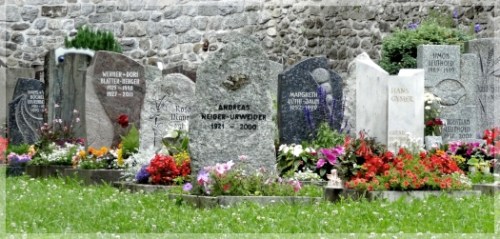
michaelkirsch cemetery - meringen switzerlandMany of the younger generation don’t know that yesterday’s Memorial Day originally was called Decoration Day and originated in the years following the Civil War. With some 620,000 dead from that conflict, communities began holding tributes to the fallen soldiers by reciting prayers and decorating their graves with flowers, flags and wreaths. The practice of leaving flowers at gravesites may have begun with the ancient Greeks who believed that, if the flowers took root and grew, the fallen had found peace or happiness in the afterlife.
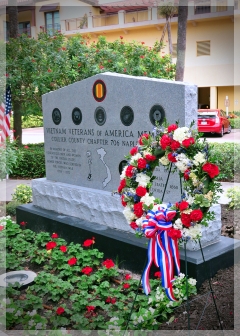
Decorating graves with flowers and other memorabilia occurs throughout the year and isn’t limited to fallen warriors. When my mother-in-law was alive, I placed flowers on my father-in-law’s grave but I only did it because those flowers were important to her. They were placed to honor a living woman rather than her dead husband; I remember that wonderful man in other ways.

Forty-five years ago, we attended a Celebration of Life for my uncle and one of the speakers shared a quote that, even with Google, I have been unable to find. Although the exact wording is forgotten, the gist of it has continued to stay with me. In effect, its words were, “When you’re in a beautiful place, think of me so that I can come and share it with you!”

Whenever we attend the symphony, I remember that uncle and how much he would have enjoyed hearing the violins and reading the program notes. When I see a beautiful rose, dig in the garden, or read anything by C.S. Lewis, I remember my mother and how much she would have enjoyed the same things. When I schussed down a great run or enjoyed après ski fun, I thought of my brother and how he would have treasured a day like that. Watching men fishing in a mountain stream or hunters in their camouflage brings to mind my father and the avid sportsman he was. When my son discusses business with his father, I remember similar conversations my husband had with his dad and, whenever I bake spritz cookies or eat ripe red cherries, I joyfully remember our beloved GG. Even though I don’t think their spirits come and share those experiences, for a brief moment, those I’ve loved are again with me. Rather than decorating their graves, I have carried them forward into an unrealized future.

I want no flowers on my grave; then again, I want no grave. I do, however, want to be remembered. When the time comes, I hope my loved ones will remember me whenever they come upon a field of wildflowers, see a butterfly, eat chocolate chip cookies, hike the Rockies, or ski in deep power. Maybe they’ll even yell a joy filled “Ye-haw!” for me.

God promises to comfort us in our mourning. Indeed, there is comfort in our faith—in knowing that our loved ones who followed Jesus are with God and that someday we will be reunited. Although faith helps, it’s the memories of our loved ones that finally get us through the heartache of loss. Our memories are the way God heals our broken hearts.

As for decorating graves—we should send flowers to the living while they can still enjoy them. Smiles shared with our loved ones today will be far more welcome than tears at their gravesides tomorrow. As for flattering eulogies and glowing obituaries, perhaps those words of admiration should be spoken to the person now rather than about them at some later date.

Death leaves a heartache no one can heal; love leaves a memory no one can steal. [From a headstone in Ireland]

He heals the brokenhearted and bandages their wounds. [Psalm 147:3 (NLT)]

The Lord is close to the brokenhearted; he rescues those whose spirits are crushed. [Psalm 34:18 (NLT)]

Copyright ©2021 jsjdevotions. All rights reserved.

A MINUTE TO REMEMBER – MEMORIAL DAY 2021

Defend the defenseless, the fatherless and the forgotten, the disenfranchised and the destitute. Your duty is to deliver the poor and the powerless; liberate them from the grasp of the wicked. [Psalm 82:3-4 (TPT)]

It is essential to remember and renew the legacy of Memorial Day, which was established in 1828 to pay tribute to individuals who have made the ultimate sacrifice to the United States and their families… [National Moment of Remembrance Act]

memorial dayContrary to popular belief, the purpose of our long holiday weekend is not to celebrate the end of school or the beginning of summer. More than a day for picnics and play, this is a day to honor those men and women who died while serving our country. Just as we stop to give thanks for our nation’s blessings on Thanksgiving, Memorial Day is the time we should stop to give thanks for the people who sacrificed their lives to makes those blessings possible.
When a group of school children touring our nation’s capital in May of 1966 were asked the meaning of Memorial Day, they said it was the day the city pools opened! After a survey that same month revealed that only 28% of adult Americans knew the significance of this national holiday, the idea for a moment of remembrance was born. Four years later, Congress passed the National Moment of Remembrance Act that designated a “moment of remembrance” at 3:00 PM (local time) every Memorial Day. In honor of our fallen warriors, people are asked to pause from whatever they are doing for one minute of silent remembrance and respect.

Sadly, this national moment doesn’t seem to be common knowledge and we’re usually too busy grilling hot dogs and hamburgers, splashing in the pool, planting flowers, playing ball, sitting in the shade with a cool drink, or watching sports to officially observe our national holiday. Rather than replacing other Memorial Day events, this observance is a simple way to put the memorial back into the day. If actually observed, these 60 seconds when all Americans honor those who died in service to our country could be a rare moment of national unity (something that seems to be in short supply these days).

While much is wrong with our country, there is much more that is right. We can worship freely or freely choose not to worship. We can read the books we want to read and say pretty much whatever it is we want to say. We can peaceably assemble and loudly complain to the government and everyone else. We can write letters to the editor, run for public office, Tweet, Instagram, and blog. We have mail that is uncensored and access to the Internet and everything on it. We can choose the television shows and movies we watch, the music and political commentators we hear, and the newspapers and magazines we read. If arrested, we have the right to a speedy and public trial by an impartial jury and to confront any witnesses against us. We enjoy a level of freedom that is unknown in much of the world. That freedom, however, came at a terrible cost. Today, if only for a minute, let us remember the heroes who made all of that possible. In December, we’re reminded to keep the “Christ” in Christmas. How about putting the “memorial” back into Memorial Day? One minute, however, is nowhere nearly enough time to honor those who died for us.

Heavenly Father, thank you for those men and women who made it possible for us to enjoy the rights we so often take for granted. May we bear in mind that Memorial Day is not a tribute to summer but rather a tribute to those brave souls who died in the pursuit of our freedom and peace. Thank you for their courage, honor, service and sacrifice.

That we here highly resolve that these dead shall not have died in vain; that this nation, under God, shall have a new birth of freedom; and that government, by the people, for the people, shall not perish from the earth. [Abraham Lincoln, Gettysburg Address, 1863]

For the greatest love of all is a love that sacrifices all. And this great love is demonstrated when a person sacrifices his life for his friends. [John 15:13 (TPT)]

Copyright ©2021 jsjdevotions. All rights reserved.


PONTIUS PILATE (Who’s Who – 5)

Very early in the morning the leading priests and the elders of the people met again to lay plans for putting Jesus to death. Then they bound him, led him away, and took him to Pilate, the Roman governor. [Matthew 27:1-2 (NLT)]

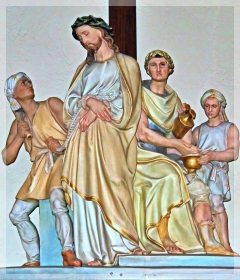
pontius pilate - washing handsPontius Pilate was the Roman prefect (or governor) of Judea from 26 to 36 AD. He was responsible for the collection of taxes, managed construction projects, and had the sole authority to order a criminal’s execution. His most important duty, however, was to maintain law and order and, if he couldn’t do it through negotiation, he did it by any means necessary.

Around 50 AD, Philo of Alexandria wrote about Pilate’s “briberies, insults, robberies, outrages and wanton injuries, executions without trial, constantly repeated, ceaseless and supremely grievous cruelty.” Ancient historian Flavius Josephus reported that after Pilate exhausted the Temple treasury to build an aqueduct, the Jews gathered in protest at his use of sacred funds. After sending soldiers dressed as Jews into the crowd of protesters, at his signal, they removed clubs hidden in their cloaks and beat many of the protesters to death. According to Josephus, Pilate eventually was removed from office and sent back to Rome after using excessive force to prevent a suspected Samaritan insurrection. Both historians described Pilate as exceedingly loyal to the emperor, stubborn, and insensitive to the Jews.

Pilate died in 39 AD and some traditions hold that he was executed while others that he committed suicide. The early Christian author Tertullian claimed that Pilate became a follower of Jesus and tried to convert the emperor to Christianity. These claims, however, are mere speculation. That Pilate existed, however, is not. In 1961, while excavating an ancient Roman theatre in Caesarea, a piece of limestone was found that was inscribed with both the emperor’s and Pilate’s names and the words “Prefect of Judea.”

Unable to sentence Jesus to death, the Sanhedrin brought Jesus to the governor. Pilate and the Sanhedrin shared a common interest in maintaining the status quo. Although he knew Jesus had been arrested on trumped up charges, Pilate also knew of Jesus’ triumphal entry into Jerusalem when people had hailed Him as the long-awaited king. Rome wouldn’t welcome the news of an unauthorized king and, if Pilate allowed Jesus to remain in Judea, the governor would be accused of disloyalty to Rome. Pilate knew Jesus’ death was the expedient political solution for all and, yet, he appeared to be hesitant to take action.

Based on the gospel accounts of Jesus’ trial, some commentators find Pilate indecisive, easily manipulated by Sanhedrin, and weak in his capitulation to the mob. Others, however, disagree with that assessment. That Pilate managed to serve ten years as prefect when the typical term was three tells us he was a man of political acumen and ancient historians described him as headstrong and authoritarian. As governor, Pilate held the power—only he could pronounce capital punishment and he was the one who appointed (or dismissed) the head priest. Since Pilate knew that he would appear weak if he yielded too quickly to the Sanhedrin’s wishes, some scholars suggest that what seemed like hesitation on Pilate’s part was just the governor making the Sanhedrin sweat a little and beg. In the end, Pilate did exactly what he wanted but he’d put the Sanhedrin in his debt by seeming to do them a favor.

We’ll never know whether Pilate was manipulated by the Sanhedrin or he shrewdly manipulated them. Whatever his motives, Pilate knew Jesus was innocent of all charges when he ordered the crucifixion of the Son of God. Putting the blame on the Sanhedrin and the angry mob that shouted “Crucify him!” Pilate disclaimed any responsibility for shedding innocent blood and literally washed his hands of the matter. Whether he voluntarily put Jesus to death or was pressured into his decision, Pilate was a political and moral coward and washing his hands couldn’t absolve him of his guilt.

Being compelled or pressured never releases us of our responsibility to do the right thing. Regardless of circumstance, we must take ownership of our actions. Remember: while we can be tempted to sin, we  never can be forced to do it!

Sin is a brat that nobody is willing to own; and many deceive themselves with this, that they shall bear no blame if they can but find any to lay the blame upon; but it is not so easy a thing to transfer the guilt of sin as many think it is. [Matthew Henry]

But the mob roared even louder, “Crucify him!” Pilate saw that he wasn’t getting anywhere and that a riot was developing. So he sent for a bowl of water and washed his hands before the crowd, saying, “I am innocent of this man’s blood. The responsibility is yours!” [Matthew 27:23b-24 (NLT)]

Copyright ©2021 jsjdevotions. All rights reserved.

THE SANHEDRIN (Who’s Who – 4)

The chief priests, and all the Sanhedrin, looked for evidence for a capital charge against Jesus, but they didn’t find any. Several people invented fictitious charges against him, but their evidence didn’t agree. Then some stood up with this fabricated charge: “We heard him say, ‘I will destroy this Temple, which human hands have made, and in three days I’ll build another, made without human hands.’” But even so their evidence didn’t agree. [Mark 14:55-59 (NTE)]

The Great Sanhedrin was the Supreme council (high court) of the Jews. Formed around 200 BC and modeled after the 70 elders who helped Moses in governing the Israelites, its 71 members consisted of scribes, priests, and elders with the high priest acting as its presiding officer. Along with religious and ritualistic Temple matters, the Sanhedrin addressed secular criminal matters, proceedings in connection with the discovery of a corpse, trials of adulterous wives, tithes, the preparation of Torah Scrolls, and drew up the calendar. As long as the Sanhedrin maintained public order and the Jews kept paying their taxes to Rome, the Romans were content to leave most of the nation’s judicial matters to them. While the Sanhedrin were supposed to administer justice, in the case of Jesus, they were anything but just; in fact, they sought perjured testimony.

The Sanhedrin’s members had to be of pure Israelite descent. The leading Jews of Jerusalem, they probably were appointed to the position. In the New Testament, the Sanhedrin is also referred to as the “council,” the “chief priests and elders,” the “chief priests, elders, and scribes,” or simply as the “chief priests.” When Judas went to the “chief priests” and offered to betray Jesus, he went to the Sanhedrin. During Jesus’ first trial, the Sanhedrin charged Him with blasphemy but changed the charge to treason when they brought Him to Pilate. It was the Sanhedrin who encouraged the crowd to call for Barabbas to be freed rather than Jesus and they were the ones who bribed the soldiers to say that the body of Jesus had been stolen from the tomb.

While the majority of the Sanhedrin were Sadducees, its scribes were Pharisees and usually the most educated men in the community. Scribes wrote up legal documents, recorded deeds, acted as ancient notary publics and court recorders, and carefully made copies of the Torah. Men of influence, they were well respected and, as professional scholars, were expert teachers and interpreters of Mosaic law.

“Elders” was a general term describing the older leaders of the community. Aristocrats with Sadducee learnings, they probably were priests or lay readers. The priests of the Sanhedrin were high-ranking, wealthy, influential Sadducees. Descending from the tribe of Levi, they served in the Temple and ensured that Temple service was carried out correctly. Originally, the Sanhedrin had the right to appoint or confirm the high priest (who was supposed to be a descendant of Aaron) and the office was a life-long position. By the time of the Herods, however, civil authorities appointed the high priests based on their political and religious sentiments and the position was not permanent. Herod the Great, for example appointed six different high priests during his reign. Because this position should have been life-long, even though Annas was ousted by the Romans in 15 AD, many Jews still considered him the high priest, which is why Jesus was first taken to Annas following His arrest. After this pre-trial hearing, Jesus was then taken to Caiaphas (Annas’ son-in-law), a Sadducee who was the high priest.

For the Sanhedrin, Lazarus’ resurrection was the last straw—a miracle that could not be denied. Thinking that Jesus’ many miraculous deeds would cause everyone to believe He was the Messiah and lead to their wanting to make Him king, they were fearful that an insurrection would follow. They reasoned that, if Jesus were allowed to continue His preaching, the Romans would destroy the Temple, nation, and their secure positions and aristocratic lifestyle (which they eventually did in the Great Revolt of 66-70 AD). In spite of their religious differences, the members of the Sanhedrin agreed that Jesus had to be stopped.

It was the high priest Caiaphas who suggested that, by eliminating Jesus, they would save the nation from Rome’s reprisal. Little did the priest know that his words were prophetic and he was playing right into God’s hand. Yes, one man, Jesus, had to die for the people but he was mistaken in thinking Jesus had to die to save the Jews from the Romans. That one man, Jesus,  had to die to save all mankind from sin and death.

“You haven’t worked it out! This is what’s best for you: let one man die for the people, rather than the whole nation being wiped out.” He [Caiaphas] didn’t say this of his own accord. Since he was high priest that year, it was a prophecy. It meant that Jesus would die for the nation; and not only for the nation, but to gather into one the scattered children of God. [John 11:5-52 (NTE)]

It was Caiaphas who had given advice to the Judaeans that the best thing would be for one man to die for the people. [John 18:14 (NTE)]

Copyright ©2021 jsjdevotions. All rights reserved.