
But I will come—and soon—if the Lord lets me, and then I’ll find out whether these arrogant people just give pretentious speeches or whether they really have God’s power. For the Kingdom of God is not just a lot of talk; it is living by God’s power. [1 Corinthians 4:19-20 (NLT)]
 Because we heard the fan running, we didn’t realize the AC wasn’t working until we returned home after being gone most of the day. By then, the inside temperature of 86 told us we were in trouble. A check outside told us the AC compressor wasn’t operating and the blackened grass near it told us why: a lightning strike during the previous night’s storm! Although the fan could still operate, without the power of the compressor, all it did was blow hot air!
Sure there was a lesson somewhere in all of that useless hot air, I thought of Paul’s letter to the Corinthians expressing his concern about eloquence without evidence. Even though some of their teachers were saying the right things, they weren’t living them out. Without God’s power, they were just windbags and, like our fan, full of hot air! Accustomed as they were to great orators, the Greeks were impressed by eloquent speeches but talk is cheap. Paul explained that the Kingdom of God isn’t speaking the right words; it is living them! He promised that, when he came to Corinth, they’d see the real power of God!
When Paul referred to the Kingdom of God, he wasn’t referring to Christ’s future reign but to Christ’s present reign in the hearts of His followers. The Kingdom of God is wherever the King is and His kingdom isn’t powered by words; it’s powered by the Holy Spirit and leads to changed lives.
John Calvin described a Christian’s task this way: “We must make the invisible kingdom visible in our midst.” That’s not done with flowery phrases, grandiose sermons, impressive words, or empty promises; it’s done by the way we live. As Paul said to the Corinthians: “If I could speak all the languages of earth and of angels, but didn’t love others, I would only be a noisy gong or a clanging cymbal.” [13:1] The Kingdom is made visible by the evidence that our King rules us in every aspect of our lives: whether at work, school, church, or home; with family, friends, co-workers or strangers; when writing a check, browsing the internet, or posting on social media.
The power enabling our air conditioner to function is in its compressor; the power enabling us to function as citizens of the Kingdom of God is found in the Holy Spirit. If we find ourselves just blowing hot air; it’s time to check the connection!
 Back in March, when this pandemic began, people began thinking seriously about worst-case scenarios. Looking at the death tolls in other countries and seeing them rise in ours, many began scrambling to write their wills and end of life directives. By late April, one on-line estate planning platform reported a 223% increase in customers. When schools announced plans to resume in-person classes, that trend continued as many teachers added will writing to their back-to-school tasks.
 Depending on the Bible translation used, there are five strange words we might encounter when reading the Psalms: maskil, miktam, shigionoth, gittith and selah. Maskil is seen in the titles of thirteen psalms and once in a psalm’s text (47:7). Believed to be derived from the Hebrew word sakal, meaning to be prudent, understand or ponder, maskil may indicate a psalm of wisdom with instructions for godliness. It’s sometimes translated as a “contemplative poem,” “instruction,” or “skillful psalm.” It also could refer to the skillful construction of the psalm (like a sonnet with its 14 lines and fixed rhyme scheme). The Amplified Bible covers both bases by calling a maskil “a skillful song, or a didactic or reflective poem.” Since the maskil psalms don’t share a common theme or a unique form, maskil could just be a musical term relating to its performance and its exact meaning remains a mystery in the Psalter.
 Of course, in another time or place, a missing nail might have better consequences. Without the nail, horseshoe and rider, the horse wouldn’t have been on the road, reared at the sight of a snake, and thrown off his rider (who died from his injuries)! Life is unpredictable.
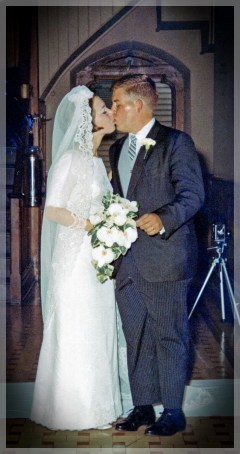 While being in lockdown for months may have given some couples a chance to reconnect, that connection wasn’t welcomed by all. Once their mandatory 10-week lockdown was lifted, Italian lawyers reported a 30% surge in couples starting divorce proceedings and both China and Saudi Arabia showed a similar rise when couples emerged from quarantine. For some couples, 24/7 togetherness for weeks on end exacerbated typical martial issues like money, housework, drinking, child care, screen and phone time, and dirty dishes in the sink. With the additional stressors of homeschooling, job loss or working at home, apprehension about the future, and trying to navigate safely in a COVID-19 world, even the best marriages have been tested.
 Devotions of the Heart