REMEMBER

We were crushed and overwhelmed beyond our ability to endure, and we thought we would never live through it. In fact, we expected to die. But as a result, we stopped relying on ourselves and learned to rely only on God, who raises the dead. And he did rescue us from mortal danger, and he will rescue us again. We have placed our confidence in him, and he will continue to rescue us. [2 Corinthians 1:8-10 (NLT)]

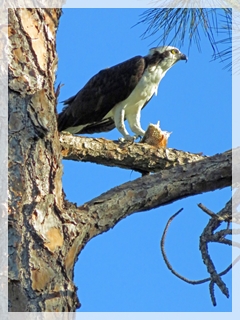
osprey600 war chariots and at least 1,200 soldiers were fast approaching and the Israelites were trapped between the mountains and the Red Sea. Panicking, they immediately blamed Moses for their predicament. No longer regarding Moses as the man who freed them from years of suffering slavery, he was now the fool who’d led them to certain death in the wilderness. In despair, the Israelites second-guessed their decision to leave Egypt. Facing such a formidable army and sure they were to die, the miseries of slavery now appealed to them. Ungrateful, unarmed, on foot, and with no place to turn, they lost heart. Failing to recall God’s powerful hand in releasing them from Pharaoh’s tyranny just a few weeks earlier, they immediately conceded defeat.

Have you ever felt like the Israelites: between a rock and a hard place, with no place to turn? When that happens, we usually do what they did: panic, find someone to blame, lose heart and want to quit because the circumstances seem greater than our God. Assuring the people that God would fight for them, Moses said, “Watch the Lord rescue you today.” I’m not sure he had any idea how the Lord planned on doing that but Moses trusted the God he knew for a solution he didn’t know.

Following God’s instructions, Moses raised his hand over the waters, the Red Sea parted as blowing winds turned the sea into dry land, and the Israelites walked across the seabed. Although we know that all the Israelites safely made it across, they didn’t know that’s what would happen! Can you imagine the faith it took when the first of them stepped onto the dry seabed with a wall of water positioned on each side? Were they fearful the waves would come rushing at them without warning? Did they literally run for their lives as they crossed? We know the rest of the story: Pharaoh and his army gave chase, their chariots got stuck, Moses raised his hand once again, the waters surged over the Egyptians and none of them survived.

Seeing God’s tremendous power, the Israelites were filled with awe and again put their faith in Moses and the Lord. What a great ending to their story, but we know it doesn’t end there. That won’t be the last time they complain, the last time they think slavery in Egypt a better option than freedom in the Promised Land, the last time they rebel against Moses’ leadership, or the last time they stop having faith in the Lord. Sadly, it won’t be the last time they forget God’s faithfulness, power and might!

Sometimes God brings us to what seems to be an impossible situation: to that spot between a rock and a hard place or an army and the deep blue sea. Those barriers are put before us so that we have nowhere to turn but to God. While He may not have parted the Red Sea for us, there have been many times that He’s led us safely through a whole sea of troubles. Unlike the Israelites, may we never forget His power and faithfulness in those trying times. Let us always be willing to trust our unknown future to our known God.

And I said, “This is my fate; the Most High has turned his hand against me.” But then I recall all you have done, O Lord; I remember your wonderful deeds of long ago. They are constantly in my thoughts. I cannot stop thinking about your mighty works. [Psalm 77:10-12 (NLT)]

Copyright ©2019 jsjdevotions. All rights reserved.

A RIGHTEOUS MAN

Joseph, to whom she was engaged, was a righteous man and did not want to disgrace her publicly, so he decided to break the engagement quietly. [Matthew 1:19 (NLT)]

Joseph Yesterday’s devotion about Mary made me wonder about Joseph. Other than having the right lineage, why did God chose this carpenter to raise His one and only Son? Mary and Joseph were betrothed and engagement in 1st century Palestine was a serious commitment. A legally binding relationship, betrothal usually lasted ten to twelve months. Although the bride continued to live at home and the couple did not have marital relations, their engagement ended only through death or a divorce-like proceeding.
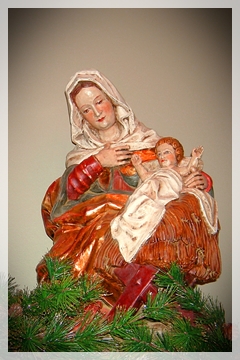
We have no idea when or how Mary told Joseph she was pregnant. Having gone to stay with Elizabeth just a few days after the annunciation, we assume she told him of her pregnancy after returning to Nazareth. The conversation couldn’t have been pleasant. We’re never told that Joseph was angry but it’s hard to think he wasn’t upset and perplexed by this turn of events. His fiancée went away for three months and returned pregnant! No matter how Mary explained it, there was no way she could prove its truth. Her story made no sense so Joseph assumed Mary had been unfaithful to him.

Betrothal was a sacred relationship and the law required a man to divorce an unfaithful fiancée. Joseph was a righteous man, a man who abided by the law; he was obligated to end the engagement by divorcing Mary. Although the Torah demanded stoning an adulterous woman, people couldn’t be executed without Roman permission. Instead, Jewish tradition called for any divorce on adulterous grounds to take place publicly. Mary would have stood in the public square to answer questions about her unfaithfulness while the townspeople watched and judged. Making Mary’s pregnancy public knowledge would have been a fitting punishment for her suspected betrayal, preserved Joseph’s reputation as a righteous man, and freed him of any responsibility for Mary’s child.

It would have been easy for Joseph to wreak revenge on his unfaithful bride, but he didn’t. While he wanted to do the right thing, which was divorce the woman he believed adulterous, he wanted to do it so that she wouldn’t suffer. Joseph decided on a “writ of divorcement” which could be done quietly in the presence of a few witnesses. The equivalent of “irreconcilable differences” or no-fault divorce, it would have allowed Mary the freedom to marry someone else. Once her pregnancy became public knowledge, however, Joseph’s reputation would suffer since he would be suspected of being the father. Nevertheless, because he loved Mary more than he wanted revenge or people’s respect, Joseph put her needs first.

Not a rash man, Joseph took no action immediately. While considering his plan of action, an angel appeared to him and reaffirmed Mary’s story that the child she was carrying was conceived by the Holy Spirit. Joseph now had a third option: marry the girl! But, by marrying her, Joseph assumed responsibility for the pregnancy, shared in Mary’s shame, gave the village fodder for gossip, became the legal father of Jesus, and accepted responsibility for a child who wasn’t his.

Although we don’t know much about Joseph, we know all we need to know: he was a man of integrity who valued God more than other people’s opinions of him. In spite of the consequences, he immediately obeyed God and took Mary as his wife. What kind of man was Joseph? A godly man is my answer. He displayed the character of God we find in Exodus 34 when the Lord passed in front of Moses: “merciful and gracious, slow to anger, and abounding in steadfast love and faithfulness.” That’s the sort of man God chose to act as father to his boy!

“Joseph, son of David,” the angel said, “do not be afraid to take Mary as your wife. For the child within her was conceived by the Holy Spirit. And she will have a son, and you are to name him Jesus, for he will save his people from their sins.” All of this occurred to fulfill the Lord’s message through his prophet:  “Look! The virgin will conceive a child! She will give birth to a son, and they will call him Immanuel, which means ‘God is with us.’” When Joseph woke up, he did as the angel of the Lord commanded and took Mary as his wife. [Matthew 1:20-24 (NLT)]

Copyright ©2019 jsjdevotions. All rights reserved.

A HANDMAID’S HEART

And Mary said, “Behold, I am the handmaid of the Lord; let it be to me according to your word.” And the angel departed from her. [Luke 1:38 (RSV)]

Mary - ChristmasIgnoring the fact that most of us in the room couldn’t qualify as virgins, are well-past child-bearing age, and our genealogies don’t link us to the tribe of Judah and the line of David, the pastor leading our women’s Bible study asked if we were the kind of women God would chose to give birth to His son.

Aside from being young, virginal, and of the right lineage, what kind of woman was Mary? At first glance, she seems little different than any other young girl in the obscure village of Nazareth. There is no mention of her having wealth, exceptional beauty, or social status. Looking like any other peasant girl, she seems unsuitable for a job as mother of God. What about Mary set her apart from every other girl in Palestine who met the lineage and virtue requirements?

Rather than looking at outward appearance, God looks into hearts; while we don’t know about Mary’s physical beauty, her character must have been exceptionally beautiful. Faithful, obedient and humble, she was filled with love for God. She risked her entire future when she submitted to Him. In many translations, Mary calls herself the “Lord’s servant.” The original Greek, however, was doule, which means bondmaid, female slave or handmaid. A doule wasn’t hired help who could quit when she wanted. She was someone who surrendered completely to her Master’s will.

I thought about the pastor’s question. Had I fit the physical and lineage requirements, would God have chosen me to bear His son? He wouldn’t have given me a second look when I was Mary’s age—I was far too willful, rebellious, selfish and unsure of myself to ever call myself a servant to anyone, even God! Even if the woman I am today fit the physical and lineage requirements, God wouldn’t consider me. It’s not that He wouldn’t trust me to feed, comfort, teach, love, guide, encourage, and protect His Son; I’d qualify in the mothering department. It’s that submission thing; I don’t think I’d freely surrender my will to His and God will not force Himself upon anyone. Mary had enough faith to yield her will to God but, even with 72 years of experiencing God’s faithfulness under my belt, I’m not sure I have the heart of a handmaiden. Humble and complete submission to the Master’s will does not come easily. “Thy will be done,” are some of the hardest words to pray and truly mean.

Both Mary and Jesus submitted to God’s divine will; should we do anything less? Father, forgive us for choosing our will over Yours. Give us a handmaid’s heart.

And he withdrew from them about a stone’s throw, and knelt down and prayed, “Father, if thou art willing, remove this cup from me; nevertheless not my will, but thine, be done.” [Luke 22:41-42 (RSV)]

Pray then like this: Our Father who art in heaven, Hallowed be thy name. Thy kingdom come, Thy will be done, On earth as it is in heaven. [Matthew 6:9-10 (RSV)]

Copyright ©2019 jsjdevotions. All rights reserved.

THE SNOW GLOBE

Steamboat SkiAnd we are confident that he hears us whenever we ask for anything that pleases him. And since we know he hears us when we make our requests, we also know that he will give us what we ask for. [1 John 5:14-15 (NLT)]

Along with the typical things you’d expect to find on my desk is an odd collection of other items. A small resin figure of the Holy Family reminds me that God deliberately chose to be born of a woman and to live as a man while the small olive wood cross tells me how He chose to end that life. When I see the three-inch square-cut nail, a souvenir from a Good Friday service, I remember how He suffered for mankind while on the cross and a small candle reminds me to let my light shine. My wooden “God box” holds some long-term prayers, Niebuhr’s “Serenity Prayer,” and my promise “to face life, not with doubt and pessimism, but with hope.” In the desk’s corner is a small African carving of two people facing one another with arms connected. Made of just one piece of stone, it continues to remind me that, in marriage, two become one and we must never turn away from one another.

Something new has just been added to my quirky collection: a small snow globe. Probably designed to be a baby gift, in it is a pink-cheeked little girl gently touching a lamb and printed on its base are the words “Jesus loves me.” This bit of nursery décor seems rather strange for a woman my age but, along with telling me that Jesus loves me, it reminds me that God answers prayers in unexpected ways!

When filling in for our pastor recently, my message was about God’s grace, the faith necessary for salvation, and the discipleship that comes from that faith. While preparing it, I’d asked God to help me bring it all together with one final example. The following day, I came across the story of Izabella McMillon. Years before she started working for Samaritan’s Purse, she lived in Romania and was the recipient of one of their gift-filled shoe boxes. Having already been introduced to Christianity, 13-year old Izabella had asked God to prove His existence by giving her snow but, after three months of waiting, the girl was ready to give up. The prayer for faith is one God always answers and inside Izabella’s shoe box was a snow globe! As she watched the snow fall through the water, she was assured of God’s presence in her life; it was then that Izabella decided to carry Jesus into the world as His disciple!

God answered my prayer with one woman’s witness about salvation, grace, faith and discipleship! He answered hers with an inexpensive snow globe! That our church was packing 75 shoeboxes for Samaritan’s Purse was just God’s way of putting frosting on the cake for me! That Izabella received other gifts in that box, gifts that told her not just of God’s presence but also of the love and compassion found in His disciples, was the frosting on hers!

God answers prayers in unexpected ways. When the Israelites complained of hunger and God promised them bread from heaven, I’m pretty sure they weren’t expecting manna—something like coriander seeds that tasted like honey and was found on the ground. When God promised a Messiah who would deliver His people, Israel expected a political savior who would free them from Rome rather than a spiritual savior to deliver them from sin. Although the Israelites accepted manna as God’s provision, most didn’t recognize God’s answer to their prayers for a Messiah. Had Izabella insisted on cold wet snow falling from the sky, she would have missed God’s glorious answer to her prayer, as well. While my new snow globe says that Jesus loves me, it also reminds me to expect the unexpected!

And may you have the power to understand, as all God’s people should, how wide, how long, how high, and how deep his love is. May you experience the love of Christ, though it is too great to understand fully. Then you will be made complete with all the fullness of life and power that comes from God. [Ephesians 3:18-19 (NLT)]

Copyright ©2019 jsjdevotions. All rights reserved.

WOULD YOU?

“Don’t be afraid, Mary,” the angel told her, “for you have found favor with God! You will conceive and give birth to a son, and you will name him Jesus.” … Mary asked the angel, “But how can this happen? I am a virgin.” Luke 1:30-31,34 (NLT)]

It’s no wonder that the angel Gabriel told Mary not to be afraid. Angels were not an everyday occurrence and, when they arrived, lives were changed. As God’s messengers, angels sometimes brought good news, offered protection, or comforted people, but they also brought warnings and executed God’s judgment. Although angels rescued Lot, they also warned of Sodom’s destruction! Balaam received a stern warning from a sword-bearing angel, David wrote of destroying angels, and 2 Samuel tells of an angel nearly destroying Jerusalem. Mary’s initial confusion and concern at seeing an angel is understandable. When reassuring the girl, Gabriel tells her she is “highly favored” by God; he’s not brought bad news, but good. Nevertheless, she knows her life is going to change; she just doesn’t know how!

Gabriel then tells Mary in what way she’s found favor—by giving birth to a child named Jesus who will fulfill the promises of Scripture. I don’t think Mary fully understood the ramification of Gabriel’s words simply because she was stuck on the “How?” of his words. When the angel told Zechariah of Elizabeth’s pregnancy, the priest questioned out of disbelief saying that he and Elizabeth were too old. Mary, however, didn’t question whether God could do such a thing; she just asked how He would do it. That it would be a miracle through the Holy Spirit was all she needed to know! Calling herself the Lord’s servant, she immediately acquiesced to His will.

Mary’s answer is one of amazing faith. Unlike Moses, she didn’t list her weaknesses or the problems facing her and unlike Jonah, she didn’t run in the opposite direction. Although the angel encouraged Mary by telling her of Elizabeth’s pregnancy, Mary never asked for proof as did Gideon. Mary’s faithful response is that of highest obedience to God.

We know the rest of the story; Mary did not. She didn’t know how Joseph or her parents would react, where God’s plan would lead, or what would be demanded of her in the future. Trusting that the Lord would work out the details, she simply walked forward in faith. When God gives us a task, are we as obedient as Mary? We should be!

There’s some task which the God of all the universe, the great Creator, your redeemer in Jesus Christ has for you to do, and which will remain undone and incomplete until by faith and obedience you step into the will of God. [Alan Redpath]

Mary responded, “I am the Lord’s servant. May everything you have said about me come true.” And then the angel left her. [Luke 1:38 (NLT)]

Copyright ©2019 jsjdevotions. All rights reserved.

WALKING IN HOPE

I heard a loud shout from the throne, saying, “Look, God’s home is now among his people! He will live with them, and they will be his people. God himself will be with them. He will wipe every tear from their eyes, and there will be no more death or sorrow or crying or pain. All these things are gone forever.” [Revelation 21:3-4 [(NLT)]

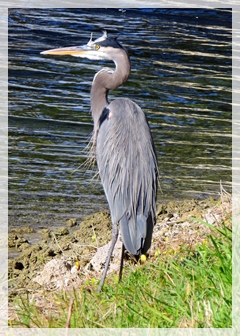
dawnMy Advent devotional suggested taking a prayer walk while looking for signs of hope. I took my regular route and, since I often pray while walking, I wasn’t sure how this walk would be different. Nevertheless, I went in search of hope. The first thing I noticed was the sun rising in the east—a sure sign of hope with its promise of a new day and all of its possibilities. I spotted a family of ducks waddling down to the pond. The five youngsters were no longer little yellow fluffs of feathers but mama duck still kept her eyes on them. Mothers of every species hope to keep their children safe—even when they’re no longer children! I noticed the lilies, canna, and arrowhead that had been planted at waters’ edge last spring to prevent shoreline erosion. They were starting to bear their first flowers—another sign of hope because it means they took root and will serve their purpose. A few people had decorated their houses for the holiday; since not all the décor was secular, I found hope that some people still keep Christ in Christmas. Further on, a patient great blue heron stood absolutely still, neck fully extended, hoping to catch a tasty fish breakfast. It reminded me that we must remain patient in our hope—all things in God’s time. Seeing a few wood storks wading in the water also was a hopeful sign; once an “endangered” breed, their status has been upgraded to “threatened,” meaning there is hope for the survival of their species.

Since this was a prayer walk, I went through my prayer list of hope-filled prayers for what could be called happy endings—things like a successful surgery, passing grades, reconciliation, recovery from illness, sobriety, a new job, successful endeavors, the sale of a house, safe travels, a problem solved, and an obstacle surmounted. Sadly, for some of the names on my list, happy endings on this side of the grass don’t seem likely. Modern-day Jobs, the cards they’re holding are bad ones. Unlike Job who got a better hand in a re-deal and ended up with more than he’d had before, they appear stuck in their dismal situations with no new cards in sight. Barring a miracle, their circumstances aren’t likely to improve. In 1 Corinthians 13, the Apostle Paul mentions the three things that last forever: faith, hope and love. He calls love the greatest of the three; perhaps hope is the hardest.

Wondering about the purpose of my hope walk, I thought back to the day’s Advent readings from Revelation and Isaiah. Advent hope isn’t a wishful thinking/finger-crossing kind of hope, like hoping the pathologist’s report says “benign.” It’s more than hoping a good outcome for something about which we’re unsure. Our hope is in God and He’s already promised us a better future. Advent hope is knowing that, in spite of our circumstances, God eventually will work it all together for our good. While we hope for deliverance from our present troubles, we know that, ultimately, we will be delivered. Our hope isn’t in situations, people, medicine, or the stock market and we don’t need a knight in shining armor to rescue us from our woes. Our hope is in God the Father, God the Son, and God the Holy Spirit! Whether the hand dealt to us looks hopeless or not, we continue to maintain Advent hope by looking away from our circumstances to the One who holds our lives in His hands.

Our hope is in Immanuel, which means “God is with us”! He is with us in our birth and death, sickness and health, joy and sorrow, good times and bad. Let us remember that, if He is with us, then we are with Him—in His resurrection, ascension, and the glory of His second coming!

Optimism and hope are radically different attitudes. Optimism is the expectation that things—the weather, human relationship, the economy, the political situation, and so on—will get better. Hope is trust that God will fulfill God’s promises to us in a way that leads us to true freedom. [Henri Nouwen]

The Lord himself will give you the sign. Look! The virgin will conceive a child! She will give birth to a son and will call him Immanuel (which means ‘God is with us’). [Isaiah 7:14 (NLT)]

Copyright ©2019 jsjdevotions. All rights reserved.