
Always be joyful. Never stop praying. Be thankful in all circumstances, for this is God’s will for you who belong to Christ Jesus. [1 Thessalonians 5:16-18 (NLT)]
The Lord afflicts us at times; but it is always a thousand times less than we deserve, and much less than many of our fellow-creatures are suffering around us. Let us therefore pray for grace to be humble, thankful, and patient. [John Newton]
 My New York Times newsletter has a section called “What You’re Doing” in which readers share how they’re dealing with the pandemic—everything from dreaming up innovative waffle recipes to sending “karaoke grams” to friends on their birthdays. Today, M.B. wrote that she’d started 2020 with a line-a-day diary. Since March, however, she’d filled the diary with “dire COVID milestones, illness among family and friends, anger at deniers, and mourning for the loss of normal life, vacations, and more.” Tiring of her negativity on Thanksgiving Day, M.B. turned that line-a-day diary into a daily gratitude journal and reported having a positive attitude that will carry her through the pandemic.
The conditions haven’t gotten any better since Thanksgiving; in fact, the COVID numbers have gotten worse. The change isn’t in the circumstances because gratitude isn’t found in our circumstances. The change is in M.B because gratitude is found in our minds and M.B. is looking at the world with an attitude of gratitude. In 1919, during another pandemic when the nation was as troubled as it is now, minister and essayist Dr. Frank Crane wrote, “To be thankful simply means that one thinks he is better off than he deserves to be.” Crane went on to suggest that happiness is found in finding a balance between our condition and what we think our condition should be—between what we have and what we think we should have. If we want to be happy, Crane suggested that we whittle down our conception of what we think we should have to match what we actually do possess.
M.B.’s words struck a chord with me. These last few months, the entries in my daily gratitude journal have been sporadic. For example, rather than write I’m thankful that the Pfizer vaccine is about to be approved, I found myself complaining that our government only ordered 100 million doses (enough to inoculate only 50 million people) and it may be June before more is available. When I used an online tool to determine my place in the vaccine queue and learned that at least 118.5 million Americans are ahead of me, I was ready to grumble even more until I remembered Crane’s words. Appreciating that I’m no more deserving than anyone else in the world, I looked thankfully at what I have (health and an eventual place in line) rather than at what I’d prefer. I am thankful that the end is in sight—even if we need a telescope to see it! Yes, gratitude is an attitude and one that often takes a conscious effort to maintain.
We can change our circumstances or change our concept of what it is we deserve and it is great deal easier to change our thoughts than to change the world around us. God will generously provide for our needs but we must remember that He is under no obligation to give us everything we want. We can’t control the pandemic but we can control our thoughts. As bad as things may seem, I think we all would admit to having more and better than we deserve. Knowing we can’t have everything we desire, let’s be thankful for all that we do have!
There is much in this world beyond our control including the nation, the economy, COVID, other people, weather, and the noisy dogs next door. If we can’t change our circumstances, the only option is to change ourselves! M.B. is finding happiness in her new attitude of gratitude—one of recognizing and appreciating all that she has right now. Let us do the same!
 When an irrevocable law was signed that prohibited praying to anyone but King Darius, Daniel prayed! Knowing he’d be thrown into a den of lions for doing so, the devout man went home, opened the windows, and prayed to God just as he always had done. Rather than starting with a fervent plea for God’s help, however, Daniel began with a prayer of thanks. His prayer of thanksgiving showed Daniel’s faith in a good God who was present in all circumstances!
 Stories—everyone loves a good one and we all have stories to tell. My children loved hearing their Grandpa tell stories of boyish pranks like stealing watermelons and tipping over outhouses but it wasn’t just his tales of mischief they enjoyed. They relished hearing about him working on the farm, playing basketball and wrestling, working his way through college, having a victory garden, and starting a business. The stories we never heard, however, are the ones I wish he had shared: the stories of his faith journey. He was a Christian, yet I don’t know how he came to be such a man of faith. I know he met his wife at a church social and they both attended the Lutheran church in our town, but that doesn’t tell me when and how the Holy Spirit truly entered his life. It doesn’t tell me about the times he might have doubted or been afraid or the times he knew without question that God was holding his hand or had answered his prayers.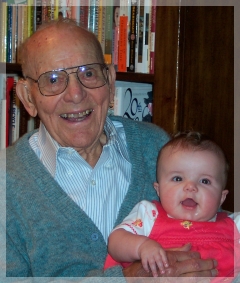
 As a child, I loved the way fairy tales always ended with these words: “and they lived happily ever after.” Real life, however, is anything but a fairy tale. I suspect that after Cinderella and the Prince had two kids, she went right back to cooking and cleaning all day and never went to another ball. Prince Eric’s fondness for ahi tuna sushi and sashimi led to his divorce from Ariel for irreconcilable differences. Snow White ended up under arrest for dwarf exploitation and trafficking in blood diamonds while Barbie, who turned 60 last year, keeps undergoing plastic surgery in an unsuccessful attempt to regain her youth. Because of Ken’s bad investments, their dream house went into foreclosure and their dream cars, boat and motor home were repossessed. In real life, no fairy godmother shows up with a magic wand to turn pumpkins into carriages, mice into horses, and our sweetest dreams into reality.
 Devotions of the Heart