GIVING THANKS  – Thanksgiving 2023

I will give thanks to the Lord with my whole heart; I will recount all of your wonderful deeds. I will be glad and exult in you; I will sing praise to your name, O Most High. [Psalm 9:1-2 (ESV)]

Enter his gates with thanksgiving, and his courts with praise! Give thanks to him; bless his name! [Psalm 100:4 (ESV)]
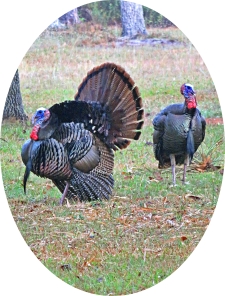
wild turkeyWhile browsing a bookstore (yes, they still exist), I came across a book offering more than 100 ways to say “Thank you.” It suggested ways to express one’s appreciation for milestone celebrations, business opportunities, assistance, social events, and assorted gifts. It even offered “damage control” for tardy thank you notes. There also were chapters devoted to topics like stationery, envelopes, and internet etiquette. One chapter offered a “thank you thesaurus” complete with several “glowing superlatives and energetic adjectives.”

Like the book’s author, I firmly believe in writing thank you notes and, for the most part, still write them by hand. Nevertheless, I find it difficult to believe anyone needs a 160-page book to help them express their thanks. Granted, I haven’t attended a debutante charity ball nor have I received an ambassador’s invitation to a reception, so I probably travel in a different circle than the author. Nevertheless, if such occasions should arise, I now know where to find the perfect wording for my thank you note.

Some of us may be etiquette-challenged but, fortunately, there’s no official protocol for thanking God. We certainly don’t need a thesaurus or a list of vivid superlatives and adjectives for our prayers. Since God is the one who does the mountain moving, we don’t need the author’s list of “power words that move mountains.” Moreover, we don’t need to know the “do’s and don’ts of using honorifics.” Although we should remember that Jesus does not have the middle initial of “H” and that God’s last name isn’t “Dammit,” simply addressing God by any one of His Biblical names works fine.

I agree with the author that our thanks should be specific; simply saying “thanks for the many blessings” is way too generic for our generous God. Even so, I think God already knows if the pink cashmere sweater looks fantastic with the new beige skirt or that the blender will be put to good use when making our morning smoothie.

Along with guidance in writing thank you notes for things like job interviews, birthday presents, condolences, party invitations, and house visits, the author included ways to express thanks for opportunities, love, friendship, continued loyalty, for “being there” and for “saving me from myself.” While just about every reason to thank people was covered, had she been writing about thanking the Almighty, the author missed a few important occasions. There were no sample letters for disappointments, delays, illness, challenges, difficult people, or pain—the sort of things the Apostle Paul might call “thorns.”

Breaking the author’s rules of proper etiquette, we can tell God we don’t care for His gift, we’d prefer something else, or we’d like to return it for something else. Nevertheless, Scripture tells us we are to give thanks in all circumstances and it’s expressing thanks during the unwelcome things that pose a problem for most of us. Even though it’s not easy, we must have thankful hearts in the midst of all that our loving God has put on our plates!

When offering thanks to God, we don’t need to fret about the proper length, right superlative, perfect stationery, ink color, or even our spelling. There are only two rules when thanking Him. The first one is simple: just do it! Never miss an opportunity to give thanks. Praise and thanksgiving are to be a part of our lives—at all times and in all circumstances. Let’s never limit giving thanks to one day a year! Even without the turkey and dressing, every day should be a day of thanksgiving! Second, while our prayers of thanks don’t have to be as eloquent as David’s, they should be as frequent and as heartfelt.

The thankful heart sees the best part of every situation. It sees problems and weaknesses as opportunities, struggles as refining tools, and sinners as saints in progress. [Francis Frangipane]
Give thanks in all circumstances; for this is the will of God in Christ Jesus for you. [1 Thessalonians 5:18 (ESV)]

Therefore, as you received Christ Jesus the Lord, so walk in him, rooted and built up in him and established in the faith, just as you were taught, abounding in thanksgiving. [Colossians 2:6-7 (ESV)]

Copyright ©2023 jsjdevotions. All rights reserved.

THE ONLY CONSTANT

I am the Lord, and I do not change. [Malachi 3:6a (NLT)]

rainbowOur fast-paced world is ever-changing and once ordinary items like slide rules, cassette tapes, boom boxes, floppy discs, dial phones, film, and VCRs are relics. My kids don’t use maps, write checks, or have a land line and my grands have never used a library card catalogue, set of encyclopedias, dictionary, carbon paper, or typewriter. We no longer need to get up to change channels, turn the lights on or off, or see who’s at the door. Our camera, maps, calculator, credit cards, compass, note pad, address book, plane tickets, and Bible all fit into our cell phones and everything on our phones (along with a fitness tracker and heart monitor) fits into a watch!
The world is in a constant state of flux! 38 different models of the iPhone have been released since its introduction in 2007 (with a new generation expected in the fall)! Since its introduction in 1985, there have been 49 versions of the Windows operating system. What with chatbots, artificial intelligence, the metaverse and internet of things, chatbots, NFTs, cryptocurrency, 3-D printers, and reality that can be extended, augmented, or virtual, by the time I’ve caught up to the latest technology, I’m already behind the times!

In theory, all those changes are supposed to be for the better but new doesn’t necessarily mean better (as the Coca-Cola company learned when they tried to change their drink formula in 1985). Unfortunately, the updated and improved version can be worse than its predecessor (which is what most tech people would say about Windows ME, Vista, and Windows 8)!

The Greek philosopher Heraclitus said, “The only thing constant is change,” and, despite my previous rant, I disagree. The one unchanging constant in our lives is God and His unchangeability is called immutability. Unlike things that can be modified like iPhones, Windows, and Coke, something immutable cannot change. Regardless of technology, innovative trends, style, or the passage of time, God’s truth, purpose, promises, and character remain the same. God needs no updates because He is the very essence of perfection—He can’t become more or less, greater or smaller, or any better than He already is!

God’s immutability doesn’t mean that He is a static, impersonal, remote, disinterested being. Although He is unchanging, we are not deists who think of God as an indifferent uninvolved clockmaker who made a clock, wound it up, and then ignored it. He is actively involved in all of His creation and regularly interacts with everything and everyone in it.

Rather than impassive and distant, God is enmeshed in our lives. He walked and talked with Adam and cared enough to give him a companion in Eve! He made covenants with Noah and Abraham and revealed Himself to people like Moses, David, Elijah, Paul, Peter, and John. The God who walked in Eden with Adam, hung a rainbow in the sky for Noah, wrestled with Jacob, etched His law onto stone tablets for Moses, sent manna from heaven, and blinded Paul on the road to Damascus is the very same God who walks with us today!

Although God’s interaction with us may change (as it did when He evicted Adam and Eve from Eden, permitted Satan to plague Job, or allowed Judah to be taken into captivity), God’s nature never changes! Timeless and eternal, God was and always will be holy, unlimited, all-powerful, ever-present, all-knowing, all-loving, and divine. Fortunately, the original 1.01 version of God (introduced at the beginning of time) is all we need or want! Thank you, O Lord, for being the one constant in our lives.

It is well for us that, amidst all the variableness of life, there is One whom change cannot affect; One whose heart can never alter, and on whose brow mutability can make no furrows. [Charles Spurgeon]

Jesus Christ is the same yesterday, today, and forever. [Hebrews 13:8 (NLT)]

Whatever is good and perfect is a gift coming down to us from God our Father, who created all the lights in the heavens. He never changes or casts a shifting shadow. [James 1:17 (NLT)]

Copyright ©2023 jsjdevotions. All rights reserved.


UNEXPECTED DESTINATIONS

But I am trusting you, O Lord, saying, “You are my God!” My future is in your hands. [Psalm 31:14-15a (NLT)]

Sometimes God doesn’t give you what you want not because you don’t deserve it but because you deserve better. [Anonymous Internet wisdom]

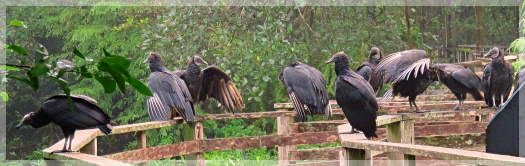
black vultures - corkscrew swampBecause the nearby bird sanctuary/swamp gets its water from rainfall, the size of its lakes fluctuates substantially with the seasons. During the dry seasons of winter and spring, the swamp’s lakes gradually recede until the summer rains begin. When this annual dry-down occurs in springtime, the wading birds congregate in the shallow lakes. With the fish having no place to hide the shallow water, it’s as easy as catching fish in a rain barrel for the birds!

Anticipating a feeding frenzy as the swamp’s wading birds gathered in the receding lakes, we went out to the bird sanctuary. The dry-down happened faster than we expected. Instead of a shallow lake covered with water lettuce, we found only mud. Rather than a plethora of egrets, herons, wood storks, and roseate spoonbills, we encountered dozens of black vultures enjoying the remains of the stinking fish in the muck! What we got certainly wasn’t what we wanted or expected.

Since vultures are known for projectile vomiting if startled or threatened, I admit to some trepidation as I walked between the perched birds on the boardwalk. Nevertheless, seeing all those vultures was an amazing experience. In spite of our initial disappointment, we were thankful for the opportunity to witness nature’s clean-up crew at work.

In spite of our best-laid plans, we don’t always get what we pray for or expect. Emily Perl Kingsley, a mother of a child with a disability, wrote a beautiful essay titled “Welcome to Holland” in which she likens having a child with a disability to someone planning a fabulous trip to Italy. After months of eager expectation, however, she discovers the flight plan unexpectedly changed and she’s landed in Holland. Even though there’s nothing wrong with Holland, it’s not Italy! Admitting the pain in losing her longed-for destination, Kingsley adds, “But, if you spend your life mourning the fact that you didn’t get to Italy, you may never be free to enjoy the very special, the very lovely things….about Holland.”

Unlike Kingsley, I’ve never arrived in Holland after expecting to touch down in Italy. Nevertheless, like her, God has changed my flight plans mid-air and I’ve landed in unplanned-for destinations. Sometimes, God’s plan is even better than we imagined and He takes us to Paris or Madrid when all we prayed for was St. Louis or Minneapolis! On the other hand, sometimes God’s plan takes us places we never wanted to visit—Al-Anon meetings, hospital rooms, nursing homes, grave sites, divorce court, or even Holland. Either way, God’s answer to our prayers is the right one—even though it’s different and unexpected. Trusting in God’s infinite love and wisdom, let us accept God’s plan with joy. Whether it’s vultures instead of roseate spoonbills, Keukenhof Gardens instead of the Colosseum, Edam cheese instead of pizza, or a special needs child instead of an honor student, may we seek to appreciate everything in our present situation and be thankful for our many blessings.

It’s just a different place. It’s slower-paced than Italy, less flashy than Italy. But after you’ve been there for a while and you catch your breath, you look around…. and you begin to notice that Holland has windmills….and Holland has tulips. Holland even has Rembrandts. [Emily Perl Kingsley]

I pray that God, the source of hope, will fill you completely with joy and peace because you trust in him. Then you will overflow with confident hope through the power of the Holy Spirit. [Romans 15:13 (NLT)]

Copyright ©2023 jsjdevotions. All rights reserved.

CHOCOLATE CHIPS

The heartfelt counsel of a friend is as sweet as perfume and incense. Never abandon a friend—either yours or your father’s. When disaster strikes, you won’t have to ask your brother for assistance. It’s better to go to a neighbor than to a brother who lives far away. [Proverbs 27:9-10 (NLT)]

Novelist Salman Rushdie said, “In the cookie of life, friends are the chocolate chips.” I agree. Granted, life can be as pleasant as a plain sugar cookie but, when you add chocolate chips to the batter or friends to the mix, it becomes something extra special.
Today happens to be National Chocolate Chip Day. (We can celebrate again on August 4—the official National Chocolate Chip Cookie Day.) Although she didn’t invent friendship, Ruth Wakefield invented both chocolate chips and chocolate chip cookies when she added pieces of a Nestlé chocolate bar to her “Butter Do Drop” cookie recipe in 1930. It wasn’t until 1939, however, that Nestlé actually started manufacturing those beautiful teardrop-shaped morsels.

Fortunately, God didn’t wait until 1939 to invent friends! Knowing it wasn’t good for “man to be alone,” He created us for connection and gave us friends. He blessed Adam with Eve, Lot with Abraham, Moses with Aaron, and Joshua with Caleb.

When Satan took away Job’s family, wealth, and health, Job’s friends remained. Even though their theology was flawed, they kept Job company and tried to comfort him in his pain and sorrow. When Joseph was imprisoned, he was blessed by friendships with the warden and Pharaoh’s cup-bearer and baker. David was blessed by good friends like Jonathon, Nathan, and even the loyal Philistine Ittai. Naomi was blessed by Ruth’s friendship as was Elijah by Elisha’s. During the Babylonian exile, Daniel, Shadrach, Meshach, and Abednego were united in their friendship and faith. Matthew invited his friends for dinner with Jesus and Martha, Mary, and Lazarus welcomed their friend Jesus into their home. Even though they didn’t always agree, Paul’s good friends included Barnabas, John Mark, Silas, Epaphroditus, Timothy, Priscilla, and Aquila.

“Make new friends, but keep the old. One is silver, the other is gold,” goes the old song. Indeed, old friends are as precious as gold and, next week, we hope to spend a little time with some golden ones. We met 45 years ago while skiing in Michigan and continued our friendship on the mountains of Colorado. Although 2,000 miles separate us and we no longer ski, our friendship remains. Love, laughter, faith, and a heap of great memories connect us. We’ll treasure our brief reunion as we thank God for the chocolate chips He scattered through our lives.

Heavenly Father, thank you for the people who befriended us—the ones who taught and inspired us, encouraged and challenged us, laughed and cried with us, and taught us how to laugh at ourselves and life’s uncertainties. Thank you for the friends who daily provide examples of how life should be lived and for the friends who answer our questions and question our answers. Thank you for those who sought us when we were lost, provided directions, and welcomed us back when we finally returned. Thank you for those who recognized what was wrong in our lives (even when we didn’t) and gently opened our eyes to what we needed to see. Thank you for blessing us with friends who have openly shared their lives and who, in turn, have listened and loved and prayed for us. Thank you for the friends who continue to walk with us, steady us when we stumble, lift us when we fall, and carry us when we think we can go no further. Thank you, Lord, for the best friend you have given each and every one of us: your son Jesus Christ.

Let us be grateful to people who make us happy; they are the charming gardeners who make our souls blossom. [Marcel Proust]

This is my commandment: Love each other in the same way I have loved you. There is no greater love than to lay down one’s life for one’s friends. You are my friends if you do what I command. [John 15:12-14 (NLT)]

Copyright ©2023 jsjdevotions. All rights reserved.

HALLELUJAH

Praise the Lord, all nations! Extol him, all peoples! For great is his steadfast love toward us, and the faithfulness of the Lord endures forever. Praise the Lord! [Psalm 117 (ESV)]

giant swallowtail vbutterflyAs a way of emphasizing the penitential nature of Lent, hymns with alleluia or hallelujah were not sung at our church during Lent’s forty days.  With the exception of Palm Sunday’s All Glory, Laud, and Honor, the hymns for the last six weeks were rather slow, somber, and introspective and I missed the more joyful upbeat hymns I enjoy. Easter service, however, opened with Christ the Lord is Risen Today and the twenty “Alleluias” we sang in five verses made up for their long absence.
If you’re not familiar with this beautiful hymn, check it out. YouTube has an outstanding rendition done by the Tabernacle Choir accompanied by full orchestra, a trumpet ensemble, and bell choir. This hymn’s alleluias are Easter’s version of the cascading of glorias in Christmas’ Angels We Have Heard on High. Regardless of your musical talent (or lack of it), you can’t help but join in singing them! Without benefit of choir, bells, or orchestra, our congregation’s joyful alleluias (some of which were off key) weren’t on a par with those of the Tabernacle. Nevertheless, because they were heartfelt, they were welcome music to God’s ears!

Having enjoyed singing those alleluias, I wondered what exactly was meant by the word. “Alleluia” comes from an ancient Hebrew word combining hālal, which means to praise or glorify, and yâ, a contraction for God’s name of Yahweh. When the Hebrew Scriptures were translated into Greek, ”hallelujah” was derived from the Hebrew spelling of the word; ”alleluia” simply is the Latin transliteration of the Greek. In Scripture, we usually find the original Hebrew of hālal yâ translated as “Praise the Lord,” which isn’t entirely accurate. In Hebrew, hālal  is an imperative command (rather than a suggestion) and the more accurate translation would be “You must praise the Lord!”

Since we are commanded to praise the Lord, what exactly is praise? While praise and thanks are closely linked, they are not quite the same thing. Thanks is gratitude for what has been done or given while praise exalts the doer or giver. Thanks is when it finally rains after weeks of drought and praise is for a God who holds the incredible power of wind, rain, thunder, and lightning in His almighty hands. Thanks is for the newborn baby and praise is for the God who miraculously packed all the makings of a human being (including a soul) into two small cells! I’m thankful when I see a beautiful sunrise but praise is when I silently sing the old hymn’s words, “When morning gilds the skies, My heart awaking cries: May Jesus Christ be praised!” Praise is an acknowledgement of the excellence, goodness, capability, power, authority, and perfection of God’s character, traits, and works. It is thanking, honoring, exalting, magnifying, applauding, proclaiming, and celebrating Him. We praise God not just by singing alleluias, but in our everyday words, actions, and thoughts.

While praise usually comes from a grateful heart, there are no qualifiers in Scripture’s “hallelujahs.” The call to praise is not dependent upon circumstances. We must praise the Lord, not because He is good to us (or those we love); we are to praise the Lord because He is a good God!

Perhaps, because there isn’t a better word encompassing the meaning of hallelujah in any other language, people from all over the world have borrowed hallelujah/alleluia from the original Hebrew. While it may be spelled differently, “hallelujah” sounds very much the same in almost every language.

“Hallelujah” appears twenty-four times in Psalms and four in Revelation. In Psalms, those hallelujahs come from earth but, in Revelation, they come from heaven. Someday, we will join a heavenly chorus of believers from every nation and the unified sound of our heavenly hallelujahs will be even louder and more beautiful than those of the Tabernacle Choir!

Then I heard what seemed to be the voice of a great multitude, like the roar of many waters and like the sound of mighty peals of thunder, crying out, “Hallelujah! For the Lord our God the Almighty reigns. [Revelation 19:6 (ESV)]

Copyright ©2023 jsjdevotions. All rights reserved.


LAMB SELECTION DAY – Palm Sunday

Rejoice, O people of Zion! Shout in triumph, O people of Jerusalem! Look, your king is coming to you. He is righteous and victorious, yet he is humble, riding on a donkey—riding on a donkey’s colt. I will remove the battle chariots from Israel and the warhorses from Jerusalem. I will destroy all the weapons used in battle, and your king will bring peace to the nations. His realm will stretch from sea to sea and from the Euphrates River to the ends of the earth. [Zechariah 9:9-10 (NLT)]

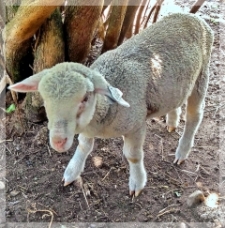
lambAs one of three pilgrimage feasts requiring every Jewish man’s attendance in Jerusalem, Jesus and the disciples joined other pilgrims on their journey toward the city for the Passover celebration. By the time they passed through Jericho (where He healed the blind Bartimaeus and ate dinner with Zacchaeus), a large crowd was following Jesus. It was on a Sunday that He and His disciples left Bethany for the two-mile walk into Jerusalem. The roads would have been crowded as pilgrims streamed into the city in preparation for the festival. Having heard of Jesus’ miracles and the way He brought Lazarus out of the grave, many of those in the streets were anxious to see Him. ”Could this be the long-awaited Messiah?” they wondered.

Although Jesus seemed to have walked everywhere, when He was less than a mile from the city, He sent two disciples to fetch a donkey’s colt that would be waiting for them. When Jesus deliberately rode that colt into Jerusalem, He was presenting Himself as Israel’s promised king. The animal’s significance was not lost on the people and their questions about His identity were answered. Solomon rode a donkey when he was presented to Israel as David’s rightful heir and successor and Zechariah prophesied that the promised Davidic king—the Messiah—would come on a donkey, as well! Thinking this king would save them from Rome, rather than Satan, people called out “Hosanna,” a combination of two Hebrew words, yasha (meaning save) and na (meaning now). Although Jesus brought salvation, it wasn’t from Rome!

Believing Jesus was the promised heir to David’s throne, the people recited from Psalm 118: “Blessings on the one who comes in the name of the Lord! Hail to the King of Israel.” Traditionally, people honored a new king by throwing their coats where he would sit or walk and palm branches were considered symbols of joy, victory, and triumph. The crowd’s reaction to seeing Jesus on the colt was to cut palm branches from the trees and to lay both palms and their coats across the road in Jesus’ path. Others, thinking they were celebrating victory over Rome, waved branches of palms as He passed. They didn’t know the victory they were celebrating was Christ’s victory over sin and death!

While Jesus was entering Jerusalem from the east, it’s likely that Pontius Pilate (governor of Judea) was entering the city from the west and King Herod from the north. In contrast to Jesus’ humble but joyous procession, their entrances would have been solemn and regal. Jesus rode a donkey and was accompanied by twelve disciples. Pilate and Herod would have ridden in chariots and been accompanied by legions of soldiers and warhorses. Jesus and his followers were weaponless but the soldiers wore armor and carried swords. While the procession from the east was led by the Prince of Peace, the processions of Herod and Pilate, men known for their violence and cruelty, would have been a show of force to quell any thoughts of a rebellion during the Passover.

Of course, only Jesus knew that the crowd exclaiming, “Hail to the king!” would soon turn on Him—that the cries of blessings upon Him would become shouts to crucify Him! Only He knew that His royal welcome would end with His dying a criminal’s death on a cross. It wouldn’t be until after His resurrection that His Jewish followers would understand the full significance of His entry into Jerusalem on that Sunday, the 10th day of Nisan.

According to Exodus 12, the 10th of Nisan was the specific day on which people were to select their Passover lamb (a male without any defect or blemish). The family was to keep the lamb until twilight on the 14th day when it would be killed and eaten. Jesus, the Lamb of God, entered Jerusalem on Lamb Selection Day. When He and His disciples ate their Passover meal that Thursday evening, Jesus broke the bread and gave it to His disciples saying, “This is my body.” He then passed the cup saying, “This is my blood.” It wasn’t until later that the disciples understood the full meaning of Christ’s words. While they may have consumed leg of lamb that night as they commemorated Israel’s deliverance from bondage to Egypt, the bread and wine made it clear that the sinless Jesus was the true Passover lamb. He was the perfect sacrifice who would deliver all who believed in Him from their bondage to sin!

On the night when he was betrayed, the Lord Jesus took some bread and gave thanks to God for it. Then he broke it in pieces and said, “This is my body, which is given for you. Do this in remembrance of me.” In the same way, he took the cup of wine after supper, saying, “This cup is the new covenant between God and his people—an agreement confirmed with my blood. Do this in remembrance of me as often as you drink it.” For every time you eat this bread and drink this cup, you are announcing the Lord’s death until he comes again. [1 Corinthians 11:23-26 (NLT)]

Copyright ©2023 jsjdevotions. All rights reserved.