
Do to others whatever you would like them to do to you. [Matthew 7:12 (NLT)]
 We recently heard a great deal about quid pro quo, a Latin phrase which means “something given or received for something else.” Although every bribe is a quid pro quo, not every quid pro quo is a bribe and there’s nothing inherently wrong with giving something to get something in return. After all, a quid pro quo occurs every time we exchange money for goods at a store! When Jesus gave us what we know as the Golden Rule, however, He didn’t mean quid pro quo. He expects us to give while expecting nothing in return or pro bono, meaning “for the sake of the greater good.”
After quoting Matthew 7:12, another abundance exercise told me to “Let someone ahead of you in traffic.” When I received the task, it was high season here and the roads were clogged with snowbirds and spring breakers—all of whom seemed to have left their driving manners at home! Nevertheless, I willingly yielded the right of way in a roundabout to a driver who should have yielded to me.
Unfortunately, as people cope with the new normal of this pandemic, rather than the “Golden Rule,” a sort of “Me first!” mentality has set in, not just on the roads, but everywhere. Ignoring the government’s specific request to do their part in protecting the most vulnerable, spring breakers have packed restaurants, bars, and beaches while partying shoulder to shoulder en masse. Granted, the young are less likely to die from COVID-19, but they can pass it on to those at greater risk, including our first responders and health workers who selflessly put themselves at jeopardy for the greater good! It’s not just the young; in spite of requests not to hoard, store shelves are picked clean as people grab case after case of paper goods and soap. Sadly, along with every story of spirit and generosity, we find another one of people selfishly putting their wants above the good of their community with things like price gouging and excessive shipping fees. Some casinos, exempt from state orders, have irresponsibly chosen to remain open while equally irresponsible people are gathering there!
Even when it just entails yielding the right of way to another driver, doing unto others as we would have done to us is easier said than done. While extending grace to family or friend is relatively easy, extending it to strangers often depends on convenience, mood, or the possibility of quid pro quo. Jesus, however, tells us to love others as he loved us, which is sacrificially—expecting nothing in return—pro bono.
Sacrificial love entails far more than letting someone into traffic. While we need a generosity of spirit in all places and at all times, if ever there was a time we desperately need the Golden Rule, it is now! Our response to God’s grace must be to extend His grace to others, not because we benefit from it, but because we should. Rather than our good, let us consider the greater good! May His Spirit enable us to treat others as we want to be treated: with love, joy, peace, patience, kindness, goodness, faithfulness, gentleness, and self-control!
 While I learned about international finance and Brexit at a women-only seminar, I also learned something more important by my reaction to two of the attendees. Their plumped up lips, wrinkle free faces, and curvaceous shapes indicated the work of a plastic surgeon and their perfect coifs and make-up caused me to wonder if they’d been professionally done that morning. Dressed from head-to toe in designer wear, it was obvious they shop at stores like Louis Vuitton, Ferragamo, and Fendi rather than Kohl’s, T.J Maxx, or Old Navy. One woman’s long cardigan sported Gucci’s trademark red and green stripes and her purse, belt and shoes all displayed the designer’s gold double G logo. The other woman, with her very blond hair, heavy make-up, lavender rabbit fur vest, matching silk blouse, swanky jewelry, and glittery Lucite heels, looked like she belonged in an episode of The Real Housewives of New Jersey.
  A man down the street has surrounded his home with security cameras pointed in every direction. I’m told that he’s an unpleasant old coot but I wouldn’t know; in all the years we’ve lived here, I’ve never seen him. He has, however, managed to irk one neighbor enough that she salutes his cameras with her middle finger every time she passes by his house.
 Ecclesiastes tells us there is a right time for everything, Colossians and Ephesians tell us to use our time wisely, Proverbs warns about wasting time, James cautions that we don’t know what tomorrow will bring, Corinthians warns us time is short and, readily admitting that his time and future are in God’s hands, David tells us to number our days. Nowhere does Scripture tell us how to have more time!
 When the Apostle James tells us that God can’t be tempted by evil, we wonder how Jesus could be tempted to sin while in the wilderness. Christians agree that Jesus never sinned but some question whether He actually could. They hold the “impeccability” position: because Jesus was God, sin was impossible and He couldn’t have been tempted. Others hold the “peccability” position: because Jesus was a man, he could sin and was tempted. Still others, recognizing His dual nature, say that, as a man, Jesus could be tempted to sin but, as a divinity, He couldn’t.
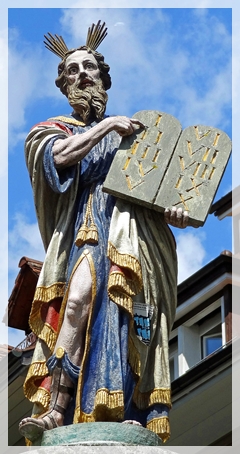 In Scripture, the number forty often appeared in the context of preparation, judgment, or testing. The rain poured down upon Noah for forty days and nights. After spending forty years in Egypt and another forty as a shepherd, Moses twice spent forty days with the Lord on Mt. Sinai. The Israelite scouts spent forty days exploring the land of Canaan and, because the people lost heart and rebelled at their report, they spent an extra forty years wandering the wilderness (one year for each day the men explored). Jonah warned Nineveh their destruction would take place in forty days, Ezekiel lay on his right side for forty days because of Judah’s sins and, before being slain by David, Goliath taunted Saul’s army for forty days.
 Devotions of the Heart