UNFORGIVABLE

And forgive us our sins, as we have forgiven those who sin against us. … If you forgive those who sin against you, your heavenly Father will forgive you. But if you refuse to forgive others, your Father will not forgive your sins. [Matthew 6:12,14-15 (NLT)]
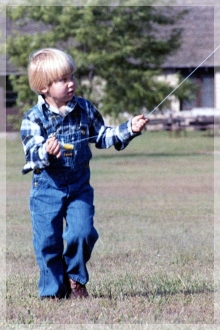
It’s been nearly 50 years, but I’ll never forget that day when, out of anger and fear, I vowed, “I’ll never forgive him!”  My husband and I had taken our three children shopping for school clothes. While I was busy with the eldest, my husband said he’d take the other two for a walk through the mall. Unknown to me, the three-year-old had convinced his father that he’d stay at the store, sit quietly in a little crawl-through hole by the store’s entrance, and wait for his dad’s return. Unfortunately, my husband never told me of that decision. Having the attention span of a gnat, the little guy quickly grew bored watching shoppers. After wandering into the store to hide in the clothes racks, he looked for his brother and me. Not seeing us (since we were in a changing room), the independent guy decided we’d left without him and calmly went looking for us in the mall parking lot. While I was paying for our purchases, my husband returned with only one child in tow. Almost simultaneously, with panic in our voices, we asked one another, “Where’s Scooter?” My imagination went wild with all the horrible things that could have happened to the youngster. In an instant, I decided I’d never forgive my husband for his carelessness and that our marriage would be over!

After the saleswoman made a call to mall security, we learned that a concerned woman had spotted the boy wandering in the parking lot sobbing because he was sure we’d left for home without him. She took him to security where he was enjoying a red lollipop. Through God’s good graces, his misadventure had a happy ending, but what if it hadn’t? While angrily deciding I’d never forgive my husband, it never occurred to me that he’d be hard put to forgive himself if our son was harmed in any way!

I thought of that episode after reading about a 5-year-old severely autistic child who’d wandered out of his house and was found drowned in a nearby pond. A few days later, I learned of a critically injured three-year old who’d fallen out of an industrial mowing tractor and been run over by his father. Unlike our story, those stories had sad endings. Several years ago, a friend’s grandchild died in another tragic accident. Wanting to go on a ride with his dad, the toddler had quietly left the house and was standing in the driveway when his father backed over the youngster. That accident ended up destroying a family through divorce and then the father’s suicide. Apparently, neither parent could forgive the other nor could they forgive themselves. I sometimes think of how my husband and I narrowly escaped a similar ending that day in the mall. Would we have forgiven ourselves and one another? How will the family of the child run over by that lawn mower or the parents of that special-needs child cope? Will they forgive each other? Will they ever forgive themselves? Or, as happened with our friend’s family, will one tragedy lead to others?

C.S. Lewis said, “Everyone says forgiveness is a lovely idea, until they have something to forgive.” Indeed, forgiveness isn’t easy and, sometimes, it seems nearly impossible. Nevertheless, we ask God to forgive us in the way we forgive others. It is hypocritical for us to ask God to forgive our sins if we withhold forgiveness from anyone else. Unless we want God to pick and choose among our sins and failings, we cannot pick and choose among the actions of those who’ve failed us. We don’t get to forgive the little transgressions and withhold forgiveness on the big ones unless we want God to do the same with us.

Instead of a mall cop and a three-year-old with a red lollipop, what if our story hadn’t ended well? I’d like to think that I would have forgiven my husband and our marriage would have survived and thrived. Only God knows—I certainly don’t and I thank Him for not putting me to the test!

To be a Christian means to forgive the inexcusable because God has forgiven the inexcusable in you. [C.S. Lewis]

Do not judge others, and you will not be judged. Do not condemn others, or it will all come back against you. Forgive others, and you will be forgiven. [Luke 6:37 (NLT)]

Copyright ©2025 jsjdevotions. All rights reserved.

WORDS OF COMFORT

For the sin of this one man, Adam, caused death to rule over many. But even greater is God’s wonderful grace and his gift of righteousness, for all who receive it will live in triumph over sin and death through this one man, Jesus Christ. … So just as sin ruled over all people and brought them to death, now God’s wonderful grace rules instead, giving us right standing with God and resulting in eternal life through Jesus Christ our Lord. [Romans 5:17,21 (NLT)]

Tears are a tribute to our deceased friends. When the body is sown, it must be watered. But we must not sorrow as those that have no hope; for we have a good hope through grace both concerning them and concerning ourselves. [Matthew Henry]

Monday’s devotion (“No Words of Comfort”) originally was published back in 2018. It came to mind because my son-in-law recently died. His death was sudden and unexpected and, when my daughter told me, I was sure I’d misunderstood her words. Not Mike! Still a young man in the prime of his life; it couldn’t be, but it was! Just as we all know we’re going to die someday, we know the people we love will die. It’s just that we expect those deaths to be on our timeline. But they’re not—they’re on God’s. The only guarantee that comes with life on earth is that it will end!

Because we are believers, as was Mike, there was no need for sentimental drivel or faulty theology at Mike’s Celebration of Life. Instead, there were the reassuring words and promises of the New Testament. As Christians, even though we mourned our loss, we could celebrate the life that had been lived and the eternal life that lay ahead. Rather than saying “Good-by” to Mike, it was more like wishing him, “Bon voyage!”

That Mike’s life goes on, however, doesn’t mean we don’t want him back here with us! Being Christ followers doesn’t mean we don’t hurt or mourn nor does it mean we aren’t angry at God for His timing. Like C.S. Lewis, we even questioned if God is a “Cosmic Sadist” who pulls the rug from under us just when life gets really good! We may be people of faith but we’re human and grief, like learning to walk, is a process that involves falls, bumps, and bruises along the way. As David did in the Psalms, we pray honest prayers and freely bring God our pain, queries, anger, and grief. He’s a big God and can handle our questions and lament.

Our anchor in grief is our faith; it keeps us from drifting away in the storm. Hope is where we find our strength. It’s what allows us to face the future—to look to the uncertainty and challenges of the tomorrows ahead and not be afraid. As for love: love comes from God and we are thankful for the years God gave Mike to us—for the love Mike gave us and for the opportunity to know and love him. Death can’t take away our love; Mike remains in our memories and our love endures.

We all grieve for Mike and for the future we expected. Even though an enormous gap now exists in the lives of my daughter and grand, there is a sense of peace surrounding us all. Yes, we mourn our loss and my daughter continues to feel as if a part of her body has been amputated. Nevertheless, we have peace in our heartache because Scripture tells us where Mike is and where we’ll eventually be. Not only do we know how the story ends, but we also know that Jesus, the man who wept at Lazarus’ grave, has not abandoned us. He walks with us in our grief. Our words of comfort are found in Jesus and His promises. They are what enable my daughter to say, “God so graciously gave me Mike. Through His wisdom he took him back home and He will graciously give me healing in my pain. God is faithful.”

And now, dear brothers and sisters, we want you to know what will happen to the believers who have died so you will not grieve like people who have no hope. For since we believe that Jesus died and was raised to life again, we also believe that when Jesus returns, God will bring back with him the believers who have died. [1 Thessalonians 4:13-14 (NLT)]

Copyright ©2025 jsjdevotions. All rights reserved.

NO WORDS OF COMFORT

Don’t let your hearts be troubled. Trust in God, and trust also in me. There is more than enough room in my Father’s home. If this were not so, would I have told you that I am going to prepare a place for you? When everything is ready, I will come and get you, so that you will always be with me where I am. [John 14:1-3 (NLT)]

water lilyThe next day would have been Sally’s wedding anniversary but, because it marked the six-month anniversary of her husband’s death, there would be no celebration. Instead of flowers, dinner, and romance, there would be tears. That morning, Sally called her step-mother, Sue, to share her dread of the following day. When telling us this, Sue admitted to being at a loss for words of consolation. A woman of faith and an ordained pastor, Sue’s difficulty in finding comforting words was because her step-daughter is Jewish. When Sue married Sally’s Jewish father, she respected her new family’s faith just as they respected hers. They knew her beliefs and what she did for a living and Sue gladly answers their questions. Nevertheless, she chooses her words carefully when speaking of the Lord and neither evangelizes nor condemns. Although her words that morning were as reassuring as they could be without speaking of Jesus, Sue knew they were nowhere near as comforting as they could have been.

In the Hebrew Bible, Sheol is mentioned as the place of the dead and the idea of a resurrection appears in Daniel and Isaiah. The Talmud contains references to heaven (Gan Eden), hell (Gehinnom), and the World to Come. Unfortunately, the who, when, what, how, and where details are missing and Judaism is ambiguous (and often contradictory) about what actually happens when one dies. Sue said she listened carefully during her son-in-law’s funeral and interment for words of comfort but heard none. After reading the Jewish funeral prayer El Maleh Rachamin and their Mourner’s Kaddish, I had to agree.

Had Sally been a believer, Sue might have told her daughter-in-law that she was not alone in distress and reminded her of the time Jesus walked on water and stilled the storm. We have a God who knows when we’re in trouble, is willing to walk on water to reach us, and will bring us peace in the middle of the tempest! Sue would have told Sally how much God loves her—so much so that He gave His one and only son so that all who believe would not perish but have eternal life. She would have comforted her with the story of Lazarus and Jesus’ words to Martha that He was the resurrection and the life and that anyone who believed in Him would live even after dying. Then again, maybe the widow would have found Revelation’s promise that He will wipe every tear and there will be no more tears, mourning, or death comforting. Sadly, those words are of little cheer to one who refuses to believe.

No words can take away the sorrow of a young woman suddenly losing her beloved husband, the father of her three small children, but there is much in our faith that can ease that pain. No Christian is left to face sorrow alone; we have a Savior, a Comforter, and the reassuring and powerful promises of Scripture. Thank you, Jesus.

Death to the Christian is the funeral of all his sorrows and evils and the resurrection of all his joys. [James H. Aughey]

I am leaving you with a gift—peace of mind and heart. And the peace I give is a gift the world cannot give. So don’t be troubled or afraid. [John 14:27 (NLT)]

Copyright ©2025 jsjdevotions. All rights reserved.


RETALIATE OR FORGIVE – FORGIVENESS (3)

But I say to you who hear, Love your enemies, do good to those who hate you, bless those who curse you, pray for those who abuse you. …. Be merciful, even as your Father is merciful. [Luke 6:27-28,36 (ESV)]

black vultureWhen writing about forgiveness these last few days, I wondered why we find it so difficult to forgive. Perhaps it’s because, in our troubled hearts, we want to even the score before doing so. Wanting to retaliate in some way, bitterness and resentment grow and eat at us until we can extract our pound of flesh.
For one woman, the opportunity for retaliation didn’t arise until her father died and she wrote his blistering obituary. Contemptuous of the man, she said he lived “29 years longer than expected and much longer than he deserved!” and called him a “horse’s ass!” After naming his “relieved children,” she said he left behind ”countless other victims including an ex-wife, relatives, friends, neighbors, doctors, nurses and random strangers.” Calling the man, “a model example of bad parenting combined with…a complete commitment to drinking, drugs, womanizing and being generally offensive,” she added that he joined the Navy as part of a plea deal to avoid criminal charges. Along with being described as reckless, wasteful, and having no redeeming qualities, he was accused of abusing his family, squandering their money, and being cruel to animals.

Explaining “there will be no prayers for eternal peace and no apologizes to the family he tortured,” she added that the man’s cremains would be kept in the barn until the “donkey’s wood shavings run out.” The obituary closed with the words that his passing “proves that evil does in fact die and hopefully marks a time of healing and safety for all.” The angry words in this scathing obituary were the family’s way of extracting their pound of flesh from the man.

Reading those words saddened me when I read them in 2017 and they continue to trouble me today. Perhaps the man’s family found the spiteful obituary cathartic, but publicly cataloguing the dead man’s wrongs accomplished nothing. Even though their contemptuous words remain on the funeral home’s website today, the man they hated will never read them! I suspect the sweet taste of revenge his family may have felt when the obituary was posted left them with a bitter aftertaste.

When harmed, it’s natural to want payback. Natural, however, isn’t necessarily right and justice and vengeance are God’s department and His alone. Rather than meeting evil with more evil, Jesus tells us we are to meet evil with grace and to do all we can to live in peace with everyone. As Christ’s followers, we are expected to extend grace and forgiveness.

I can only pray that this man’s passing has provided healing for those whose lives he touched. That healing, however, won’t come until they finally forgive him and let go of the past. Like their anger, forgiveness can’t change their past but, unlike anger, forgiveness can change their future! Unlike the bitter aftertaste of anger and revenge, forgiveness always tastes sweet!

 To forgive is to set a prisoner free and discover that the prisoner was you. [Lewis B. Smedes]

If possible, so far as it depends on you, live peaceably with all. Beloved, never avenge yourselves, but leave it to the wrath of God, for it is written, “Vengeance is mine, I will repay, says the Lord.” To the contrary, “if your enemy is hungry, feed him; if he is thirsty, give him something to drink; for by so doing you will heap burning coals on his head.” [Romans 12:18-20 (ESV)]

Copyright ©2025 jsjdevotions. All rights reserved.


BROKEN PROMISES

For we must all appear before the judgment seat of Christ, so that each one may receive what is due for what he has done in the body, whether good or evil. Therefore, knowing the fear of the Lord, we persuade others. But what we are is known to God, and I hope it is known also to your conscience. [2 Corinthians 5:10-11 (ESV)]

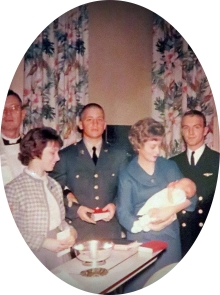
Earlier this week, I wrote about my nephew Johnny’s baptism in my mother’s hospital room. Because she was at death’s door, my brother took emergency leave and he and I served as the baby’s sponsors in Baptism (or Godparents).

As Johnny’s Godmother, I made three promises for him during the service: that he would “renounce the devil and all his works…believe all of the Articles of the Christian Faith and…keep God’s holy will and commandments.” In a perfect world, Johnny would have made those same promises again at his confirmation when he was old enough to personally know Jesus. But the world isn’t perfect; he never came to know Jesus and make those vows for himself.

As his Baptismal sponsor, I promised to make sure Johnny learned the Creed, the Lord’s Prayer, the Ten Commandments, and “all the other things which a Christian ought to know and believe to his soul’s health.” Sometimes promises are easier said than done and I did not keep my vows any better than did my nephew the promises made on his behalf. I can make all sorts of excuses for my failure—I only was 15 when I made those vows, at least 1,500 miles always separated us, and I saw him less than ten times in his 60 years. Nevertheless, I did not try to keep those promises and I will answer to God for my failure.

When I stand at God’s judgment seat, my sins will not be an issue; they already have been forgiven and my ticket to heaven is secure. But I will be asked to give an accounting for what I have done (and failed to do) since becoming a believer. While I kept my nephew in my prayers, I squandered my opportunity, small as it was, to share God’s love and the good news of the Gospel with him. I can’t say that anything I could have done would have made a difference in his troubled life but I should have tried. That weighs heavy on my heart—not because I may miss out on some heavenly reward, but because I missed an opportunity to be a disciple of Christ.

When believers stand before God, we will be judged. Since each of us have been uniquely created and gifted, my evaluation will not be the same as yours; nevertheless, each one of us will give an accounting of ourselves. What did we do with the spiritual light we had, what did we do with the opportunities given to us, and what did we do with the time, talents, and property God entrusted to us?

My nephew is one of the reasons I served our church’s children’s ministry and support both recovery ministries and programs serving the homeless and mentally ill. I suspect I continue writing these devotions as a way of atoning for not keeping the promises to God I made at my mother’s bedside 63 years ago. Older, wiser, and having more light, opportunity, time, and ability, more is expected of me now. While I no longer pray for my nephew, I continue to pray for God’s protection, grace, and mercy on others like him. As for those of us who are Christ followers, I pray that we will make good use of all that God has given us and that through our words and deeds we will live and teach the Creeds, the Lord’s Prayer, the Ten Commandments, and “all the other things which a Christian ought to know and believe to his soul’s health.”

Having gifts that differ according to the grace given to us, let us use them. [Romans 12:6 (ESV)]

Everyone to whom much was given, of him much will be required, and from him to whom they entrusted much, they will demand the more. [Luke 12:48b (ESV)]

Copyright ©2025 jsjdevotions. All rights reserved.

IT’S CURTAINS

Teach us to realize the brevity of life, so that we may grow in wisdom. [Psalm 90:12 (NLT)]

Death never takes the wise man by surprise; He is always ready to go. [Jean de La Fontaine]

powderpuffSeveral years ago, two friends joined the ranks of widowhood within a week of one another. Because her husband surrendered to cancer several months earlier by stopping all treatment, one woman was not surprised when she joined the club. The other woman, however, went to bed a wife and awoke the next morning to find herself a widow. Despite his looking the picture of health, her husband, having suffered a fatal stroke while she slept, lay dead on the kitchen floor.

Although Ira Byock is a palliative care physician and a leading advocate for improving end of life care, his book The Four Things That Matter Most is as much about living well as it is about dying. The four things referenced in the book’s title are four simple phrases: Please forgive me. I forgive you. Thank you. I love you. While we may think we’re simply restating what should be evident to those around us, we must never underestimate the power of those words.

We’d like to picture a peaceful ending with family gathered around our bedside and the opportunity to say and hear whatever needs to be said or heard, but that’s probably not the way our last act of life will be staged. Even though I knew my mother’s cancer would defeat her, when I walked out of her hospital room that afternoon, I never suspected that she’d be in a coffin when next I saw her! When I said farewell to my father after a holiday visit, I never expected that, while pheasant hunting in a cornfield, he’d die of a massive heart attack less than three weeks later. My father-in-law was airlifted to a trauma center and died there before any of us even knew he’d been in a car accident. Neither life nor death go according to plan!

In their last moments, did either of those husbands regret having left something unspoken? When their caskets were closed, did their family members weep because of words they’d left unsaid? Because they had warning, I’d like to think the first man and his family expressed their forgiveness, thanks, and love. As for the second husband—while gasping his last breath, did he wish he’d said “I love you!” before his wife went to bed? Do his children regret not apologizing for something or failing to express their love and appreciation for all he did? Does his wife wish she’d told him how much she loved him before going upstairs that night? Does she regret their previous day’s spat or wish she’d thanked him for his incredible patience?

Why should we wait until the curtain is closing before saying the important things? Any forgiveness to request or extend, any thanks to offer, and any words of love to share should not wait for the final act. We may not even know the play is closing, the people to whom we want to speak may not be present, or conversation may not be possible.

Please forgive me. I forgive you. Thank you. I love you. While it may be stating the obvious when we utter those words, being obvious doesn’t mean they don’t need to be said or heard. They’re all things that shouldn’t wait to be expressed until we or the people we love are at death’s door. If Lazarus or his sisters left anything unsaid the first time he died, I imagine they didn’t after his resurrection. Unlike Lazarus, however, we don’t get a second chance at dying and, unlike Martha and Mary, we don’t get a second opportunity to say farewell to our loved ones.

Please forgive me. I forgive you. Thank you. I love you. We don’t know when the curtain will close. Is there anyone to whom we should say those words before it does?

Everyone knows they’re going to die, but nobody believes it…If we did, we would do things differently. … Forgive yourself before you die, then forgive others. [Morrie Schwartz in “Tuesdays with Morrie” by Mitch Albom]

Lord, remind me how brief my time on earth will be. Remind me that my days are numbered—how fleeting my life is. You have made my life no longer than the width of my hand. My entire lifetime is just a moment to you; at best, each of us is but a breath. [Psalm 39:4-5 (NLT)]

Copyright ©2025 jsjdevotions. All rights reserved.