
Stay away from every kind of evil. [1 Thessalonians 5:22 (NLT)]
Moses received the Torah from Sinai and committed it to Joshua, and Joshua to the elders, and the elders to the Prophets, and the Prophets to the Men of the Great Assembly. They said three things: Be deliberate in judgment, raise up many disciples, and make a fence around the Torah. [Misnha (Pirke Avot)]
 Last December, after breaching the barrier surrounding the tiger enclosure at our local zoo, a man stuck his hand into the tiger’s cage. A similar incident occurred a few months later at a nearby airboat attraction when a man improperly went through the first enclosure and put his arms into the tiger’s cage. Although both men survived, they suffered serious injuries to their hands and arms. Fences are placed to protect us and keep us from getting too close to danger but you can’t protect people from their own stupidity.
Just as those fences around the tigers’ cages were meant to protect people from the tigers (and the tigers from people), many of the Rabbinic innovations were designed to protect the commandments of the Torah. It is in the Mishnah (the oldest collection of post-biblical Jewish laws) that we find the phrase “make a fence around the Torah.” It is this fence, not the Bible, that explains the hundreds of prohibitions we find in Judaism.
Those Rabbinic rules were supposed to prevent people from being tempted to break the law or unintentionally doing so. For example, items like hammers and scissors that were associated with prohibited work like building or cutting, were not even to be picked up lest handling them led to their use. Although the Sabbath officially begins at sunset Friday, a few minutes were added before its beginning and after its end to make sure no one accidentally worked too late or resumed work too early. Even today, for my Jewish friend, the Shabbat candles are lit and all work has stopped no later than 18 minutes before the sun officially sets. His Sabbath ends when three stars are visible, which can be about 30 minutes after sunset. Rather than additions to the Mosaic law, these fences were seen as a way of helping people remain obedient to the law; they were erected to keep people from giving into temptation or just cutting it too close! Sadly, through the years, the rules became increasingly complicated and, by Jesus’ time, they were the heavy yoke about which He spoke.
Nevertheless, Jesus gave us a New Testament version of building a fence when He equated the emotion of anger with the act of murder and the attitude of lust with adultery. Anger and lust are like stepping too close to the tiger’s cage—they’re dangerous territory! Just as picking up his cell phone on Saturday might lead my Jewish friend to break the Sabbath by using it, lust and anger can lead to something far worse! Sticking your arm in a tiger’s cage or stepping into sin never ends well and, rather than gouging out our eyes or cutting off our hands, we can erect spiritual boundaries to keep us and our loved ones safe. We may restrict our youngsters to G or PG movies or set specific rules about dating for our teens. We might use internet filters to screen out inappropriate content on our computers, abstain from alcohol, or avoid the appearance of inappropriate behavior by following the “Billy Graham rule” of never being alone with a person of the opposite sex except for one’s spouse. We each have our own spiritual fences.
Unless they’re found in Scripture, however, those fences are not doctrine. They are our personal rules and, as such, other people may have different ones, some of which may be closer or further from the tiger’s cage than ours. We are not in a position to judge other people’s spiritual barriers any more than they are to judge ours. Unfortunately, for the Pharisees of Jesus’ day, the fence around the Torah became more important than the law itself. We must never do that. Every fence we erect must comply with God’s simple law that we love Him with our entire being and love our neighbors as we love ourselves.
 When Jesus brought Matthew into the inner circles of disciples, it was as shocking as if someone like Billy Graham brought a loan shark, heroin trafficker, money launderer, or embezzler onto his worship team. But, along with his questionable reputation and his devotion to Jesus, Matthew brought a unique set of skills to the Lord and to countless generations of Christ’s followers.
 Although Mark and Luke call him Levi, there is no doubt that Levi and Matthew are the same man. He may have had two names, as did John Mark or was known by two different names as were Peter (Simon), Thomas (Didymus), Jude (Thaddeus), and Nathanael (Bartholomew). It simply may be that, like the Apostle Paul (Saul), he was known both by his Greek name of Matthew as well as his Hebrew one of Levi.
 Normally, the Internet would be one of the worst places to search for love but, according to my favorite online Bible resource site, some people went looking for love on line and were successful. Of course, they were looking for it in one of the right places—the Bible. With nearly 3 million searches a day (which, in case you wondered, is more than 2,000 per minute 24/7), “love” was the keyword most commonly searched for by the 160 million visitors to their site in 2021. Appearing 759 times in the NLT Bible, “love” was easily found (even in the King James that only uses it 442 times)!
 Used primarily in soccer and hockey, the term “own goal” or “OG” describes the moment a player accidentally (or deliberately) puts the ball or puck into their own net, resulting in the opposing team getting credited with the goal. OGs can arise from a player’s misjudgment or simply bad luck, as might happen when he’s the victim of a wicked deflection or freak incident. An “own goal” is probably one of the lowest moments for a player and the term has now become a metaphor for any action that backfires on a person. When I think of the way Paul’s imprisonment helped rather than hindered the growth of the early church, I can’t help but think that Satan made an own goal with that one and the point went to God’s team, not his.
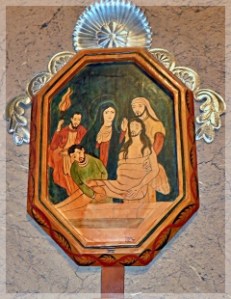 Not all of the Sadducees and Pharisees were disinterested in the truth. Consider Nicodemus, a man who was both a Pharisee and a member of the Sanhedrin, the Jewish ruling council. Drawn to Jesus because of His miracles, the Pharisee visited Him alone during the night. That his approach seems furtive implies Nicodemus was hesitant to let others know of his visit. Nevertheless, he approached Jesus with respect, an open mind, and honest questions. Although some Pharisees said Jesus got His power from Satan, Nicodemus began by acknowledging that Jesus’ miracles testified He came from God. Recognizing that Jesus came from God, however, was not enough. Jesus’s response was, “Unless you are born again, you cannot see the Kingdom of God.” Jesus, of course, was speaking of spiritual rebirth but Nicodemus’ response implies he took Jesus’ words literally when he pointed out the impossibility of an old man re-entering his mother’s womb to be born again.
 Devotions of the Heart