LET US HONOR HIM IN ALL WE DO

When it was time for the harvest, Cain presented some of his crops as a gift to the Lord. Abel also brought a gift—the best portions of the firstborn lambs from his flock. The Lord accepted Abel and his gift, but he did not accept Cain and his gift. This made Cain very angry, and he looked dejected.

“Why are you so angry?” the Lord asked Cain. “Why do you look so dejected?  You will be accepted if you do what is right. But if you refuse to do what is right, then watch out! Sin is crouching at the door, eager to control you. But you must subdue it and be its master.” [Genesis 4:3-7 (NLT)]

best5-crop-vert

Sundays, I take photos for the church website. As I was editing pictures from last Sunday’s service, I wondered why I was doing it and bemoaned the fact that it is so much faster and easier to take 150 photos than to edit them all. Couldn’t I just upload them without the painstaking process of editing? Or, couldn’t I just take a quick look through them and just eliminate the really bad or unfocused ones? Why did I have to analyze every photo before deleting or enhancing and cropping it to make it good enough for posting? Why am I so careful to eliminate any that, if I were the subject, I wouldn’t want someone to see? Who really looks anyway? Then, I remembered that there were 9,000 hits on the church’s Facebook page the week after Easter so I suppose some people actually do look at those photos. I had an idea: what if I didn’t take so many? Couldn’t I get by with just a handful of the band, singers, pastor and congregation? Think how quickly I’d be done if I only took twenty instead of 150 or more! I say I wasn’t complaining, but really I was.

I paused in my tirade when I came to the photo of the lovely crosses given to our music team in appreciation for their service to the congregation. It brought to mind the hours the worship leader, band, singers and sound crew work to give us the music that makes our one hour of worship so joyful, entertaining and moving. I pondered the hours our pastors work each week to make that same hour so meaningful. I looked at the photos of the men setting up and taking down the thousand chairs that get carted to the park each week for our worshippers. I looked at my shots of the volunteers who pick up or serve the food, coffee, and juice. I saw pics of the teachers for our kid’s time and youth groups. I saw the friendly faces of the greeters who faithfully hand out programs and carry collection buckets every Sunday. There are other pictures of the many volunteers who make our church so special: the blood pressure checkers, the men in charge of our veteran’s outreach, the Bible study teachers and small group leaders, and the food pantry volunteers. Every one of these people give their very best every Sunday.

God accepted Abel’s offering and rejected Cain’s and it wasn’t because God didn’t like vegetarian fare! Abel gave God the finest he had to offer: the choicest piece of meat from the firstborn of his flock. Although he gave God some of his crops, Cain didn’t give Him the first of the harvest or even the best of his crop. It may have been the surplus yield or possibly blighted in some way. The best was accepted; the less than best was not. It’s clear that God expects the best we can offer; after all, he gave us His best when he gave us Jesus! I guess a few hours on Sunday afternoon aren’t all that much to offer. So, I’ll continue to take way too many photos at church tomorrow and I’ll probably grumble a bit as I edit them. I will continue to carefully look through them to delete the bad ones and enhance and crop the good ones so they are the best I can offer to God and my fellow worshippers.

What’s the best you have to offer?

“You Are My King (Amazing Love)” [Billy James Foote, songwriter]
Amazing love, how can it be
That You, my King, should die for me?
Amazing love and I know it’s true,
And it’s my joy to honor You, in all I do to honor You.
In all I do to honor You, in all I do, let me honor You.

It was by faith that Abel brought a more acceptable offering to God than Cain did. Abel’s offering gave evidence that he was a righteous man, and God showed his approval of his gifts. Although Abel is long dead, he still speaks to us by his example of faith. [Hebrews 11:4 (NLT)]

UNCONDITIONAL FORGIVENESS

If any of your fellow Israelites become poor and are unable to support themselves among you, help them as you would a foreigner and stranger, so they can continue to live among you. Do not take interest or any profit from them, but fear your God, so that they may continue to live among you. You must not lend them money at interest or sell them food at a profit. [Leviticus 25:35-37 (NIV)]

If you lend money to one of my people among you who is needy, do not treat it like a business deal; charge no interest. [Exodus 22:25 (NIV)]

birdsfoot trefoil--LkGenWI14webIn the Old Testament, God commanded the Israelites to give help to one another freely and not to expect a profit from their assistance. The purpose of a loan was to help a person in need, not to increase one’s wealth. Avarice, of course, killed that concept. People being people, greediness quickly replaced concern when loans were made. Although the lender was to give out of love not out of hope of gain, rates of interest became exorbitant and poor debtors became helpless. Sound familiar?

In the New Testament, debtors and creditors were often used to illustrate the concept of forgiveness of sins. Sin is a debt that must be paid or canceled before man can be free. Jesus taught us to ask God to forgive our debts (or trespasses) as we forgive the debts (or trespasses) against us. Sometimes, however, we want something more before we’ll forgive. Often, as a condition of forgiveness, we want an apology from the offender; we may want him or her to eat some “humble pie” or we may want them to make amends. We want them to pay for their offense! Not that the offender shouldn’t apologize or try to make things right but, as the forgiver, we are not allowed to demand or expect it!

Jesus freely repaid our debt on the cross. God doesn’t expect us to grovel and beg for His forgiveness; he readily hands it out to all who repent. We are to be as equally forgiving of our fellow man!

And forgive us our debts, as we also have forgiven our debtors. [Matthew 6:12 (NIV)]

For if you forgive other people when they sin against you, your heavenly Father will also forgive you. But if you do not forgive others their sins, your Father will not forgive your sins. [Matthew 6:14-15 (NIV)]

IN GOD’S BOAT

I have chosen to be faithful; I have determined to live by your regulations. I cling to your laws. Lord, don’t let me be put to shame! I will pursue your commands, for you expand my understanding. [Psalm 119:30-32 (NLT)]

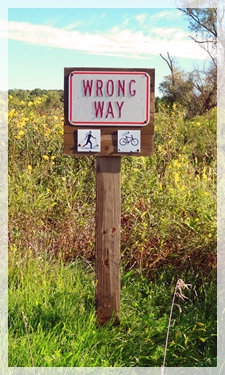
4-14-15DSC02196CROPwebMy father, C.W. Smith, was a bit of an autocrat; his word was law and not to be questioned by anyone. One day, while fishing with a friend, the two men were preparing their lines and baiting their hooks. My father noticed that his friend was tying the lure on his line in a way entirely different from the “tried and true” Smith technique. When my dad asked his friend why he used that method, his fishing buddy replied that he’d always done it that way and that it worked fine. The friend assured my father that he always caught plenty of fish and rarely lost a lure. My dad couldn’t accept the possibility of more than one way to tie a lure and finally said, “That may be well and good. But, when you’re in the Smith boat, there is only one way to do it and that is the Smith way.”

We aren’t in the Smith boat today, so we can fish any way we want. We are, however, in God’s and He’s the one who sets the rules. Unlike fishing, there is only one way to behave in God’s boat and that is His way!

Teach me your decrees, O Lord; I will keep them to the end. Give me understanding and I will obey your instructions; I will put them into practice with all my heart. Make me walk along the path of your commands, for that is where my happiness is found. [Psalm 119:33-35 (NLT)]

DETOURS

This is what the Lord says—your Redeemer, the Holy One of Israel: “I am the Lord your God, who teaches you what is best for you, who directs you in the way you should go. [Isaiah 48:17 (NIV)]

detoursDSC01393WEBIn yesterday’s message, I compared God’s guidance to our car’s GPS. They both know where we are and can guide us in our journeys. Personally, I love the soothing voice of our navigation system. When we ignore its advice, it never yells or calls us names. A gentle voice just calmly corrects us by saying, “Make a legal U-turn.” Moreover, the GPS will eventually adjust to accommodate our plans if we decide to take a different route. On our way to Florida, for example, because of warnings posted about a back-up due to an accident, we exited the interstate to avoid an hours-long delay. A quick look at the map indicated that we could take a detour and get back on the interstate south of the pile-up. At first the GPS kept gently telling us to turn around so we simply muted the voice; we knew what we were doing even if it didn’t. Eventually, the navigation system agreed with our plan and directed us back to the interstate our way.

God, however, isn’t so obliging when we choose to go our way instead of His. One, we can’t mute His voice. We can try to ignore him, but we can’t mute Him. Two, He’s the one who decides whether or not we take detours. He’s not going to adapt His plans to accommodate us. Moreover, God’s correction is rarely as gentle as a soothing voice suggesting a legal U-turn. When they ignored God’s directions, Jonah ended up in the belly of a great fish, Balaam’s donkey gave him grief when an angel blocked their way, and Lot’s wife turned into a pillar of salt. Finally, unlike the GPS, which we can turn on and off at will, God is always there and He expects obedience. He wants us to hear, trust, and submit to His plan, not ours.

Trust in the Lord with all your heart and lean not on your own understanding; in all your ways submit to him, and he will make your paths straight. [Proverbs 3:5-6 (NIV)]


WHO IS MY NEIGHBOR?

DSC074clamPass2WEB
The man answered, “‘You must love the Lord your God with all your heart, all your soul, all your strength, and all your mind.’ And, ‘Love your neighbor as yourself.’” … The man wanted to justify his actions, so he asked Jesus, “And who is my neighbor?” [Luke 10:27,29 (NLT)]

“Where is she coming from?”…“How could anyone in his right mind think that?”…“How bizarre!”…“Would you look at that?”…“They’re so different.”…”She’s weird!” We’ve all had reactions like that to various people; some may even had reactions like that to us! It’s challenging to think of them as our neighbors and we’re pretty sure we wouldn’t want them living next door!

God loves everyone, so why is it so difficult for us? We don’t seem to have a problem loving ourselves, but it’s loving others that poses the problem. Naturally, it is easier to love those who are more like us. There’s a commonality; we may share similar experiences or ethnic backgrounds. Perhaps we enjoy the same authors, live near one another, have similar interests, or attend the same church. We can better understand why they speak, think, eat, dress, worship, or relax the way they do. Being pretty practiced at loving ourselves, it is easier to think of people who think, look and act like us as neighbors and to love them (at least a little bit).

The love part, however, gets increasingly more difficult the less like us someone happens to be. In fact, sometimes we’re needlessly afraid of people simply because they’re different. They may not speak our language, look like us, or even eat the same food. Like it or not, however, most of the world’s population is not like much like us. Or is it? We all share one thing for sure: God’s love for each and every one of us! That’s something we all have in common with more than seven billion people. Since nearly a third of them are Christian, we share the love of Jesus with a good number of them, as well.

Father in heaven, God of love, help us see the similarities rather than the differences among your children. Replace any judgment in our hearts with understanding, any anger with forgiveness, and any anxiety with confidence. Trade our pride with humility, our pettiness with generosity, and our self-centeredness and selfishness with love so that we treat everyone as a “neighbor.”

It’s a beautiful day in this neighborhood, A beautiful day for a neighbor. Would you be mine? Could you be mine? … Won’t you be my neighbor? [Fred Rogers, “Won’t You be My Neighbor?”]

The Bible makes this clear. Be as loving as you can, as often as you can, for as many people as you can, for as long as you live. Why should we do this? Because. [Kate Braestrup]

For the whole law can be summed up in this one command: “Love your neighbor as yourself.” [Galatians 5:14 (NLT)]

FISHERS OF MEN

Jesus called out to them, “Come, follow me, and I will show you how to fish for people!” [Matthew 4:19 (NLT)]

DSC09292-cropreducedWEB

When we’re fishing for souls, we can learn from our fisherman friends.

Trust your guide: He knows where he’s taking you and how to get you home.
Obey the guide: Cast your line when and where he tells you.
Have patience: A good fisherman is willing to wait for the fish to bite.
Use the right lure: The same bait won’t work for all fish.
Be quiet: If you’re too loud, you might scare away the fish.
Be adaptable: There’s more than one way to catch fish.
Don’t get discouraged: Remember, tomorrow is another day.
There are no age or gender limitations: Everyone can go fishing!

Of course, there are some differences between fishing for people and trying to catch fish: no license is required, there are no limits on the size of our catch, and God never throws anyone back!

There is never a bad day for fishing; some days, however, turn out to be bad days for catching! [Scott, a fisherman friend]

“Don’t be afraid! From now on you’ll be fishing for people!” [Luke 5:10b (NLT)]