WHO IS MY NEIGHBOR?

DSC074clamPass2WEB
The man answered, “‘You must love the Lord your God with all your heart, all your soul, all your strength, and all your mind.’ And, ‘Love your neighbor as yourself.’” … The man wanted to justify his actions, so he asked Jesus, “And who is my neighbor?” [Luke 10:27,29 (NLT)]

“Where is she coming from?”…“How could anyone in his right mind think that?”…“How bizarre!”…“Would you look at that?”…“They’re so different.”…”She’s weird!” We’ve all had reactions like that to various people; some may even had reactions like that to us! It’s challenging to think of them as our neighbors and we’re pretty sure we wouldn’t want them living next door!

God loves everyone, so why is it so difficult for us? We don’t seem to have a problem loving ourselves, but it’s loving others that poses the problem. Naturally, it is easier to love those who are more like us. There’s a commonality; we may share similar experiences or ethnic backgrounds. Perhaps we enjoy the same authors, live near one another, have similar interests, or attend the same church. We can better understand why they speak, think, eat, dress, worship, or relax the way they do. Being pretty practiced at loving ourselves, it is easier to think of people who think, look and act like us as neighbors and to love them (at least a little bit).

The love part, however, gets increasingly more difficult the less like us someone happens to be. In fact, sometimes we’re needlessly afraid of people simply because they’re different. They may not speak our language, look like us, or even eat the same food. Like it or not, however, most of the world’s population is not like much like us. Or is it? We all share one thing for sure: God’s love for each and every one of us! That’s something we all have in common with more than seven billion people. Since nearly a third of them are Christian, we share the love of Jesus with a good number of them, as well.

Father in heaven, God of love, help us see the similarities rather than the differences among your children. Replace any judgment in our hearts with understanding, any anger with forgiveness, and any anxiety with confidence. Trade our pride with humility, our pettiness with generosity, and our self-centeredness and selfishness with love so that we treat everyone as a “neighbor.”

It’s a beautiful day in this neighborhood, A beautiful day for a neighbor. Would you be mine? Could you be mine? … Won’t you be my neighbor? [Fred Rogers, “Won’t You be My Neighbor?”]

The Bible makes this clear. Be as loving as you can, as often as you can, for as many people as you can, for as long as you live. Why should we do this? Because. [Kate Braestrup]


For the whole law can be summed up in this one command: “Love your neighbor as yourself.” [Galatians 5:14 (NLT)]

FOR THOSE WE LOVE – Valentine’s Day 2015

“Haven’t you read the Scriptures?” Jesus replied. “They record that from the beginning ‘God made them male and female.’” And he said, “‘This explains why a man leaves his father and mother and is joined to his wife, and the two are united into one.’ Since they are no longer two but one, let no one split apart what God has joined together.” [Matthew 19:4-6 (NLT)]

8-17-15b&gWEB

Father, thank you for my spouse; please don’t let me take my life’s partner for granted. Prevent us both from allowing the obligations and frustrations of each day hinder us from making time for one another. Give us forgiving hearts when the other’s words or actions cause anger or grief. May we never allow people or things to keep us from walking the same path, hand in hand, for the rest of our lives.

Father, for those who are not blessed with a partner at this time, give them plenty of friends and family to fill their hearts and lives with love and joy.

In every marriage more than a week old, there are grounds for divorce. The trick is to find, and continue to find, grounds for marriage. [Robert Anderson]

Most important of all, continue to show deep love for each other, for love covers a multitude of sins. [1 Peter 4:8 (NLT)]

Always be humble and gentle. Be patient with each other, making allowance for each other’s faults because of your love. Make every effort to keep yourselves united in the Spirit, binding yourselves together with peace. [Ephesians 4:2-3 (NLT)]

A NEW WAY TO SERVE

The twelve apostles called all the disciples together and told them, “It’s not right for us to give up God’s word in order to distribute food. So, brothers and sisters, choose seven men whom the people know are spiritually wise. We will put them in charge of this problem. [Acts 6:2-3 (GW)]

The office of deacon was established early in the New Testament church to make sure food was distributed to widows and others in need. A good friend is a Presbyterian deacon and, according to The Presbyterian Deacon: An Essential Guide, he is to “exhibit within the church and before the world the exemplary moral authority of sympathy, witness and service after the example of Jesus Christ.” At a recent deacon’s meeting, while offering the evening’s devotion, he spoke of their calling to be the caring arm of the church and of the various ways they fulfill their mission. They typically drive people to worship or Bible study, bring food when someone is ill, visit shut-ins, and welcome visitors. My deacon friend pointed out that many of the struggles faced by their congregation are quite different from the ones faced in the past. He questioned whether their old ways of serving were still effective. Challenging his fellow deacons to think “outside of the box” and to try new ideas, he said, “We are only limited by our own imaginations.”

Another friend recently shared how she helped an elderly woman in Hospice care. Her story illustrates the new problems faced by our church family and the new methods that can be used to meet them. Using her business and Internet savvy, she arranged for automatic bill payments for the woman’s expenses and cancelled services no longer needed. She set up online accounts, established passwords, and answered security questions. She now has online access to her friend’s medical records and bills and can finally make sense of the stacks of paper that have accumulated during this long illness. I’m sure her sick friend would have appreciated a visit from a church member but getting her personal business in order was far more important. It had become overwhelming, especially since Internet knowledge has become essential to doing it.

Until hearing this story, I hadn’t considered how daunting the Internet can be for others, especially the elderly. Many people still don’t use smart phones or computers. Moreover, many of those who do are hopelessly lost beyond email, FaceTime or Facebook. Increased dependence on computerization for important communication is just one of the new challenges faced by many in our church family.

We don’t need to be deacons to be the caring arms of our churches. We all have been given the task of ministering to the ill, those in want, those without family or friends, and those enduring hardships. Jesus called on all of us to serve, not just a select few. Let’s never allow the limit of our imaginations limit the ways we minister to those in need. Is there something you can do for someone? Is there some unique way you can serve?

Each of you as a good manager must use the gift that God has given you to serve others. [1 Peter 4:10 (GW)]

HE CAME FOR EVERYONE

For God loved the world so much that he gave his one and only Son, so that everyone who believes in him will not perish but have eternal life. [John 3:16 NLT)]

That’s you, my friend, and me. It’s everyone else, too. Salvation isn’t just for the rich or pretty, the respected and comfortable, the intelligent and wealthy. It’s for all of us, no matter our color or nationality, our education or profession, our hygiene or attire. Let’s always remember that God has an “open door” policy; he loves us all and all are welcome in His house.

Jesus surrounded himself with an assorted group of people: tax collectors, fishermen, the mentally ill and handicapped, laborers, children, and even women of questionable reputations. He came for them all and loved them all. Every church has an interesting mix of people and we might find some of them a bit annoying at times. Perhaps it’s the special needs man who talks too loudly, the oddly dressed woman who seems to come only for the cookies and coffee, the smoker who brings the aroma of stale cigarettes with him to the sanctuary, the woman who falls asleep during the sermon and snores, the cougher who sits behind you and the lady next to him who loudly sings off key, the babies who cry, the kids who fidget, the person with body odor who sits beside you, or the ladies who whisper to one another during service. If we don’t like the person we’re sitting next to at church, it’s time to do a little soul searching. Remember, since God loved him enough to die for him, we ought to be able to muster up a little love, patience and tolerance for our neighbor. After all, he may have some misgivings about us, as well!

Because of the privilege and authority God has given me, I give each of you this warning: Don’t think you are better than you really are. Be honest in your evaluation of yourselves, measuring yourselves by the faith God has given us. Just as our bodies have many parts and each part has a special function, so it is with Christ’s body. We are many parts of one body, and we all belong to each other. [Romans 12:3-5 (NLT)]

Respect everyone, and love the family of believers. [1 Peter 2:17a (NLT)]

FOR CAREGIVERS EVERYWHERE

He does not ignore those in trouble. He doesn’t hide from them but listens when they call out to him. [Psalm 22:24 (NCV)]

God will strengthen you with his own great power so that you will not give up when troubles come, but you will be patient. [Colossians 1:11 (NCV)]rose - CLIL959-8x10WEB

Cerebral palsy, rheumatoid arthritis, ALS, cancer, MS, Parkinson’s, MD, Down’s, congestive heart disease, Alzheimer’s, stroke: you name it – they’re all burdensome diagnoses. They take their toll not only on those afflicted but also on those who love and care for them. Most of us have all we can do to take care of ourselves, yet there are many who spend their days and nights looking after the needs of others as well as themselves. These caregivers are often emotionally, physically, and even spiritually exhausted. For many, it is a daily struggle to cope with their loved ones’ debilities and demands with no end in sight. For others, the end is painfully clear and their time together is no longer counted in years but rather in weeks, days or even hours.

Father in Heaven, thank you for those who care for and comfort the ill; we offer this prayer for caregivers everywhere. Strengthen and reassure them, free them from worry and fear, and give them patience, not only with their loved ones but also with themselves. Guide them through the many difficult decisions they face daily. Relieve their doubts and anxiety and make your loving presence known. Remind them of the necessity of taking respite time; encourage them to seek help and support from others. May we all be willing to ease their burden if we possibly can.

Though my sickness was a trouble for you, you did not hate me or make me leave. But you welcomed me as an angel from God, as if I were Jesus Christ himself! [Galatians 4:14 (NCV)]

HEAR THEIR CRIES

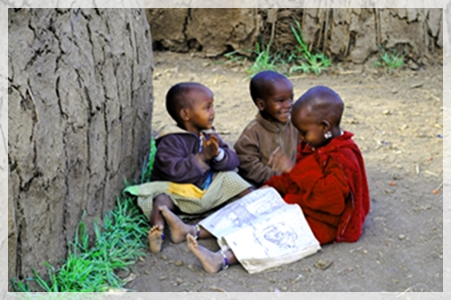
Masai 17WEB
Give freely and spontaneously. Don’t have a stingy heart. The way you handle matters like this triggers God, your God’s, blessing in everything you do, all your work and ventures. There are always going to be poor and needy people among you. So I command you: Always be generous, open purse and hands, give to your neighbors in trouble, your poor and hurting neighbors. [Deuteronomy 15:10-11 (MSG)]

We recently celebrated my mother-in-law’s 98th birthday; how blessed we are that she is still spry and alert. Since my husband’s father lived until the age of ninety-six and many of his other relatives lived well into their nineties, we were curious about his life expectancy. According to an on-line calculation, it’s likely my seventy-one year old spouse will live until he’s at least ninety; he has a 25% chance of living beyond ninety-five. That’s not as old as Methuselah, Abraham, or Jacob, but he probably has several good years ahead. Clearly, he comes from good genes. Those long and healthy life spans, however, are probably due more to an accident of birth: he and his family were born in the right place. Living in one of the wealthiest nations in the world, even during difficult times, they were never without shelter, safe water, enough food, or good medical care. Unfortunately, that’s not true for many children today, even children in our own country.

Granted, if we lived in Monaco, Switzerland or even Canada, my husband’s life expectancy would be even higher. If, however, he was born today in sub-Sahara Africa, he could expect to live only forty-seven years. If, by good fortune, he’d made it into his sixties, he certainly wouldn’t have gotten that heart stent a few years back, so I would probably be widowed by now. If we lived in a third world country, other members of my family would also be missing. Grandma most certainly would never have lived this long. If she’d survived giving birth, surely her asthma, heart attack, stroke, broken bones, and abscessed teeth would have caused her demise. A granddaughter would be absent as well. She’s alive today only because of the surgical intervention of pediatric cardiologists; she wouldn’t have had that kind of care in a developing country. Then again, she might never have been born if her mother hadn’t survived a bout of pneumonia as a girl, something made possible with a simple regimen of antibiotics, so plentiful here and so rare elsewhere. Another grandchild and her mother probably wouldn’t have survived childbirth without the emergency Caesarian section that made a safe birth possible. Of course, that’s assuming my son lived long enough to become a father, something that wouldn’t have happened without the lifesaving surgery for a ruptured spleen he had several years earlier. In many parts of the world, he would have died from internal bleeding. The bout of diarrhea that landed one of my babies in the hospital and on IVs would have been fatal in places like Sierra Leone or Chad. Of course, all this assumes that my husband and I could have lived long enough to have children. Because of readily available medical care and good nutrition, we easily survived bouts of the flu, measles, mumps, chicken pox, strep and other assorted infections and diseases. In a developing country, that wouldn’t have been the case. Because of immunizations, my children and grands, unlike so many children in the third world, will never even have most of those illnesses.

I apologize for moving from the joyful celebration of a birthday to such depressing thoughts. As Christians, however, we can’t turn away from the facts simply because they are unpleasant. It is horrifying that more than 20,000 children die each and every day from the silent killers of poverty, hunger, easily preventable diseases and illnesses, and related causes. One child dies every four seconds; that’s over 7 million deaths a year, with the vast majority occurring in sub-Sahara Africa and South Asia. More than a quarter of all children in developing countries are underdeveloped or stunted; they simply don’t have enough to eat. Add malnutrition to the lack of shelter, medical care and safe water, and you have the recipe for disaster. As Christians, we must take notice. As Christians, we must do something.

Father, forgive us when we turn away from unpleasant truths. Don’t let us take the blessings of shelter, food, clean water, and health care for granted. Guide us as we prayerfully consider what it is we can do to improve the lives of our brothers and sisters both here and abroad. Don’t let us stop at prayer, Lord; empower us to act on your behalf.

If you stop your ears to the cries of the poor, your cries will go unheard, unanswered. [Proverbs 21:13 (MSG)]

Learn to do good. Work for justice. Help the down-and-out. Stand up for the homeless. Go to bat for the defenseless. [Isaiah 1:17 (MSG)]