ORTHOPRAXY

What good is it, my brothers, if someone says he has faith but does not have works? Can that faith save him? If a brother or sister is poorly clothed and lacking in daily food, and one of you says to them, “Go in peace, be warmed and filled,” without giving them the things needed for the body, what good is that? So also faith by itself, if it does not have works, is dead. [James 2:14-17 (ESV)]

African irisJeopardy introduced me to the word “performative” but, in an article about how scandals are hurting organized religion, the New York Times introduced me to another new word, “orthopraxy.” While “orthodoxy” means correct belief, doctrine, or teaching, “orthopraxy” has to do with correct practice, behavior, or action. Orthodoxy says, “Hear my words!” but orthopraxy says, “Watch my behavior!” With the flood of scandals throughout the Christian church, it’s easy to point our fingers at the disgraced Christian celebrities, megachurch pastors, and Roman Catholic priests whose orthodoxy didn’t match their orthopraxy—people who espoused devotion to God and adherence to His word while disregarding it in their own lives.  Let’s remember, however, that whenever we point a finger at someone, three other fingers point at us! Although the Times article was about the disconnect between orthodoxy and orthopraxy in the church at large, there’s often a disconnect between the two in our personal lives, as well.
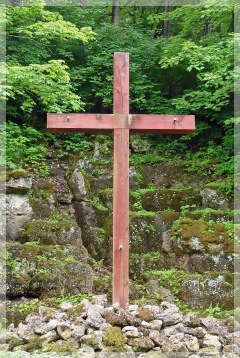
As a Christ follower, correct doctrine or belief must come first; nevertheless, that doctrine should lead to correct behavior! In his letter to the Romans, the Apostle Paul spends the first eleven chapters focusing on theology—the message of the Gospel. Paul, however, doesn’t stop at correct belief or orthodoxy. In chapter 12, he transitions to the application or orthopraxy of that belief or doctrine. Paul does the same thing in his letter to the Ephesians. The first three chapters highlight doctrine and emphasize that we are saved by God’s grace through our faith rather than works [2:8-9]. Then the Apostle continues by telling his readers how to put that doctrine into practice. He urges them to  “lead a life worthy of your calling,” by being humble, gentle, united, patient with one another, making allowances for each other’s faults, and by binding themselves “together in peace.” [4:2-3]

Making it clear that orthodoxy and orthopraxy are two sides of the same coin, Paul told Titus to “insist on these teachings (orthodoxy) so that all who trust in God will devote themselves to doing good (orthopraxy).” [3:8] James makes the same point when he asks, “What good is it, my brothers, if someone says he has faith but does not have works?” Just as a Christian’s belief or doctrine should lead to walking as did Christ, the believers’ actions or “works” are evidence of his belief in that doctrine!

While we tend to think of “works” as good deeds, orthopraxy is more than writing a check to a charity, teaching Sunday school, or helping at the food pantry. Our works are the way we conduct ourselves every moment of every day. It’s the way we demonstrate the integrity, goodness, honesty, truth, peace, love, patience, compassion, generosity, self-control, and forgiveness that should be the result of our faith or orthodoxy. Our secular behavior—the way we do our work, vote, compete, negotiate a contract, accept criticism, disagree, serve, talk with (or about) other people, spend our money, and use our leisure time is our orthopraxy. We can’t have one without the other!

For a Christian, correct belief must come first but, out of that belief, correct conduct must follow. Although we are saved by faith and not works, God’s purpose in saving us is so we’ll do good works. Our problem as Christians isn’t that we don’t know what to do—the problem is that we do know what to do but we often fail to do it!

For by grace you have been saved through faith. And this is not your own doing; it is the gift of God, not a result of works, so that no one may boast. For we are his workmanship, created in Christ Jesus for good works, which God prepared beforehand, that we should walk in them. [Ephesians 2:8-10 (ESV)]

Copyright ©2024 jsjdevotions. All rights reserved.

HEARTFELT OR HYPOCRITICAL?

Watch out! Don’t do your good deeds publicly, to be admired by others, for you will lose the reward from your Father in heaven. … But when you give to someone in need, don’t let your left hand know what your right hand is doing.  [Matthew 6:1,3 (NLT)]

st. Thomas Catholic Church-Petosi -WisconsinIn the category of “Newer Words,” the night’s Final Jeopardy clue was, “Philosopher’s use it for language that accompanies an action, like ‘I dub thee knight’; it also means done for show or signal.” The correct response was “performative.” A new word to me, I encountered it again the following day in an article by Rich Villodas about “performative spirituality.” After asking, ”If a good deed is not posted on social media, did it really happen?” Villodas continued with another rhetorical question, “If an act of generosity is not caught on camera and never goes viral, was it a worthwhile gesture?”

Performative behavior is intended to show how a person wants to be seen by others, rather than who they really are. While performative spirituality is more blatant in this day and age, it didn’t begin in the 21st century with social media. God the Father took issue with it back in the 8th century BC. Through the prophet Hosea, God made it clear that outward expressions of faith through offerings and sacrifices were meaningless without the covenant loyalty, love, and obedience that are the hallmarks of spirituality. God wanted true faith rather than empty sacrifice. [6:6]

Jesus certainly took issue with performative spirituality in the 1st century. Along with strict adherence to the law, Jewish religious leaders considered giving, fasting, and praying to be the most important proof of one’s piety. When they made offerings, many were sure to do it in public view and, when they fasted, their sad demeanor, unshaven unwashed faces, and unclean clothes made it obvious to all. To show their piousness, they often enlarged their tefillin, lengthened the tzitzits on their robes, and prayed long, loud, and public prayers. They may have worn large prayer boxes on their arms, but they hadn’t placed the boxes’ words in their hearts nor were they obeying the commandments represented by their long tassels. Being regarded as righteous by others is not the same as being righteous before God!

Jesus chastised the Pharisees and scribes for the way they could appear devout and honorable through their strict obedience to the law while actually breaking it. Through the practice of Corban, they could dedicate their property (both real and personal) to the Lord. In theory, having given everything to the Temple, they were penniless. In practice, however, they retained their wealth with a life estate in their property. Able to keep their possessions and land, they could live off any earnings and interest for the rest of their lives! Contrary to God’s law, this arrangement allowed them to enjoy a comfortable life while freeing them from their debts along with their financial responsibility to support their aging parents and help those in need.

When Jesus told us we’re not to let our left hand to know what our right hand is doing when we give to those in need, I’ve always interpreted the words to mean that our giving should be done anonymously. After all, kindness, generosity, and compassion aren’t spectator sports. Jesus, however, is speaking of more than anonymity. For a Christ follower, charity and compassion should be as automatic and instinctive for us as it was for Jesus. With no thought of reward, it should be so natural that the left hand doesn’t even notice when the right hand reaches into the wallet or writes a check to charity. Moreover, with the left hand uninvolved, we can’t applaud our “righteous” behavior!

What we might call “performative spirituality” in the 21st century, Jesus bluntly called hypocrisy! His words about such behavior are a warning to all generations—especially ours when it’s so easy to be caught up in seeking approval from people. Nothing we do or say should be done with the purpose of displaying our ”righteousness,” exhibiting our “holiness,” or receiving admiration or applause. God knows what we do but He also knows why we do it. As God’s lamps, the purpose of letting our light shine is not to glorify ourselves; it to glorify the source of our light—God!

It is not the being seen of men that is wrong, but doing these things for the purpose of being seen of men. The problem with the hypocrite is his motivation. He does not want to be holy; he only wants to seem to be holy. He is more concerned with his reputation for righteousness than about actually becoming righteous. The approbation of men matters more to him than the approval of God. [Augustine]

You are the light of the world—like a city on a hilltop that cannot be hidden. No one lights a lamp and then puts it under a basket. Instead, a lamp is placed on a stand, where it gives light to everyone in the house. In the same way, let your good deeds shine out for all to see, so that everyone will praise your heavenly Father. [Matthew 5:14-16 (NLT)]

Copyright ©2024 jsjdevotions. All rights reserved.

TRUE LOVE

Love is patient and kind; love does not envy or boast; it is not arrogant or rude. It does not insist on its own way; it is not irritable or resentful; it does not rejoice at wrongdoing, but rejoices with the truth. Love bears all things, believes all things, hopes all things, endures all things. Love never ends. [1 Corinthians 13:4-8 (ESV)]

I was married fifty-seven years ago today. When I promised to love, comfort, honor, cherish, forsake all others, and to have and to hold my husband “for better for worse, for richer for poorer, in sickness and in health” until we parted at death, I had no idea just how bad “for worse” could get, how little money “for poorer” might be, or that sickness could mean much more than a case of the flu. I certainly never pictured us growing old with wrinkles, white hair, hearing aids, bifocals, arthritis, and the limitations that come advanced years.

My husband and I had known each other for less than a year when we made our vows. Although we took them seriously and sincerely meant every word we said, at 20 and 24, neither of us had any inkling of the challenges that would accompany parenthood or how difficult it can be to cherish someone whose words or actions hurt us or with whom we disagree. With 43% of all first marriages ending in divorce, we’re not the only ones who entered into marriage so naively. Since 60% of second marriages fail and 73% of third ones do, some people never learn!

Like many couples, we had 1 Corinthians 13 read during the ceremony. Paul, however, wasn’t writing to young lovers or for a wedding—he was writing to the church in Corinth. The word he used for love wasn’t eros, the Greek word for romantic or sexual love, nor was it philia, meaning brotherly love, or storge, meaning familial love. It was agape and describes the kind of love that comes from God (who is love) and the kind of love believers are to have for all their fellow travelers on this planet. Agape is an unconditional love that doesn’t depend on appearance, physical attraction, or emotions. Unlike eros, agape isn’t something we fall into or out of. Agape is more than a feeling; it is a deliberate choice (and one that must be made daily if any marriage is to survive)!

Although Paul was addressing his words to the church and specifically speaking about the necessity of love when using spiritual gifts, his description of agape love holds true in marriage, as well. In the decades since our wedding, we’ve experienced good and not so good times. There have been periods of plenty and sparseness, illness and well-being, tragedy and joy, fullness and emptiness, anger and forgiveness, excitement and tedium, labor and leisure, vulnerability and security, loss and gain, turmoil and peace, discontent and satisfaction. Although eros brought us together, eros alone couldn’t have gotten us through those times. Only agape love could have kept us together all these decades.

Agape mirrors the love God showed us on Calvary and, by the grace of God, our marriage survives because of agape! While Jesus’ sacrifice saved mankind, the sacrifices made in marriage save the unity of the relationship! The unrestricted, unrestrained, unselfish, and sacrificial love of agape is a conscious choice. None of us are loveable all of the time; we can, however, choose to be loving all of the time!

The love that is affirmed at a wedding is not just a condition of the heart but an act of the will, and the promise that love makes is to will the other’s good even at the expense sometimes of its own good—and that is quite a promise. … A marriage made in heaven is one where they become more richly themselves together than the chances are either of them could ever have managed to become alone. [Frederick Buechner]

So now faith, hope, and love abide, these three; but the greatest of these is love. [1 Corinthians 13:13 (ESV)]

Copyright ©2024 jsjdevotions. All rights reserved.

POSTING THE COMMANDMENTS

Then God gave the people all these instructions: “I am the Lord your God, who rescued you from the land of Egypt, the place of your slavery. You must not have any other god but me.” Exodus 20:2-3 (NLT)]

Moses - Meiringen - MichaelskircheOn June 19, Louisiana’s Governor Jeff Landry signed legislation requiring all public K-12 classrooms and state-funded universities to display a poster-sized version of the Ten Commandments in “large, easily readable font” in every classroom next year. As expected, a lawsuit has been filed to block what some say is an unconstitutional requirement. I’ll leave the arguments about civil liberties and constitutional law to the lawyers and courts; Louisiana’s law is troubling for other reasons.

For the poster’s required wording, Louisiana’s legislators didn’t look to the original Hebrew or any of the more than 60 accepted Christian Bible translations. Instead, they canonized their own version of the commandments by using the same words placed on a Texas monument the U.S. Supreme Court found to be “on the permissible side of the constitutional line.”

Although the “approved” commandments appear to be from the King James, they are more like a Reader’s Digest version than the real thing. While the prohibition about graven images (Ex. 20:4) is included, verses 5 and 6 with the rest of that commandment along with its warning for disobedience are omitted. The 3rd commandment’s warning of punishment if the Lord’s name is taken in vain also is omitted. Although the commandment to remember the sabbath and keep it holy is included, its prohibitions of work and the reason for the commandment (Ex. 20:9-11) are not. Governments are designed for writing laws, not re-writing Scripture, and God made it clear that His words were not to be edited or abridged in any way!

While Jews, Roman Catholics, Protestants, and Orthodox Christians observe the Ten Commandments, their commandments are not all the same! Disregarding the 16% of their population who are not Christian and the 26% of Louisiana Christians who are Roman Catholic, the required poster uses the Protestant version of the commandments.

In the Texas case, because the monument in question was one of 38 monuments or historical markers on 22-acres of the Texas Capitol grounds and had been there for more than 40 years without objection, the court considered it “historical.” Latching onto the word “historical,” Louisiana’s law doesn’t put the commandments in the Biblical context of who gave them, when and why they were given, and where they are written. Instead, they put the commandments in the context of an historical document. The poster must be accompanied by a four-paragraph “context statement” describing how the Ten Commandments “were a prominent part of American public education for almost three centuries.” Along with the Ten Commandments’ poster, the law also requires the posting of the Mayflower Compact, the Declaration of Independence, and the Northwest Ordinance.

The Ten Commandments do not get their authority because they’ve been printed in schoolbooks since the 17th century nor do they get their significance because they were written thousands of years ago! While they have existed longer than the New England Primer  or the Mayflower Compact, Scripture is no more an “historical document” than the Declaration of Independence or Webster’s The American Spelling Book are sacred ones! Treating the God-breathed Ten Commandments as an historical document diminishes them by placing them on equal footing with McGuffey’s Readers  and a 1787 ordinance laying the basis for the government of the Northwest Territory. As well-written as they may be, theirs are secular words written by men; the words of the Ten Commandments, however, are sacred words spoken by God! Moreover, placing God’s law alongside the teacher’s rules about raising your hand or working quietly further diminishes them.

We could post the Ten Commandments on the walls of every building but that would make no difference in our world today because we can’t legislate God. We can, however, display Him. If we’re to make the world a better place, we won’t do it by posting the Ten Commandments in schools, courtrooms, billboards, or anyplace else. We will do it by posting God’s commandments in our hearts and obediently living God’s way every day!

No one lights a lamp and then puts it under a basket. Instead, a lamp is placed on a stand, where it gives light to everyone in the house. In the same way, let your good deeds shine out for all to see, so that everyone will praise your heavenly Father. [Matthew 5:15-16 (NLT)]

Imitate God, therefore, in everything you do, because you are his dear children. Live a life filled with love, following the example of Christ. [Ephesians 5:1-2a (NLT)]

Copyright ©2024 jsjdevotions. All rights reserved.

DENYING HIM (Part 2)

But Peter denied it again. A little later some of the other bystanders confronted Peter and said, “You must be one of them, because you are a Galilean.” Peter swore, “A curse on me if I’m lying—I don’t know this man you’re talking about!” [Mark 14 (NLT)]

goatDescribed as a “preaching genius…like no other preacher you have ever heard,” the late Rev. Fred Craddock was well-known for including stories in his sermons. He told one that took place during the early 60s in a diner in the deep South. Although the white Craddock sat in a booth and was served with courtesy and consideration, he silently watched the diner’s manager treat a Black man at the counter with rudeness, disdain, and open contempt. Although offended by the man’s racist behavior, Craddock remained silent. It was when he walked out of the diner after finishing his meal that the preacher heard a rooster crow. A signal of his betrayal, the crowing told the preacher that, by ignoring one of the “least of these”, he’d ignored Jesus! His silence was as much a betrayal of the Lord as were Peter’s denials!

Of course, to understand the impact of Craddock’s story on him and those who heard him tell it, you must be familiar with the story of Peter and his denial of Jesus. After finishing what would be known as the “Last Supper,” Jesus and the disciples went out to the Mount of Olives. When Jesus predicted that all the disciples would desert Him that night, Peter and the others protested saying they’d never deny Him. Outraged at the thought of denying the Lord, Peter insisted, “Even if I must die with you, I will not deny you!” Jesus, however, told the overconfident disciple that he would, indeed, deny knowing the Lord three times before the rooster crowed. Within a few hours, the man who claimed a willingness to join Jesus in prison and death denied knowing Jesus three times before the rooster announced the break of day with his crow.

The stories of Peter and Fred Craddock remind us that our faith is more vulnerable than we think. While I’ve never heard an actual rooster crow after denying the Lord, like those men, I’ve denied Jesus every time I’ve ignored His face in the faces of God’s children. While we may not have denied knowing Jesus as did Peter, like Craddock, we’ve denied Him when, like the goats in Jesus’ parable, we fail to be His disciples. We deny following the Galilean whenever we fail to be the hands of Jesus and serve the needy, to be the voice of Jesus and speak for the disenfranchised, or be the feet of Jesus and walk the extra mile for our neighbor.

Although Scripture assures us of God’s provision, presence, and power, when push comes to shove, it’s hard to fully trust a God we don’t see and whose ways we can’t fully understand! That’s when Satan gets busy behind the scenes instilling doubt, cowardice, and shame into our hearts. Rather than trust God’s strength more than our own, we begin to fear failure, rejection, and involvement. Rather than hear His call and cede control to Him, we’re like the priest and Levite in the parable of the Good Samaritan—we turn a blind eye to the suffering and a deaf ear to their cries!

We are fallen people living in a fallen world and, at times, we will fail to be the people Jesus calls us to be. We will fail to see Jesus in our midst and the cock will crow! Nevertheless, we must never allow those failures to defeat us. Peter—the one who lied three times with his blatant denial of Jesus—did not remain a prisoner to his fear or shame. He became the Apostle who boldly spoke of Jesus to the high council and, despite the threats, continued to speak of Christ until he, like his Lord, was crucified! Craddock didn’t let his failure stop him either. He told his story and others like it and, thirty years later, the man who remained silent when he should have spoken was named one of the twelve most influential preachers in America. Neither man was defined by his failures and neither are we. In nature, goats can never become sheep but, in God’s kingdom, by the power of the Holy Spirit, they can!

All men will be Peters in their bragging tongue, and most men will be Peters in their base denial; but few men will be Peters in their quick repentance. [Owen Feltham]

Your love for one another will prove to the world that you are my disciples. [John 13:35 (NLT)]

And he will answer, “I tell you the truth, when you refused to help the least of these my brothers and sisters, you were refusing to help me.” [Matthew 25:45 (NLT)]

Copyright ©2024 jsjdevotions. All rights reserved.

WHEN DID WE SEE YOU? (Part 1)

Yes, just as you can identify a tree by its fruit, so you can identify people by their actions. Not everyone who calls out to me, “Lord! Lord!” will enter the Kingdom of Heaven. Only those who actually do the will of my Father in heaven will enter. [Matthew 7:20-21 NLT]

sheepHaving previously warned people that not everyone who claimed to follow Him would enter the Kingdom, Jesus told the Parable of the Sheep and Goats in which He likened the last judgment to a king separating the sheep from the goats at the end of the day. Placing the sheep to His right and the goats to His left, the King invites the sheep into the Kingdom. The reasoning behind His selection is disarmingly simple: “For I was hungry, and you fed me. I was thirsty, and you gave me a drink. I was a stranger, and you invited me into your home. I was naked, and you gave me clothing. I was sick, and you cared for me. I was in prison, and you visited me.” [Matthew 25:35-36] Having failed to do those things, the goats are sent into eternal punishment.

Both the blessed (sheep) and the condemned (goats) are astonished at the King’s explanation and they ask when they did or didn’t do those things. The goats seemed to expect they’d enter the Kingdom. After all, they’d followed all the rules. They may have recited the creed Sundays at church, tithed (after taxes of course), and avoided even a whiff of scandal but their supposed faith never moved from their heads into their hearts. Nevertheless, they’re confident they would have helped Jesus if they’d ever seen Him.

Like the goats, the sheep don’t remember seeing Jesus. But, unlike the goats, their faith produced fruit. They’d grocery shopped for the ailing neighbor, brought casseroles to the grieving family, offered water to the landscaper, read to the blind woman down the street, written letters to prisoners, worked at the food pantry, brought communion to the house-bound, mentored a refugee family, tutored immigrant children, volunteered in the charity resale shop, been foster parents, or taken cancer patients to chemo. Rather than projects, they saw people in need! Like the goats, they don’t recall seeing Jesus’ face; nevertheless, sacrificial love was a way of life for them.

Both sheep and goats ask Jesus, “Lord, when did we ever see you?” He explains that whatever the sheep did for the “least of these” had been done for Him and that, whenever the goats refused to help the “least of these,” they had refused to help Him! If, like the Pharisees, we split hairs and ask who the “least of these” are, Jesus answered that question with the Good Samaritan parable and his command to love one another as He loved us! [John 13:34]

This isn’t a case of faith versus works. We are, indeed, saved by grace through faith alone. Even so, our faith is judged by our works and it is by our fruit that He will know us. If our faith hasn’t transformed our lives, it is dead. Faith is far more than “lip service;” we can’t claim we love Jesus when we fail to love others as He did!

Being a sheep isn’t about heroic, grand, or impressive deeds. The sheep hadn’t cured cancer,  solved the housing crisis, or reformed the prison system. They didn’t do great things but they continually did little things with great love! Without realizing it, they saw Jesus in every person they met. Both groups claimed to love the Shepherd but only the sheep loved as the Shepherd loved!

Sacrificial love is the real wool that distinguishes the sheep from the goats. Having real wool does not make you a sheep. But being a sheep causes you to have real wool. [Hayden Hefner]

Just as the body is dead without breath, so also faith is dead without good works. [James 2:26 (NLT)]

Dear children, let’s not merely say that we love each other; let us show the truth by our actions. [1 John 3:18 (NLT)]

Copyright ©2024 jsjdevotions. All rights reserved.