
I encourage you to offer your bodies as living sacrifices, dedicated to God and pleasing to him. This kind of worship is appropriate for you. Don’t become like the people of this world. Instead, change the way you think. Then you will always be able to determine what God really wants—what is good, pleasing, and perfect. … God in his kindness gave each of us different gifts. [Romans 12:1b-2,6a (GW)]
 When told that the gifts the Holy Spirit gives us are unique for our specific ministries, we get nervous. We already have a career, didn’t sign up for seminary, and aren’t interested in being ministers. While being a minister/pastor/priest is a vocation, the ministry is the work of every Christian. No matter what our professions, we are all called to minister and that doesn’t necessarily mean pastoring a church. It means serving God and His people in Jesus’ name, which is where those spiritual gifts come in. God is not about to send us off empty-handed.
In job interviews, applicants often are asked, “What do you bring to the table?” With God, however, it’s a little different. When we come to him, He doesn’t care about our resume, how much or little we know, or how many assets we bring to Him. When we come to His table, we receive our own personal coach in the way of the Holy Spirit who provides us with at least one spiritual asset personally designed for us.
In Matthew 9, Jesus spoke of the harvest being plentiful but the laborers being few. I wonder—is it the labor pool that is lacking or is it the willingness of the laborers to do His work that is missing? As Christians, we’re filled with the Holy Spirit and yet we often seem void of His promised gifts. Is it that we don’t recognize our gifts or are we simply unwilling to use them? Last week, while receiving Communion with others in the congregation, I wondered what gifts we each brought to God’s holy table and how many of those unused gifts we were taking back home with us.
I suspect that there are enough laborers but we’re just waiting for the ideal job, the perfect opportunity, or the ideal situation to arise. My brother remained unemployed for years because of that attitude; although there were plenty of opportunities, none were the precise one he desired! There should be no unemployment line in God’s Kingdom! We forget that God’s strength is made perfect in our weakness. Not only does He equip us but He also offers on-the-job training!
I’ve taken assorted Spiritual Gift inventories and, while they can be helpful, I doubt their necessity. All we have to do is look at the harvesting needs around us and show up for work. We’ll soon figure out if driving the combine, baling the hay, swinging the scythe, hand-picking the berries, cleaning the tools, transferring the grain to the silo, managing the logistics, marketing the wheat, bringing water to the thirsty, or feeding the workers is the job for which we’ve been designed. The important thing is to show up for the harvest; in God’s Kingdom, there should be no shortage of laborers! Let’s get to work!
 Joe Btfsplk was a character in Al Capp’s Lil’ Abner comic strip. With a last name that sounds likes what’s known as a “raspberry” or “Bronx cheer,” the poor man had a dark cloud of perpetual bad luck hanging over his head. Btfsplk no longer appears in the comics but I think his dark cloud of misfortune has settled over the head of a dear friend I’ll call JB (in honor of Capp’s luckless character). Since JB’s retirement, if something could go wrong, it has and, as soon as one challenge resolves, another one appears. When I saw the photos from his most recent mishap, JB looked as if he’d been tossed around in a giant rock tumbler filled with broken glass and boulders.
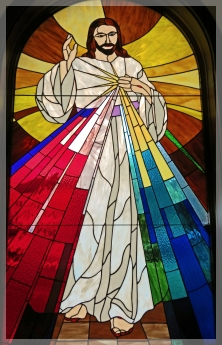 “And be sure of this,” He promised, “I am with you always, even to the end of the age.” [Matthew 28:20 (NLT)]
 My son has a beautiful pomegranate tree in his yard but, when he first purchased the property, he didn’t know what it was. Although showy red flowers eventually appeared, it wasn’t until the flowers developed into deep-red globe-shaped fruit that he knew it was a pomegranate. The tree was recognized by its fruit and it is by our fruit that Christ’s followers are recognized.
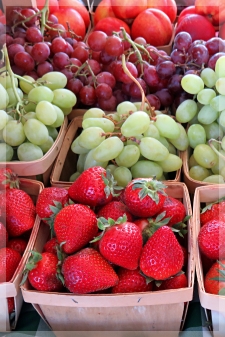 As Christ’s followers, we are saved through our faith and God’s grace. God takes us soiled sinners just as we are because there is no way we could be good enough to earn salvation. Nevertheless, just because God welcomes His immoral, angry, impatient, bad-tempered, anxious, sinful, and selfish children doesn’t mean He wants us to stay that way. When Jesus saved the woman caught in adultery, He told her to, “Go and sin no more” and, when we are saved, He tells us the same thing!
 Jesus promised the disciples, “And I will ask the Father, and he will give you another Advocate, who will never leave you. He is the Holy Spirit, who leads into all truth.” [John 14:16-17] In fulfillment of that promise, the moment we accept Christ as our Savior, the Holy Spirit moves into our hearts. When He arrives, He helps us but, rather than making the bed or washing dishes, the Spirit comforts, counsels, and convicts us. He gives us the power to share His word, the strength to do His work, and confidence in the fullness of God’s promises.
 Devotions of the Heart