
Put on your new nature, and be renewed as you learn to know your Creator and become like him. In this new life, it doesn’t matter if you are a Jew or a Gentile, circumcised or uncircumcised, barbaric, uncivilized, slave, or free. Christ is all that matters, and he lives in all of us. [Colossians 3:10-11 (NLT)]
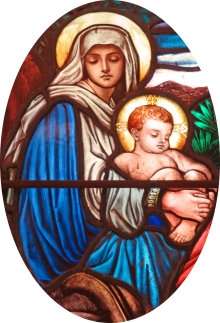 It’s tempting to speed-read through the long genealogies found in the Hebrew Scriptures, especially the nine chapters of names in 1 Chronicles. Just when we thought we were done with them, we get to the New Testament and Matthew begins with a lengthy genealogy. His abbreviated genealogy, however, is more than a list of often unpronounceable names. Because it was prophesized that the Messiah would be a descendant of Abraham and from the line of David, Matthew takes us through Jesus’ family tree to firmly establish His royal lineage and legal right to be the king of the Jews. There are three notable omissions in the line of ancestors—the vile kings Ahaziah, Joash, and Amaziah, all of whom Scripture says “did evil in the eyes of the Lord”—but there are five remarkable additions. While highly unusual to mention women in a genealogy, Matthew mentions five women, all of whom had what we might call “colorful” pasts.
We start with Tamar who was married to Judah’s son Er. When Er died, Judah had his second son, Onan, marry Tamar to provide offspring so Er’s line would continue. Onan prevented that from happening, died, and Tamar remained childless. Although Judah promised his next son to the widow, that never happened. Taking matters into her hands, Tamar pretended to be a prostitute and duped Judah into having sex with her. Twin boys, Perez and Zerah, were the result of that union. Her unconventional behavior is a blemish on the family tree, but it’s nothing when compared to the next woman mentioned: Rahab.
When Rahab first appears in Scripture, she’s a Canaanite prostitute in Jericho. Even though she helped Israel’s spies, joined the Israelites after Jericho’s fall, and gave birth to Boaz, this Canaanite woman of ill repute is another blot on the pedigree of the Prince of Peace. The next unlikely name in this Jewish genealogy is Ruth, the Gentile widow who accompanied her widowed mother-in-law Naomi back to Bethlehem. Ruth may have been a devoted daughter-in-law but she was from Moab. Because Moab had opposed the Israelites and tried to curse them, her people were cursed and could not enter into the assembly. Nevertheless, she ended up marrying Boaz and was the grandmother to King David. A hated foreigner is hardly the ancestor you’d expect of the man who came to save the Jews.
Then we come to Bathsheba who was married to Uriah the Hittite. One of David’s mighty men, He was off fighting battles when she was impregnated with David’s child. Whether she was the innocent victim of rape or a seductive adulteress, her husband was murdered by King David and the child conceived in adultery died. While we know little more of Bathsheba, we’ve got the plot line of a soap opera now! The genealogy finishes with Mary, the mother of Jesus: a peasant girl from Nazareth who became pregnant before marriage!
These are hardly the kind of women about whom a good Jew would boast: a woman who used sex to trick a man, a prostitute from Canaan, a cursed Moabite, an adulteress, and an unwed mother! After neglecting to mention three kings, why did Matthew include these women? If women were to be mentioned at all, there must have been a few upstanding ones whose reputations were without blemish. Yet, in Tamar, we have a woman who sought justice on her own terms; in Rahab, a courageous woman with enough faith in the Israelites’ God to commit treason; in Ruth, a woman who abandoned her pagan gods for Yahweh and became a sacrificial servant to Naomi; in Bathsheba, a woman resilient in the face of the loss of both husband and child; and in Mary, a girl with a servant’s heart whose decision meant she faced scorn and shame because of other peoples’ assumptions. Despite the difficult circumstances each woman faced, God brought about much good. Damaged and vulnerable, these are the kind of people to whom we all can relate.
Matthew’s list is as much a theological statement as it is a genealogical record. It makes clear that both Jews and Gentiles had a role in the Messiah’s ancestry and that both should benefit from His sacrificial death. Jesus came for all people: men and women, rich and poor, native and foreigner, accepted and unwelcome, king and laborer, famous and infamous, strong and weak, honored and scorned, Jews and Gentiles—sinners all. He came to save each and every one of us and to make us members of the same family! Thank you, God, for the Christmas gift of salvation for all who believe.
For you are all children of God through faith in Christ Jesus. And all who have been united with Christ in baptism have put on Christ, like putting on new clothes. There is no longer Jew or Gentile, slave or free, male and female. For you are all one in Christ Jesus. And now that you belong to Christ, you are the true children of Abraham. You are his heirs, and God’s promise to Abraham belongs to you. [Galatians 3:26-29 (NLT)]
Copyright ©2025 jsjdevotions. All rights reserved.
 In all probability, you’re not having more than 5,000 guests for dinner today and they won’t be dining al fresco on a hillside. Nevertheless, John’s description of that miraculous meal sounds a bit like Thanksgiving dinner at any number of homes today. There will be lots of people and more than enough to eat but, instead of all the leftovers being gathered in baskets, we’ll pack them into storage containers made by Rubbermaid, Glad, Tupperware, and Pyrex.
 The early Christians often marked anniversaries of the martyrdom of Christ’s followers. By the fourth century, however, there’d been so many martyrs that there weren’t enough days to honor them all and the idea of one feast day honoring all the martyrs began. In 609, Pope Boniface IV established an All Saints’ Day in May. After Christianity came to Ireland, however, the Roman church attached the Feast of All Saints to the pagan holiday of Samhain (a celebration of the end of the harvest and precursor to Halloween). In 847, Pope Gregory IV formally rebranded this pagan Celtic festival as All Saints Day. Saturday, November 1, is All Saints’ Day and, regardless of your denomination, it remains a day to commemorate all of the saints, not as determined by any Pope, but as defined in the Bible.
 Today is Labor Day—the unofficial last day of summer. On a day originally intended to celebrate the accomplishments of workers, it’s somewhat ironic that most of us are doing as little work as possible. Nevertheless, whether it’s just making the bed, grilling the burgers, washing the car, or being called in for an emergency surgery, we’ll all do some work today. We appreciate the day off but we’d much prefer a full-blown vacation—with no chores, deadlines, schedules, or business calls, texts, and emails. On the ideal vacation, all we have to do is relax and enjoy ourselves.
 The Resurrection story didn’t end on Easter with Jesus’ appearance to ten disciples, Mary Magdalene, Mary the mother of James and John, Salome, and Joanna, along with Cleopas and another believer who broke bread with Him in Emmaus. Appearing and disappearing at will, Jesus remained on earth for forty days. While He probably appeared other times, Scripture tells us He later appeared to Thomas and the ten others, to seven of the disciples beside the Sea of Galilee, to His half-brother James, to over 500 believers at one time, and to the disciples on his last day with them.
 By forgiving people’s sins, Jesus was placing Himself in the role of God because only God can forgive sins. Had Jesus not been God, it would have been blasphemy. When He raised the dead, multiplied food, stilled storms, and healed incurable diseases, Jesus was doing other things that only God could do. His incredible claim that He could bring Himself back from the dead, something only God could do, was another way Jesus claimed His divinity. The undeniable proof of His claim came Easter morning when Jesus demonstrated power over both life and death. The tomb was empty and people saw the risen Christ—they heard Him speak, watched Him eat, saw His wounds, and touched Him. The forty days the resurrected Jesus remained on earth, however, is about more than proof of his claim to be God; it’s about proof of our relationship to God.
