THE APPLE OF HIS EYE – Part 2

Keep me as the apple of your eye; hide me in the shadow of your wings, from the wicked who do me violence, my deadly enemies who surround me. [Psalm 17:8-9 (ESV)]

appleWhen my father called me the apple of his eye, while I knew that meant he cherished me, I didn’t know the idiom originated in the Bible. The Hebrew expression used was ‘iyshown ‘ayin which literally means “little man of the eye.” The ancient metaphor most likely refers to the eye’s pupil—the opening through which light enters the eye. Because our eyes are both necessary and vulnerable, God provided us with reflexes that automatically shut them, turn our heads, or shield them with our hands as a means of protection. Throughout Scripture, the apple of the eye metaphor is used to mean something as precious as the pupil of the eye. With this in mind, the psalmist may be asking God to protect him as if he were the pupil of God’s eye. Supporting that interpretation, the psalmist switches metaphors by asking God for protection by hiding the man in the shadow of His wings. In line with this interpretation, the NLT and other thought-for-thought Bibles translate the above verse as, “Guard me as you would guard your own eyes.”

If we simply replace “apple of your eye” with “pupil” or “eyeball,” however, we’d miss the nuance of the idiom. Although the psalmist is asking God to hide and protect him as God would his own eyes, he is asking more—that God keep His eyes focused on him. When someone looks directly at us, it is in the pupil, the central and darkest part of the eye, where our miniature reflection can be seen. We literally have become the little man or woman in the other person’s eyes. Of course, for us to become that little person in another’s eyes, he or she must be looking directly at us! Since we can’t be the apples in God’s eyes unless He is gazing at us, the psalmist is asking God to keep His eyes focused on him. Fortunately, God never takes His eyes off any of His beloved children and each one of us is the “little man” (or woman) in His eyes!

To shield our eyes and protect them from things like dust, sun, bugs, chemicals, infection, and wind, we wear sun glasses with UV protection, safety glasses, face shields, and assorted goggles for things like SCUBA, skiing, swimming, racquetball, and welding. If we’re careful enough to protect the apple of our eye when handling power tools, riding a motorcycle, playing paintball or handling chemicals, why are we so casual about protecting our relationship with God and His word? For that matter, if we are the people reflected in the pupil of God’s eyes, who is reflected in the pupils of our eyes? On who or what do we gaze? It should be God. Is it?

My son, keep my words and treasure up my commandments with you; keep my commandments and live; keep my teaching as the apple of your eye; [Proverbs 7:1-2 (ESV)]

The Lord looks down from heaven; he sees all the children of man… Behold, the eye of the Lord is on those who fear him, on those who hope in his steadfast love. [Psalm 33:13,18 (ESV)]

Copyright ©2021 jsjdevotions. All rights reserved.

TEACH THE CHILDREN (FATHER’S DAY- 2020)

And you must think constantly about these commandments I am giving you today. You must teach them to your children and talk about them when you are at home or out for a walk; at bedtime and the first thing in the morning. Tie them on your finger, wear them on your forehead, and write them on the doorposts of your house! [Deuteronomy 6:6-9 (TLB)]

elkIn 2018, a woman posted a video on Facebook that was shared over 400,000 times in the next six days. It was of a little boy who had a unique way of reciting his ABCs—each letter was followed by a Bible verse that began with it. Rather than “A is for apple,” the youngster started with “Ask and it will be given to you; seek and you will find,” [Matthew 7:7] and finished with “Zion hears and rejoices.” [Psalm 97:8] In spite of the boy’s dark brown hair and East Texas drawl, the woman mistakenly identified him as blond-haired Prince George, third in line to the British throne. Originally posted in October of 2016, the video actually was of  four-year-old Tanner Hemness from Tyler, Texas.

After the youth minister at Tanner’s church challenged the congregation to learn Bible verses for every letter of the alphabet as a family, Tanner’s dad wasn’t sure his then three-and-a-half-year-old could do it; nevertheless, the family gave it a try. Every week they worked on another letter and verse. Seven months later, Tanner was able to recite his ABCs in Bible verses. We had enough trouble convincing our children that they couldn’t use “Jesus wept” as their personal Bible verse at their confirmations and this little guy learned twenty-six far longer verses! Instead of “Jesus wept,” for J, the youngster learned Hebrews 13:8, “Jesus Christ is the same yesterday and today and forever.”

Although there were many positive responses to seeing this little boy happily reciting God’s word, there also was criticism. Among other things, Tanner’s father was accused of brainwashing, psychological indoctrination, and child abuse. Yet, if he’d spent seven months successfully teaching his son how to hit a baseball or make a basket, those same people probably would have applauded his dedication to the boy. Tanner’s father did exactly what Scripture told him to do: teach God’s word to his child. After all, the Israelites were told to talk about God’s word from morning to night, tie it on their hands, wear it on their foreheads, and post it on their doorways, so writing a different Bible verse on a chalkboard each week doesn’t sound that extreme! It speaks of a father’s dedication to and love for both his family and the Lord! Sadly, if we don’t teach our children to follow Jesus, the world will teach them not to!

The Bible is the basis for our faith; all of our doctrine and practices are guided by God’s word. Unfortunately, many of us are at a loss when it comes to knowing what the Bible actually says. That four-year old boy is further ahead than many adults I know. Of course, Tanner’s dad knows that many of those verses don’t have the same meaning to a child that they do to an adult. Realizing his work is not done, he and his wife will continue sharing God’s word and the meaning of those verses with their son. “The hard part,” said Tanner’s father in an interview, comes with “being the kind of dad who helps him live these words.” He’s made a great start!

Sunday is Father’s Day but, sadly, not all of us had fathers as dedicated to their families and God as does Tanner Hemness. Unfortunately, it is far easier to father a child than to be a father to a child. Some of us never may have known our fathers, can barely remember them, or would prefer not remembering them, at all. Nevertheless, we probably all had men in our lives who inspired, taught, nurtured, guided, and corrected us. If we can’t honor our fathers this day, let us honor them.

Thank you, God, not just for our fathers but for all of the men in our lives who took the time to share your message and teach us your word. Thank you for the men who have shown us what it means to live in God’s light. Fill them with your Holy Spirit so they may continue in your good works.

Teaching kids to count is fine, but teaching them what counts is best. [Bob Talbert]

And now a word to you parents. Don’t keep on scolding and nagging your children, making them angry and resentful. Rather, bring them up with the loving discipline the Lord himself approves, with suggestions and godly advice. [Ephesians 6:4 (TLB)]

Copyright ©2021 jsjdevotions. All rights reserved.

EXTRA BIBLICAL EVIDENCE

We proclaim to you the one who existed from the beginning, whom we have heard and seen. We saw him with our own eyes and touched him with our own hands. He is the Word of life. This one who is life itself was revealed to us, and we have seen him. And now we testify and proclaim to you that he is the one who is eternal life. He was with the Father, and then he was revealed to us. We proclaim to you what we ourselves have actually seen and heard so that you may have fellowship with us. And our fellowship is with the Father and with his Son, Jesus Christ. We are writing these things so that you may fully share our joy [1 John 1:1-4 (NLT)]

hibiscus“The luckiest traitor ever,” are the words historian Mary Beard used to describe Flavius Josephus, a first-century Jewish general who ended up allying himself with the Romans—the very people who destroyed his homeland and demolished the Temple during the Great Revolt (66-70 AD). Born in 37 AD, Josephus grew up in Jerusalem and studied with the Pharisees, Sadducees, and Essenes before serving as a general during the Jewish rebellion against Rome. According to Josephus, when fleeing the Roman army, he led his troop of 40 men into a cave. Rather than surrender, they agreed to commit suicide and drew lots to determine the order in which they would die. Either Josephus was incredibly lucky or he’d fixed the lottery but, when only he and another man remained, he convinced him to join in surrender to the Romans. In support of his story, excavations at Jotapata in the 1990s revealed the remains of 30 to 40 men assumed to have been Josephus’ men.

As an enemy general, Josephus was taken to the Roman general Vespasian. Presenting himself as a prophet, he used Balaam’s Messianic prophecy [Numbers 24:17] to predict that Vespasian would become emperor (which he did two years later). Shrewdly, Josephus then allied himself with the Romans by advising and translating for Vespasian and his son Titus.

Following the Judean war, Josephus returned to Rome with the victorious Titus where he was provided with an apartment in Vespasian’s house, given an annual pension, and made a Roman citizen. Josephus volunteered to write a history of the war for the Romans, The Jewish War, that provides an eye-witness account of the Great Revolt and the fall of Jerusalem in 70 AD. His second work was a twenty-volume Jewish history called Jewish Antiquities.

In his Antiquities, Josephus wrote of Herod’s fear of, “John, that was called the Baptist: for Herod slew him, who was a good man, and commanded the Jews to exercise virtue, both as to righteousness towards one another, and piety towards God, and so to come to baptism.” [18:5] Josephus also made the earliest existing non-Christian referral to Christ. Since many scholars believe Christian copyists later may have added to Josephus’ words by calling Jesus the Messiah and mentioning his resurrection, I am only including what is believed by most to have been the ancient historian’s original account, “Now there was about this time Jesus, a wise man, for he was a doer of wonders. He drew many after him. When Pilate, at the suggestion of the principal men among us, had condemned him to the cross, those that loved him at the first did not forsake him, and the tribe of Christians, so named from him, are not extinct at this day.” [18:63-64]

Josephus also reported the trial and death in 62 AD of James: “But this younger Ananus, who, as we have told you already, took the high priesthood, was a bold man in his temper, and very insolent … assembled the Sanhedrin of judges, and brought before them the brother of Jesus, who was called Christ, whose name was James, and some others, and when he had formed an accusation against them as breakers of the law, he delivered them to be stoned.” [20:9.1]

The Bible doesn’t require outside sources to prove its truth and, as followers of Christ, we don’t need an ancient Jewish historian to tell us that Jesus actually existed. Nevertheless, it’s good to know that it isn’t just believers like Matthew, Mark, Luke, John, Paul, James, and Peter who attest to His existence. We have Josephus’s account along with the Greek historian Thallus who wrote of the darkness during Jesus’ crucifixion, Pliny the Younger who wrote of dealing with Christians who sang hymns “to Christ as if to a god,” Tacitus who wrote of the “pernicious superstition” (Christ’s resurrection) that broke out in Judea following Jesus’ crucifixion, and the Greek historian Mara bar Serapion, who referred to Jesus as the “wise king” of the Jews.

For we were not making up clever stories when we told you about the powerful coming of our Lord Jesus Christ. We saw his majestic splendor with our own eyes when he received honor and glory from God the Father. The voice from the majestic glory of God said to him, “This is my dearly loved Son, who brings me great joy.” We ourselves heard that voice from heaven when we were with him on the holy mountain. [2 Peter 1:16 (NLT)]

Copyright ©2021 jsjdevotions. All rights reserved.

THE SHEMA (Part 2)

The tassels will help you remember that you must obey all my commands and be holy to your God. I am the Lord your God who brought you out of the land of Egypt that I might be your God. I am the Lord your God! [Numbers 15:40-41 (NLT)]

great blue heronIn its entirety, the Shema consists of three sections: Deuteronomy 6:4–9, Deuteronomy 11:13–2, and Numbers 15:37–41. The second paragraph of the Shema repeats the first one’s commands regarding the binding of God’s words to hands and forehead, writing them on the doorways and gates, teaching them to the children, and talking about them throughout the day. The primary theme of this paragraph, however, is that the promised land and the people’s enjoyment of it depended on their faithfulness to God. As long as they loved God and served Him with heart and soul, the people and land would be blessed but, if they turned aside to serve other gods, God’s wrath would result and things would not go well for the people or their land. In this warning, that is repeated again and again throughout the Old Testament, we see the fundamental Jewish belief that reward and punishment are based on the fulfillment of God’s commandments.
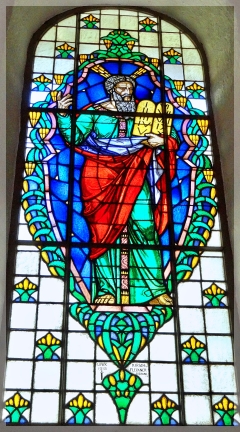
The third section of the Shema required the wearing of tassels or fringes (tzitzit) on the hems of clothing. Like the tefillin and mezuzot commanded in the first two sections, the fringes were a visual reminder to obey the commandments and “be holy to your God.” The final command of this last section was to remember the Exodus and that it was the Lord who brought them out of Egypt.

It was a Biblical commandment to recite the Shema twice a day. Morning and night, the Israelites were to acknowledge the one God, who they were to love with heart, soul, and strength, and whose commandments they were to keep. Twice a day, they were reminded to impress God’s word on the next generation and, twice a day, they repeated God’s warning that things would not go well if they abandoned Him or turned to other gods. So, what went wrong? Did the Israelites put so much emphasis on performing rituals—repeating these words twice a day, putting on their tefillin, measuring the length of their tzitzit, and placing their mezuzot—that they forgot the rituals’ meanings? Did they let rituals replace loving God with their heart, soul, and strength? Were they so intent on doing the right thing that they forgot to be the right people? Did they start trusting in themselves rather than God?

God gave the Israelites a simple command—love the Lord alone, with heart, soul, and strength—and He gave them an equally simple choice—a blessing or a curse. He makes the same offer to us. The blessing, however, isn’t a reward; it’s a result. When we revere God, love Him fully, and put His word into practice, life will go well for us because God’s way is the right way and the right way is blessed. Like the blessing, the curse is the result of our choice and is found in the life we choose. A life lived without God is a cursed one. Even with tefillin on their arms and heads, mezuzot on their doorposts, tassels on their hems, and the continued repetition of the Shema’s words, the Israelites forgot the Lord and went their own way; let us not make the same mistake.

Today I have given you the choice between life and death, between blessings and curses. Now I call on heaven and earth to witness the choice you make. Oh, that you would choose life, so that you and your descendants might live! You can make this choice by loving the Lord your God, obeying him, and committing yourself firmly to him. This is the key to your life. [Deuteronomy 30:19-20 (NLT)]

Copyright ©2021 jsjdevotions. All rights reserved.

THE SHEMA (Part 1)

Hear, O Israel: The Lord our God, the Lord is one. You shall love the Lord your God with all your heart and with all your soul and with all your might. And these words that I command you today shall be on your heart. You shall teach them diligently to your children, and shall talk of them when you sit in your house, and when you walk by the way, and when you lie down, and when you rise. You shall bind them as a sign on your hand, and they shall be as frontlets between your eyes. You shall write them on the doorposts of your house and on your gates. [Deuteronomy 6:4-9 (ESV)]

Meiringen-MichaelskircheMy morning’s reading took me to Deuteronomy 6 and the words that Jesus cited as the first, and most important commandment. Known as the Shema and found in verses 4 through 9, it is the essential declaration of the Jewish faith. Its name comes from the first Hebrew word of the verse, shema, which means “hear.” Observant Jews recite its words twice a day (morning and evening), on the Sabbath and religious holidays, and as the last words before death. The Shema is so entrenched in Judaism that a story is told about Rabbi Yitzhak Herzog who, in 1946, went searching for Jewish children who’d been hidden by Christians during the Holocaust. As he walked through European convents, monasteries, and orphanages, the rabbi would start to recite the Shema. He easily found the Jewish children because they immediately joined in saying the sacred words.

The Shema’s first words sum up the essence of Judaism—there is only one true God and He is Israel’s God. During the time of the Temple, a second line was inserted into the Shema. After the priest recited, “Hear, O Israel: The Lord our God, the Lord is one,” the congregation replied, “Blessed be the name of the glory of His kingdom forever and ever.” In acknowledgement that this phrase is not part of the original Scripture, it usually is said in an undertone. The rest of the original prayer then follows.

When Moses passed these words along to the Israelites, they had spent centuries surrounded by people who worshipped many gods. The Shema’s daily repetition impressed upon them that love, obedience, and faithfulness to their one true God was the only way to live. These words may have been passed to the Jews some 3,500 years ago but its message holds true for all of God’s children—there is one true God and He is ours!

The rest of the original Shema details how that belief in the one true God is to be lived and its words continue to apply to Christians as well as Jews. We are to love Him with our whole being, teach his word to the next generation, make His words part of our daily conversation, and impress His word into all aspects of our lives.

In verses 8 and 9, we find the command to bind the God’s words to our hands, foreheads, doorposts, and gates. Taking the words literally, Jews wore black leather boxes (tefillin) containing scripture on their heads and arms and placed mezuzot, containing part of the Shema, on their doorposts. Observant Jews continue to do so today.

Even when taking those instructions figuratively, it’s not difficult to understand what is meant by placing God’s word between our eyes or on our arms. God’s words must affect the way we think and see as well as our every action. While we don’t place Scripture on doorways and gates, when stepping into a Christian’s home or workplace, God’s presence and influence should be felt by all who enter. For the Christian, the Shema’s words mean that we are to write God’s words in our hearts and minds and love Him with our whole being!

Because the words of the Shema were important to Jesus, they are important to us. Whether Christian or Jew, I can’t think of a better way to start or end my day than with these words: “The Lord our God, the Lord is one. You shall love the Lord your God with all your heart and with all your soul and with all your might.”

And one of the scribes…asked him, “Which commandment is the most important of all?” Jesus answered, “The most important is, ‘Hear, O Israel: The Lord our God, the Lord is one. And you shall love the Lord your God with all your heart and with all your soul and with all your mind and with all your strength.’” [Mark 12:28-30 (ESV)]

Copyright ©2021 jsjdevotions. All rights reserved.

PONTIUS PILATE (Who’s Who – 5)

Very early in the morning the leading priests and the elders of the people met again to lay plans for putting Jesus to death. Then they bound him, led him away, and took him to Pilate, the Roman governor. [Matthew 27:1-2 (NLT)]

pontius pilate - washing handsPontius Pilate was the Roman prefect (or governor) of Judea from 26 to 36 AD. He was responsible for the collection of taxes, managed construction projects, and had the sole authority to order a criminal’s execution. His most important duty, however, was to maintain law and order and, if he couldn’t do it through negotiation, he did it by any means necessary.

Around 50 AD, Philo of Alexandria wrote about Pilate’s “briberies, insults, robberies, outrages and wanton injuries, executions without trial, constantly repeated, ceaseless and supremely grievous cruelty.” Ancient historian Flavius Josephus reported that after Pilate exhausted the Temple treasury to build an aqueduct, the Jews gathered in protest at his use of sacred funds. After sending soldiers dressed as Jews into the crowd of protesters, at his signal, they removed clubs hidden in their cloaks and beat many of the protesters to death. According to Josephus, Pilate eventually was removed from office and sent back to Rome after using excessive force to prevent a suspected Samaritan insurrection. Both historians described Pilate as exceedingly loyal to the emperor, stubborn, and insensitive to the Jews.

Pilate died in 39 AD and some traditions hold that he was executed while others that he committed suicide. The early Christian author Tertullian claimed that Pilate became a follower of Jesus and tried to convert the emperor to Christianity. These claims, however, are mere speculation. That Pilate existed, however, is not. In 1961, while excavating an ancient Roman theatre in Caesarea, a piece of limestone was found that was inscribed with both the emperor’s and Pilate’s names and the words “Prefect of Judea.”

Unable to sentence Jesus to death, the Sanhedrin brought Jesus to the governor. Pilate and the Sanhedrin shared a common interest in maintaining the status quo. Although he knew Jesus had been arrested on trumped up charges, Pilate also knew of Jesus’ triumphal entry into Jerusalem when people had hailed Him as the long-awaited king. Rome wouldn’t welcome the news of an unauthorized king and, if Pilate allowed Jesus to remain in Judea, the governor would be accused of disloyalty to Rome. Pilate knew Jesus’ death was the expedient political solution for all and, yet, he appeared to be hesitant to take action.

Based on the gospel accounts of Jesus’ trial, some commentators find Pilate indecisive, easily manipulated by Sanhedrin, and weak in his capitulation to the mob. Others, however, disagree with that assessment. That Pilate managed to serve ten years as prefect when the typical term was three tells us he was a man of political acumen and ancient historians described him as headstrong and authoritarian. As governor, Pilate held the power—only he could pronounce capital punishment and he was the one who appointed (or dismissed) the head priest. Since Pilate knew that he would appear weak if he yielded too quickly to the Sanhedrin’s wishes, some scholars suggest that what seemed like hesitation on Pilate’s part was just the governor making the Sanhedrin sweat a little and beg. In the end, Pilate did exactly what he wanted but he’d put the Sanhedrin in his debt by seeming to do them a favor.

We’ll never know whether Pilate was manipulated by the Sanhedrin or he shrewdly manipulated them. Whatever his motives, Pilate knew Jesus was innocent of all charges when he ordered the crucifixion of the Son of God. Putting the blame on the Sanhedrin and the angry mob that shouted “Crucify him!” Pilate disclaimed any responsibility for shedding innocent blood and literally washed his hands of the matter. Whether he voluntarily put Jesus to death or was pressured into his decision, Pilate was a political and moral coward and washing his hands couldn’t absolve him of his guilt.

Being compelled or pressured never releases us of our responsibility to do the right thing. Regardless of circumstance, we must take ownership of our actions. Remember: while we can be tempted to sin, we  never can be forced to do it!

Sin is a brat that nobody is willing to own; and many deceive themselves with this, that they shall bear no blame if they can but find any to lay the blame upon; but it is not so easy a thing to transfer the guilt of sin as many think it is. [Matthew Henry]

But the mob roared even louder, “Crucify him!” Pilate saw that he wasn’t getting anywhere and that a riot was developing. So he sent for a bowl of water and washed his hands before the crowd, saying, “I am innocent of this man’s blood. The responsibility is yours!” [Matthew 27:23b-24 (NLT)]

Copyright ©2021 jsjdevotions. All rights reserved.