ADVENT HOPE

I pray that your hearts will be flooded with light so that you can understand the confident hope he has given to those he called—his holy people who are his rich and glorious inheritance. I also pray that you will understand the incredible greatness of God’s power for us who believe him. This is the same mighty power that raised Christ from the dead and seated him in the place of honor at God’s right hand in the heavenly realms. [Ephesians 1:18-20 (NLT)]

Without Christ there is no hope. [Charles Spurgeon]
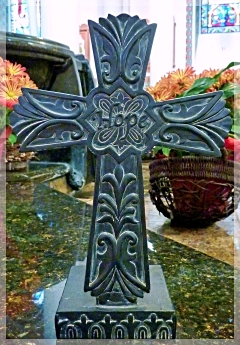
According to the Greek myth, when Zeus presented a beautiful jar to Pandora as part of her dowry, he forbade her to open it. Curiosity, however, got the best of her. When she lifted its lid to peek into the jar, all the malevolence and afflictions Zeus hid inside were released. As evils like sickness, chaos, death, conflict, hatred, jealousy, sorrow, envy, lust, famine, and violence came rushing out , the terrified woman quickly replaced its lid. All that remained in the jar was hope—the only consolation humans have for the trouble and suffering Pandora let loose upon the world.

Of course, it wasn’t Pandora who brought misery into the world—it was Adam and Eve who brought sin, misery, and death into the world with their disobedience. Rather than remaining in Pandora’s jar, hope came to the world in a baby born in Bethlehem about 2,000 years ago.

How many times this past week did you hope? Did you hope the family would arrive safely, the turkey would be done on time, the rolls wouldn’t burn, or that no one would argue about politics at dinner? We hope for things both large and small—getting a raise, excellent grades, better health, reconciliation, a good night’s sleep, a winning season for our team, a cure for cancer, an on-time departure, finding the perfect gift, world peace, the winning lottery ticket, or a better tomorrow.

Biblical hope, however, isn’t about expecting better circumstances. Biblical hope is living through the storms, loss, pain, and disorder of this life while holding on to the hope that God will show up right in the middle of our mess! In the darkness of our lives and today’s troubled world, Christ’s followers have hope regardless of whether our circumstances change for the better or the worse. We have hope because we know the One who holds our future in His hands. We have hope because we know that He is with us every step of the way. Best of all, we have hope because we know how the story ends—and its end is better than anything we possibly could imagine!

Yesterday was the first Sunday in Advent—the four-week season in the Church calendar dedicated as much to the Messiah’s second arrival as to His first! In observance of this season of preparation, last night we lit the first candle (the candle of hope) in our Advent wreath. A circular garland of evergreen, the wreath’s greens represent eternal life and its round shape represents God’s unending love. Often called the prophecy candle, it reminds us that the Messiah’s arrival, death, resurrection, and return in final victory were prophesied hundreds of years before His birth. This first candle represents mankind’s past hope for the coming of the promised Messiah, our present hope because of Jesus’ presence in our lives, and our future hope for His promised return.

Hope came into the world with the birth of Jesus—Immanuel—God with us. God gave us hope with His forgiveness of sins, our salvation, and His promise of peace. He gave us hope with the resurrection of the dead, the communion of saints, the redemption of creation, the Holy Spirit, the return of Christ, and the life of the world to come. Thank you, Heavenly Father, for the gift of hope.

The Christmas message is that there is hope for a ruined humanity—hope of pardon, hope of peace with God, hope of glory—because, at the Father’s will, Jesus became poor and was born in a stable so that thirty years later He might hang on a cross. [J.I. Packer]

I pray that God, the source of hope, will fill you completely with joy and peace because you trust in him. Then you will overflow with confident hope through the power of the Holy Spirit. [Romans 15:13 (NLT)]

TRUSTING JOE

For my thoughts are not your thoughts, neither are your ways my ways, declares the Lord. For as the heavens are higher than the earth, so are my ways higher than your ways and my thoughts than your thoughts. [Isaiah 55:8-9 (ESV)]

green heron - corkscrew sanctuaryOur old friend Joe recently visited. Along with our friend Ric, he and my husband were partners in a manufacturing business in another state many years ago. Once a year, the three men would meet away from the business (with its phone calls and constant interruptions) to discuss their short-term and long-term business goals. While Ric and my husband were the legal, financial, and sales parts of the business, as a processing engineer, Joe oversaw manufacturing.

Although Joe is a genius when it comes to engineering, electronics, production, and machinery, the innovative thinker had difficulty verbalizing his long-range manufacturing plans to his technology and machinery-challenged partners. Often unable to visualize what Joe had in mind, they sometimes had difficulty understanding his reasoning behind wanting to alter existing equipment, create new machinery, remove or install racks, re-arrange the factory, revise old procedures, or inaugurate new ones. Joe, however, knew exactly what he was doing. Inevitably, a new system would be in place that always resulted in faster and more efficient production, a better-quality product, and a safer work place for their employees. Although my husband and Ric didn’t fully comprehend Joe’s proposals, they knew there always was a method to what sometimes appeared to be madness. Having faith in Joe’s expertise and knowing his concern was for the welfare of their business and employees, they simply had to trust Joe to do his job in the factory while they did theirs in the office!

Just as my husband and Ric rarely understood Joe’s visions, we often have difficulty understanding what God is doing in our lives. We tend to be creatures of habit and prefer doing things the old familiar way rather than learning a new and better way. God, however, is never satisfied with our just being OK; He has great plans for us—to give us “a future and a hope.”

The words of Isaiah 55:8-9 remind us that we must put our complete trust in God; His ways always are better than our own. Because He loves us, we can know that everything in His plans is for our greater good. It’s rarely easy to understand why things (both pleasant and unpleasant) happen the way they do. Nevertheless, it all is part of God’s plan—a plan we cannot fully comprehend. It is only in hindsight that we finally understand why our lives took the twists and turns they did.

Looking back, I see how various difficulties and challenges caused me to mature in my faith, develop character and strength, and become more patient, peaceful, and thankful. Those changes and the circumstances that caused them (most of which I didn’t appreciate at the time) enabled me to withstand the challenges of today. Moreover, the troubles of today will empower me to better withstand the challenges that are sure to arrive tomorrow or the day after. Just as Joe transformed the factory and its manufacturing processes, God wants to transform and perfect us. Let us trust Him even more than Ric and my husband trusted Joe!

Father, thank you for transforming our lives so that we can grow more like Christ. Forgive us when we rebel and question your plan. Remind us to look back and reflect on the many blessings we’ve received that originally came packaged as trouble, sorrow, and difficulty. Thank you for never giving up on us.

Faith looks back upon the past, for her battles have strengthened her, and her victories have given her courage. She remembers that God has never failed her. … Therefore faith…can say, “Surely goodness and mercy shall follow me all the days of my life!” [Charles Spurgeon]

Surely goodness and mercy shall follow me all the days of my life, and I shall dwell in the house of the Lord forever. [Psalm 23:6 (ESV)]

For I know the plans I have for you, declares the Lord, plans for welfare and not for evil, to give you a future and a hope. [Jeremiah 29:11 (ESV)]

Copyright ©2024 jsjdevotions. All rights reserved.

TRANSFORMING PUMPKINS

Don’t copy the behavior and customs of this world, but let God transform you into a new person by changing the way you think. Then you will learn to know God’s will for you, which is good and pleasing and perfect. [Romans 12:2 (NLT)]

Just finishing its 5th season, the Food Network’s “Outrageous Pumpkins” features remarkable pumpkin artistry. This year’s competition matched up 14 of the nation’s best carvers into teams and challenged them to create over-the-top pumpkin creations. The pumpkin artists created horrific nightmares, constructed grisly crime scenes, and fashioned monstrous mechanical battling beasts. Using everything from melon ballers to huge saws, they they sculpted extraordinary and intricate ghouls, witches, wizards, goblins, werewolves, and monsters. As someone who is severely pumpkin-challenged (and eventually purchased a permanent Jack O-Lantern complete with an electric light), I’m amazed by the skill of these artists.
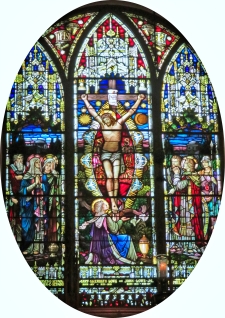
Watching those carvers transform what are nothing more than large gourds into works of art, I couldn’t help but think of another artist who is in the business of transformation: God. There are both similarities and differences between transforming pumpkins into Halloween décor and transforming people into Christians. In both cases, the finished product bears little resemblance to what it once was. But, while the pumpkins become something frightening and macabre, the Christians become more beautiful!

Both carvers and God start by selecting their subject but, unlike the pumpkin artists, God isn’t looking for perfection. He’ll take any color, size, condition, or age. Scratches, bruises, blemishes, a dried-up stem, and even a little mold or rot won’t keep anyone from His workshop. Just as the carvers cut into the pumpkins and scrape out all of the slimy stuff inside, God opens us up, as well. Rather than scooping out our guts, however, He scrapes away things like fear, anger, despair, doubt, hate, pride, and greed. Instead of an X-Acto knife, vegetable peeler, saw, or drill, God’s tools consist of His word, the church, and both blessings and challenges. Just as those artists’ imaginative pumpkin creations are unique, each one of God’s creations is a one-of-a-kind custom design.

Preferring something sinister and spooky, pumpkin carvers usually give their creations a menacing expression. Although the Christian’s outward appearance may not change, God wants His handiwork to spread faith, hope, and love rather than terror or dread so He gives us a far nicer demeanor. The carvers occasionally make small mistakes and, when that happens, they simply alter their design or use a toothpick to reattach a piece. God, however, never makes a mistake and every one of His creations is perfectly made. Pumpkin carvers transform pumpkins for only a few weeks around Halloween and I’m not sure what they do the rest of the year. On the other hand, God keeps busy transforming people all year long.

Although the carvers leave their pumpkins hollow, God fills His people with the Holy Spirit and His gifts. Wanting their creations to glow from the inside out, both the carver and God insert lights. While the carver uses a candle, light bulb, or flashlight, the Christian’s light comes from the Holy Spirit. Eventually, the pumpkin’s light will cease shining but God’s light lasts a lifetime. Unlike competitive carvers, God has no time limit and He continues tweaking us until our dying day. While the “Outrageous Pumpkins” competitors performed their artistry in hope of winning a $50,000 prize and bragging rights, God transforms His children simply out of His love for us.

Despite the hours and labor that go into their making, those fantastic pumpkin creations are temporary. Even when dipped in a mild bleach mixture, they will turn moldy and soft; eventually, they’ll end up in the trash. Not so with God’s handiwork! Unlike carved pumpkins, Christians tend to improve over time; in fact, they last forever!

A pumpkin has no choice about being chosen, washed, and transformed but we are free to reject God’s hand in transforming our lives. It’s wise to remember, however, that any pumpkins remaining in the patch after harvest will rot and decompose; the same goes for people.

This means that anyone who belongs to Christ has become a new person. The old life is gone; a new life has begun! [2 Corinthians 5:17 (NLT)]

Copyright ©2024 jsjdevotions. All rights reserved.

THE ONLY PATH

Jesus told him, “I am the way, the truth, and the life. No one can come to the Father except through me.” [John 14:6 (NLT)]

Pope Francis recently visited Singapore and, when speaking to young people at an interfaith meeting, he is reported to have said “All religions are paths to God.” After comparing the various religions to “different languages that express the divine,” he added, “There is only one God, and each of us has a language to arrive at God. Some are Sheik, Muslim, Hindu, Christian, and they are different paths [to God].” While the pontiff was encouraging interfaith dialogue, his words are troubling. I will not presume to know the Pope’s meaning or intention with his comments. Nevertheless, I find it important to address how the world understood the pontiff’s message.

Jesus is not one of many ways to God; He is the one and only way! He spoke of Himself as the only path to heaven. He said His words are life, called Himself the ”bread of life,” and promised that His believers would have eternal life. Jesus is the only one who came down from Heaven, lived a perfect sinless life, fulfilled the Law and the Prophets, sacrificed Himself for mankind’s sins, and conquered death! As Christians, we believe salvation comes through Christ alone and that the Bible teaches us everything we need to know about God. At best, all any other religion offers is an incomplete, inaccurate, and deceptive understanding of God and His creation.

From where we live, there are no direct flights to my son’s home in San Diego. Although we have a choice of routes and airlines, we must change planes in Atlanta, Houston, Dallas, Charlotte, Chicago, or Washington. While there are different ways to get to California, if we stay in a connecting city, we’ll never get there. If we hope to see our son, we need to board the right plane—the one headed for San Diego. If, by mistake, we get on a plane going to Paris, we’d land more than 5,600 miles away from our son’s home. But, if we landed in Tijuana, we’d only be 20 miles away. Nevertheless, whether 5,600 miles or only 20 away from our destination, we wouldn’t find our son waiting there to welcome us to his home! While some flights might get us close to our journey’s end, there only is one correct place to land! It’s said that “close only counts in horseshoes and hand grenades.” That’s important to remember when it comes to both airports and God! Unless we get on another plane headed for San Diego, we won’t be seeing our boy. If we want the Son to welcome us to His heavenly home, we eventually must take the only path that leads to Him!

If we believe Christianity’s claims are true, then the claims of other religions must be wrong wherever they contradict it—and there are plenty of contradictions. For example, Islam’s condemnation of the Trinity and its rejection of the deity of Jesus, His death, resurrection, ascension, and atonement for our sins along with its denial of His Holy Spirit and the salvation of His believers don’t seem remotely close to our path. Islam seems more like deliberately heading to Paris when you’re supposed to be going west to San Diego!

While we may find wisdom and inspiration in Hinduism’s Bhagavad Gita, the Buddha’s words in the Dhammapada, the Chinese philosophy of the Tao Te-Ching, and in the rabbis’ discourse in the Talmud, we know those texts are not sacred and the words in them are man’s, not God’s. Christianity doesn’t allow for a mingling of faith in other philosophies or gods.

Saying we all worship the same God is what David Limbaugh calls “intellectual laziness.” The claim that all paths can lead to God is a statement we should never make or accept. It’s an insult to Jesus. As God incarnate, He came, suffered, and died on the cross for our sins—something totally unnecessary were there any other way to God. Whether you call them languages or paths, all religions do not lead to God. Then again, no “religion” leads to God; only faith in Jesus Christ does!

 Jesus is not one of many ways to approach God, nor is he the best of several ways; he is the only way [A.W. Tozer]

For this is how God loved the world: He gave his one and only Son, so that everyone who believes in him will not perish but have eternal life. God sent his Son into the world not to judge the world, but to save the world through him. There is no judgment against anyone who believes in him. But anyone who does not believe in him has already been judged for not believing in God’s one and only Son. [John 3:16-18 (NLT)]

Copyright ©2024 jsjdevotions. All rights reserved.

SUPPORTING ROLES

And what more should I say? For time would fail me to tell of Gideon, Barak, Samson, Jephthah, of David and Samuel and the prophets, who through faith conquered kingdoms, administered justice, obtained promises, shut the mouths of lions, quenched the power of fire, escaped the edge of the sword, were made strong out of weakness, became mighty in war, put foreign armies to flight. [Hebrews 11:32-34 (NTFE)]

pipevine swallowtail butterflyHebrews 11 lists the great examples of faith found in the Hebrew Scriptures. Every story, however, has a supporting cast and, while we may not remember or even know their names, they played an important role in everyone’s story. We know Moses is one of those heroes of faith but what of the midwives Shiphrah and Puah? If they hadn’t defied Pharaoh’s orders to kill newborn Hebrew boys, Moses wouldn’t have lived long enough to be found by Pharaoh’s daughter let alone lead Israel to the Promised Land!

We know the promised Messiah was to come from David’s line but that line nearly became extinct in 841 BC when Judah’s king Ahaziah died and his mother, Athaliah, seized the throne for herself. To secure her position, the queen mother murdered Ahaziah’s children (her grandchildren) and the rest of the royal family! The Davidic line remained only because Athaliah’s sister, Jehosheba, rescued Ahaziah’s infant son Joash. At great risk, she kept the boy hidden for six years until the time was right for him to be named king.

We recall the names of Esther and her uncle Mordecai but probably not that of Hegai, the eunuch in charge of the king’s harem. Without his coaching and assistance, Esther never would have captured the heart of Xerxes, become queen, and been able to save the Hebrew nation from extinction. We revere the name of David but probably don’t know the names of his thirty-seven “mighty men” listed in 2 Samuel 23. We know of Jeremiah but not Ebed-melech, the court official who risked his life to rescue the prophet from the cistern where he had been left to die.

What of those heroes of faith whose names we don’t know—people like the slave girl who told Naaman about the Samarian prophet who could heal him of leprosy? It was her testimony that introduced the Syrian warrior to the one true God of Israel. What of the king’s cup-bearer who told Pharaoh that Joseph could interpret his dream? Without his action, the story of Israel could have ended in Genesis! We only know her as the widow of Zarephath but this nameless woman fed Elijah the last of her oil and bread during a time of famine. We know Gideon but not the names of his 300 valiant men who bravely fought 135,000 Midianites. When outnumbered by 450 to 1, most soldiers would have fled, but those nameless men belong in the “Hall of Faith” along with Gideon!

The New Testament is not without its unnamed heroes of faith—consider the boy who gave his lunch, the widow who gave her two mites, and the four friends so committed to the paralytic’s healing they cut a hole in the roof and lowered him down to the Lord! What of the nameless shepherds and Magi who worshipped the newborn king? We don’t know the names of the woman at the well, the hemorrhaging woman, the Ethiopian eunuch, the repentant thief on the cross, or the Syrophoenician woman who was determined to have Jesus heal her daughter, but they were just as much heroes of faith as were Moses and Abraham.

Every story, play, or movie has both major roles and a supporting cast. While we may have the lead role in our own personal story, we are just supporting actors in the Kingdom’s story. Nevertheless, we are as essential to God’s scenario as were Shiphrah and Puah, Gideon’s 300 and David’s 37, the woman at the well, and those four faithful friends! For the most part, those supporting actors didn’t even know their own importance; nevertheless, acting in faith, they simply followed God’s direction. Let us take the small (but essential) roles God has given us and play them as well as all the unsung heroes of faith did!

There are no small roles, only small actors. [Konstantin Stanislavski]

Therefore, since we are surrounded by so great a cloud of witnesses, let us also lay aside every weight and the sin that clings so closely, and let us run with perseverance the race that is set before us, looking to Jesus, the pioneer and perfecter of faith, who for the sake of the joy that was set before him endured the cross, disregarding its shame, and has taken his seat at the right hand of the throne of God. [Hebrews 12:1-2 (NTFE)]

 Copyright ©2024 jsjdevotions. All rights reserved.

THE RIGHT TIME AND WAY

“No!” David said. “Don’t kill him. For who can remain innocent after attacking the Lord’s anointed one? Surely the Lord will strike Saul down someday, or he will die of old age or in battle. The Lord forbid that I should kill the one he has anointed!” [1 Samuel 26:9-11 (NLT)]

But God removed Saul and replaced him with David, a man about whom God said, “I have found David son of Jesse, a man after my own heart. He will do everything I want him to do.” [Acts 13:22 (NLT)]

In the Gospel stories of the two miraculous catches of fish, experience told the disciples that fishing in the light of day was the wrong time and casting a net from the right side of the boat was the wrong way to do it. Nevertheless, that’s exactly how Jesus told them to fish. If we look at those stories more figuratively, we see that night time was man’s time and the boat’s left side was man’s way. Those miraculous catches, however, tell us that the right time is whenever God says it is and the right way is however God says it’s to be done!

It’s not just in His fishing instructions to the disciples that we find Jesus’ way counter-intuitive and unconventional. Man’s way is to hold grudges but Jesus’ is to offer forgiveness. Man’s way is to get even; Jesus’ is to be merciful. Man’s way is exclusive; Jesus’ is inclusive. Man’s way values power, authority, and wealth; Jesus’ way values the meek, humble, and poor. Man’s way declares certain people unclean, disgraceful, worthless, or untouchable; Jesus’ way loves and touches them all. Man’s way is to be self-sufficient; Jesus’ is to be God-dependent. Man’s way doesn’t turn the other cheek, find strength in weakness, or go the extra mile, but Jesus’ way does! As strange as it sometimes sounds, God’s way always is the right way!

Seeing the oppression of his people under Pharaoh, Moses initially tried to do things his way in his own time. After observing an Egyptian beating a fellow Hebrew, he killed the offender and hid the body in the sand. While his motive was good, Moses accomplished nothing by killing one Egyptian. Doing it his way meant fleeing Egypt, separation from his own people, losing his position and power, and 40 years as an alien in a foreign land. Meanwhile, the Hebrews spent another 40 miserable years in slavery! It was only when Moses abided by God’s timing and way that he brought Egypt to its knees and the entire Hebrew nation to freedom!

On the other hand, when David was on the run from Saul, he passed up two opportunities to kill the king and take the crown. Even though he’d been anointed king by Samuel, David knew that God anointed Saul first. David trusted that, in God’s time and His way, Saul would fall and he faithfully waited until God’s time. He was, indeed, a man after God’s own heart!

As counter-intuitive as it often seems, we’re supposed to do things God’s way in His time. It’s not a question of how or when it’s always been done or we want to do it; it’s how and when God wants it done! Remember, if we’re not fishing at His time from the right side of the boat, it doesn’t matter how many times we drop that net!

“My thoughts are nothing like your thoughts,” says the Lord. “And my ways are far beyond anything you could imagine. For just as the heavens are higher than the earth, so my ways are higher than your ways and my thoughts higher than your thoughts.” [Isaiah 55:8-9 (NLT)]

Don’t copy the behavior and customs of this world, but let God transform you into a new person by changing the way you think. Then you will learn to know God’s will for you, which is good and pleasing and perfect. Romans 12:2 (NLT)]

Copyright ©2024 jsjdevotions. All rights reserved.