
But I am trusting you, O Lord, saying, “You are my God!” My future is in your hands. [Psalm 31:14-15a (NLT)]
Sometimes God doesn’t give you what you want not because you don’t deserve it but because you deserve better. [Anonymous Internet wisdom]
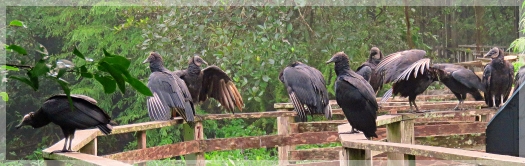 Because the nearby bird sanctuary/swamp gets its water from rainfall, the size of its lakes fluctuates substantially with the seasons. During the dry seasons of winter and spring, the swamp’s lakes gradually recede until the summer rains begin. When this annual dry-down occurs in springtime, the wading birds congregate in the shallow lakes. With the fish having no place to hide the shallow water, it’s as easy as catching fish in a rain barrel for the birds!
Anticipating a feeding frenzy as the swamp’s wading birds gathered in the receding lakes, we went out to the bird sanctuary. The dry-down happened faster than we expected. Instead of a shallow lake covered with water lettuce, we found only mud. Rather than a plethora of egrets, herons, wood storks, and roseate spoonbills, we encountered dozens of black vultures enjoying the remains of the stinking fish in the muck! What we got certainly wasn’t what we wanted or expected.
Since vultures are known for projectile vomiting if startled or threatened, I admit to some trepidation as I walked between the perched birds on the boardwalk. Nevertheless, seeing all those vultures was an amazing experience. In spite of our initial disappointment, we were thankful for the opportunity to witness nature’s clean-up crew at work.
In spite of our best-laid plans, we don’t always get what we pray for or expect. Emily Perl Kingsley, a mother of a child with a disability, wrote a beautiful essay titled “Welcome to Holland” in which she likens having a child with a disability to someone planning a fabulous trip to Italy. After months of eager expectation, however, she discovers the flight plan unexpectedly changed and she’s landed in Holland. Even though there’s nothing wrong with Holland, it’s not Italy! Admitting the pain in losing her longed-for destination, Kingsley adds, “But, if you spend your life mourning the fact that you didn’t get to Italy, you may never be free to enjoy the very special, the very lovely things….about Holland.”
Unlike Kingsley, I’ve never arrived in Holland after expecting to touch down in Italy. Nevertheless, like her, God has changed my flight plans mid-air and I’ve landed in unplanned-for destinations. Sometimes, God’s plan is even better than we imagined and He takes us to Paris or Madrid when all we prayed for was St. Louis or Minneapolis! On the other hand, sometimes God’s plan takes us places we never wanted to visit—Al-Anon meetings, hospital rooms, nursing homes, grave sites, divorce court, or even Holland. Either way, God’s answer to our prayers is the right one—even though it’s different and unexpected. Trusting in God’s infinite love and wisdom, let us accept God’s plan with joy. Whether it’s vultures instead of roseate spoonbills, Keukenhof Gardens instead of the Colosseum, Edam cheese instead of pizza, or a special needs child instead of an honor student, may we seek to appreciate everything in our present situation and be thankful for our many blessings.
It’s just a different place. It’s slower-paced than Italy, less flashy than Italy. But after you’ve been there for a while and you catch your breath, you look around…. and you begin to notice that Holland has windmills….and Holland has tulips. Holland even has Rembrandts. [Emily Perl Kingsley]
 Whenever we play Yahtzee, my younger grands blow on the dice to ensure their good luck. Like Yahtzee, life often seems a game of chance where sometimes we’re lucky and sometimes we’re not. Luck, however, has nothing to do with it. For example, King Ahab seemed to have incredibly bad luck when a soldier randomly shot an arrow and accidently hit him right between the joints of his armor. In spite of appearances, however, that wasn’t because of Ahab’s bad luck. Before going into battle, God had pronounced the evil king’s doom through His prophet Micaiah.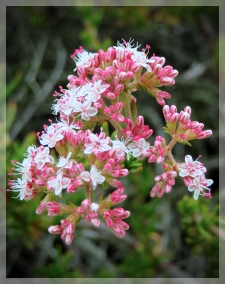
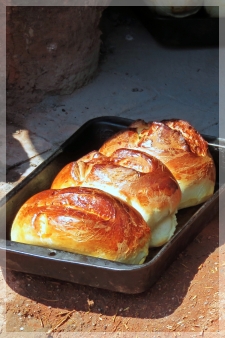 Immediately after the Parable of the Mustard Seed, Jesus compared the Kingdom of Heaven to the yeast a woman added to “three measures of flour” when making bread. While “measures” seems vague, the original word used wasn’t. It was seah (about a peck and a half of flour) and three seahs were over 167 cups (nearly 50 pounds) of flour. This was an enormous amount of flour for just “a little yeast” and, as He did in the previous parable, Jesus used hyperbole to emphasize the power of something very small. The question in this parable is whether the yeast is a metaphor for a bad or a good thing.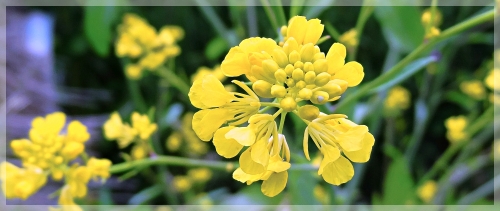
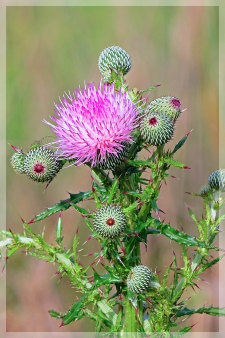 Following the Parable of the Sower and the Soils, Jesus told another parable about the coming of the Kingdom. In the Parable of the Weeds, after the farmer plants wheat, his enemy sows weeds in the same field. Jesus’ hearers would have known the weed likely was darnel. Called wheat’s “evil twin,” it looks and behaves much like wheat. When wheat is consumed it gives life but, when darnel is consumed, this inedible look-alike causes nausea and even death. Sowing weeds in a field was an act of sabotage and Roman law specifically prohibited doing so with darnel. When nations went to war, agricultural vandalism was a common practice. Olive trees were cut down, grape vines destroyed, and fields were salted so nothing would grow.
 Devotions of the Heart