WHAT HAPPENED TO THEM?

He said to them, “The Son of Man is going to be betrayed into the hands of his enemies. He will be killed, but three days later he will rise from the dead.” They didn’t understand what he was saying, however, and they were afraid to ask him what he meant. [Mark 9:31-32 (NLT)]
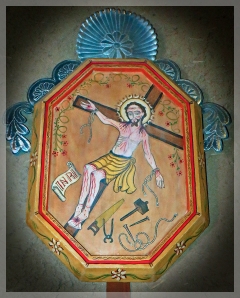
Although crucifixion probably began with the Assyrians and Babylonians, the first historical record is of Persia’s King Darius I crucifying 3,000 political opponents in 519 BC. Alexander the Great adopted the practice when he crucified 2,000 survivors of the siege of Tyre in 332 BC. In 88 BC, the Hasmonean king of Judea, Alexander Jannaeus, crucified 800 Jewish rebels after killing the rebels’ wives and children in front of them. Following a massive slave revolt against Rome in 71 BC, 6,000 rebels were crucified along the Appian Way. The crosses stretched for miles and the bodies were left there as a clear message that any rebellion would end in a violent death. After the death of Herod the Great in 4 B.C., a failed rebellion in Judea led to the crucifixion of 2,000 rebellious Jews.

While the Romans didn’t invent crucifixion, they had perfected it by the time of Jesus and the torture began long before the cross. The condemned were stripped naked, tied to a post, and flogged across the back, legs, and buttocks by Roman soldiers using whips called flagrums consisting of small pieces of bone and metal attached to a number of leather strands. The scourging left the victims’ skin ripped to the bone. If they survived the scourging, they were taunted and forced to carry the crossbar of their death instrument to the place of execution. According to Josephus, sometimes Roman soldiers further tortured the condemned by blinding them or cutting off a body part (like the tongue). Arms were nailed or strapped to the cross beam and feet to the upright. Once upright, a massive strain was put on the wrists, arms and shoulders often resulting in dislocated shoulder and elbow joints. The rib cage was constrained in a fixed position making it extremely difficult to exhale and impossible to take a full breath. While death came from suffocation, loss of body fluids, and multiple organ failure, it did not come quickly.

According to Josephus, crucifixion in Palestine was a common sight so Jesus’ disciples knew all too well what carrying a cross meant. They heard stories of Roman cruelty, saw the bloodied and battered condemned carrying their crosses, and passed by the dead bodies left decaying on crosses as a warning to those who dared challenge Rome. But, for all of their lives, these same men had been waiting for the promised Messiah to come and deliver them from Roman oppression.

Perhaps, when Jesus spoke of the cross, they thought He was referring to the many Jewish rebels who had carried their crosses for defying Rome. But, unlike those times, this time they had Jesus—the promised Messiah who finally would bring victory to the Jewish nation. Even though they believed Jesus was the Messiah, they didn’t fully understand what that meant. They thought He came to defeat Rome, rather than death, and to save a nation, not the world. Even after Jesus spoke of His death on the way to Jerusalem, we have James and John ignoring that prediction and asking Jesus for positions in His kingdom. They still pictured a political victory!

The disciples abandoned Him at His arrest and, in spite of His repeated warnings, were not prepared for His death. Surely, the man who raised Lazarus from the dead wasn’t going to die a criminal’s death, but He did and there was no doubt that He was dead. When the Sabbath was over, two disappointed followers returned to Emmaus, the women went to the tomb to anoint a dead body, and the frightened disciples were gathered in a locked room. They weren’t proclaiming Jesus that morning and didn’t even believe the women when told the tomb was empty. They were a defeated, disappointed, and frightened group of men.

So, what happened to change this group of disheartened disciples? What turned them into enthusiastic evangelists? What turned them into men who willingly followed Jesus to their own equally horrific deaths? It was seeing the risen Christ! May we always remember the truth of this message: Christ has died, Christ is risen, Christ will come again!

God raised Jesus from the dead, and we are all witnesses of this. Now he is exalted to the place of highest honor in heaven, at God’s right hand. And the Father, as he had promised, gave him the Holy Spirit to pour out upon us, just as you see and hear today. [Acts 2:32-33 (NLT)]

Copyright ©2022 jsjdevotions. All rights reserved.

FLYING AWAY

Oh, that I had wings like a dove; then I would fly away and rest! I would fly far away to the quiet of the wilderness. [Psalm 55:6-7 (NLT)]

mourning doveEaster is over and “season” here in southwest Florida is winding down. More people are departing than arriving as our seasonal visitors return north, transport trucks laden with cars are moving up the interstate, and we finally can get a table at our favorite restaurant! It’s been said that there is no escape from death or taxes but we usually try to flee from just about every other unpleasant thing. Thinking their lives would be better here, our snowbirds came south to escape sub-zero temps, heating bills, and shoveling snow. While the climate here is nicer, our tropical paradise doesn’t come with a guarantee and none of us can flee from life’s uncertainties and problems.
Rather than escaping from winter weather, Naomi and Elimelech fled from Bethlehem to escape a famine. Instead of trusting God, they ran away to Moab, a pagan nation hostile to Israel. They intended staying briefly but remained for ten years during which time their sons broke Jewish law by marrying Moabite women. Moab, however, didn’t turn out to be the sort of get-away for which they hoped; sadly, Elimelech and both sons died. A widow with no sons in a hostile and pagan land was in worse straits than a family in their homeland during a famine. Having literally fallen out of the frying pan into the fire, Naomi decided to flee from Moab. At least this time, she went in the right direction—back to Bethlehem and the God of Israel!

We’re not much different from Naomi and some of our snowbirds; we want to escape to a place where life will be better, simpler, happier, easier, less costly, or more fun. Like Naomi, however, we’re likely to be disappointed because the baggage we’ve packed contains more than our clothes. Tucked in with the sunglasses and beach attire are things like problems at work, disappointments, worries, responsibilities, lack of faith, ill health, guilt, unmet deadlines, family strife, or financial problems. If we can’t physically flee from our troubles, some people try escaping through things like procrastination, alcohol, shopping, drugs, busyness, codependency, or denial. Disregarding the bills doesn’t get them paid, ignoring the lump won’t make it disappear, and taking a vacation, moving to a new house, or having another baby won’t fix a broken marriage. There is no way to escape from life’s problems, obligations, or consequences. We carry that baggage with us wherever we go.

In Naomi and Elimelech’s day (the time of the judges), famine was a test of faith but the couple missed what God planned for them by fleeing from their challenge. If we simply suffer through our troubles and allow them to be our master, we lose hope and become bitter, as did Naomi. Having resigned herself to being an embittered penniless widow with no grandchildren, upon her return to Bethlehem the woman whose name meant pleasant called herself Mara, meaning bitter. Rather than running from or resigning ourselves to our troubles, we can endeavor to change them by trusting God—exactly what Naomi and Elimelech failed to do. Instead, it was the Moabite woman Ruth who showed more faith in Israel’s God than did her in-laws. Trusting in Him, she bravely faced the challenges of widowhood by gleaning in the fields of Boaz. Ruth, however, wasn’t alone in those fields; God was at her side! No matter how bleak the situation may seem, there’s no need to flee when we remember that God is with us in our troubles.

Good people must never expect to escape troubles; if they do, they will be disappointed, for none of their predecessors have been without them. [Charles Spurgeon]

The Lord hears his people when they call to him for help. He rescues them from all their troubles. The Lord is close to the brokenhearted; he rescues those whose spirits are crushed. The righteous person faces many troubles, but the Lord comes to the rescue each time. [Psalm 34:17-19 (ESV)]

Don’t be afraid, for I am with you. Don’t be discouraged, for I am your God. I will strengthen you and help you. I will hold you up with my victorious right hand. [Isaiah 41:10 (NLT)]

Copyright ©2022 jsjdevotions. All rights reserved.

SONGS OF VICTORY – MAUNDY THURSDAY 2022

Praise the Lord! Yes, give praise, O servants of the Lord. Praise the name of the Lord! Blessed be the name of the Lord now and forever. Everywhere—from east to west—praise the name of the Lord. For the Lord is high above the nations; his glory is higher than the heavens. [Psalm 113:1-4 (NLT)]

The stone that the builders rejected has now become the cornerstone. This is the Lord’s doing, and it is wonderful to see. This is the day the Lord has made. We will rejoice and be glad in it. … Give thanks to the Lord, for he is good! His faithful love endures forever. [Psalm 118:22-24,29 (NLT)

crucifixion - cathedral st. francis - santa feJesus knew that one would betray Him, another deny Him, and all desert Him. He knew the people He’d fed, healed, taught, and loved—the people who just a few days earlier had greeted him like a king with palm branches and shouts of “Hosanna”—soon would prefer a thief over Him. Because of His anguished prayers later that evening in Gethsemane, we know that He knew the suffering and torment that lay ahead for him. Nevertheless, he sang with the disciples during their Passover meal that last night and it wasn’t a sorrow-filled psalm of lament.

Because it was a Passover feast, at least twice during the evening they would have paused to sing the traditional Passover hymns commemorating Israel’s escape from slavery. Known as the “Egyptian Hallel” and consisting of Psalms 113 through 118, they are joyful hymns of praise and thanksgiving. Hallel literally means praise and the Hebrew phrase Hallelu Yah, meaning “praise the Lord,” is found frequently in these beautiful psalms. The sages understood that Psalm 118, the climax of the Hallel, was about the Messiah and that night in Jerusalem, nearly 2,000 years ago, the Messiah Himself sang those very words. As the disciples gathered in that upper room celebrating Israel’s release from bondage in Egypt, did they realize they really were celebrating man’s release from bondage to sin?

The following day, after three hours on the cross, Jesus cried out, “My God, my God, why have you abandoned me?” After the praise and thanks of the previous night, did He now doubt God? The question was rhetorical because Jesus knew exactly why He was suffering—He was bearing the weight of the sins of the world. What the gospels don’t include is the rest of Psalm 22, the psalm Jesus probably was reciting. Although the psalm begins with the complaint of unanswered prayers and abandonment by God, it is followed by a statement of confidence in Him. A complaint of being forsaken by men comes next but it also is followed by an expression of trust in the Lord.

Although the psalm was written by David, rather than reflecting his experiences, it prophetically presented the future suffering of the Messiah and the next several stanzas clearly depict the crucifixion of Jesus: people mocked and scorned Him, He was in pain, His strength ebbed, His mouth was dry, His hands and feet were pierced, He was dying, and His clothing was divided and lots cast for it. These lines are followed by a cry for deliverance.

By the psalm’s 22nd verse, however, its tone changes and the plaintive cries turn to praise and words of faithful confidence: “I will proclaim your name to my brothers and sisters. I will praise you among your assembled people. Praise the Lord, all you who fear him!” The praise and promises continue throughout the rest of the psalm. These are not the words of a defeated man but the words of the promised Messiah, the Anointed One, the one who fulfilled the promise made to Abraham in Genesis that, “through your descendants all the nations of the earth will be blessed.” Out of what seemed to be defeat came triumph.

The One who’d sung “Hallelu Yah,” the previous night with his disciples again praised the Lord with His last words as He hung on the cross. Hallelujah! Praise the Lord!

The cross was two pieces of dead wood; and a helpless, unresisting Man was nailed to it; yet it was mightier than the world, and triumphed, and will ever triumph over it. [Augustus William Hare]

I will praise you in the great assembly. I will fulfill my vows in the presence of those who worship you. The poor will eat and be satisfied. All who seek the Lord will praise him. Their hearts will rejoice with everlasting joy. The whole earth will acknowledge the Lord and return to him. All the families of the nations will bow down before him. For royal power belongs to the Lord. He rules all the nations. Let the rich of the earth feast and worship. Bow before him, all who are mortal, all whose lives will end as dust. Our children will also serve him. Future generations will hear about the wonders of the Lord. His righteous acts will be told to those not yet born. They will hear about everything he has done. [Psalm 22:25-31 (NLT)]

Copyright ©2022 jsjdevotions. All rights reserved.

THY WILL BE DONE

“My Father! If it is possible, let this cup of suffering be taken away from me. Yet I want your will to be done, not mine.” … Then Jesus left them a second time and prayed, “My Father! If this cup cannot be taken away unless I drink it, your will be done.” … So he went to pray a third time, saying the same things again. [Matthew 26:39,42,44 (NLT)]

water liliesThroughout His ministry, it seems that Jesus knew that the cross awaited Him but we don’t know if the human part of Him knew the exact details. Even so, it’s one thing to know what lays in the future but quite another to know it is about to begin within a matter of minutes. That night in Gethsemane, God showed Jesus the cup from which He would drink and He showed it in gruesome detail. Jesus viewed the betrayal, abandonment, sham trials, mocking, beating, flogging, and suffering torture on the cross along with the jeers of the crowd and the heartbreak and tears of His mother and the other women at the foot of the cross. Had Jesus not known exactly what the next 24-hours held, He would have been no different than the lambs brought to the Temple for sacrifice. They weren’t there of their own volition and had no knowledge of what would happen to them when presented to the priest. Rather than willing sacrifices, they were victims! The Lamb of God, however, needed to know the extraordinary cup—the horrible ordeal—that lay before him because, rather than a victim, He was a willing volunteer! His anguished prayers that night, however, tell us He didn’t look forward to it.
When we look at Jesus’ prayers that last night, there’s a condition to His request to remove the cup: “if it is possible.” If there were an alternative means to accomplish God’s will, Jesus certainly would have preferred it. Knowing exactly what He was facing, the human part of Him prayed for another way and He prayed so intensely that he sweat blood! Judas and the soldiers hadn’t yet arrived and Jesus could have quietly slipped away in the night and disappeared into Jerusalem, but He didn’t! As He prayed for deliverance, He also prayed to do God’s will. Since the Son of God had come to mankind to do His Father’s will, Jesus obediently and willingly stayed in the garden and submitted to all the horror that followed.

Looking at Jesus’ prayers in Gethsemane as a lesson in prayer, we see that since God the Father denied the request of His only Son, we shouldn’t expect God to agree to all we ask. C.S. Lewis says that Jesus’ unanswered prayers that night make it clear that prayer is not to be considered “a sort of infallible gimmick.” There is, however, a greater lesson in Jesus’ prayers in Gethsemane.

He forthrightly asked for the horror of what lay ahead to be removed which is the sort of prayer we typically offer when a loved one lies in a coma, the doctor says “inoperable,” the bank threatens foreclosure, we face 32 more radiation treatments, or a child become addicted. We pray, “Take it away, Lord—make it all right!” That, however, is usually where we stop but Jesus didn’t stop there. After asking for our difficult cup to be removed, do we add “if it is possible,” with the understanding that God’s purpose is more important than our desire? Finally, like Jesus, do we complete our prayer by fully submitting to God’s divine plan (whether we like it or not) with the words, “I want your will to be done, not mine”? Jesus submitted, will we?

If there was not an absolute necessity of his suffering them in order to their salvation, he desired that the cup might pass from him. But if sinners, on whom he had set his love, could not, agreeably to the will of God, be saved without his drinking it, he chose that the will of God should be done. He chose to go on and endure the suffering, awful as it appeared to him. [Matthew Henry]

He walked away, about a stone’s throw, and knelt down and prayed, “Father, if you are willing, please take this cup of suffering away from me. Yet I want your will to be done, not mine.” Then an angel from heaven appeared and strengthened him. He prayed more fervently, and he was in such agony of spirit that his sweat fell to the ground like great drops of blood. [Luke 22:41-44 (NLT)]

Copyright ©2022 jsjdevotions. All rights reserved.


PREDICTIVE PROPHECY (Prophecy – 3)

Bel and Nebo, the gods of Babylon, bow as they are lowered to the ground. They are being hauled away on ox carts. The poor beasts stagger under the weight. Both the idols and their owners are bowed down. The gods cannot protect the people, and the people cannot protect the gods. They go off into captivity together. [Isaiah 46:1-2 (NLT)]

The Israelites were surrounded by various pagan peoples who worshipped foreign deities. Baal ruled over Canaan and Phoenicia, Chemosh over Moab, and Marduk/Bel and Nebo over Babylonia. The Philistines’ had Dagon and the Ammonites worshipped Molech. These gods usually had a domain over which they ruled. For example, Baal’s domain was rain, storms, and the harvest. Moab’s Chemosh presided over war and mountains. As patron deity of Babylon, Marduk/Bel was supposed to protect the city and rule over storms while Nebo’s purview was wisdom and science. The Philistines’ chief god Dagon presided over death, the afterlife, war, and agriculture while Ammon’s Molech reigned over the underworld, which may explain his association with child sacrifice in the Old Testament.

In spite of their reputed special powers, those pagan gods were nothing more than powerless idols who had to be carried around on ox carts and would be taken captive along with their worshippers! Marduk/Bel couldn’t protect Babylon from Cyrus or Alexander the Great and Baal, the god of rain and storms, couldn’t even make it rain after Elijah called for a drought or muster up a bolt of lightning to ignite a fire! In contrast, upon Elijah’s prayer, the God of Israel immediately flashed down flames and turned water-soaked wood into an inferno.

Perhaps, the ultimate test of any god is prophecy because only a true God can know all that has gone before and all that is yet to come. In Isaiah 41, the Lord called out those false gods because they couldn’t prophesy when He, the God of Israel, could! It wasn’t just His prophet Isaiah who accurately forecast the future; many others did as well. For example, Jeremiah accurately foretold Jerusalem’s destruction, King Jehoiakim’s death and the end of his line, Babylon’s fall, the length of captivity, and the exiles’ return to Judah. When interpreting Nebuchadnezzar’s dream, Daniel accurately foretold the different empires in historical progression—from Babylonian to Medo-Persian to Grecian and then to Roman. In 536 BC, more than 213 years before it happened, he predicted the division of Alexander the Great’s kingdom into four weaker nations. In fact, the book of Daniel predicted political history for the next 370 years!

Since true prophecy is the living word of God, I suppose the historic accuracy of those fulfilled prophecies shouldn’t surprise us. Their accuracy tells us that God exists, that there are no other gods, and that, just as He controlled the past, He is in full control of the future. There are, however, several prophecies yet to come. For example, Daniel’s predictive prophecies didn’t stop at 166 BC with the Maccabees and Antiochus IV. He continued on with end-time predictions of the antichrist, the tribulation, and humanity’s resurrection. The accuracy of past predictive prophecy tells us that those prophecies not yet fulfilled will come to pass. Will you be ready when they do?

I’ve read the last page of the Bible. It’s all going to turn out all right. [Billy Graham]

“Present the case for your idols,” says the Lord. “Let them show what they can do,” says the King of Israel. “Let them try to tell us what happened long ago so that we may consider the evidence. Or let them tell us what the future holds, so we can know what’s going to happen. Yes, tell us what will occur in the days ahead. Then we will know you are gods. In fact, do anything—good or bad! Do something that will amaze and frighten us. But no! You are less than nothing and can do nothing at all. [Isaiah 41:21-24a (NLT)]

Copyright ©2022 jsjdevotions. All rights reserved

THE ONE WHO DOES THESE THINGS (Prophecy – 2)

Who has stirred up this king from the east, rightly calling him to God’s service? Who gives this man victory over many nations and permits him to trample their kings underfoot? With his sword, he reduces armies to dust. With his bow, he scatters them like chaff before the wind. He chases them away and goes on safely, though he is walking over unfamiliar ground. [Isaiah 41:2-3 (NLT)]

In 538 BC, in fulfillment of Isaiah’s prophecy, Persia’s King Cyrus issued a proclamation allowing the first group of Judean exiles to return home with the purpose of rebuilding the Temple and inhabiting Jerusalem. In fulfillment of another prophecy, he then did what to any other conqueror would be unthinkable by returning the “plunder of tyrants”: 2,499 gold and silver sacred utensils taken by King Nebuchadnezzar when he ransacked the Temple. Cyrus permitted those who returned to take any wealth they’d accumulated during exile and encouraged those choosing to remain in Babylon to support their returning brethren with gifts, supplies, and food offerings. As a result, a total of 5,400 articles of gold and silver were taken back to Judah with the exiles.

In Cyrus’ proclamation releasing the Jews (found in Ezra 1), he claimed that it was “the Lord, the God of heaven” who gave him his kingdoms and appointed him to build a house for the “God of Israel who lives in Jerusalem.” Although Cyrus acknowledged the existence of Israel’s Yahweh, he limited Yahweh’s domain of power to Judah, just as the lesser gods of other nations (such as Babylon’s Marduk) were limited in power to their territory. Like other lesser gods, Israel’s god was governed by another higher god, “the God of heaven.” It’s likely that Cyrus believed Ahura Mazda, the deity of Persian Zoroastrianism, was the supreme god who ruled the others and gave him his kingdoms.

While Cyrus was right about getting divine direction and assistance from God, he was dead wrong about its source! Rather than a God who ruled over the lesser gods of other nations, there was only one God and, unlike those other gods, He wasn’t an idol, didn’t live in a house, and wasn’t limited to Israel or any other border. This one and only God was all-powerful, omnipresent, and omniscient. While He was the God Israel worshipped, He was the God of the universe!

When we think of the parting of the Red Sea, the flood, Egypt’s plagues, hailstones destroying the Amorite army, or the 3½-year drought followed by rain in Elijah’s time, we see that God sometimes uses nature to accomplish His will. For the most part, however, human beings are the agents through which God does most of His work. Some, like Moses, Isaiah, Samuel, and Elijah knew they’d been called to achieve God’s purposes while others, like Rahab and Joseph’s brothers didn’t. God even used heathen kings and pagan nations to achieve his purposes. It was God who moved the Israelites’ Egyptian neighbors to willingly give them their wealth at the time of the exodus. It was their Egyptian gold, silver, and ornaments that were used to make the sacred objects used in the Tabernacle and Temple! God used Assyria to punish Samaria for their apostasy and later used Babylonia to punish Assyria. Calling King Nebuchadnezzar of Babylon “my servant,” God used him to punish Judah for their disobedience and then used both Persia and the armies of Alexander the Great to punish and demolish Babylon! Calling Persia’s Cyrus “God’s anointed one” and “my shepherd,” God used him to free the Jews and rebuild Jerusalem and then used Alexander the Great’s army to punish Persia for their evil!

To achieve His purposes, God will use both the righteous and wicked, those who believe and those who don’t. People don’t have to believe in God to be used by Him because it is not one’s belief in God that gives him power. God is Lord of all nations and all people and His supremacy and magnificence are so great that regardless of who we are or what kind of person we happen to be, we can be used by Him. It is God, and God alone, who controls history!

I am the Lord; there is no other God. I have equipped you for battle, though you don’t even know me, so all the world from east to west will know there is no other God. I am the Lord, and there is no other. I create the light and make the darkness. I send good times and bad times. I, the Lord, am the one who does these things. [Isaiah 45:5-7 (NLT)]

Copyright ©2022 jsjdevotions. All rights reserved