THE SINNER’S PRAYER

And Peter said to them, “Repent and be baptized every one of you in the name of Jesus Christ for the forgiveness of your sins, and you will receive the gift of the Holy Spirit.” [Acts 2:38 (ESV)]

purple prairie cloverIn a book about evangelism, the author wrote of bringing a new believer into his office and the two of them saying the “Sinner’s Prayer.” After the new believer repeated the Pastor’s words, he was pronounced saved. While there is no official version of this “sinner’s” prayer, it probably goes something like this: “God, I know that I am a sinner and that I deserve to go to hell. I believe that Jesus Christ died on the cross for my sins. I do now receive Jesus Christ as my personal Lord and Savior. Thank you, Lord, for saving me and forgiving me! Amen.” Many evangelical Christians speak of saying some sort of prayer like this at the moment of conversion. Is a special “Sinner’s Prayer” a requirement for salvation?

If would seem that, if a special prayer were required, we would find it in the Bible. While we find lots of prayers, there doesn’t appear to be a special prayer prerequisite for salvation. Jesus told the sinful woman who kissed and anointed his feet that her faith had saved her, He told the woman with the bleeding disorder that her faith made her well, and He told the blind men that their faith gave them sight. While on the cross, the Lord promised the repentant thief that he’d join the Him in paradise that day. Although they all knew they were sinners, none of them recited a special “sinner’s” prayer!

When the 3,000 were converted at Pentecost, we don’t read of a mass recitation of a specific prayer. Instead, Peter told the people to repent of their sins, turn to God, and be baptized in the name of Jesus for the forgiveness of sins. After hearing the gospel from Philip, the Ethiopian eunuch was baptized and, after speaking with Ananias, Saul regained his sight and was baptized. While Peter preached the gospel to the Roman centurion Cornelius and his Gentile friends, the Holy Spirit descended upon them and they all were baptized. In none of those cases is there mention of a special prayer before conversion, asking for salvation, or taking Jesus as a “personal Lord and Savior.” The people believed, repented, and were baptized. If a special prayer is required for Christ’s salvation, I’m pretty sure it would have been included in Scripture and it isn’t.

Nevertheless, it is Biblical to repentantly pray and ask for forgiveness; what’s not Biblical is to say salvation comes because of a prayer. Salvation comes by God’s grace through faith. We are justified by faith, not by works, and certainly not by words. Even so, there’s nothing inherently wrong with praying some sort of sinner’s prayer at conversion—unless, of course, the person praying isn’t called by the Holy Spirit and genuinely repentant. When empty of faith, that prayer is meaningless and gives the person praying it a false (and dangerous) sense of security. Merely saying a version of the Sinner’s Prayer isn’t like purchasing an insurance policy guaranteeing salvation and eternal life. Even repeating dozens of prayers can’t save us. We’re not saved by the words of a prayer but by the genuine repentance and faith behind the prayer. As Christians, we don’t put our trust in words but in the body and blood of Jesus Christ.

In actuality, since we’re all sinners, every prayer we say is a sinner’s prayer. Nevertheless, our faith, hope, and assurance should not be in the prayers we say but rather in the God who hears those prayers.

For by grace you have been saved through faith. And this is not your own doing; it is the gift of God. [Ephesians 2:8 (ESV)]

Though you have not seen him, you love him. Though you do not now see him, you believe in him and rejoice with joy that is inexpressible and filled with glory, obtaining the outcome of your faith, the salvation of your souls. [1 Peter 1:8-10 (ESV)]

Copyright ©2025 jsjdevotions. All rights reserved.

THE FIRST HYMN

…be filled with the Spirit, addressing one another in psalms and hymns and spiritual songs, singing and making melody to the Lord with your heart, giving thanks always and for everything to God the Father in the name of our Lord Jesus Christ…. [Ephesians 5:18-20 (ESV)]

About midnight Paul and Silas were praying and singing hymns to God, and the prisoners were listening to them, [Acts 16:25 (ESV)]

In the ruins of Oxyrhynchus, Egypt, a scrap of parchment known as P.Oxy. 1786 was discovered in 1918. Only 11-inches long and 2-inches wide, it consists of four lines of text along with musical notations on the back of a grain contract. Found in an ancient garbage dump, it was just one of 500,000 parchments dating from the 1st century BC to the 7th AD. Along with grocery lists, official records, and business contracts, the rubbish heap yielded a play by Sophocles, poetry by Sappho, portions of the Old Testament, fragments of both Matthew’s and Mark’s gospels, and an arrest warrant for a Christian.
While scholars call it P.Oxy. 1786, after hearing the version adapted by Chris Tomlin and Ben Fielding, you probably will know it as “The First Hymn.” Indeed, in a way, it is! Granted, the song sung by Miriam after crossing the Red Sea predates Christ by 1,400 years, the Hebrew Psalms were sung at Temple worship, and Biblical scholars believe passages like Colossians 1:15-20 and 1 Timothy 3:16 were hymns sung by early Christians. Nevertheless, none of those psalms or hymns include musical notations as does P.Oxy. 1786. To date, this scrap of parchment dating from around 260 AD is the oldest piece of Christian music in existence.

Although musicologists and historians have known about P.Oxy. 1786 for over a century, it remained in a sort of academic “no man’s land,” until historian John Dickson took an interest in it. Hoping to bring this obscure little hymn back to life, he reached out to musicians Ben Fielding and Christ Tomlin. The result is a new worship song, “The First Hymn.” Bringing the words of this ancient hymn back to life as a contemporary worship song seems almost sacrilegious until we understand the original music. Musicologists say the hymn used the same melodic structure  used in taverns and on the stage at pagan theaters at the time. Musically, it was a 3rd century version of a Broadway, pop, or contemporary worship song! While the resurrected version doesn’t sound like the original, it has remained true to its purpose—a Christian worship song in the musical style of the day!

This hymn was sung at a time when the Church was confronted both by the pagan gods of the Roman Empire and various heresies regarding the divinity of Jesus and the Trinity. Yet, in its 35 words, it is a bold declaration of Christian faith. Combatting heresies of the day, it clarifies both the divinity of Jesus and the three separate but equal persons of the one triune God. It also makes a not too subtle dig at the Roman god Zeus. While pagans referred to him as the “giver of good gifts,” this hymn calls God the “only giver of all good gifts.” Moreover, by calling the heavens to be silent and the rivers to be still, the hymn showed the power of the one true God!

The 3rd century was a dangerous time for followers of Christ. In 201, Rome made conversion to Christianity a capital offense and, by mid-century, every citizen was required to make a sacrifice to the gods or face death. Found in that same ancient rubbish dump was a formal certificate proving that one local citizen had offered pagan sacrifice in public. Christians who refused were martyred in gruesome ways; if they weren’t crucified or beheaded, they may have been tossed into cauldrons of boiling oil or cast into an arena to be devoured by lions. Nevertheless, this hymn speaks of a God who gives good gifts—not suffering and persecution! This defiant hymn resounds with joy with its words, “Might, praise, and glory forever to our God. The only giver of all good gifts.”

The singing of hymns has a long history in the Christian church. Psalms, a book of songs, is the longest book in the Bible and Scripture makes over four hundred references to singing and fifty direct commands to sing. The last thing Jesus and the disciples did in the upper room His last night was sing a hymn. While in prison, Paul and Silas prayed and sang hymns to God which led to their jailer’s conversion! We find instructions to sing in Psalms, Ephesians, Colossians, and James. In the early second century, the Roman governor Pliny the Younger described the worship practices of Christians who “were in the habit of meeting on a certain fixed day before it was light, when they sang in alternate verses a hymn to Christ, as to a god.” Let us continue to sing the song of the redeemed as boldly as did the persecuted Christians of the early Church. Amen and amen.

Let all be silent: The shining stars not sound forth,
All rushing rivers stilled, As we sing our hymn
To the Father, Son, and Holy Spirit,
As all Powers cry out in answer, “Amen, amen.”
Might, praise, and glory forever to our God.
The only giver of all good gifts. Amen. Amen.
[P.Oxy. 1786 (The First Hymn)]

Let the word of Christ dwell in you richly, teaching and admonishing one another in all wisdom, singing psalms and hymns and spiritual songs, with thankfulness in your hearts to God. [Colossians 3:16 (ESV)]

Copyright ©2025 jsjdevotions. All rights reserved.

BROKEN PROMISES

For we must all appear before the judgment seat of Christ, so that each one may receive what is due for what he has done in the body, whether good or evil. Therefore, knowing the fear of the Lord, we persuade others. But what we are is known to God, and I hope it is known also to your conscience. [2 Corinthians 5:10-11 (ESV)]

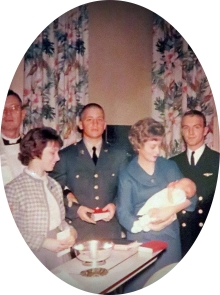
Earlier this week, I wrote about my nephew Johnny’s baptism in my mother’s hospital room. Because she was at death’s door, my brother took emergency leave and he and I served as the baby’s sponsors in Baptism (or Godparents).
As Johnny’s Godmother, I made three promises for him during the service: that he would “renounce the devil and all his works…believe all of the Articles of the Christian Faith and…keep God’s holy will and commandments.” In a perfect world, Johnny would have made those same promises again at his confirmation when he was old enough to personally know Jesus. But the world isn’t perfect; he never came to know Jesus and make those vows for himself.

As his Baptismal sponsor, I promised to make sure Johnny learned the Creed, the Lord’s Prayer, the Ten Commandments, and “all the other things which a Christian ought to know and believe to his soul’s health.” Sometimes promises are easier said than done and I did not keep my vows any better than did my nephew the promises made on his behalf. I can make all sorts of excuses for my failure—I only was 15 when I made those vows, at least 1,500 miles always separated us, and I saw him less than ten times in his 60 years. Nevertheless, I did not try to keep those promises and I will answer to God for my failure.

When I stand at God’s judgment seat, my sins will not be an issue; they already have been forgiven and my ticket to heaven is secure. But I will be asked to give an accounting for what I have done (and failed to do) since becoming a believer. While I kept my nephew in my prayers, I squandered my opportunity, small as it was, to share God’s love and the good news of the Gospel with him. I can’t say that anything I could have done would have made a difference in his troubled life but I should have tried. That weighs heavy on my heart—not because I may miss out on some heavenly reward, but because I missed an opportunity to be a disciple of Christ.

When believers stand before God, we will be judged. Since each of us have been uniquely created and gifted, my evaluation will not be the same as yours; nevertheless, each one of us will give an accounting of ourselves. What did we do with the spiritual light we had, what did we do with the opportunities given to us, and what did we do with the time, talents, and property God entrusted to us?

My nephew is one of the reasons I served our church’s children’s ministry and support both recovery ministries and programs serving the homeless and mentally ill. I suspect I continue writing these devotions as a way of atoning for not keeping the promises to God I made at my mother’s bedside 63 years ago. Older, wiser, and having more light, opportunity, time, and ability, more is expected of me now. While I no longer pray for my nephew, I continue to pray for God’s protection, grace, and mercy on others like him. As for those of us who are Christ followers, I pray that we will make good use of all that God has given us and that through our words and deeds we will live and teach the Creeds, the Lord’s Prayer, the Ten Commandments, and “all the other things which a Christian ought to know and believe to his soul’s health.”

Having gifts that differ according to the grace given to us, let us use them. [Romans 12:6 (ESV)]

Everyone to whom much was given, of him much will be required, and from him to whom they entrusted much, they will demand the more. [Luke 12:48b (ESV)]

Copyright ©2025 jsjdevotions. All rights reserved.

A CHANGE OF HEART

For you are not a true Jew just because you were born of Jewish parents or because you have gone through the ceremony of circumcision. No, a true Jew is one whose heart is right with God. And true circumcision is not merely obeying the letter of the law; rather, it is a change of heart produced by the Spirit. [Romans 2:28-29a (NLT)]

In 1962, my 2-month-old nephew Johnny and his parents traveled 1,500 miles for his Baptism. Because my mother was hospitalized (and soon would be dead), the sacrament took place at her bedside. This was the only time Johnny and his grandmother met and the last time my sister saw our mother alive.

Believing that children should be free to find their own way to God, my brother-in-law was opposed to infant baptism. Nevertheless, my father wanted that baby baptized as much as he wanted my mother to meet her first grandchild. Because children under 12 were not allowed to visit hospitals back then, he convinced my brother-in-law that a hospital baptism was the only way my mother could see and hold the little guy. The hospital was run by the Sisters of Charity so he knew the nuns wouldn’t deny his request for a bedside baptism (especially since he neglected to mention that the priest was Episcopalian rather than Roman Catholic). That we were Protestants, however, didn’t keep the nuns from joining us during the service.

Unfortunately, other than the funerals of his grandparents, Johnny’s baptism probably was the only time he came near a minister, church, Bible, prayer book, holy water, or even a nun. While his parents were good people, they never attended church and the boy had no religious education. By the time he was in his teens, the troubled youth was diagnosed with schizoaffective disorder. As often happens for people with severe mental illness, he self-medicated with drugs and alcohol. A vicious cycle began as the substance abuse exacerbated his mental illness and his disease increased the abuse.

Unable to stay on his meds and off drugs, he was a lost soul. When he wasn’t in jail, the hospital, or couch surfing through the homes of other users, Johnny lived on the streets. Sadly, it was on those streets that he died from a fentanyl overdose. While I can’t know what is in anyone’s heart, I doubt that Johnny believed in Jesus. Nevertheless, he was baptized; did that sprinkle of water mean he was saved?

As a sign of God’s covenant with Israel, all of Abraham’s descendants were to be circumcised. In Romans 2, however, Paul points out that, for the Jew, the true sign of belonging to God was not the ceremony of circumcision; it was a change of heart produced by God’s Spirit. It was God’s spiritual surgery upon the heart rather than the removal of one’s foreskin that made a Jew right with God. While there are parallels between baptism and circumcision, they symbolize two very different covenants. Nevertheless, while studying Romans and rereading today’s verse, I replaced “Jew” with “Christian” and “circumcision” with “baptism.” Indeed, Christianity has nothing to do with parentage nor does baptism bring salvation; salvation requires a change of heart.

The Book of Common Prayer (1958) calls baptism an “outward and visible sign of an inward and spiritual grace.” Without that “inward and spiritual grace,” I fear it is just a ritual. External actions like baptism, communion, genuflecting, making the sign of the cross, or church attendance are not what make us Christians. Salvation doesn’t come by works or sacraments; it comes through God’s grace through faith!

Assuming Johnny never came to know Jesus and be filled with His Holy Spirit, I fear that my nephew’s baptism didn’t make him a Christian any more than his hospital circumcision made him a Jew. While baptism is a step of obedience for every Christian, it does not save us. Our salvation is because of Jesus’ death and resurrection and is available only through faith in Jesus Christ. Let us all beware of trusting that baptism alone will bring us to heaven.

Tragically, some people believe they are going to heaven when they die just because a few drops of water were sprinkled over their heads a few weeks after their birth. They have no personal faith, have never made a personal decision, and are banking on a hollow ceremony to save them. How absurd. [Max Lucado]

If you openly declare that Jesus is Lord and believe in your heart that God raised him from the dead, you will be saved. For it is by believing in your heart that you are made right with God, and it is by openly declaring your faith that you are saved. [Romans 10:9-10 (NLT)]

Copyright ©2025 jsjdevotions. All rights reserved.

CLOSE ONLY COUNTS IN HORSESHOES

For God loved the world so much that he gave his only Son, so that every one who believes in him shall not be lost, but should have eternal life. … Any man who believes in him is not judged at all. It is the one who will not believe who stands already condemned, because he will not believe in the character of God’s only Son. [John 3:16,18 (PHILLIPS)]

clematisWe once had neighbors who left our church for what I’ll call the “church of what’s happening now.” Its members have a variety of beliefs about God and, while they acknowledge a “higher power,” they do not share a concept of it. It could be God, a sacred force, or the spirit of life and there is no right or wrong way to understand Him, Her, or It. While some may regard Jesus as a great moral and spiritual leader or prophet (and possibly even supernatural), they don’t believe He was God and reject the Trinity. Theirs is an eclectic mix of beliefs with each person having his or her own personal truth. Embracing uncertainty, some believe there may be an afterlife and/or reincarnation but, for others, this life is all there is. Although they look to the Bible for wisdom, they also find spiritual inspiration in texts like the Bhagavad Gita, Dhammapada, and Tao Te-Ching. Our neighbors were loving caring people who believed in good things like justice, compassion, peace, protecting the environment, and the dignity of the individual. Nevertheless, while some of their thinking was correct, their conclusion was very wrong.
C.S. Lewis asserts that while many non-Christian religions have good ideas and may not be entirely erroneous, they most definitely are not correct. After all, while some math answers might be closer to being correct than others, there is only one correct answer to the problem. For example, if we had to determine the volume of a cone, we’d need the correct formula:⅓ x b x h. But, before starting, we’d need to figure out b (the area of the base) with another formula: pi x r2. To do that, however, we’d have to know the value for pi. With two formulas, several multiplications and one division, there are plenty of opportunities to get the final answer wrong. If the wrong formulas are used, the answer is wrong. If both the formulas and math are correct but the wrong number for pi is used, the answer is wrong and, if everything is done correctly but the decimal is misplaced, the answer still is wrong. Although a nice math teacher may give us some credit for being partially correct, I’m not sure God works that way. Although some of the answers offered by other religions are closer to being right than others, the only correct answer to the salvation equation is Jesus Christ!

In mathematics, we’re given a set of axioms (fundamental truths) and postulates (fundamental assumptions) on which we base our figuring. In Christianity, our creeds are our axioms and postulates. But rather than basing them on Aristotle or Euclid, our fundamental truths and assumptions are based on the Word of God as revealed in Scripture. Within those uncompromisable Christian beliefs, however, we are free to make choices and even disagree. That’s why we have so many different denominations! Nevertheless, our Christian creeds are just that—Christian—and they clarify and encompass our universal beliefs so that, however we got there, we all share the one and only right answer!

I believe in God the Father Almighty, Maker of heaven and earth, And in Jesus Christ his only Son our Lord, Who was conceived by the Holy Ghost, Born of the Virgin Mary, Suffered under Pontius Pilate, Was crucified, dead, and buried. He descended into hell; The third day He rose again from the dead; He ascended into heaven, And sitteth on the right hand of God the Father Almighty; From thence he shall come to judge the quick and the dead. I believe in the Holy Ghost; The Holy catholic Church, the Communion of Saints; The Forgiveness of sins; The Resurrection of the body, And the Life everlasting. Amen. [Apostles’ Creed]

You all belong to one body, of which there is one Spirit, just as you all experienced one calling to one hope. There is one Lord, one faith, one baptism, one God, one Father of us all, who is the one over all, the one working through all and the one living in all. [Ephesians 4:4-6 (PHILLIPS)]

Copyright ©2025 jsjdevotions. All rights reserved.

SWEETER THAN HONEY

Your words were found, and I ate them. Your words became a delight to me and the joy of my heart, for I bear your name, Lord God of Armies. [Jeremiah 15:16 (CSB)]

“Son of man,” he said to me, “feed your stomach and fill your belly with this scroll I am giving you.” So I ate it, and it was as sweet as honey in my mouth. [Ezekiel 3:3 (CSB)]

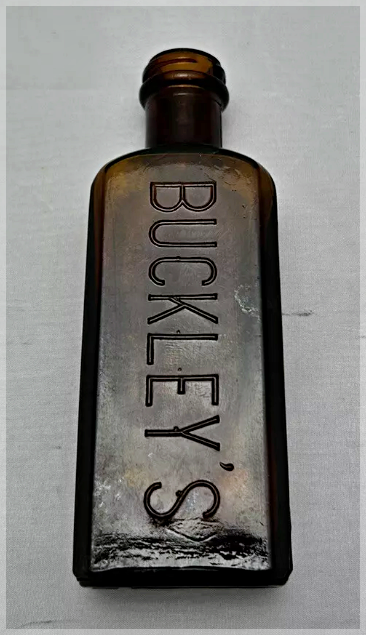
Back in 1919, pharmacist W.K. Buckley created a concoction to treat coughs, colds, and bronchitis called Buckley’s Original Mixture. Buckley’s elixir was tremendously effective but its flavor was horrid. Nevertheless, their nasty tasting blend of things like menthol, camphor, Canadian balsam, and pine needle oil is still being sold more than 100 years later. The mixture’s longevity is due as much to the company’s straightforward and humorous “awful taste” ad campaign as it is to its reputed efficacy. With the slogan, “It tastes awful. And it works!” Buckley’s is described by consumers as “the worst tasting, foulest smelling, yet most effective cough remedy.” Apparently, it is. Despite ads admitting, “People swear by it. And at it,” consumers continue to endure Buckley’s ghastly flavor. Never having used Buckley’s (and not about to try), this is not an endorsement!

While nowhere as unpleasant tasting as Buckley’s Mixture, many Christians tend to treat imbibing in God’s word as they might taking a dose of it or some other nasty tasting medication: hard to swallow and consumed only out of necessity! While Scripture’s writers sometimes likened God’s word to food or wrote of its taste, they never described it as “drinking turpentine and transmission fluid mixed together, with a hint of menthol and petroleum” as do some of Buckley’s customers!

While the Bible can be said to be “good for what ails you” and “just what the doctor ordered,” reading Scripture isn’t like taking a dose of Buckley’s or castor oil. God’s word never should be treated as a horrible-tasting medicine—something taken only when absolutely necessary. Peter likened God’s word to milk while Paul and the writer of Hebrews compared it to both milk and solid food (like meat). Job reported treasuring God’s words more than his daily food and Jeremiah, Ezekiel, and the Apostle John all wrote of eating God’s word. And, unlike those who consumed Buckley’s, there were no complaints about its foul taste. In fact, Jeremiah found God’s words a delight and the joy of his heart while Ezekiel and John said they were “sweet as honey” in their mouths. In fact, Psalms 19 and 119 refer to God’s words as even “sweeter” than honey!

When God fed the hungry Israelites in the Sinai desert, His provision included more than earthly food. Along with manna, He gave them something beautiful with which nourish their very souls—His Word! When Israel arrived in the Promised Land, the manna stopped but God’s voice didn’t; He provided mankind with a feast from Genesis through Revelation—and that feast remains with us today. As Moses told the Israelites and Jesus repeated to His followers, “Man must not live on bread alone but on every word that comes from the mouth of God.”

While God’s Word has been described as “sweet as honey” in one’s mouth, unlike cotton candy and sugary sodas, there’s more to it than a sweet taste. Rather than empty calories, God’s words were described by Charles Spurgeon as, “full of substance—they are spirit, they are life, they are to be fed upon by the spiritually hungry!” Remembering that God spoke all of creation into existence with His Word, it shouldn’t come as a surprise that God’s Word is what sustains us, as well! Fortunately, the words of Scripture are sweeter and much easier to consume than Buckley’s disagreeable mixture!

The Bible is not an end in itself, but a means to bring men to an intimate and satisfying knowledge of God, that they may enter into Him, that they may delight in His Presence, may taste and know the inner sweetness of the very God Himself in the core and center of their hearts. [A.W. Tozer]

 He humbled you by letting you go hungry; then he gave you manna to eat, which you and your ancestors had not known, so that you might learn that man does not live on bread alone but on every word that comes from the mouth of the Lord. [Deuteronomy 8:3 (CSB)]

Copyright ©2025 jsjdevotions. All rights reserved.