THE SHEMA (Part 1)

Hear, O Israel: The Lord our God, the Lord is one. You shall love the Lord your God with all your heart and with all your soul and with all your might. And these words that I command you today shall be on your heart. You shall teach them diligently to your children, and shall talk of them when you sit in your house, and when you walk by the way, and when you lie down, and when you rise. You shall bind them as a sign on your hand, and they shall be as frontlets between your eyes. You shall write them on the doorposts of your house and on your gates. [Deuteronomy 6:4-9 (ESV)]
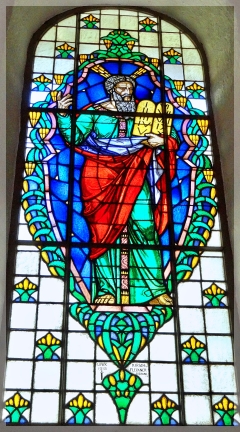
Meiringen-MichaelskircheMy morning’s reading took me to Deuteronomy 6 and the words that Jesus cited as the first, and most important commandment. Known as the Shema and found in verses 4 through 9, it is the essential declaration of the Jewish faith. Its name comes from the first Hebrew word of the verse, shema, which means “hear.” Observant Jews recite its words twice a day (morning and evening), on the Sabbath and religious holidays, and as the last words before death. The Shema is so entrenched in Judaism that a story is told about Rabbi Yitzhak Herzog who, in 1946, went searching for Jewish children who’d been hidden by Christians during the Holocaust. As he walked through European convents, monasteries, and orphanages, the rabbi would start to recite the Shema. He easily found the Jewish children because they immediately joined in saying the sacred words.

The Shema’s first words sum up the essence of Judaism—there is only one true God and He is Israel’s God. During the time of the Temple, a second line was inserted into the Shema. After the priest recited, “Hear, O Israel: The Lord our God, the Lord is one,” the congregation replied, “Blessed be the name of the glory of His kingdom forever and ever.” In acknowledgement that this phrase is not part of the original Scripture, it usually is said in an undertone. The rest of the original prayer then follows.

When Moses passed these words along to the Israelites, they had spent centuries surrounded by people who worshipped many gods. The Shema’s daily repetition impressed upon them that love, obedience, and faithfulness to their one true God was the only way to live. These words may have been passed to the Jews some 3,500 years ago but its message holds true for all of God’s children—there is one true God and He is ours!

The rest of the original Shema details how that belief in the one true God is to be lived and its words continue to apply to Christians as well as Jews. We are to love Him with our whole being, teach his word to the next generation, make His words part of our daily conversation, and impress His word into all aspects of our lives.

In verses 8 and 9, we find the command to bind the God’s words to our hands, foreheads, doorposts, and gates. Taking the words literally, Jews wore black leather boxes (tefillin) containing scripture on their heads and arms and placed mezuzot, containing part of the Shema, on their doorposts. Observant Jews continue to do so today.

Even when taking those instructions figuratively, it’s not difficult to understand what is meant by placing God’s word between our eyes or on our arms. God’s words must affect the way we think and see as well as our every action. While we don’t place Scripture on doorways and gates, when stepping into a Christian’s home or workplace, God’s presence and influence should be felt by all who enter. For the Christian, the Shema’s words mean that we are to write God’s words in our hearts and minds and love Him with our whole being!

Because the words of the Shema were important to Jesus, they are important to us. Whether Christian or Jew, I can’t think of a better way to start or end my day than with these words: “The Lord our God, the Lord is one. You shall love the Lord your God with all your heart and with all your soul and with all your might.”
And one of the scribes…asked him, “Which commandment is the most important of all?” Jesus answered, “The most important is, ‘Hear, O Israel: The Lord our God, the Lord is one. And you shall love the Lord your God with all your heart and with all your soul and with all your mind and with all your strength.’” [Mark 12:28-30 (ESV)]

Copyright ©2021 jsjdevotions. All rights reserved.

A MINUTE TO REMEMBER – MEMORIAL DAY 2021

Defend the defenseless, the fatherless and the forgotten, the disenfranchised and the destitute. Your duty is to deliver the poor and the powerless; liberate them from the grasp of the wicked. [Psalm 82:3-4 (TPT)]

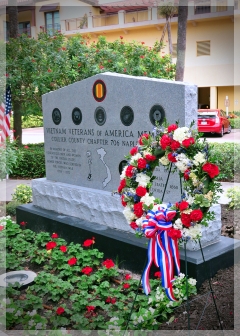
It is essential to remember and renew the legacy of Memorial Day, which was established in 1828 to pay tribute to individuals who have made the ultimate sacrifice to the United States and their families… [National Moment of Remembrance Act]

memorial dayContrary to popular belief, the purpose of our long holiday weekend is not to celebrate the end of school or the beginning of summer. More than a day for picnics and play, this is a day to honor those men and women who died while serving our country. Just as we stop to give thanks for our nation’s blessings on Thanksgiving, Memorial Day is the time we should stop to give thanks for the people who sacrificed their lives to makes those blessings possible.

When a group of school children touring our nation’s capital in May of 1966 were asked the meaning of Memorial Day, they said it was the day the city pools opened! After a survey that same month revealed that only 28% of adult Americans knew the significance of this national holiday, the idea for a moment of remembrance was born. Four years later, Congress passed the National Moment of Remembrance Act that designated a “moment of remembrance” at 3:00 PM (local time) every Memorial Day. In honor of our fallen warriors, people are asked to pause from whatever they are doing for one minute of silent remembrance and respect.

Sadly, this national moment doesn’t seem to be common knowledge and we’re usually too busy grilling hot dogs and hamburgers, splashing in the pool, planting flowers, playing ball, sitting in the shade with a cool drink, or watching sports to officially observe our national holiday. Rather than replacing other Memorial Day events, this observance is a simple way to put the memorial back into the day. If actually observed, these 60 seconds when all Americans honor those who died in service to our country could be a rare moment of national unity (something that seems to be in short supply these days).

While much is wrong with our country, there is much more that is right. We can worship freely or freely choose not to worship. We can read the books we want to read and say pretty much whatever it is we want to say. We can peaceably assemble and loudly complain to the government and everyone else. We can write letters to the editor, run for public office, Tweet, Instagram, and blog. We have mail that is uncensored and access to the Internet and everything on it. We can choose the television shows and movies we watch, the music and political commentators we hear, and the newspapers and magazines we read. If arrested, we have the right to a speedy and public trial by an impartial jury and to confront any witnesses against us. We enjoy a level of freedom that is unknown in much of the world. That freedom, however, came at a terrible cost. Today, if only for a minute, let us remember the heroes who made all of that possible. In December, we’re reminded to keep the “Christ” in Christmas. How about putting the “memorial” back into Memorial Day? One minute, however, is nowhere nearly enough time to honor those who died for us.

Heavenly Father, thank you for those men and women who made it possible for us to enjoy the rights we so often take for granted. May we bear in mind that Memorial Day is not a tribute to summer but rather a tribute to those brave souls who died in the pursuit of our freedom and peace. Thank you for their courage, honor, service and sacrifice.

That we here highly resolve that these dead shall not have died in vain; that this nation, under God, shall have a new birth of freedom; and that government, by the people, for the people, shall not perish from the earth. [Abraham Lincoln, Gettysburg Address, 1863]

For the greatest love of all is a love that sacrifices all. And this great love is demonstrated when a person sacrifices his life for his friends. [John 15:13 (TPT)]

Copyright ©2021 jsjdevotions. All rights reserved.


ZEALOTS AND ESSENES (Who’s Who – 2)

They then entered the city (‘they’ here means Peter, John, James, Andrew, Philip, Thomas, Bartholomew, Matthew, James the son of Alphaeus, Simon the zealot, and Judas (the son of James) and went to the upstairs room where they were staying. [Acts 1:13 (NLT)]

hong kong orchidAlong with the Pharisees and Sadducees, the two other major sects or philosophies mentioned by the historian Flavius Josephus were the Zealots and Essenes. Religion and politics were one and the same in ancient Palestine and the Zealots movement originated with Judah/Judas of Galilee and Zadok the Pharisee. Their most basic belief was that any and all means were justified if it led to political and religious liberty for the Jews. When Judah was killed while leading a revolt around 6 AD, his followers fled to the desert and continued in guerilla warfare against the Romans.

Josephus reported that the Zealots agreed in most things with the Pharisees “but they have an inviolable attachment to liberty, and say that God is to be their only Ruler and Lord.” The two groups interpreted their suppression by Rome differently. Seeing their oppression as God’s punishment for the nation’s sins and His call to repentance, the Pharisees were confident that once the nation became committed to following the law, God would intervene and their nation would be restored (explaining their rigorous enforcement of the Law). The Zealots, however, believed that the Jews had to reject any ruler other than Jehovah and considered any cooperation with their Roman rulers as traitorous. Fiercely opposed to Rome’s occupation of Judea, they believed God would deliver them with the sword. Regarding the Greek language a symbol domination and paganism, Zealots were opposed its use. Wanting to incite rebellion, they refused to pay taxes, harassed and murdered government officials, and were known to violently attack Jews if they thought them to be collaborators or heretics. There probably were no other groups so diametrically opposed than Zealots and tax collectors and yet among Jesus’ disciples were Simon the Zealot and Levi/Matthew, the tax collector. What a beautiful demonstration of Jesus’ power that, rather than hate each other, these men loved Jesus and one another!

The Zealots, thinking Jesus would incite war against the Romans, initially may have welcomed Him as the Messiah. As His ministry continued and they realized the Kingdom of which Jesus spoke was not a political one and would not come about by military victory, they may have seen Him as a false Messiah. It is speculated that, like Simon, Judas was a Zealot and that his disappointment in a non-military kingdom is what led to his betrayal of the Lord. Barabbas, the criminal whose place Jesus took that day on Golgotha, was a Zealot who’d been sentenced to death because he’d committed murder during an uprising.

The Essenes are the fourth group cited by Josephus who reported they “shun the pleasures as vice, they consider self-control and not succumbing to the passions virtue.” Originating around 150 BC and disappearing after the Temple’s destruction, they’re not directly mentioned in Scripture. Rather than coexist with or fight Rome, the Essenes chose to withdraw from Rome entirely. Disgusted by both the Pharisees and Sadducees, they abandoned Jerusalem in protest against the worldliness of the city, the way the Temple was run, and Roman rule. A monastic Jewish community with strict membership requirements and the communal ownership of their possessions, the Essenes lived in the desert. Living austere lives of poverty, abstinence, and ritual purity, they didn’t sacrifice animals, own slaves, or make oaths. The Essenes believed God would send two messiahs from within their sect. Rather than resurrection, they believed in an immortal soul and, rather than man’s free will, they credited all things to God. When the Apostle Paul warned the Colossians about man-made philosophies, he may have been warning them about some of the Essenes’ unorthodox beliefs. Because of their ascetic lifestyle and their belief that ritual immersion in water (baptism) was an indication of spiritual change, it is speculated that John the Baptist was an Essene but that is merely speculation.

Fortunately, the Essenes were copyists who preserved the texts of the Hebrew Scriptures. It is thought that the Dead Sea scrolls, found by shepherds in Qumran in 1946 or 47, were recorded and stored by an Essene community. Among the scrolls, we have a nearly all the Hebrew Bible along with Essene commentaries on many of them. Even though they are never specifically mentioned in Scripture, they played an essential role in preserving the Word for future generations.

While we tend to think of 1st century Judaism as a unified faith, we find that it was as divided as the Christian church is today.  And, just as Paul warned the Colossians about false philosophies, we must be cautious as well.

Watch out that nobody uses philosophy and hollow trickery to take you captive! These are in line with human tradition, and with the ‘elements of the world’ – not the king. In him, you see, all the full measure of divinity has taken up bodily residence … Don’t let anyone rule you out of order by trying to force you into a kind of fake humility, or into worshipping angels. Such people will go on and on about visions they’ve had; they get puffed up without good reason by merely human thinking, and they don’t keep hold of the Head. It’s from him that the whole body grows with the growth God gives it, as it’s nourished and held together by its various ligaments and joints. [Colossians 2: 8-9,18-19 (NTE)]

Copyright ©2021 jsjdevotions. All rights reserved.

OUT OF CONTEXT

The instructions of the Lord are perfect, reviving the soul. The decrees of the Lord are trustworthy, making wise the simple. The commandments of the Lord are right, bringing joy to the heart. The commands of the Lord are clear, giving insight for living. [Psalm 19:7-8 (NLT)]

gullIf I read a novel simply by searching through it for a few choice sentences, I’d miss the whole plot! I could quote Scarlett’s last words “After all, tomorrow is another day,” but I wouldn’t know why she said it nor would I know why Rhett said he didn’t give a damn! If I picked out just a few sentences in A Tale of Two Cities, I’d never know why Dickens said, “It was the best of times, it was the worst of times,” or even the names of the two cities! While I might be able to quote Santiago’s belief that, ”A man can be destroyed but not defeated,” I wouldn’t know if that proved true without finishing The Old Man and the Sea. Reading only bits and pieces, I’d never know that it was an escaped convict, not Miss Havisham, who was Pip’s benefactor in Great Expectations, that Jane Eyre’s Mr. Rochester had a lunatic wife in the attic, or the identity of the killer in Agatha Christie’s And Then There Were None.

Since we don’t read novels haphazardly, I wonder why we tend to do that with the Bible. Rather than a work of fiction, it’s the Word of God! Moreover, we can get in trouble by reading out of context and basing our faith and lives on a few select verses. The story is told of a man, plagued by guilt, who sought spiritual guidance in his Bible. Opening it randomly to Matthew 27, he closed his eyes and placed his finger on the page. It came to rest on verse 5 in which the remorseful Judas went out and hung himself. Wanting clarification and further guidance, the man flipped to another page and randomly selected a new verse. It was Luke 10:37 when, following the parable of the Good Samaritan, Jesus said, “Yes, now go and do the same.” For that man, reading the Bible as a random series of verses and instructions had tragic consequences. We must be cautious of thinking of Scripture as a faith-based version of a Magic 8-ball. Opening it randomly and putting a finger on a verse to select our course of action is not its purpose.

In spite of its 66 books, 1,189 chapters, and 31,173 verses, the Bible is not a series of unconnected short stories or unrelated verses—it is the continuous story of God’s relationship to man and deserves to be read that way. Individual verses aren’t meant to be read alone; they need to be read in context. The chapter and verse numbers are there solely to make it easier for us to locate passages and are no more part of the Bible than are its page numbers. If we’re not going to read at an entire chapter at a sitting, we’d be wise to follow the advice found in the Talmud: “He that reads in the Torah may not read less than three verses.” [m. Meg. 4.4]

The Word of God well understood and religiously obeyed is the shortest route to spiritual perfection. And we must not select a few favorite passages to the exclusion of others. Nothing less than a whole Bible can make a whole Christian. [A.W. Tozer]

You have been taught the Holy Scriptures from childhood, and they have given you the wisdom to receive the salvation that comes by trusting in Christ Jesus. All Scripture is inspired by God and is useful to teach us what is true and to make us realize what is wrong in our lives. It corrects us when we are wrong and teaches us to do what is right. God uses it to prepare and equip his people to do every good work. [2 Timothy 3:15-17 (NLT)]

Copyright ©2021 jsjdevotions. All rights reserved.

SHAVUOT

At the Festival of Harvest, when you present the first of your new grain to the Lord, you must call an official day for holy assembly, and you may do no ordinary work on that day. [Numbers 28:26 (NLT)]

fruitAt sunset yesterday, the Jewish feast of Shavuot began. Originally known as Festival of Harvest or First Fruits, Shavuot is the second of the three pilgrimage festivals given to the Israelites. The first was that of Unleavened Bread (Passover) and the third was the Final Harvest or Ingathering (Sukkot or Tabernacles). Originally, all three festivals were tied to the harvest with Passover at the beginning of the barley harvest, Shavuot seven weeks later at the start of the wheat harvest, and Sukkot at the last harvest of the season. For a nation who’d left Canaan because of famine, spent four hundred years in a foreign land (much of it as slaves) and then another forty years as nomads, the promise of becoming a people with land of their own, who could plant and harvest for themselves, must have been almost inconceivable.
Two distinct rituals were observed on Shavuot. In gratitude for the harvest, two loaves of bread baked from the new crop of wheat, a bull, seven lambs, two rams, and a goat were offered. In the second ritual, the choicest of the harvest’s first fruits were presented to the priests as these words from Deuteronomy were said: “With this gift I acknowledge to the Lord your God that I have entered the land he swore to our ancestors he would give us.” [26:3] Continuing with verses 5 through 10, the worshiper then acknowledged God’s faithfulness in bringing the people out of Egypt and in keeping His promise to the patriarchs to bring His people to a land “flowing with milk and honey.” Because it fell a full seven weeks (50 days) after the Passover, this festival became known as the Feast of Weeks (Shavuot).

Ten days after Christ’s ascension, during Shavuot, a group of believers gathered together in Jerusalem. A powerful wind roared and flashes of fire appeared and “everyone present was filled with the Holy Spirit.” Because of the uproar, a crowd gathered and Peter preached the gospel to them. That day, 3,000 people believed and were baptized; these new believers were the first fruits of the gospel harvest. Because it occurs fifty days after Easter, Christians call this day Pentecost, from the Greek meaning “fiftieth.” Because of the difference between the Jewish and Gregorian calendars, however, 2021’s Shavuot began last night but Pentecost will not occur until Sunday, the 23rd.

Because rabbinic tradition held that the Law was given on Mt. Sinai exactly seven weeks from the beginning of the Exodus, the day’s emphasis gradually moved from the first fruits of the harvest to the Torah. By the 2nd century, with the Temple destroyed, what began as a harvest festival commemorated the giving of the law at Mt. Sinai.

Today, Shavuot celebrates Israel’s bond because of the Torah and Pentecost celebrates Christians’ bond because of the Holy Spirit. Nevertheless, when looking at the origin of this ancient Jewish festival and its acknowledgement that God fulfilled His promise to bring His people into the Promised Land, I think of the many Messianic promises of the Old Testament. Rather than freeing us from slavery in Egypt, God faithfully fulfilled His promise and freed us from slavery to sin. Rather than physically bringing us into Canaan, He brought the Kingdom of God to us. Granted, the story is not over and the Kingdom is not fully realized, but we are in the land He promised and the best is yet to come! Let us be thankful and praise God for all He’s given us!

For the Lord your God is bringing you into a good land of flowing streams and pools of water, with fountains and springs that gush out in the valleys and hills. It is a land of wheat and barley; of grapevines, fig trees, and pomegranates; of olive oil and honey. It is a land where food is plentiful and nothing is lacking. It is a land where iron is as common as stone, and copper is abundant in the hills. When you have eaten your fill, be sure to praise the Lord your God for the good land he has given you. [Deuteronomy 8:7-10 (NLT)]

Copyright ©2021 jsjdevotions. All rights reserved.

SABBATH CONFLICTS

What can we bring to the Lord? Should we bring him burnt offerings? … No, O people, the Lord has told you what is good, and this is what he requires of you: to do what is right, to love mercy, and to walk humbly with your God. [Micah 6:6a,8 (NLT)]

In the Holy Place of the Tabernacle, there was a table on which the showbread was placed. Consisting of twelve loaves of unleavened bread stacked in two columns, it remained on the table for a week. When new loaves replaced it, the showbread was removed and eaten by the priests in the sanctuary. Because it was holy, no one other than a priest could eat it. Nevertheless, when David and his hungry men arrived in the town of Nob where the Tabernacle was located, Ahimelech the priest gave them the previous week’s showbread once he was assured the men were ceremonially clean. Having no other food for the famished men, the priest understood that feeding them was more essential than compliance with the ceremonial law. He knew the laws of compassion, mercy and love took precedence over ritual.

A thousand years later, Jesus and his disciples were walking through a grain field on the Sabbath when the hungry men picked some heads of grain and ate them. The Pharisees charged them with breaking the law, but not because they were picking grain in someone else’s field. It was perfectly permissible to do what they’d done any other day of the week but they’d done it on the Sabbath! Although harvesting grain was one of the thirty-nine categories of forbidden work on this day of rest, it’s not as if they were reaping sheaves of grain! Actually, the hungry men were doing no more work than someone feeding himself at a table. Moreover, Jewish tradition prohibited fasting on the Sabbath.

That subtle difference, however, was lost on the Pharisees who couldn’t see beyond the technicalities of the law. After Jesus reminded them of the story of David and the sacred loaves, He pointed out that they clearly didn’t understand God’s words in Micah about preferring mercy to sacrifices and that compassion was as important as the Law. Declaring Himself Lord over the Sabbath, Jesus then claimed authority over how the Sabbath was to be observed. To the Pharisees, however, His words were heresy.

Soon after, the Pharisees continued to exhibit their lack of mercy when they condemned Jesus for healing a man on the Sabbath. Jesus exposed their inconsistency by asking if they could save an animal on the Sabbath and then pointing out that a man was more valuable than a sheep. The laws of the Sabbath were never meant to release people from the need for mercy, whether to feed the hungry or relieve the misery of the afflicted.

Jesus regularly came into conflict with the Pharisees regarding the Sabbath but His issue wasn’t with the Sabbath; it was with the Pharisees. God didn’t create the Sabbath before making man! After creating humanity, God knew people would need a rest from the burden of work so He created the Sabbath for them. “The Sabbath,” Jesus explained, “was made to meet the needs of the people, and not the people to meet the requirements of the Sabbath.”

While this sacred day of rest and worship should have been viewed as a gift from God, by Jesus’ day, it had been complicated with an extensive list of restrictions (along with a variety of devious ways to skirt them). The Pharisees, however, had built their lives around rules and regulations and when Jesus questioned their authority, they called a meeting to plot His death. They didn’t understand that our God is a God of love not ritual, a God of people not regulations, a God who asks us to do is what is right, love mercy, and walk humbly with Him.

And I know it is important to love him with all my heart and all my understanding and all my strength, and to love my neighbor as myself. This is more important than to offer all of the burnt offerings and sacrifices required in the law.” [Mark 12:33 (NLT)]

Copyright ©2021 jsjdevotions. All rights reserved.