
All the believers devoted themselves to the apostles’ teaching, and to fellowship, and to sharing in meals (including the Lord’s Supper), and to prayer. [Acts 2:42 (NLT)]
 It was while Jesus and the disciples were eating the Passover meal that the Lord instituted the Eucharist. The 1st century church followed His lead by celebrating the Eucharist in the context of a communal meal. The wealthier contributed the food and portions were set aside for the sick, poor, and widowed. Nourishing both body and soul while building a sense of community, these fellowship meals were known as agape or love feasts!
Although Luke wrote of the church sharing “their meals with great joy and generosity,” it didn’t go as smoothly in Corinth. Instead of gathering all the food together, dividing it among the participants, and eating together, people only ate and drank what they brought for themselves and some over-indulged in wine! The wealthy ate more and better than the poor and some even went hungry. Rather than building a sense of community by erasing the differences in social class, such rudeness and disparity caused division and hard feelings within the church and the Apostle Paul took the Corinthians to task for neither sharing nor caring when they gathered. [1 Cor 11:20-34] 2 Peter 2:13 and Jude 12 also refer to these fellowship meals when warning about the false teachers who attended such gatherings.
Although the practice of agape meals declined by the 4th century, something similar to the agape, love feast, or fellowship meal can be found in the modern church potluck. While “potluck” initially meant the meal an unexpected guest might get—the luck of whatever was in the pot—during the Depression years, it took on the meaning of a communal meal at which all attending brought a dish to share. Our northern church hosted mid-week Lenten potlucks but our Florida church always hosts a potluck the week before Thanksgiving Day.
Last week’s dinner got me thinking about the way a potluck resembles the Church. A potluck means a vast assortment of food prepared and served in any number of ways. Dishes will range from pierogis and baked ziti to empanadas and Swedish meatballs. Sides will include everything from Waldorf salad, deviled eggs, and baked beans to Jello, scalloped potatoes, Brussels sprouts, and macaroni salad. Desserts will range from peanut butter cookies and chocolate cake to lemon bars and apple pie. Although it seems an odd mix, if everyone brought the same food, the meal would be boring and, if everyone’s offerings were dumped into one pot, it would be even worse! By allowing each dish to reflect its own texture, color, and flavor, this strange assortment of food comes together to make a cohesive and delightful meal. While some may prefer apple pie to pumpkin or mac ‘n cheese to green bean casserole, everyone’s offerings are welcomed, appreciated, and respected.
That diversity of food reflects the diversity of people within the Church—the regions from which we come, our nationalities, and our diverse backgrounds, preferences, and traditions. Just as a potluck encompasses a variety of food, the church consists of a collection of unique people as different from one another as is ham from a vegan casserole! Each person brings their distinctive personality, ethnicity, interests, gifts, and politics. While we may have our preferences, everyone is welcomed, appreciated, and respected. When diverse individuals come together as a church, they become the body of Christ in the same way a potluck’s various dishes became a cohesive meal! It’s not their sameness that unites Christians—it’s their love of Jesus!
The Christian’s love for his neighbor along with the generosity, hospitality, and fellowship found in Christ’s church are seen in a potluck. Each dish is prepared with love and care and everyone brings much more than they possibly could consume themselves. Unlike the Corinthians, they bring excess food with the express purpose of sharing it (and any leftovers) with others! Everyone’s gifts are as welcome in the Church as they are at a potluck! No one eats alone at a potluck and no one is alone in the Church—we are blessed by our brothers and sisters in Christ. At a potluck, even when we don’t know someone at our table, by the time the meal is over, we will have dined with friends! In the same way, when we come to the Lord’s table, we are one in the Spirit with all who partake of the Eucharist.
A potluck, like the Church, nourishes both body and soul! While the agape or love feast is no longer a regular part of Christian worship, you’re sure to find both love and feast in Christ’s Church—especially at a potluck! Let us break bread together.
 Without a globe, I allowed a random number to decide the nation for which I’d pray this week. Number 19 was Benin and I’m embarrassed to admit knowing nothing about this narrow strip of land in West Africa between Nigeria and Togo. These three nations once were part of the kingdom of Dahomey and it was in Dahomey that the ancient practice of voudon/vodun/vodou (commonly called voodoo) began. Now a republic, Benin is a severely underdeveloped nation, rife with corruption, where the life expectancy for men is just 60! A little over 40% of the population are Christian, nearly 30% Muslim, about 17% practice voodoo, and another 10% follow other indigenous/animistic religions. As a side note, ARDA (The Association for Religion Data Archives) stated that many of those identifying as Christian also practice voodoo.
 Pastor Chris recently shared a devotion she read in which the author gives his office globe a gentle spin each morning. After a moment or two, he places a finger on the globe, stops its revolution, and prays for the people wherever his finger lands. Chris said she’s adopted this practice but, to make it more than a quick uninformed prayer, she does some research on the country’s needs and religions to guide her petitions.
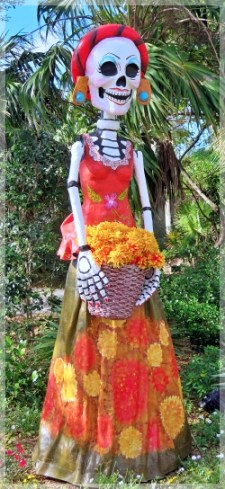 All Saint’s Day for the Western Christian Church is November 1. While Roman Catholic and Orthodox church observances tend to focus on those who’ve been canonized saints, the Protestant church has a different approach to this holy day. Whether living or dead, it regards all Christian believers as “saints” and part of the Communion of Saints we speak of when reciting the Apostles’ Creed. For Protestants, All Saint’s Day is a time to commemorate Christian family members, church members, and friends who have died. At our liturgical church, there will be a solemn reading of the names of all church members who passed during the year. After each name is read, the bell will toll.
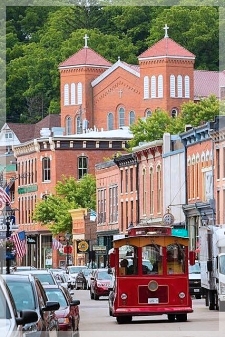 Our cottage was near a charming little town known for its history, architecture, and resorts. A popular summer destination, its Main Street was flooded on weekends with tourists checking out the various stores. Chef I’s shop usually was bursting with browsers enjoying samples of his salsas, hot sauces, mustards, BBQ sauces, seasonings, rubs, marinades, fruit preserves, salad dressings, and dips. Although some tasters purchased a jar or two to take back home, they were just browsers. Having purchased something on a whim, they wouldn’t return unless they happened to come back to town.
 In the years following the exiles’ return to Judah and the rebuilding of the Temple, adherence to the Law grew lax. Knowing how to live a Jewish life depended on knowing the commandments of the Torah but the people had drifted away from God and His word and were committing the same sins that got them exiled! More than fifty years after the Temple’s rebuilding, Ezra arrived in Jerusalem. As a priest and teacher of the law, Ezra was shocked to find such disobedience. He tore his clothes and pulled his hair in sorrow before kneeling in prayer. He led the people in prayers of confession and repentance after which they swore a solemn oath to follow the Lord’s commands.
