FAIRY TALE ENDINGS

Can anything ever separate us from Christ’s love? Does it mean he no longer loves us if we have trouble or calamity, or are persecuted, or hungry, or destitute, or in danger, or threatened with death?. [Romans 8:35,38-39 (NLT)]

blue flag irisAs a child, I loved the way fairy tales always ended with these words: “and they lived happily ever after.” Real life, however, is anything but a fairy tale. I suspect that after Cinderella and the Prince had two kids, she went right back to cooking and cleaning all day and never went to another ball. Prince Eric’s fondness for ahi tuna sushi and sashimi led to his divorce from Ariel for irreconcilable differences. Snow White ended up under arrest for dwarf exploitation and trafficking in blood diamonds while Barbie, who turned 60 last year, keeps undergoing plastic surgery in an unsuccessful attempt to regain her youth. Because of Ken’s bad investments, their dream house went into foreclosure and their dream cars, boat and motor home were repossessed. In real life, no fairy godmother shows up with a magic wand to turn pumpkins into carriages, mice into horses, and our sweetest dreams into reality.

The “grown-up” life we expected at age ten probably bears little resemblance to our present reality. Naively, we were sure that life would be easy for us. We envisioned a life that went according to plan, never expecting that circumstances beyond our control could leave a loved one dead or take away our business. If we anticipated marriage, we didn’t picture things like infidelity or “irreconcilable differences.” We certainly didn’t consider the possibilities of job loss, unpaid bills, or bankruptcy. Piles of laundry, dirty dishes, or having to work two jobs never entered our thoughts. If we imagined children, they didn’t have cerebral palsy, autism, Down’s or an addiction. If we even visualized ourselves as senior citizens, we’d be athletic, slender, healthy and as attractive as we were at twenty. We never imagined being alone, needing a walker, artificial hips or cardiac rehab. Nor did our mental picture have age spots, wrinkles, a bald spot or dementia.

If there’s anything we’ve learned from this pandemic, it’s that life doesn’t go according to our plan. It isn’t like a private train ride in which we set the destination, map the route, and schedule the stops. It’s more like we’re hitch-hiking across the country with all of the delays, detours, rejections, good and bad encounters, and unscheduled stops that come with thumbing a ride. Life is filled with the unexpected and, like a successful hitch-hiker, we just have to make the most of what comes our way.

Rest assured that we are never alone on this journey. Life doesn’t go according to our perfect plan but it does go according to God’s! As the Apostle Paul told the Romans: “Nothing can ever separate us from God’s love.“ Rest assured, as a believer in Jesus, there really is a “happily ever after!”

That is why we never give up. Though our bodies are dying, our spirits are being renewed every day. For our present troubles are small and won’t last very long. Yet they produce for us a glory that vastly outweighs them and will last forever! So we don’t look at the troubles we can see now; rather, we fix our gaze on things that cannot be seen. For the things we see now will soon be gone, but the things we cannot see will last forever. [2 Corinthians 4:16-18 (NLT)]

Copyright ©2020 jsjdevotions. All rights reserved.

IN GOD’S TIME

So humble yourselves under the mighty power of God, and at the right time he will lift you up in honor. Give all your worries and cares to God, for he cares about you. [1 Peter 5:6-7 (NLT)]

Humility is the proper estimate of oneself. [Charles Spurgeon]

silk floss tree“Haven’t they ever seen this show? They’re sure to fail!” I exclaimed as we watched the two chefs attempt to make panna cotta in the final round of Chopped. An Italian dessert made of sweetened cream, gelatin, and flavorings, panna cotta usually requires a minimum of four hours to set. In spite of chefs using quick process gelatin, liquid nitrogen, or the blast chiller to speed things up, I don’t think there’s ever been a successful panna cotta on the show. In fact, Chopped judge chef Alex Guarnaschelli calls panna cotta “Chopped suicide!” Nevertheless, these two chefs were sure they would be the ones who could pull it off in the allotted 30-minutes. As expected, instead of ending up with a dessert resembling a Jell-O mold made with cream, they both served something more like melted ice cream. I wondered what made them think they were that much better than any of the other chefs in the twelve years the show has aired. Apparently, competitive chefs tend to be a little short in the humility department!

We may not be chefs who think they’re more skilled than everyone else but, sometimes, we think we’re more skilled than God! As unwilling as the chefs were to accept that gelatin needs time to set, we’re often as unwilling to wait for God to do His work, His way, in His own time. So, rather than humbly admitting that God knows best, we try to be God and make things happen our way and in our time.

“Pray as if everything depends on God; work as if everything depends on you,” often is attributed to St. Ignatius and that advice may be wise in some cases. Nevertheless, there are times when we must humbly step back and leave it all to God. Just as it’s impossible to make a panna cotta in thirty minutes, we can’t make other people change. We can’t make them reconcile, forgive, love, heal, believe, or get sober but, sometimes, we act as if we can! Instead of using the blast chiller or extra gelatin, we try to nudge things along with intimidation, meddling, prying, interference, or concealment. Take it from one who’s learned the hard way, when we think our way is better and faster than God’s, the result is far worse than a runny panna cotta.

A certain amount of arrogance probably is necessary in cooking competitions. The chef needs to think he can achieve the impossible and, someday, a chef may prove victorious over 30-minute panna cotta. Prayer, however, is not a competition; it is a lesson in humility. It is admitting our powerlessness and handing the challenge to God for Him to deal with in His own time and way. Victory alone comes from Him!

We tend to use prayer as a last resort, but God wants it to be our first line of defense. We pray when there’s nothing else we can do, but God wants us to pray before we do anything at all. Most of us would prefer, however, to spend our time doing something that will get immediate results. We don’t want to wait for God to resolve matters in His good time because His idea of “good time” is seldom in sync with ours. [Oswald Chambers]

I wait quietly before God, for my victory comes from him. … Let all that I am wait quietly before God, for my hope is in him. He alone is my rock and my salvation, my fortress where I will not be shaken. My victory and honor come from God alone. [Psalm 62:1,5-7a (NLT)]

Copyright ©2020 jsjdevotions. All rights reserved.

HALT

Jesus replied, “I am the bread of life. Whoever comes to me will never be hungry again. Whoever believes in me will never be thirsty.” [John 6:35 (NLT)]

chicoryAlthough they were twins, Esau and Jacob were as different from one another as oil and water. Esau, the first born, was impulsive. An outdoorsman and hunter, he was his father’s favorite. Jacob was the quiet (and cunning) stay-at-home mama’s boy. Esau would have watched the Outdoor and Sportsman Channels while Jacob would have watched Food Network and HGTV.
Returning exhausted from one of his adventures and claiming he was starved, Esau asked for some of Jacob’s stew. Exploiting his brother’s hunger, Jacob offered to trade the stew for Esau’s birthright. The stew must have smelled delicious because Esau, who should have been outraged at the idea, accepted his brother’s offer. Foolishly, he relinquished his double share of their inheritance along with all the privileges and responsibilities due the eldest son simply to gratify his hunger.

Esau’s story reminds me of the acronym HALT which stands for hungry-angry-lonely-tired. Halt is what we should do before making a decision if we’re feeling any of those things! Esau was both tired and hungry when he made that life-altering decision. Granted, Jacob’s insistence on making a bargain before feeding his own brother was both sly and selfish of him. Still, the fault for that decision falls solely on the shoulders of Esau.

Esau wasn’t starving; his empty stomach may have been growling but he wasn’t malnourished or wasting away. Nevertheless, he was far more interested in immediately gratifying his hunger with a bowl of lentil stew than the ramifications of his choice. Like Esau, when we’re hungry, angry, lonely, or tired, we look to quickly meeting our needs without thinking about the consequences. In short, we’re blind to the enemy’s tactics and vulnerable to sin.

Our hunger may simply be for food, as it was for Esau, but it also can be for things like money, fame, attention, understanding, or acceptance. Simon the Sorcerer, for example, was so hungry for the power and authority of the Holy Spirit that he tried to buy it from Peter and John.

The time to make decisions is not when our emotions are on high alert. Acting in anger is dangerous and can lead to name calling, broken relationships, criticism, belittling, destruction, and even violence. Anger is what caused Moses to rashly smash stone tablets that had been written on by the hand of God! When insulted by Nabal, an enraged David immediately set out to kill every man in Nabal’s household. Fortunately, Abigail stepped in, pled for mercy, and cooler heads prevailed.

Making decisions when we’re lonely isn’t a good idea either. Feeling abandoned and alone, Elijah wanted to lie down and die. Being lonely, however, doesn’t necessarily mean being alone. We can feel isolated and disconnected even when surrounded by plenty of people. Perhaps, in spite of his wives and concubines, it was that sort of loneliness that caused David to desire Bathsheba. Halting helps us remember that God always is with us.

Being tired can be physical exhaustion, as it was with Esau, but it also can be a sense of being overwhelmed and drained. For forty years, Moses faithfully led the Israelites but it was his weariness and exasperation at their constant rebellion that caused him to disobey God and strike the rock at Kadesh. Sadly, his impulsive act meant the weary man never entered the Promised Land.

It’s been said that the difference between school and life is that, in school, you’re taught a lesson and then take a test but, in life, you’re given a test that teaches you a lesson! Let us learn the lesson about halting without having to make a mistake like Esau’s. As the old saying goes, “act in haste, repent in leisure.” Poor decisions come when we’re hungry, angry, lonely or tired. When you’re in one of those situations, halt and pray instead!

We are pressed on every side by troubles, but we are not crushed. We are perplexed, but not driven to despair. We are hunted down, but never abandoned by God. We get knocked down, but we are not destroyed. [2 Corinthians 4:8-9 (NLT)]

Be still in the presence of the Lord, and wait patiently for him to act. Don’t worry about evil people who prosper or fret about their wicked schemes. [Psalm 37:7 (NLT)]

Copyright ©2020 jsjdevotions. All rights reserved.

DO NOT DISTURB

clam pass birds naples flBut to you who are willing to listen, I say, love your enemies! Do good to those who hate you. Bless those who curse you. Pray for those who hurt you. If someone slaps you on one cheek, offer the other cheek also. … Do to others as you would like them to do to you. [Luke 6:27-29,31 (NLT)]
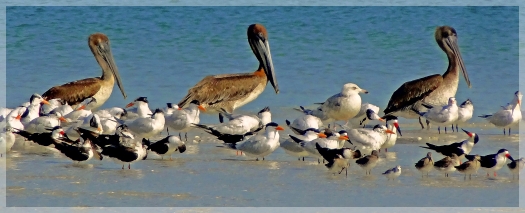
The snowbirds are back; not the retirees who arrive in cars or on planes but the migratory birds, some of whom flew more than 3,000 miles to get here. Their long flight takes a tremendous toll on their bodies. By the time they reach our beaches, they’re exhausted and hungry and many have lost half their body weight. Before I understood the trials they endure in migrating, I never gave it a thought if I happened to disturb them while walking the beach. Granted, it’s a beautiful sight to see hundreds of birds take wing at once but, every time they’re flushed by someone on the beach or a passing boat, precious reserves of energy are used and their nests are left unattended. Now that I understand the birds’ challenges, I am more considerate of their needs. When walking the beach, I keep my distance to avoid unsettling them.

Although they may not be as endangered, hungry, and exhausted as migratory birds, many people have taken a long and arduous journey to get where they are today. While some end up better for the journey, others end up bitter, rude, angry, or demanding. Just as I hadn’t thought about the challenges facing the birds, I rarely pause to consider the circumstances these difficult or toxic people must have encountered to leave them so embittered, short-tempered, or uncivil. While trials, loss, and pain never excuse bad behavior, they often cause it. Not everyone believes in God, has experienced the joy that comes from following Jesus, possesses His peace, or knows they are loved and forgiven.

In these stressful and divisive times, hostility and boorishness seem to be on the rise. Admittedly, upon encountering a toxic person, self-control, patience, kindness, love, and courtesy often fly right out the window. Rather than turn the other cheek, we want to give as good as we got. Retaliation, however, only begets more of the same. Studies have shown that incivility and rudeness are as contagious as yawns, smiles, laughter, and viruses! As followers of Jesus, our job is to make sure we don’t contribute to the problem. We’re expected to treat people with kindness and consideration, not because they’re nice people who deserve it, but simply because it’s what Jesus would do! Hopefully, our even-tempered behavior will make the rest of their journey easier.

We must choose to break the chain of incivility with love, gentleness, a forgiving heart, and by praying for the offender. It helps to remember that difficult people carry a lot of baggage with them and their quarrel, hostility, or complaint may have nothing to do with us. Remembering that we know nothing of their hardships, pain, or fear, let’s cut them a little slack and give them as much space as possible. Like the migratory birds, they’ve had a difficult journey and are struggling to survive the only way they know. “Do not disturb” is wise advice in both instances!

Be kind, for everyone you meet is fighting a hard battle. [attributed to Plato]

Make allowance for each other’s faults, and forgive anyone who offends you. Remember, the Lord forgave you, so you must forgive others. Above all, clothe yourselves with love, which binds us all together in perfect harmony. And let the peace that comes from Christ rule in your hearts. [Colossians 3:13-15a (NLT)]

Copyright ©2020 jsjdevotions. All rights reserved.


HAPPINESS STARTS WITH A SMILE

We were filled with laughter, and we sang for joy. And the other nations said, “What amazing things the Lord has done for them.” Yes, the Lord has done amazing things for us! What joy! [Psalm 126:2-3 (NLT)]

Sometimes your joy is the source of your smile, but sometimes your smile can be the source of your joy. [Thich Nhat Hanh]

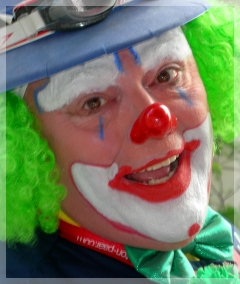
clownIn the Pearls Before Swine comic drawn by Stephen Pastis, Pig may be a little naïve but, sometimes, the sweet fellow has the right idea. In a recent strip, when asked why he was wearing an enormous hat decorated with a smiley face, he explained it was “the hat o’ great happiness” and he wore it as a way of sending happiness to others. I thought of Pig’s silly hat of happiness while viewing an ad made by Coca-Cola as part of their 2015 Belgian “Choose happiness” campaign.

It began with people walking into a subway tram. Among the commuters was a man who stood in the middle of a crowded car. Wearing ear buds and looking at his tablet, he suddenly erupted in laughter. Ignoring the stares of the people around him, he continued to laugh—not polite little giggles but loud and unembarrassed guffaws. Hidden cameras filmed the reactions of his fellow commuters. As his laughter increased, they began to smile and then their smiles turned into laughter. A promotional team from Coke revealed themselves and handed out cans of Coke with a leaflet linking laughter and happiness. The ad closed with the words, “Happiness starts with a smile, what are you waiting for?” followed by the hashtag “choosehappiness.” Filmed over two days on 17 trains and six different metro lines, the commercial brought laughter to over 4,000 commuters! Millions more have caught themselves laughing as they’ve viewed the video since it first aired. (You can find it on YouTube.)

Scientific studies actually have found that actions like yawning, smiles, and laughter are contagious. Because of a primitive reflex in the cortex of our brains, the urge to mirror another person is triggered by something called echophenomena: the automatic imitation of another’s words (echolalia) or actions (echopraxia). Moreover, other studies have found that a smile brings hidden blessings by releasing a cocktail of body chemicals that relax the body, lower the heart rate and blood pressure, decrease stress levels, and serve as antidepressants and mood lifters!

The joy we have in Jesus should be obvious and as contagious as any yawn, smile, laugh, or virus. Like Pig, we need to find ways to send happiness to others and we don’t need a silly hat or a fit of laughter on a train to do that. Just as the Lord smiles upon us, we must smile upon all who cross our path (even if that smile is hidden by a mask). We have to make that smile pass into the rest of our body: our face, eyes, voice, hands, and heart. Like Pig, let us find ways to send happiness and joy to those around us; we just might find our spirits lifting as we do!

Too often we underestimate the power of a touch, a smile, a kind word, a listening ear, an honest compliment, or the smallest act of caring, all of which have the potential to turn a life around. [Leo Buscaglia]

They longed for me to speak as people long for rain. They drank my words like a refreshing spring rain. When they were discouraged, I smiled at them. My look of approval was precious to them. [Job 29:23-24 (NLT)]

A cheerful look brings joy to the heart; good news makes for good health. [Proverbs 15:30 (NLT)]

Copyright ©2020 jsjdevotions. All rights reserved.

CHALLENGING CIRCUMSTANCES

How long, O Lord, must I call for help? But you do not listen! “Violence is everywhere!” I cry, but you do not come to save. Must I forever see these evil deeds? Why must I watch all this misery?” [Habakkuk 1:2-3 (NLT)]

bougainvilla

In Pearls Before Swine, a comic drawn by Stephen Pastis, the gentle, sweet, and somewhat dim-witted Pig has been struggling to maintain his cheerful disposition during the pandemic. He tried ignoring it all with a good book and a bucket of cheese while sequestered in his “comfy corner” of pillows and then attempted to erase the year entirely by throwing out his 2020 calendar. In the belief that “the only way out of these difficult days is to hug our way out!” Pig recently went door to door offering hugs. After being told that hugging wasn’t allowed because of the virus, he lamented, “These are merciless times.” Indeed they are and we can’t change them with a bucket of cheese (or a bottle of gin), denial, or hugs.

It’s a bad situation and may well get worse before it gets better. We could do as Pig did in one comic—close our eyes, cover our ears, and sing “lalala” whenever there’s bad news but ignoring bad news won’t help. Eventually, we have to face reality and hear what it has to say. Recently, the naïve Pig asked the wise one on the hill, “When will things get better?” His response was, “When you decide they get better.” Pig questioned what he meant and the man answered, “That you can’t control events, but you can control your reaction to those events.” Disappointed, Pig said, “I was hoping he’d just say Tuesday.” Yes, the answer is disappointing but it’s true. The naïve Pig was told what we, as Christians, should know: circumstances do not have to determine our mindset!

This isn’t the first time life has presented us with circumstances beyond our control and it won’t be the last. The book of Habakkuk begins with a complaint much like Pig’s. Wanting to know when things will get better, the prophet cries, “How long, O Lord, must I call for help?” Looking at the troubles surrounding him, he wonders if God has everything under control and questions God’s goodness. God’s answer is to wait patiently and trust Him.

Like Pig, Habakkuk doesn’t completely understand. Nevertheless, he chooses to look beyond the difficult times and focus on God. His words conclude with a psalm of faith, trust, and triumph. The situation is still as bad at the end of the book as it was at the beginning and yet the prophet’s words go from those of gloom to ones of glory. The only thing that changed was his mind! Like us, Habakkuk still didn’t know why or when, but he knew that he would rejoice in the Lord regardless of his circumstances.

Rather than focusing on our circumstances—circumstances not of our choosing or liking—let us focus on the God who is with us in these circumstances. As Christians, we must remember that we’re not defeated by loss, pain, worry, grief, injustice, or insults and we’re not overpowered by trials, difficult people, or even a pandemic! Things will get better when we decide they will: by accepting what we can’t control, controlling what we can, and trusting in the Lord!

Since we cannot change reality, let us change the eyes which see reality. [Nikos Kazantzakis]

Even though the fig trees have no blossoms, and there are no grapes on the vines; even though the olive crop fails, and the fields lie empty and barren; even though the flocks die in the fields, and the cattle barns are empty, yet I will rejoice in the Lord! I will be joyful in the God of my salvation! The Sovereign Lord is my strength! He makes me as surefooted as a deer, able to tread upon the heights. [Habakkuk 3:17-19 (NLT)]

Copyright ©2020 jsjdevotions. All rights reserved.