
Together, we are his house, built on the foundation of the apostles and the prophets. And the cornerstone is Christ Jesus himself. We are carefully joined together in him, becoming a holy temple for the Lord. [Ephesians 2:20-21 (NLT)]
We believe in…the holy catholic church. [Apostle’s Creed]
 When reciting the creeds as a youngster, I wondered why I said we believed in the catholic church when we didn’t go to one. My family didn’t attend the Church of the Nativity of the Blessed Virgin Mary, our priest was married, and our service was in English, so why did we attest faith in the catholic church? It wasn’t until my confirmation class that I clearly understood that the creeds weren’t referring to the Roman Catholic church. Coming from the Greek katholikos (derived from kath holos, meaning “throughout the whole”), catholic simply means universal! The term originates from the first century and the words of Ignatius of Antioch: “Where Jesus Christ is, there is the catholic church.”
The catholic church wasn’t founded by Peter, James, Paul, Clement, Ignatius, or Polycarp. It wasn’t founded by Augustine, Emperors Constantine or Theodosius, or Patriarch Michael Cerularius nor was it founded by reformers like Martin Luther, John Wesley, John Wycliffe, William Tyndale, or John Calvin. The catholic church was founded by Jesus! The “catholic” in the creeds simply confirms the universality of the entire Christian church—a church that is not confined by ethnicity, race, geography, language, culture, or time. The catholic church shares a common confession of God’s redemptive work in Christ and our necessary response to it.
While we Christ followers may disagree on a number of secondary and minor issues like celibacy for the clergy or the day to worship, we agree about the essentials of faith and are united by the beliefs stated in the Apostles’, Nicene, and Athanasian creeds. It is this unity that transcends our various denominational differences. Our brothers and sisters in Christ may belong to different churches and worship in different ways, but we all are members of the holy catholic church.
Nevertheless, some still mistake catholic with the small “c” for (Roman) Catholic with the capital “C.” To avoid any confusion, some Protestant churches prefer to say “holy Christian church” when reciting the creeds but it’s the same thing. Regardless of the term used, the catholic church is what remains when all the Christian church buildings burn down and the priests and ministers all leave town.
Sadly, however, Christians sometimes forget that we’re in the same family. A friend attended the same church for nearly two decades and, as one of the parish’s “prayer warriors,” she received a weekly list of prayer requests. Within a week of her quietly changing to another Christian church, she stopped getting the list. She contacted her previous pastor and, after pointing out that her love for her brothers and sisters in Christ did not stop when she changed her place of worship, she respectfully asked to keep receiving the prayer list so she could continue offering prayers for their needs and praises for their blessings. Unfortunately, her request fell on deaf ears. Perhaps, just as I did when a child, the pastor confused one’s place and manner of worship with what it means to be part of the catholic church.
Indeed, wherever Christ is, there we find the church. Without a doubt, Jesus tells us to pray and why anybody would arbitrarily decide who is allowed to pray for someone or whose prayers God will hear is beyond me. I’ll gladly welcome any prayer sent on my behalf, regardless of who offers it or where they attend church. If they believe in and worship God the Father, God the Son, and God the Holy Spirit, they are my brothers and sisters and members of my church—the holy catholic church—the body of Christ!
 Can worship be fun? In various translations, Hebrews 12:28 tells us to worship God with reverence and awe, honor and respect, or deep reverence. No where is there any mention of fun. In fact, except for the somewhat cynical and world-weary words directing us to eat, drink, and be merry in Ecclesiastes 8:15 Scripture uses the word “fun” in a negative way—that of “making fun” of someone. Hagar was sent away after she and Ishmael made fun of Isaac, Delilah accused Sampson of making fun of her with his lies, and the fertile Peninnah made fun of Hannah because of her barrenness. So, if, by “fun,” we mean mere amusement (especially at another’s expense), it doesn’t seem that fun and worship go hand in hand. On the other hand, if by “fun” we mean something deeper than light-hearted entertainment or diversion, perhaps it does.
 While baking banana bread, I decided to add in the last of the walnuts I found in the refrigerator. After pouring the dough into the prepared pans, I spotted a few walnut pieces that hadn’t made the mixing bowl and popped them in my mouth. One taste told me they were rancid! Not only are rancid nuts horrid tasting but, if enough are consumed, they can make you sick! Just as there’s no way to get a little bit of yeast out of a lump of dough, there was no way to get every last bit of nut nastiness out of the bread. A mere cup of nuts managed to turn more than eight cups of what should have been sweet and delicious into something bitter and sour. As I emptied the pans into the garbage, I recalled a sermon illustration about a thirteen-year-old girl.
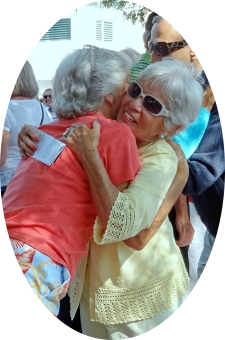 Novelist Salman Rushdie said, “In the cookie of life, friends are the chocolate chips.” I agree. Granted, life can be as pleasant as a plain sugar cookie but, when you add chocolate chips to the batter or friends to the mix, it becomes something extra special.
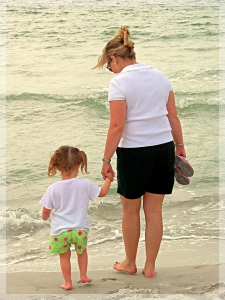 My Mother’s Day prayers will include thanks for the mother and mother-in-law God put in my life, the blessings of motherhood and family, the privilege of seeing my children become adults, and the immeasurable joy of being a grandmother! Because those grands wouldn’t be here were it not for the three beautiful daughters (one by birth and two through marriage) with which He blessed me, I’ll thank God for them, as well.
 Devotions of the Heart