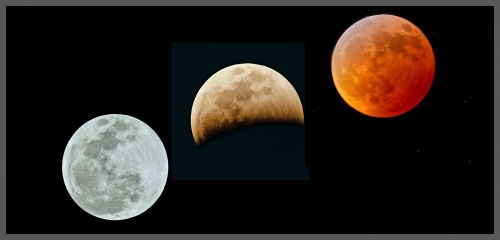
ONCE-IN-A-LIFETIME

Photo: Dennis Johnson

Look here, you who say, “Today or tomorrow we are going to a certain town and will stay there a year. We will do business there and make a profit.” How do you know what your life will be like tomorrow? Your life is like the morning fog—it’s here a little while, then it’s gone. … Remember, it is sin to know what you ought to do and then not do it. [James 4:13-14,17 (NLT)]

Last week, I missed a once-in-a-lifetime opportunity—the longest lunar eclipse to occur in a span of 1,000 years. The last time a lengthy lunar eclipse happened was in 1440 and the next one won’t occur until 2669! Although I woke in the middle of the night and remembered the eclipse, I let the threat of clouds, the inconvenience of going outside in the middle of the night, and the lure of sleep deter me. Instead of seizing the opportunity, I rolled over and went back to sleep. Although it will be much shorter, I can always see another lunar eclipse next year. Then again, there’s no guarantee that the sky will be clear that night or that I’ll be awake (or even alive) between midnight and 3:00 AM on May 22! A missed opportunity is missed forever!

When pondering once-in-a-lifetime opportunities, I think of the time Jesus passed through Jericho on His way to Jerusalem. A blind man named Bartimaeus was sitting by the roadside begging. When he heard that Jesus was passing by, he called out, “Jesus, Son of David, have mercy on me!” Annoyed by his cries, the crowd following Jesus yelled at him to be quiet. Perhaps, like many of their time, they considered illness and disability God’s punishment for one’s sins and didn’t think the blind man deserved Jesus’ attention. In any case, Bartimaeus was not to be deterred. Taking the opportunity before him, he called out so loudly and persistently that Jesus heard the blind man’s voice, called to him, and restored the man’s sight.

As Jesus walked through Jericho, a wealthy tax collector named Zacchaeus wanted to catch a glimpse of the famous rabbi. A little man, Zacchaeus was too short to see over people’s heads and couldn’t push his way to the front of the crowd. As the chief tax-collector, he probably was the most hated man in Jericho and no one was about to make way for the man. In fact, Zacchaeus probably was shoved around by the crowd and may have encountered a few deliberate pokes in his ribs. Like Bartimaeus, however, the publican was not about to be deterred. He ran ahead (a very undignified thing for a government official) and climbed up a sycamore tree to get a view of Jesus as He passed. Seeing his determination, Jesus called him down and invited himself to the tax man’s house.

That day, Jesus restored the sight of Bartimaeus and brought salvation to the home of Zacchaeus but what if those two men had allowed the opportunity to know Jesus slip past them? Like most, they thought Jesus was going to Jerusalem for Passover and would be passing back through town again. Thinking they’d catch Jesus next time He came through town, they easily could have allowed the crowd to deter them. Jesus, however, was on His way to the cross and that one day in Jericho was their once-in-a-lifetime opportunity.

Regretfully, I’ve missed far more important opportunities than seeing a six-hour lunar eclipse—opportunities to be kind, helpful, compassionate, and generous. I’ve allowed myself to be deterred from opportunities to witness, defend, advocate, assist, and support. Like Bartimaeus and Zacchaeus, we don’t know if today is the last day a particular opportunity will arise nor do we know what tomorrow will bring. Today, let us take advantage of all the God-given opportunities it offers.

If today were your last, would you do what you’re doing? Or would you love more, give more, forgive more? Then do so! Forgive and give as if it were your last opportunity. Love like there’s no tomorrow, and if tomorrow comes, love again. [Max Lucado]

So be careful how you live. Don’t live like fools, but like those who are wise. Make the most of every opportunity in these evil days. Don’t act thoughtlessly, but understand what the Lord wants you to do. [Ephesians 5:15-17 (NLT)]

So let’s not get tired of doing what is good. At just the right time we will reap a harvest of blessing if we don’t give up. Therefore, whenever we have the opportunity, we should do good to everyone—especially to those in the family of faith. [Galatians 6:9-10 (NLT)]

Copyright ©2021 jsjdevotions. All rights reserved.

FEAR NOT

And the angel said to them, “Fear not, for behold, I bring you good news of great joy that will be for all the people. For unto you is born this day in the city of David a Savior, who is Christ the Lord. [Luke 2:10-11 (ESV)]

Even though “Black Friday” sales already have started and stores have been decorated for Christmas since Halloween, the holiday season doesn’t officially start until Thursday with Thanksgiving. Although the angel brought good news of joy to the shepherds and told them not to be afraid, the holiday season brings a sense of dread and anxiety for many of us. “Stress” and “family” are two words that shouldn’t go together but often do. The dynamics of several families and generations gathering together over the holidays can put a strain on everyone as different traditions, expectations, politics, and faiths collide with one another. Couples struggle to keep both in-laws and parents happy while grandparents overindulge their grands. Children get too much sugar and not enough sleep, too much money is spent, and too much alcohol often gets consumed. Add to that the challenges presented by long-distance travel with its almost inevitable lost luggage, delays, or cancellations and trying to maintain peace at a politically divided dinner table and we have the makings of a perfect storm! The joy of the season easily gets lost in the stress of the season.

Hoping to have a perfectly orchestrated Thanksgiving feast and Christmas celebration, we often have unrealistic expectations and are disappointed when they’re not met. In actuality, our holiday is more likely to resemble that of the Griswolds than anything we’ll see on the Hallmark channel. Because we don’t live in TV-land, our problems won’t be resolved in ninety minutes and happy endings are not guaranteed. Things can and will go awry and there are no retakes when they do. Babies cry and spit up, toddlers have tantrums, children get tired and cranky, adolescents pout, milk spills, cakes fall, roasts burn, toys break, people sing out of tune, planes get delayed, and someone’s feelings are sure to get hurt. We just have to learn to accept and love the imperfections of our loved ones and understand that chaos and confusion are a part of life. Let us resign ourselves to the noise, disorder, and stress that comes with any family gathering and concentrate on the love, joy, and peace God brought to us when Jesus came into the world so very long ago.

Lord, guide us this holiday season so that what should be a joyous time of year doesn’t become a joyless one. Help us to have realistic expectations as we celebrate Thanksgiving and Christmas. Please, give us an extra dose of patience and a sense of humor when things go awry. May your message of love and peace fill our hearts and minds.

And suddenly there was with the angel a multitude of the heavenly host praising God and saying, “Glory to God in the highest, and on earth peace among those with whom he is pleased!” Luke 2:13-14 (ESV)]

Copyright ©2021 jsjdevotions. All rights reserved.

YESTERDAY, TODAY AND TOMORROW

Lord, I trust in you. You are my God. My life is in your hands. [Psalm 31:14-15a (ERV)]

Going by the popular name of “Yesterday, Today and Tomorrow,” the Brunfelsia is one of my favorite Florida flowers. Three colors of pansy-like fragrant flowers can be seen on the one plant at the same time: the deep purple of the new flower, the pale lavender that appears shortly thereafter, and the pure white just before the flower falls off. Although we get to see what this flower looked like yesterday, looks like today and will look like tomorrow, we don’t get to see the past, present and future of our lives all at once. God, however can.

This lovely flower was brought to mind last week when I had my yearly exam at the dermatologist’s. In honor of Thanksgiving, one wall of the waiting room displayed brown, orange, red, and yellow construction paper leaves scattered under a banner that asked, “For what are you thankful?” While reminiscent of an elementary school classroom bulletin board, the answers written on those leaves by both patients and staff weren’t like those of the average grade-schooler who knows little of things like death, biopsies, addiction, loneliness, strokes, cancer, conflict, bankruptcy, job loss, homelessness, violence, or struggle. While a fourth-grader might have written her dog’s name on a leaf, only a mature adult would have said, “I’m thankful for the troubled times because, without them, I wouldn’t be the person I am today!”

Indeed, I can’t say I was thankful for my troubles when they occurred but, like that person, I am thankful for what God did with them in my life. The hurdles, pain, injury, loss, and trouble that seemed so random and senseless at the time make sense in retrospect. I can see how God brought those difficult yesterdays together to bring me to a better and more beautiful today and how today’s challenges will lead me into an even more amazing tomorrow. Having no crystal ball to see how it all will come together at some point in the future, however, we simply must trust God with our tomorrows and settle on only seeing the past, present, and future at one time in the lovely flowers of the Brunfelsia.

Another name for the Brunfelsia is “Kiss Me Quick Before I Fade,” but I tend to think of it as the Carpe Diem flower. The phrase comes from the Roman poet Horace and was part of his injunction to “carpe diem quam minimum credula postero” meaning “pluck the day, trusting as little as possible in the next one.” Horace, who died in 8 BC, was a pagan but, had he been born at a later date and become a follower of Jesus, the poet could have trusted in his tomorrows because he would have known they were in God’s hands.

As for me, while thanking God for the blessings of yesterday (even though I didn’t appreciate many of them at the time), I will pluck this day with enthusiasm and joy while trusting God with the next one. He planted us right here and at this time for a reason and He will faithfully cultivate, prune, water, and nurture us. Trusting that God knows what He’s doing, what He wants for us, where He’s taking us, and how He will get us there, let us release to Him all of our yesterdays, todays, and tomorrows.

God promises a safe landing but not a calm passage. [Bulgarian Proverb]

The Lord guides our steps, and we never know where he will lead us. [Proverbs 20:24 (ERV)]

So I saw that the best thing people can do is to enjoy what they do, because that is all they have. Besides, no one can help another person see what will happen in the future. [Ecclesiastes 3:22 (ERV)]

Copyright ©2020 jsjdevotions. All rights reserved.

DESSERTS OR DESERTS?

But the other criminal protested, “Don’t you fear God even when you have been sentenced to die? We deserve to die for our crimes, but this man hasn’t done anything wrong.” [Luke 23:40-41 (NLT)]

wild turkeyWe’re hosting family and friends for Thanksgiving dinner and I’m still planning the menu. One guest won’t eat anything green, another doesn’t eat seafood, one dislikes turkey, and two are vegetarians. While I’m still working on appetizers, salad, main course and sides, dessert is a given. Between the sweets our guests are bringing and my pecan pumpkin pie topped with caramel sauce and whipped cream, even the pickiest eater will be happy! I probably could please everyone with just desserts!
Thinking of eating just desserts reminded me of a show I saw several years ago about non-traditional Thanksgiving menus. Prepared by the owner of a confectionery, the entire meal consisted of sweets masquerading as traditional savory holiday dishes. The turkey was formed of dark and light chocolate and the mashed potatoes and gravy were a white cake heaped in a bowl, topped with buttercream frosting, and drizzled with butterscotch syrup. The dinner rolls were doughnuts, the yams were sweet pumpkin soufflé, and the peas were made of marzipan. After their initial dismay, everyone enjoyed eating just desserts. In fact, upon cleaning his dinner plate, one little boy asked for dessert!

The life God give us isn’t like that holiday dinner of just desserts; there always will be things like sadness, trouble, loss, and pain. We didn’t enjoy them the first time around and certainly don’t want second or third helpings. Nevertheless, like that little boy, rather than relishing whatever sweetness we’re given, we often think we deserve more. While we might prefer a life of just desserts, what we don’t want is one of just deserts!

You see, in spite of their similar pronunciation, the phrases “just desserts” and “just deserts” are not the same thing.  “Just deserts” uses a now obsolete definition of “desert” as “something that is deserved” and precedes the mid-16th century concept of an after dinner sweet called “dessert” by several hundred years.

In fact, we’re blessed that God doesn’t give us our just deserts. As sinners, we don’t even deserve the blessings we’ve already been given. We certainly don’t deserve God’s love—a love so great that He sacrificed His only son for us. Without sin, Jesus didn’t get His just deserts when he suffered on the cross; He took our just deserts! Dying so that we might live, our Lord got what He didn’t deserve so that we could receive what we didn’t! We deserve condemnation and punishment but God’s mercy gives us love and forgiveness. Let’s be careful when we demand what we truly deserve from God; we don’t want Him to give us our just deserts!

The Gospel is good news of mercy to the undeserving. The symbol of the religion of Jesus is the cross, not the scales. [John Stott]

He does not punish us for all our sins; he does not deal harshly with us, as we deserve. For his unfailing love toward those who fear him is as great as the height of the heavens above the earth. He has removed our sins as far from us as the east is from the west. [Psalm 103:10-12 (NLT)]

Copyright ©2021 jsjdevotions. All rights reserved.

NEW WINE (Matthew 9:16-17 – Part 2)

But now we have been cut loose from the law; we have died to the thing in which we were held tightly. The aim is that we should now be enslaved in the new life of the spirit, not in the old life of the letter. [Romans 7:6 (NTE)]

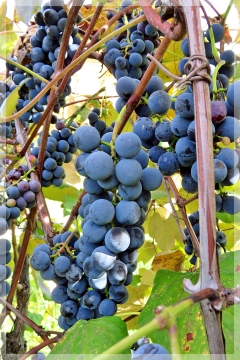
concord grapesWhen explaining to some of John the Baptist’s followers why His disciples didn’t fast, along with the illustration of patching an old garment, Jesus compared His new way with winemaking. While many of us have sewn patches on clothing, few of us are experienced winemakers. Nevertheless, we know that today’s vintners ferment their wine in oak, stainless, concrete, or clay barrels rather than wineskins. Our only experience with wineskins may hearken back to college football games and ski trips when some fellows carried a wineskin filled with an alcoholic beverage hidden under their coats.

In the 1st century, however, wine often was fermented in large wineskins made from animal hide or bladders. Like new material sewn on old fabric, new wine in old skins also would be a failure. When unfermented juice was put into a skin and left to age, gasses would form. Although new wineskins were pliable enough to hold both wine and gasses as they fermented, old skins were hard and brittle. Without elasticity, the old skins would be unyielding as the new wine expanded during fermentation. Eventually, the old skins would burst and both wineskin and wine would be spoiled.

Thinking of new wine, today is Beaujolais Nouveau Day in France. Observed with music, fireworks and festivals, it celebrates the release of the first wine of the season. Bottled and sold just six weeks after harvest, Beaujolais Nouveau is intended for immediate drinking. I thought of this fruity red when Jesus concluded His two parables with these words in Luke 5:39: “But no one who drinks the old wine seems to want the new wine. ‘The old is just fine,’ they say.”

With Beaujolais Nouveau, people who prefer the old to the new are correct. In spite of its popularity, Beaujolais Nouveau rarely lives up to its promise and never is as rich as properly aged red wine. The result of shortcuts and additives, unlike other wines, it doesn’t even improve with age. Calling it “near wine,” wine critics have compared Beaujolais Nouveau to eating raw cookie dough.

Jesus, however, wasn’t talking about new wine; He was talking about the difference between the old religious legalism of the Pharisees and the new way of God’s grace found in Him. He cautioned that it is far easier to fall back into the old familiar ways than to take on anything new. Grace through faith was a radical idea and Jesus knew He couldn’t put new ideas into inflexible closed minds. For many people, it was easier to remain in a life governed by laws and regulations than to step out in faith and live according the Spirit.

Unlike Beaujolais Nouveau, the rich life found in Christ isn’t the result of shortcuts or additives. Following Him lives up to its promise and only gets richer and better with time. Like Beaujolais Nouveau, however, the message of hope and salvation Jesus brought into the world is worthy of celebration (and not just on the third Thursday of November)!

Then he took some bread. He gave thanks, broke it and gave it to them. “This is my body,” he said, “which is given for you. Do this in memory of me.” So too, after supper, with the cup: “This cup,” he said, “is the new covenant, in my blood which is shed for you.” [Luke 22:19-20 NTE]

Copyright ©2021 jsjdevotions. All rights reserved.

SEWING ON A PATCH (Matthew 9:16-17 – Part 1)

juvenile green heronYou have stripped off the old human nature, complete with its patterns of behaviour, and you have put on the new one – which is being renewed in the image of the creator, bringing you into possession of new knowledge. In this new humanity there is no question of ‘Greek and Jew’, or ‘circumcised and uncircumcised’, of ‘barbarian, Scythian’, or ‘slave and free’. The king is everything and in everything!  [Colossians 3: 9-11 (NTE)]

Even though it wasn’t required, zealous Jews like the Pharisees and John the Baptist’s ascetic disciples fasted twice a week. For many of them, their religion had become one of laws, rituals, and works. When some of John’s followers questioned why Jesus’ disciples didn’t fast as did they, Jesus explained with the illustration of patching an old garment with new fabric.

No 1st century seamstress would sew a new piece of unshrunk cloth onto a worn and washed piece of clothing and not just because the two pieces wouldn’t match. Ancient cloth was usually wool or linen, both of which shrunk when washed. After the garment was washed, the new patch would shrink causing it to pucker and pull away from the old. Such a repair job would only make the original tear larger. Cutting a hole out of new fabric would ruin it, as well. The new way of Jesus, a way of grace rather than law, relationship rather than ritual, and faith rather than works, could not be patched into the old religious practices of Judaism.

It’s important to remember that Jesus never said the garment was bad, only that it was old. In fact, the Greek word translated as old was palaios. Meaning old in the sense of worn out and decrepit, palaios conveyed the sense of being obsolete, antiquated, or on its last legs. The garment had served its purpose and it was time for a new one!

Jesus’ way couldn’t be patched into the old religious practices of Judaism and His simple illustration made it clear that, in spite of their shared beginning, Christianity is not an extension or Version 2.1 of Judaism. Rather than repairing or reforming Judaism, He inaugurated a brand-new covenant. He didn’t improve the old system; He replaced it with a new version of man’s relationship with God. Jesus didn’t die on the cross just to repair us; He died and rose again to make us new!

Thus, if anyone is in the Messiah, there is a new creation! Old things have gone, and look – everything has become new! [2 Corinthians 5:17 (NTE)]

Don’t suppose that I came to destroy the law or the prophets. I didn’t come to destroy them; I came to fulfil them! [Matthew 5:17]

Copyright ©2021 jsjdevotions. All rights reserved.