TEACH IT

Jesus came and told his disciples, “I have been given all authority in heaven and on earth. Therefore, go and make disciples of all the nations, baptizing them in the name of the Father and the Son and the Holy Spirit. Teach these new disciples to obey all the commands I have given you. And be sure of this: I am with you always, even to the end of the age.” [Matthew 28:18-20 (NLT)]

tri-colored heronSince 1890, a common teaching method in a surgical residency is to “see one, do one, teach one.” The med student learns the basics by watching an experienced physician do a procedure and then puts his knowledge into practice by doing the procedure himself. He hasn’t mastered the procedure, however, until he’s taught someone else to do it; it is only when we can teach something that we truly understand it.
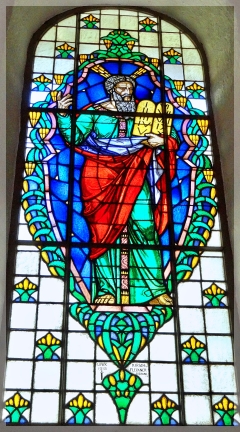
While Jesus doesn’t call us all to be physicians, he does call us all to be disciples and discipleship follows much the same “see, do, and teach” philosophy of med school. Almost anyone, if they studied hard and observed enough of them, could learn how a coronary heart bypass is done, but that wouldn’t make them cardiovascular surgeons any more than just knowing about Jesus makes someone a disciple of Christ. The first disciples did more than just watch Jesus perform miracles and listen to His parables and, if we’re to be Christ’s disciples, we need to do more than just learn about our Lord.

For the budding heart surgeon, just knowing how a heart bypass is done isn’t enough; he actually has to do one. He actually has to do it by making an incision, opening the chest, touching the heart, and grafting blood vessels from other parts of the body to reroute the blood around the clogged arteries. For Christians, the equivalent of doing one is living like Jesus—applying the Lord’s teachings to our lives and becoming like Him. We put into practice all that we’ve learned about love, forgiveness, redemption and salvation. While few of us would be able to take that second step in medicine and perform bypass surgery, we can take that second step in our faith and put into practice what we’ve been taught by Jesus.

Just seeing and doing, however, aren’t enough if we really want to comprehend something or master a skill. It’s when we try to help someone else understand a concept or technique that we learn in greater depth. In the third step, the training physician teaches someone else how to do the procedure. Because this new student sees things from another viewpoint and asks different questions, the teacher has to think harder and dig deeper to answer and explain his reasoning. It is when the new surgeon can clearly explain and demonstrate which arteries have the best results when grafted and how to remove and reattach them, that he has become a competent surgeon. It’s successfully taking that third step of teaching that eventually turns a med student into a skilled physician.

In Christianity, we often hold back when it comes to that third step: teaching, talking about, and demonstrating how our faith in Jesus works. The command to be disciples was given to us so the gospel message could spread far and wide but, perhaps, in His wisdom, God also knew that it is in sharing our faith that it becomes deeper and stronger. The faith of those early disciples intensified as they spread the gospel message and their knowledge expanded as they taught. When reading Acts and the Epistles, we see how the men who abandoned Jesus in the garden became mature disciples as they shared the gospel, clarified points, answered questions, and explained their belief. Most of us have no hope of ever becoming a surgeon and we’re probably not going to become theologians or even Sunday school teachers. Nevertheless, we have an opportunity to teach about Jesus whenever we open our mouths. Our faith will grow stronger and deeper not just by seeing Jesus in Scripture and doing as would He, but by sharing the gospel message with others.

To teach is to learn twice. [Joseph Joubert]

Then we will no longer be immature like children. We won’t be tossed and blown about by every wind of new teaching. We will not be influenced when people try to trick us with lies so clever they sound like the truth. Instead, we will speak the truth in love, growing in every way more and more like Christ, who is the head of his body, the church. [Ephesians 4:14-15 (NLT)]

Copyright ©2021 jsjdevotions. All rights reserved.

THE SHEMA (Part 1)

Hear, O Israel: The Lord our God, the Lord is one. You shall love the Lord your God with all your heart and with all your soul and with all your might. And these words that I command you today shall be on your heart. You shall teach them diligently to your children, and shall talk of them when you sit in your house, and when you walk by the way, and when you lie down, and when you rise. You shall bind them as a sign on your hand, and they shall be as frontlets between your eyes. You shall write them on the doorposts of your house and on your gates. [Deuteronomy 6:4-9 (ESV)]

Meiringen-MichaelskircheMy morning’s reading took me to Deuteronomy 6 and the words that Jesus cited as the first, and most important commandment. Known as the Shema and found in verses 4 through 9, it is the essential declaration of the Jewish faith. Its name comes from the first Hebrew word of the verse, shema, which means “hear.” Observant Jews recite its words twice a day (morning and evening), on the Sabbath and religious holidays, and as the last words before death. The Shema is so entrenched in Judaism that a story is told about Rabbi Yitzhak Herzog who, in 1946, went searching for Jewish children who’d been hidden by Christians during the Holocaust. As he walked through European convents, monasteries, and orphanages, the rabbi would start to recite the Shema. He easily found the Jewish children because they immediately joined in saying the sacred words.

The Shema’s first words sum up the essence of Judaism—there is only one true God and He is Israel’s God. During the time of the Temple, a second line was inserted into the Shema. After the priest recited, “Hear, O Israel: The Lord our God, the Lord is one,” the congregation replied, “Blessed be the name of the glory of His kingdom forever and ever.” In acknowledgement that this phrase is not part of the original Scripture, it usually is said in an undertone. The rest of the original prayer then follows.

When Moses passed these words along to the Israelites, they had spent centuries surrounded by people who worshipped many gods. The Shema’s daily repetition impressed upon them that love, obedience, and faithfulness to their one true God was the only way to live. These words may have been passed to the Jews some 3,500 years ago but its message holds true for all of God’s children—there is one true God and He is ours!

The rest of the original Shema details how that belief in the one true God is to be lived and its words continue to apply to Christians as well as Jews. We are to love Him with our whole being, teach his word to the next generation, make His words part of our daily conversation, and impress His word into all aspects of our lives.

In verses 8 and 9, we find the command to bind the God’s words to our hands, foreheads, doorposts, and gates. Taking the words literally, Jews wore black leather boxes (tefillin) containing scripture on their heads and arms and placed mezuzot, containing part of the Shema, on their doorposts. Observant Jews continue to do so today.

Even when taking those instructions figuratively, it’s not difficult to understand what is meant by placing God’s word between our eyes or on our arms. God’s words must affect the way we think and see as well as our every action. While we don’t place Scripture on doorways and gates, when stepping into a Christian’s home or workplace, God’s presence and influence should be felt by all who enter. For the Christian, the Shema’s words mean that we are to write God’s words in our hearts and minds and love Him with our whole being!

Because the words of the Shema were important to Jesus, they are important to us. Whether Christian or Jew, I can’t think of a better way to start or end my day than with these words: “The Lord our God, the Lord is one. You shall love the Lord your God with all your heart and with all your soul and with all your might.”

And one of the scribes…asked him, “Which commandment is the most important of all?” Jesus answered, “The most important is, ‘Hear, O Israel: The Lord our God, the Lord is one. And you shall love the Lord your God with all your heart and with all your soul and with all your mind and with all your strength.’” [Mark 12:28-30 (ESV)]

Copyright ©2021 jsjdevotions. All rights reserved.

PONTIUS PILATE (Who’s Who – 5)

Very early in the morning the leading priests and the elders of the people met again to lay plans for putting Jesus to death. Then they bound him, led him away, and took him to Pilate, the Roman governor. [Matthew 27:1-2 (NLT)]

pontius pilate - washing handsPontius Pilate was the Roman prefect (or governor) of Judea from 26 to 36 AD. He was responsible for the collection of taxes, managed construction projects, and had the sole authority to order a criminal’s execution. His most important duty, however, was to maintain law and order and, if he couldn’t do it through negotiation, he did it by any means necessary.

Around 50 AD, Philo of Alexandria wrote about Pilate’s “briberies, insults, robberies, outrages and wanton injuries, executions without trial, constantly repeated, ceaseless and supremely grievous cruelty.” Ancient historian Flavius Josephus reported that after Pilate exhausted the Temple treasury to build an aqueduct, the Jews gathered in protest at his use of sacred funds. After sending soldiers dressed as Jews into the crowd of protesters, at his signal, they removed clubs hidden in their cloaks and beat many of the protesters to death. According to Josephus, Pilate eventually was removed from office and sent back to Rome after using excessive force to prevent a suspected Samaritan insurrection. Both historians described Pilate as exceedingly loyal to the emperor, stubborn, and insensitive to the Jews.

Pilate died in 39 AD and some traditions hold that he was executed while others that he committed suicide. The early Christian author Tertullian claimed that Pilate became a follower of Jesus and tried to convert the emperor to Christianity. These claims, however, are mere speculation. That Pilate existed, however, is not. In 1961, while excavating an ancient Roman theatre in Caesarea, a piece of limestone was found that was inscribed with both the emperor’s and Pilate’s names and the words “Prefect of Judea.”

Unable to sentence Jesus to death, the Sanhedrin brought Jesus to the governor. Pilate and the Sanhedrin shared a common interest in maintaining the status quo. Although he knew Jesus had been arrested on trumped up charges, Pilate also knew of Jesus’ triumphal entry into Jerusalem when people had hailed Him as the long-awaited king. Rome wouldn’t welcome the news of an unauthorized king and, if Pilate allowed Jesus to remain in Judea, the governor would be accused of disloyalty to Rome. Pilate knew Jesus’ death was the expedient political solution for all and, yet, he appeared to be hesitant to take action.

Based on the gospel accounts of Jesus’ trial, some commentators find Pilate indecisive, easily manipulated by Sanhedrin, and weak in his capitulation to the mob. Others, however, disagree with that assessment. That Pilate managed to serve ten years as prefect when the typical term was three tells us he was a man of political acumen and ancient historians described him as headstrong and authoritarian. As governor, Pilate held the power—only he could pronounce capital punishment and he was the one who appointed (or dismissed) the head priest. Since Pilate knew that he would appear weak if he yielded too quickly to the Sanhedrin’s wishes, some scholars suggest that what seemed like hesitation on Pilate’s part was just the governor making the Sanhedrin sweat a little and beg. In the end, Pilate did exactly what he wanted but he’d put the Sanhedrin in his debt by seeming to do them a favor.

We’ll never know whether Pilate was manipulated by the Sanhedrin or he shrewdly manipulated them. Whatever his motives, Pilate knew Jesus was innocent of all charges when he ordered the crucifixion of the Son of God. Putting the blame on the Sanhedrin and the angry mob that shouted “Crucify him!” Pilate disclaimed any responsibility for shedding innocent blood and literally washed his hands of the matter. Whether he voluntarily put Jesus to death or was pressured into his decision, Pilate was a political and moral coward and washing his hands couldn’t absolve him of his guilt.

Being compelled or pressured never releases us of our responsibility to do the right thing. Regardless of circumstance, we must take ownership of our actions. Remember: while we can be tempted to sin, we  never can be forced to do it!

Sin is a brat that nobody is willing to own; and many deceive themselves with this, that they shall bear no blame if they can but find any to lay the blame upon; but it is not so easy a thing to transfer the guilt of sin as many think it is. [Matthew Henry]

But the mob roared even louder, “Crucify him!” Pilate saw that he wasn’t getting anywhere and that a riot was developing. So he sent for a bowl of water and washed his hands before the crowd, saying, “I am innocent of this man’s blood. The responsibility is yours!” [Matthew 27:23b-24 (NLT)]

Copyright ©2021 jsjdevotions. All rights reserved.

THE SANHEDRIN (Who’s Who – 4)

The chief priests, and all the Sanhedrin, looked for evidence for a capital charge against Jesus, but they didn’t find any. Several people invented fictitious charges against him, but their evidence didn’t agree. Then some stood up with this fabricated charge: “We heard him say, ‘I will destroy this Temple, which human hands have made, and in three days I’ll build another, made without human hands.’” But even so their evidence didn’t agree. [Mark 14:55-59 (NTE)]

The Great Sanhedrin was the Supreme council (high court) of the Jews. Formed around 200 BC and modeled after the 70 elders who helped Moses in governing the Israelites, its 71 members consisted of scribes, priests, and elders with the high priest acting as its presiding officer. Along with religious and ritualistic Temple matters, the Sanhedrin addressed secular criminal matters, proceedings in connection with the discovery of a corpse, trials of adulterous wives, tithes, the preparation of Torah Scrolls, and drew up the calendar. As long as the Sanhedrin maintained public order and the Jews kept paying their taxes to Rome, the Romans were content to leave most of the nation’s judicial matters to them. While the Sanhedrin were supposed to administer justice, in the case of Jesus, they were anything but just; in fact, they sought perjured testimony.

The Sanhedrin’s members had to be of pure Israelite descent. The leading Jews of Jerusalem, they probably were appointed to the position. In the New Testament, the Sanhedrin is also referred to as the “council,” the “chief priests and elders,” the “chief priests, elders, and scribes,” or simply as the “chief priests.” When Judas went to the “chief priests” and offered to betray Jesus, he went to the Sanhedrin. During Jesus’ first trial, the Sanhedrin charged Him with blasphemy but changed the charge to treason when they brought Him to Pilate. It was the Sanhedrin who encouraged the crowd to call for Barabbas to be freed rather than Jesus and they were the ones who bribed the soldiers to say that the body of Jesus had been stolen from the tomb.

While the majority of the Sanhedrin were Sadducees, its scribes were Pharisees and usually the most educated men in the community. Scribes wrote up legal documents, recorded deeds, acted as ancient notary publics and court recorders, and carefully made copies of the Torah. Men of influence, they were well respected and, as professional scholars, were expert teachers and interpreters of Mosaic law.

“Elders” was a general term describing the older leaders of the community. Aristocrats with Sadducee learnings, they probably were priests or lay readers. The priests of the Sanhedrin were high-ranking, wealthy, influential Sadducees. Descending from the tribe of Levi, they served in the Temple and ensured that Temple service was carried out correctly. Originally, the Sanhedrin had the right to appoint or confirm the high priest (who was supposed to be a descendant of Aaron) and the office was a life-long position. By the time of the Herods, however, civil authorities appointed the high priests based on their political and religious sentiments and the position was not permanent. Herod the Great, for example appointed six different high priests during his reign. Because this position should have been life-long, even though Annas was ousted by the Romans in 15 AD, many Jews still considered him the high priest, which is why Jesus was first taken to Annas following His arrest. After this pre-trial hearing, Jesus was then taken to Caiaphas (Annas’ son-in-law), a Sadducee who was the high priest.

For the Sanhedrin, Lazarus’ resurrection was the last straw—a miracle that could not be denied. Thinking that Jesus’ many miraculous deeds would cause everyone to believe He was the Messiah and lead to their wanting to make Him king, they were fearful that an insurrection would follow. They reasoned that, if Jesus were allowed to continue His preaching, the Romans would destroy the Temple, nation, and their secure positions and aristocratic lifestyle (which they eventually did in the Great Revolt of 66-70 AD). In spite of their religious differences, the members of the Sanhedrin agreed that Jesus had to be stopped.

It was the high priest Caiaphas who suggested that, by eliminating Jesus, they would save the nation from Rome’s reprisal. Little did the priest know that his words were prophetic and he was playing right into God’s hand. Yes, one man, Jesus, had to die for the people but he was mistaken in thinking Jesus had to die to save the Jews from the Romans. That one man, Jesus,  had to die to save all mankind from sin and death.

“You haven’t worked it out! This is what’s best for you: let one man die for the people, rather than the whole nation being wiped out.” He [Caiaphas] didn’t say this of his own accord. Since he was high priest that year, it was a prophecy. It meant that Jesus would die for the nation; and not only for the nation, but to gather into one the scattered children of God. [John 11:5-52 (NTE)]

It was Caiaphas who had given advice to the Judaeans that the best thing would be for one man to die for the people. [John 18:14 (NTE)]

Copyright ©2021 jsjdevotions. All rights reserved.

THE HERODS AND HERODIANS (Who’s Who – 3)

Then he [Jesus] said to the man, “Stretch out your hand.” He stretched it out – and his hand was restored. The Pharisees went out right away and began to plot with the Herodians against Jesus, trying to find a way to destroy him. [Mark 3:5b-6 (NTE)]

Great Blue HeronRather than a religious sect, the Herodians were a political group who favored Herodian rule over direct Roman rule. Unlike previous kings of Israel, the Herodian kings were appointed by the Roman emperors. It’s been said that “You can’t tell the players without a scorecard,” and it seems that way with the various Herods we meet in the New Testament. It was Herod the Great, ruler of Judea from 37 to 4 BC, who enlarged the Temple Mount and began rebuilding the second Temple around 20 BC. This Herod was the “king of the Jews” who questioned the Magi and sought to kill the Messiah by slaughtering boys under the age of two. [Jesus was born between 6 and 4 BC.] After Herod’s death, his kingdom was divided among his sons and Herod Antipas became tetrarch of Galilee and Perea. This is the Herod who ruled Galilee throughout Jesus’ ministry—the one who married the wife of his brother (Herod Philip II), beheaded John the Baptist, and sent Jesus back to Pilate.

The next king of Judea was Herod the Great’s grandson and Herod Antipas’ nephew, Herod Agrippa I. Ruler from 41 to 44 AD, his story is found in Acts 12. He put the Apostle James to death, imprisoned Peter (who was miraculously rescued from prison by an angel of the Lord), and met a horrible end when he was consumed by worms. The last of the Herodian line to be king was his son, Herod Agrippa II. Mentioned in Acts 25 and 26, this was the Herod who, after allowing Paul to testify in court, said he’d done nothing to deserve imprisonment or death. The main job of all these Herods was to keep the peace in Judea. They had to maintain a delicate balance by bending to the people’s will just enough to avoid being overthrown and yet not allow the Jews so much independence that Rome would step in and take full control.

Seeing Herod and his family as Judea’s salvation, the Herodians submitted to Rome out of political expediency. Afraid that Jesus would cause an uprising, they saw Him as a threat to keeping Herod on the throne. As long as the land remained peaceful, Herod would rule and the status quo would remain. Knowing that any insurrection would cause the Romans to respond with overwhelming force, they wanted to make a pre-emptive strike against any disturbance by killing Jesus.

Even though the Pharisees wanted a descendant of David on the throne and the Herodians wanted to keep Herod there, politics makes for strange bedfellows. Jesus’ miracles caused people to look to Him for salvation—something not on either groups’ agenda. When Jesus healed a man’s withered hand on the Sabbath, the Pharisees enlisted the Herodians to help in a plot to destroy Him. Although the Pharisees were popular with the people, they lacked the political clout to carry out their plans. As supporters of Herod Antipas, the Herodians held the political power and these rival forces came together to plot against their common enemy.

The Herodians were willing to settle for temporary salvation and peace but Jesus brought permanent salvation and peace. They looked to politics and people when they should have looked to faith in God!

Then the Pharisees went and plotted how they might trap him into saying the wrong thing. They sent their followers to him, with the Herodians. “Teacher,” they said,…. “So tell us what you think. Is it lawful to pay tribute to Caesar, or not?” [Matthew 22:15-17 (NTE)]

Copyright ©2021 jsjdevotions. All rights reserved.

ZEALOTS AND ESSENES (Who’s Who – 2)

They then entered the city (‘they’ here means Peter, John, James, Andrew, Philip, Thomas, Bartholomew, Matthew, James the son of Alphaeus, Simon the zealot, and Judas (the son of James) and went to the upstairs room where they were staying. [Acts 1:13 (NLT)]

hong kong orchidAlong with the Pharisees and Sadducees, the two other major sects or philosophies mentioned by the historian Flavius Josephus were the Zealots and Essenes. Religion and politics were one and the same in ancient Palestine and the Zealots movement originated with Judah/Judas of Galilee and Zadok the Pharisee. Their most basic belief was that any and all means were justified if it led to political and religious liberty for the Jews. When Judah was killed while leading a revolt around 6 AD, his followers fled to the desert and continued in guerilla warfare against the Romans.

Josephus reported that the Zealots agreed in most things with the Pharisees “but they have an inviolable attachment to liberty, and say that God is to be their only Ruler and Lord.” The two groups interpreted their suppression by Rome differently. Seeing their oppression as God’s punishment for the nation’s sins and His call to repentance, the Pharisees were confident that once the nation became committed to following the law, God would intervene and their nation would be restored (explaining their rigorous enforcement of the Law). The Zealots, however, believed that the Jews had to reject any ruler other than Jehovah and considered any cooperation with their Roman rulers as traitorous. Fiercely opposed to Rome’s occupation of Judea, they believed God would deliver them with the sword. Regarding the Greek language a symbol domination and paganism, Zealots were opposed its use. Wanting to incite rebellion, they refused to pay taxes, harassed and murdered government officials, and were known to violently attack Jews if they thought them to be collaborators or heretics. There probably were no other groups so diametrically opposed than Zealots and tax collectors and yet among Jesus’ disciples were Simon the Zealot and Levi/Matthew, the tax collector. What a beautiful demonstration of Jesus’ power that, rather than hate each other, these men loved Jesus and one another!

The Zealots, thinking Jesus would incite war against the Romans, initially may have welcomed Him as the Messiah. As His ministry continued and they realized the Kingdom of which Jesus spoke was not a political one and would not come about by military victory, they may have seen Him as a false Messiah. It is speculated that, like Simon, Judas was a Zealot and that his disappointment in a non-military kingdom is what led to his betrayal of the Lord. Barabbas, the criminal whose place Jesus took that day on Golgotha, was a Zealot who’d been sentenced to death because he’d committed murder during an uprising.

The Essenes are the fourth group cited by Josephus who reported they “shun the pleasures as vice, they consider self-control and not succumbing to the passions virtue.” Originating around 150 BC and disappearing after the Temple’s destruction, they’re not directly mentioned in Scripture. Rather than coexist with or fight Rome, the Essenes chose to withdraw from Rome entirely. Disgusted by both the Pharisees and Sadducees, they abandoned Jerusalem in protest against the worldliness of the city, the way the Temple was run, and Roman rule. A monastic Jewish community with strict membership requirements and the communal ownership of their possessions, the Essenes lived in the desert. Living austere lives of poverty, abstinence, and ritual purity, they didn’t sacrifice animals, own slaves, or make oaths. The Essenes believed God would send two messiahs from within their sect. Rather than resurrection, they believed in an immortal soul and, rather than man’s free will, they credited all things to God. When the Apostle Paul warned the Colossians about man-made philosophies, he may have been warning them about some of the Essenes’ unorthodox beliefs. Because of their ascetic lifestyle and their belief that ritual immersion in water (baptism) was an indication of spiritual change, it is speculated that John the Baptist was an Essene but that is merely speculation.

Fortunately, the Essenes were copyists who preserved the texts of the Hebrew Scriptures. It is thought that the Dead Sea scrolls, found by shepherds in Qumran in 1946 or 47, were recorded and stored by an Essene community. Among the scrolls, we have a nearly all the Hebrew Bible along with Essene commentaries on many of them. Even though they are never specifically mentioned in Scripture, they played an essential role in preserving the Word for future generations.

While we tend to think of 1st century Judaism as a unified faith, we find that it was as divided as the Christian church is today.  And, just as Paul warned the Colossians about false philosophies, we must be cautious as well.

Watch out that nobody uses philosophy and hollow trickery to take you captive! These are in line with human tradition, and with the ‘elements of the world’ – not the king. In him, you see, all the full measure of divinity has taken up bodily residence … Don’t let anyone rule you out of order by trying to force you into a kind of fake humility, or into worshipping angels. Such people will go on and on about visions they’ve had; they get puffed up without good reason by merely human thinking, and they don’t keep hold of the Head. It’s from him that the whole body grows with the growth God gives it, as it’s nourished and held together by its various ligaments and joints. [Colossians 2: 8-9,18-19 (NTE)]

Copyright ©2021 jsjdevotions. All rights reserved.