
As they passed by in the morning, they saw the fig tree withered away to its roots. And Peter remembered and said to him, “Rabbi, look! The fig tree that you cursed has withered.” And Jesus answered them, “Have faith in God. Truly, I say to you, whoever says to this mountain, ‘Be taken up and thrown into the sea,’ and does not doubt in his heart, but believes that what he says will come to pass, it will be done for him. [Mark 11:20-23 (ESV)]
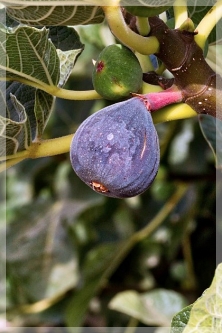 The next morning, while Jesus and the disciples walked from Bethany to Jerusalem for yet another confrontation with Judea’s religious leaders, the disciples saw the tree Jesus cursed the previous day. The disciples had witnessed Jesus cast out demons and still a storm with a just a word but, when they saw the withered and dead fig tree, they were amazed. Normally, trees die slowly from the top down but this tree instantly withered from the roots up. With dead roots, no amount of water or fertilizer would revive it. Having witnessed the tree go from abundance to ruin with just a word from the Lord, rather than asking Jesus to explain cursing the tree, the disciples focused on the speed with which the fig died.
Rather than focusing on spiritual hypocrisy and the significance of the dead fig, Jesus focused on how He performed the miracle and spoke about the power of genuine faith. This wasn’t faith in something vague like positive thinking or an object; it wasn’t faith in faith or faith in the power of prayer. He made it clear that the sole object of this faith must be God! After all, faith is only as good as the object in which it trusts and God is all-powerful, ever-faithful, and trustworthy to His promises.
Pause for a moment and consider—even though Jesus was God, He was living as a man with the limitations of humanity. By saying, “Have faith in God,” He displayed both His humanity and His dependence upon God. Jesus’ power to speak with authority, forgive sins, calm a storm, heal the sick, raise the dead, provide food for a multitude, and wither that fig tree came from His faith in God and the indwelling of the Holy Spirit.
Explaining the power of faith in God, Jesus told them that, with faith, they could move the mountain on which they were standing (the Mount of Olives) into the sea (probably the Dead Sea 15 miles away). Moving a mountain is even more inconceivable than killing a tree with a word but Jesus uses this hyperbole to emphasize that what is impossible with man can be accomplished through faith in the power of God!
We tend to say that prayer changes things—but it is God who does the changing! Although we speak of the power of prayer, prayer alone has no power; the power comes from God who hears that prayer. We often lament, “If only I had more faith!” The disciples even asked Jesus to increase their faith. Jesus, however, told them that the size of their faith doesn’t matter—even a mustard seed of faith is enough! (With a diameter of 1 to 2 millimeters, the mustard seed was used proverbially to represent the smallest of things.) It’s not the amount of faith that matters—as long as we put our faith completely in God’s power rather than ours. It’s not faith that moves those mountains—it’s God! Even if our faith is not great, our God is!
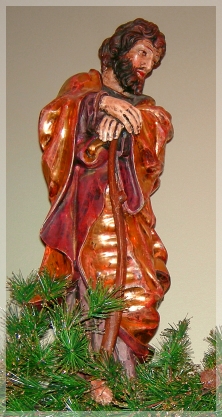 While putting away our nativity, I looked at the figure of Joseph. For the man who played a pivotal role in the Christmas story, once Christmas is packed away, Mary’s husband rarely gets a second thought until the next December. Neither Mark nor John mention the man who served as step-father to Jesus and the author of Hebrews didn’t even list him in its “Hall of Faith.”
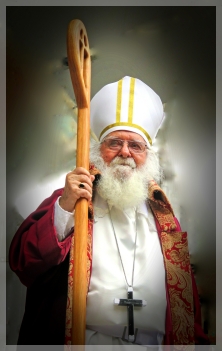 Sometime near the end of the 3rd century, the Bishop of Myra died and a conclave was held to elect his replacement. Legend has it that the bishops kept praying and voting but could not come to an agreement. In a stalemate, they prayed all night for God’s guidance. That night, one bishop heard a voice telling him that, at the hour of matins, the man who walked into the church was the one God wanted to shepherd His flock.
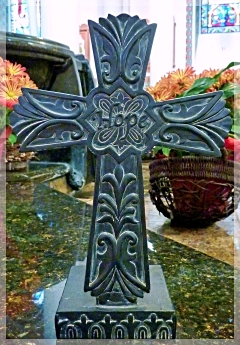 According to the Greek myth, when Zeus presented a beautiful jar to Pandora as part of her dowry, he forbade her to open it. Curiosity, however, got the best of her. When she lifted its lid to peek into the jar, all the malevolence and afflictions Zeus hid inside were released. As evils like sickness, chaos, death, conflict, hatred, jealousy, sorrow, envy, lust, famine, and violence came rushing out , the terrified woman quickly replaced its lid. All that remained in the jar was hope—the only consolation humans have for the trouble and suffering Pandora let loose upon the world.
 Our old friend Joe recently visited. Along with our friend Ric, he and my husband were partners in a manufacturing business in another state many years ago. Once a year, the three men would meet away from the business (with its phone calls and constant interruptions) to discuss their short-term and long-term business goals. While Ric and my husband were the legal, financial, and sales parts of the business, as a processing engineer, Joe oversaw manufacturing.
 Making the point that wisdom is better than strength, the sage Agur spoke of the wisdom of ants, locusts, lizards, and sāphān. Often translated as badgers, rock-badgers, hyraxes, conies, or marmots, the animal’s exact identity is unknown but commentators suspect it to be the Syrian rock hyrax. Looking like a cross between a rabbit, guinea pig, and meerkat, these social animals gather in colonies of up to 80 individuals. Sleeping and eating together, they live in the natural crevices of rocks and boulders or take over the abandoned burrows of other animals.
 Devotions of the Heart