EXPRESS YOUR GRATITUDE

One of them, when he saw that he was healed, came back to Jesus, shouting, “Praise God!” He fell to the ground at Jesus’ feet, thanking him for what he had done. This man was a Samaritan. Jesus asked, “Didn’t I heal ten men? Where are the other nine? [Luke 17:15-17 (NLT)]

Feeling gratitude and not expressing it is like wrapping a present and not giving it. [William Arthur Ward]

roseWhen writing yesterday’s message (“Jehovah Rapha”) about my ski accident, I thought about the ten lepers healed by Jesus. Only one returned to thank Him. Did the others assume they would see Jesus some other day and could express their gratitude then? Jesus, however, was on His way to Jerusalem. The lepers had a week’s worth of purification ceremonies, cleansing, isolation, and offerings ahead of them and that “other day” would not come. By not returning immediately, they missed a precious opportunity to thank Jesus.

We were seasonal residents of our Colorado mountain town so, after my accident, we didn’t return to the Rockies until winter. At our first church service back, I found myself behind the woman with the healing hands. During greetings, she turned back, looked at me intently, held my hands in hers, and asked, “How are you!” Hers wasn’t just a cursory church greeting and her question peered deep into my soul. I looked at her with a smile, squeezed her hands and, thinking we’d talk later, simply said, “I am well.” Although the previous months had been challenging in many ways, I finally was physically, emotionally and spiritually well. The music resumed and she turned back to face the pastor and worship leader. When the service ended, she immediately was surrounded by others. Not wanting to interrupt and anxious to get home, I decided to wait until the following week to thank her. I didn’t see her the next week and, one week later, our pastor told the congregation that she’d been killed instantly in a car accident in Denver.

I’d missed the opportunity to speak with this woman, share my testimony, and thank her. Making the mistake of thinking there always was time, like those nine lepers, I’d let life get in the way of my gratitude. Instead of personally telling this beautiful woman how much her compassion, touch, and prayers had meant, not just to my body, but to my soul, I ended up telling her husband in a letter of sympathy. I hope my words gave him some comfort in the depth of his sorrow. His wife was loved by all who knew her and her departure left a huge gap in our church family.

Heavenly Father, forgive us for our unspoken words of thanks, both to you and to those acting on your behalf. Thank you for your servants: the life lines, rescuers, spiritual first responders, and healers that you send into our lives. As your emissaries, they offer their prayers, hands, compassion, and encouraging words. They inspire, comfort, lead, teach, and lift us. Let us never delay expressing our gratitude for the blessings bestowed upon us.

It’s one thing to be grateful. It’s another to give thanks. Gratitude is what you feel. Thanksgiving is what you do. [Tim Keller]
Give thanks to the Lord and proclaim his greatness. Let the whole world know what he has done. Sing to him; yes, sing his praises. Tell everyone about his wonderful deeds. [1 Chronicles 16:8-9 (NLT)]

Copyright ©2020 jsjdevotions. All rights reserved.

BLOWING KISSES

Since we are receiving a Kingdom that is unshakable, let us be thankful and please God by worshiping him with holy fear and awe. [Hebrews 12:28 (NLT)]

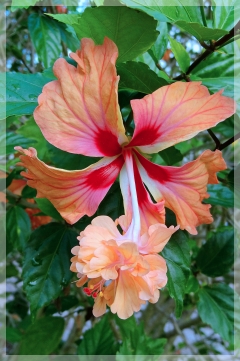
hibiscusIn the New Testament, the Greek word commonly translated as “worship” is proskyneō. While it came to mean kneeling down, prostrating oneself, showing reverence toward, and worshiping, its roots are thought-provoking. Coming from the Greek pro (to or toward) and kyneō (to kiss), its literal meaning is “to kiss towards!” Knowing his Greek, a pastor said of proskyneō: ”I like to think of our worship in church as being sons and daughters of God blowing kisses to our Father.” I thought of his words when I welcomed the kisses my children and grands blew to me on our recent Zoom call.
The way we worship has changed drastically since March. For some people, it involves sitting in their cars in the church parking lot, tuning their radios to a specific station, and drive-by communion. For others, worship requires reservations, temperature checks, face masks, assigned seats, roped off pews, and restrictions on singing. Many of us, however, find church on the screen of our computers, tablets, smart phones, or TV. Our worship is virtual.

The live streaming from most churches really isn’t “live.” Having found that wide shots of the sanctuary and recreating the traditional Sunday service doesn’t transfer well to a small screen, many churches now pre-record. Early in the week, the pastor videos his part at home or in the empty church. At a different time, the worship leader and musicians video their parts, often from different locations. The tech team then pieces together the separate recordings and adds words for the songs and relevant Bible verses before posting the now cohesive video to their chosen platform. There’s a good chance that, even though the pastor “led” the worship service, even he doesn’t know what the finished product looks like until it is streamed on Sunday. That’s the case for a pastor I know who watches worship service with the rest of his congregation when it goes live on Sunday mornings.

This pastor mentioned getting an email from one of his parishioners thanking him for the inspiring on-line services. After telling her pastor that she still rises early Sunday mornings so she can get dressed and do her make-up and hair, the woman said she sets up her home “pew” with a lit candle and a Bible (so she can follow along during the lessons). Adding that she always stands for the Creed, Gospel and hymns, the woman said it almost feels like she’s worshiping inside the church! Hers were words of conviction for the pastor who reluctantly admitted to being unshaven and still in his pj’s while sitting on the sofa, feet resting on the coffee table, drinking coffee and eating a Danish as he views the service on his television. After confessing that the only time he stands is to get another cup of coffee from the kitchen, he realized he was watching rather than worshiping.

It’s not easy to stay engaged while worshiping on-line. People who normally wouldn’t talk during music now chat on-line during worship songs. I wouldn’t think of checking my phone, texting, or getting up for coffee during the sermon, but I did it during last week’s virtual worship! We don’t have to put on make-up or wear our Sunday best to worship in this COVID world but we might want to examine our worship behavior. The Essential Bible Dictionary defines worship as, “The honor, reverence, and homage that we should pay to God for his perfection, greatness, and goodness.” Does our worship reflect our love, respect, gratitude, dedication, and deference to God? Whether we’re worshiping in a kitchen, car, park, or pew, may our worship be so reverent, single-minded, and heartfelt that God receives it with the same joy a grandma would when her children and grands blow her kisses!

And so, dear brothers and sisters, I plead with you to give your bodies to God because of all he has done for you. Let them be a living and holy sacrifice—the kind he will find acceptable. This is truly the way to worship him. [Romans 12:1 (NLT)]

For God is Spirit, so those who worship him must worship in spirit and in truth. [John 4:24 (NLT)]

Copyright ©2020 jsjdevotions. All rights reserved.

THE ONE HE LOVED

One of them, the disciple whom Jesus loved, was reclining next to him. [John 13:23 (NIV)]

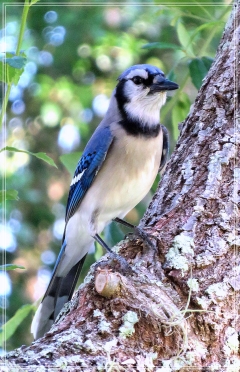
blue jayWhile Matthew, Mark, and Luke mention the Apostle John several times in their gospels, the gospel that bears John’s name doesn’t mention his name once. Instead, the author refers to an unnamed witness and a disciple described only as the one “whom Jesus loved.” Since John is conspicuously absent from his gospel, it would seem that he was both the witness and this much loved disciple.
While the gospel of John may have been written any time between 55 and 95 AD (with 80 to 85 AD most likely), there isn’t much dispute about its author. We might wonder why the Apostle hid himself in the gospel by referring to himself simply as another unnamed disciple or as that specially loved one. John may have chosen to remain incognito simply because he knew the good news wasn’t about him and his relationship with a man named Jesus. It was about the Messiah Jesus and His relationship with mankind. By remaining nameless, the story stayed centered on Jesus as opposed to its author.

But why would John choose to designate this unnamed disciple as especially beloved by Jesus? Did he want to point out (possibly even flaunt) the special relationship he enjoyed with Christ—a relationship not enjoyed by the other disciples? In a gospel filled with examples of Christ’s love, integrity, righteousness, humility, and sacrifice, a Messiah who blatantly favored one over others seems unlikely and a disciple who would boast of his special status seems equally implausible.

Perhaps John was simply engaging some word play. In Hebrew, the disciple’s name was Johanan. The first part of his name was Yah, a shortened version of YHWH, the name of the Lord. The last part was from the verb hanan which meant to be gracious. John’s name literally meant Yahweh is Gracious (or the one whom Jehovah loves)!

The five times this nameless disciple is mentioned as being so loved by Jesus all occur during the events surrounding Jesus’ death and resurrection—a time it became abundantly clear to all of the disciples just how much Jesus loved not just them but all of mankind! Perhaps John used this designation because it represented what is true of all of Christ’s disciples: each person who follows Jesus is a disciple loved by Jesus!

If you were asked, “Who are you?” how would you answer? While you might provide your name, marital status, profession, or background, any one of those could be changed and you would still be you (slightly different but still you). Regardless of circumstances, or even whether you’re alive or dead, the one thing about you that won’t change is your identity as a child of God and, if you are a believer, that you are a disciple of Christ. The highest honor John could claim was that Jesus loved him and yet it is an honor to which we all can lay claim! Who are you? As for me, I am the disciple Jesus loves!

For God so loved the world that he gave his one and only Son, that whoever believes in him shall not perish but have eternal life. [John 3:16 (NIV)]

Copyright ©2020 jsjdevotions. All rights reserved.

THE HALLEL

Praise the Lord! Yes, give praise, O servants of the Lord. Praise the name of the Lord! Blessed be the name of the Lord now and forever. Everywhere—from east to west—praise the name of the Lord. [Psalm 113:1-3 (NLT)

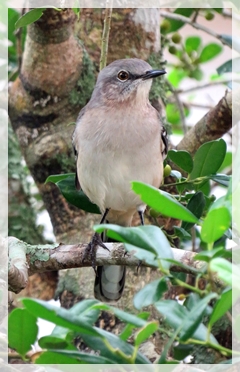
Southern MockingbirdSeveral years ago, our mountain church hosted a concert sponsored by the small Jewish congregation in town. I vividly remember the end of the program as Jews and Gentiles sang Hava Nagila, joined hands, and danced the hora around our large sanctuary. Impressed by the performer’s energy, passion, and love of God, I purchased one of his recordings. Yesterday, after sorting through some old books and CDs, I listened to it for the first time in over 10 years. The music was composed and performed by a man who still performs today but the Hebrew words he sang were those of the Hallel and over 2,000 years old.

Hallel means “praise” and the Hallel is a liturgical prayer found in Jewish prayer books today that consists of all or parts of Psalms 113 through 118. Considered the cornerstone of Jewish liturgy, it testifies to the glorious miracles performed by God. Except for the solemn days of Rosh Hashanah and Yom Kippur, the jubilant Hallel is said or sung on all major Jewish holidays.

The author or authors of the six psalms of the Hallel are unknown but the psalms share a common theme: the events surrounding the exodus, God’s covenant with Israel, and the people’s obligation of praise and thanksgiving for God’s loving-kindness and sovereignty over Israel and all nations.

It opens with the simple song of praise found in Psalm 113 which begins and ends with “Hallelu yah” meaning “Praise the Lord.” Psalm 114 follows with a poetic description of the exodus and all of nature reacting in dance to God’s great work. Psalm 115 is an appeal for God’s assistance, not for Israel’s sake, but to bring honor and glory to God’s name among the pagan nations. The next psalm is one of gratitude by someone who, in a time of trouble, called upon God and was saved. Ending with a commitment to serve the Lord, it is followed by the shortest of all the psalms with a call for all nations to praise the Lord. The final psalm, 118, begins with thanksgiving followed by recounting God’s salvation in troubled times. It echoes the words Moses and the people sang after crossing the Red Sea: “The Lord is my strength and my song; he has given me victory.” [Exodus 15:2] This last psalm ends as it began—with thanksgiving.

Until now, I don’t think I appreciated the psalms as what they are: an ancient hymnbook. Reciting or singing the Hallel was a well-established part of the Jewish Passover, Pentecost, and Sukkoth celebrations by the first century. When I’ve sung or spoken the psalms in unison at church, I didn’t think about Jesus singing or saying those very same words (in Hebrew, of course). That Jews continue to sing the same hymns of praise sung by Jesus and the disciples when they worshiped—the same songs they sang together during the seder on the night He was betrayed—is mind boggling. That we still have those beautiful words of praise and thanksgiving, words we can say or sing any time, is a blessing. Praise the Lord!

Praise the Lord, all you nations. Praise him, all you people of the earth. For his unfailing love for us is powerful; the Lord’s faithfulness endures forever. Praise the Lord! [Psalm 117]

Copyright ©2020 jsjdevotions. All rights reserved.

TRUE FREEDOM – INDEPENDENCE DAY 2020

Sin is no longer your master, for you no longer live under the requirements of the law. Instead, you live under the freedom of God’s grace. [Romans 6:14 (NLT)]

fireworksTomorrow, as we commemorate our nation’s birthday, the celebration will be a little different. Beaches are closed and the brat fests, chicken roasts, band concerts, parades, fireworks, neighborhood picnics, rodeos, and ice cream socials typical of this national holiday have been cancelled. Friends and family won’t be joining us to light sparklers, have a water balloon fight or baseball game, catch fireflies, eat popsicles and watermelon, or enjoy s’mores around a campfire.

Restrictions because of this pandemic have made some people bristle at their loss of personal freedom and these last few weeks have put a spotlight on both the shortcomings of our nation and the imperfections of our national heroes. Nevertheless, regardless of our nation’s faults and problems, we have an incredible amount of personal freedom. Here, we are free to disagree but, in nations like Syria, Turkmenistan, South Sudan, North Korea, and even our close neighbor Cuba, those demonstrations would never have taken place. There we’d have suppression of political opposition, restrictions on internet use, a one-party political system, government controlled media, prohibitions on worship, and harsh authoritarian rule with even more injustice and inequalities. While we’re far from perfect, we’re better than most!

As thankful as I am for the statesmen and patriots (flawed as they were) who made this great nation a reality, I am even more thankful for Jesus and his small band of Apostles who made it possible for us to live in true freedom! True freedom has more to do with belief in Jesus than it does with a Declaration of Independence or a Bill of Rights. Without Christ we will never truly be free because, no matter where we live or what kind of government we have, we will still be in bondage to sin. The Liberty Bell rang out for our nation’s freedom but it was the cross and an empty tomb that gave us our spiritual freedom. Our nation’s freedom began with its Declaration of Independence 244 years ago; our spiritual freedom came when we accepted Jesus and learned to live in dependence on Him.

We lift up our hearts, O God, on this day of celebration in gratitude for the gift of being Americans. We rejoice with all those who share in the great dream of freedom and dignity for all. 

With flags and feasting, with family and friends, we salute those who have sacrificed that we might have the opportunity to bring to fulfillment our many God-given gifts. 

As we deny all prejudice a place in our hearts, may we also clearly declare our intention to work for the time when all people, regardless of race, religion, or sex, will be granted equal dignity and worth. 

Come, O gracious God, who led your children Israel from slavery, keep us free from all that might hold us in bondage. 

Bless our country and join our simple celebration that we may praise you, our Source of freedom, the One in whom we place our trust. [Edward Hays, “A Pilgrim’s Almanac”]

For the Lord is the Spirit, and wherever the Spirit of the Lord is, there is freedom. So all of us who have had that veil removed can see and reflect the glory of the Lord. And the Lord—who is the Spirit—makes us more and more like him as we are changed into his glorious image. [2 Corinthians 3:17 (NLT)]

Copyright ©2020 jsjdevotions. All rights reserved.

MEMORIALS – Memorial Day 2020

This is my commandment: Love each other in the same way I have loved you. There is no greater love than to lay down one’s life for one’s friends. [John 15:12-23 (NLT)]

9/11 MemorialLast fall, when New York City was a bustling and untroubled city, our family gathered there to celebrate my son’s birthday. Only staying for a few days, we rushed to do the things tourists are expected to do in the “Big Apple.” When we walked onto the grounds of the 9/11 Memorial, however, the hubbub of the city disappeared and a hush descended. People’s silent tears fell on the bronze parapets inscribed with the names of the dead that edge the memorial as they reverently looked down at the twin waterfall pools disappearing into nothingness. According to their architect, Michael Arad, the pools represent “absence made visible.” Although the water flows continually into the voids, they never can be filled. Indeed, the loss of a loved one leaves a void that cannot be filled this side of eternity.

As we left the park, we passed six large low stone monuments. Inlaid with steel remnants from the World Trade Center, these monoliths recognize the courage, selflessness, and perseverance of the tens of thousands of men and women from across the nation and throughout the world who contributed to the rescue and recovery effort. This Memorial Glade honors the continuing sacrifice of those rescue, recovery, and relief workers (along with the survivors and members of the lower Manhattan community) who have died or remain sick from exposure to toxins at the site in the aftermath of 9/11.

Along with weddings, births, and deaths, there are certain dates that stand out in our memories—that mark the before and after of our lives. For many, it is the terrorist attacks of September 11, 2001. For my mother-in-law, it was Black Tuesday, October 29, 1919, and the start of the Great Depression. For others, it is the “date which will live in infamy”—December 7, 1941, and the bombing of Pearl Harbor. For many in my generation, it is November 22, 1962, and John Kennedy’s assassination. While the exact date will be unclear, I don’t think there is a person alive today who will not see the spring of 2020 as another dividing line much like 9/11: a line between what once was and now is.

As I think back to that 9/11 Memorial, I wonder if eventually another memorial will be erected in New York City, this time dedicated to the police officers, first responders and medical personnel throughout the nation who put their health and lives on the line during this COVID-19 pandemic. While serving on the front-lines, they were over-worked, under-staffed, under-supplied, and under-paid; sadly, some lost their lives in the process.

Today is Memorial Day, a day traditionally dedicated to honoring the men and women who died while serving our nation in the armed forces. While not minimizing their military service or the loss of their lives, today I also will remember the police, first responders, and medical personnel who lost their lives (and continue to lose them) while trying to save ours from COVID-19. Like their fallen sisters and brothers in the armed forces, they lost their lives in a battle. They, too, were in combat; it’s just that their enemy was invisible and seemed unbeatable.

Because they selflessly chose to serve rather than be served, today is a day to remember all those who have fallen, whether to bullets, bombs, toxins, or disease. They were mothers, fathers, sisters, brothers, sons, daughters, husbands, wives, and friends. Whether military or civilian; whether they wore scrubs, fatigues, combat helmets, hazmat suits, N95 respirators, isolation gowns, or turnout gear; whether they carried stethoscopes, AEDs, or weapons; whether they served in the desert, the ambulance, or the ER: we have been served and protected by them. Let us honor their sacrifice.

Lord, we remember and thank you for those who put the welfare of others ahead of their own and, in doing so, gave their lives to protect our freedom, safety and health. Please protect those who continue to serve us; may your loving arms keep them from harm. Grace them with your peace, provision, wisdom, and strength.

O God, you yourself have taught us that no love is greater than that which gives itself for another. These honored dead gave the most precious gift they had, life itself, for loved ones and neighbors, for comrades and country – and for us. … Though their names may fade with the passing of generations, may we never forget what they have done. Help us to be worthy of their sacrifice, O God, help us to be worthy. [J. Veltri, S.J.]

God showed how much he loved us by sending his one and only Son into the world so that we might have eternal life through him. This is real love—not that we loved God, but that he loved us and sent his Son as a sacrifice to take away our sins. Dear friends, since God loved us that much, we surely ought to love each other. No one has ever seen God. But if we love each other, God lives in us, and his love is brought to full expression in us. [1 John 4:9-12 (NLT)]

Copyright ©2020 jsjdevotions. All rights reserved.