WHO IS MY NEIGHBOR?

DSC074clamPass2WEB
The man answered, “‘You must love the Lord your God with all your heart, all your soul, all your strength, and all your mind.’ And, ‘Love your neighbor as yourself.’” … The man wanted to justify his actions, so he asked Jesus, “And who is my neighbor?” [Luke 10:27,29 (NLT)]

“Where is she coming from?”…“How could anyone in his right mind think that?”…“How bizarre!”…“Would you look at that?”…“They’re so different.”…”She’s weird!” We’ve all had reactions like that to various people; some may even had reactions like that to us! It’s challenging to think of them as our neighbors and we’re pretty sure we wouldn’t want them living next door!

God loves everyone, so why is it so difficult for us? We don’t seem to have a problem loving ourselves, but it’s loving others that poses the problem. Naturally, it is easier to love those who are more like us. There’s a commonality; we may share similar experiences or ethnic backgrounds. Perhaps we enjoy the same authors, live near one another, have similar interests, or attend the same church. We can better understand why they speak, think, eat, dress, worship, or relax the way they do. Being pretty practiced at loving ourselves, it is easier to think of people who think, look and act like us as neighbors and to love them (at least a little bit).

The love part, however, gets increasingly more difficult the less like us someone happens to be. In fact, sometimes we’re needlessly afraid of people simply because they’re different. They may not speak our language, look like us, or even eat the same food. Like it or not, however, most of the world’s population is not like much like us. Or is it? We all share one thing for sure: God’s love for each and every one of us! That’s something we all have in common with more than seven billion people. Since nearly a third of them are Christian, we share the love of Jesus with a good number of them, as well.

Father in heaven, God of love, help us see the similarities rather than the differences among your children. Replace any judgment in our hearts with understanding, any anger with forgiveness, and any anxiety with confidence. Trade our pride with humility, our pettiness with generosity, and our self-centeredness and selfishness with love so that we treat everyone as a “neighbor.”

It’s a beautiful day in this neighborhood, A beautiful day for a neighbor. Would you be mine? Could you be mine? … Won’t you be my neighbor? [Fred Rogers, “Won’t You be My Neighbor?”]

The Bible makes this clear. Be as loving as you can, as often as you can, for as many people as you can, for as long as you live. Why should we do this? Because. [Kate Braestrup]
For the whole law can be summed up in this one command: “Love your neighbor as yourself.” [Galatians 5:14 (NLT)]

FISHERS OF MEN

Jesus called out to them, “Come, follow me, and I will show you how to fish for people!” [Matthew 4:19 (NLT)]

DSC09292-cropreducedWEB

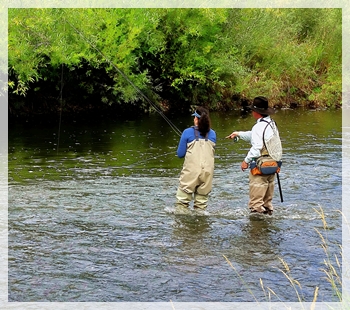
When we’re fishing for souls, we can learn from our fisherman friends.

Trust your guide: He knows where he’s taking you and how to get you home.
Obey the guide: Cast your line when and where he tells you.
Have patience: A good fisherman is willing to wait for the fish to bite.
Use the right lure: The same bait won’t work for all fish.
Be quiet: If you’re too loud, you might scare away the fish.
Be adaptable: There’s more than one way to catch fish.
Don’t get discouraged: Remember, tomorrow is another day.
There are no age or gender limitations: Everyone can go fishing!

Of course, there are some differences between fishing for people and trying to catch fish: no license is required, there are no limits on the size of our catch, and God never throws anyone back!

There is never a bad day for fishing; some days, however, turn out to be bad days for catching! [Scott, a fisherman friend]

“Don’t be afraid! From now on you’ll be fishing for people!” [Luke 5:10b (NLT)]

A NEW WAY TO SERVE

The twelve apostles called all the disciples together and told them, “It’s not right for us to give up God’s word in order to distribute food. So, brothers and sisters, choose seven men whom the people know are spiritually wise. We will put them in charge of this problem. [Acts 6:2-3 (GW)]

The office of deacon was established early in the New Testament church to make sure food was distributed to widows and others in need. A good friend is a Presbyterian deacon and, according to The Presbyterian Deacon: An Essential Guide, he is to “exhibit within the church and before the world the exemplary moral authority of sympathy, witness and service after the example of Jesus Christ.” At a recent deacon’s meeting, while offering the evening’s devotion, he spoke of their calling to be the caring arm of the church and of the various ways they fulfill their mission. They typically drive people to worship or Bible study, bring food when someone is ill, visit shut-ins, and welcome visitors. My deacon friend pointed out that many of the struggles faced by their congregation are quite different from the ones faced in the past. He questioned whether their old ways of serving were still effective. Challenging his fellow deacons to think “outside of the box” and to try new ideas, he said, “We are only limited by our own imaginations.”

Another friend recently shared how she helped an elderly woman in Hospice care. Her story illustrates the new problems faced by our church family and the new methods that can be used to meet them. Using her business and Internet savvy, she arranged for automatic bill payments for the woman’s expenses and cancelled services no longer needed. She set up online accounts, established passwords, and answered security questions. She now has online access to her friend’s medical records and bills and can finally make sense of the stacks of paper that have accumulated during this long illness. I’m sure her sick friend would have appreciated a visit from a church member but getting her personal business in order was far more important. It had become overwhelming, especially since Internet knowledge has become essential to doing it.

Until hearing this story, I hadn’t considered how daunting the Internet can be for others, especially the elderly. Many people still don’t use smart phones or computers. Moreover, many of those who do are hopelessly lost beyond email, FaceTime or Facebook. Increased dependence on computerization for important communication is just one of the new challenges faced by many in our church family.

We don’t need to be deacons to be the caring arms of our churches. We all have been given the task of ministering to the ill, those in want, those without family or friends, and those enduring hardships. Jesus called on all of us to serve, not just a select few. Let’s never allow the limit of our imaginations limit the ways we minister to those in need. Is there something you can do for someone? Is there some unique way you can serve?

Each of you as a good manager must use the gift that God has given you to serve others. [1 Peter 4:10 (GW)]

WE CONTINUE TO FLOURISH IN HIS GARDEN

But good people will grow like palm trees; they will be tall like the cedars of Lebanon. Like trees planted in the Temple of the Lord, they will grow strong in the courtyards of our God. When they are old, they will still produce fruit; they will be healthy and fresh. They will say that the Lord is good. He is my Rock, and there is no wrong in him. [Psalm 92:12-15 (NCV)]

DSC01563reducedWEB

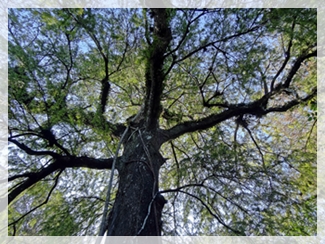
Bald Cypress – Corkscrew Swamp Sanctuary

Some of the old-growth cypress trees in Corkscrew Swamp are nearly 600 years old. They’re just youngsters compared to a bristlecone pine tree in California that’s still alive and growing at over 5,000 years of age. That’s nothing compared to a Norway spruce in Sweden with a root system that has been growing for over 9,500 years. Granted, these old trees aren’t that beautiful anymore; time and weather have taken their toll, but they still stand strong. If these trees can continue to flourish in their old age, I guess we can, too.

In God’s world, we are never too old to grow, blossom and even bear fruit. There is much we can share with those younger than us. More important, there is much we can still be taught by those both older and younger than ourselves. We’re never too old to learn something new!

Lord, help us all to continue to thrive in your garden and to bear fruit among your people.

Teach older men to be self-controlled, serious, wise, strong in faith, in love, and in patience. In the same way, teach older women to be holy in their behavior, not speaking against others or enslaved to too much wine, but teaching what is good. … In every way be an example of doing good deeds. When you teach, do it with honesty and seriousness. [Titus 2:2-3,7 (NCV)]

HEAR THEIR CRIES

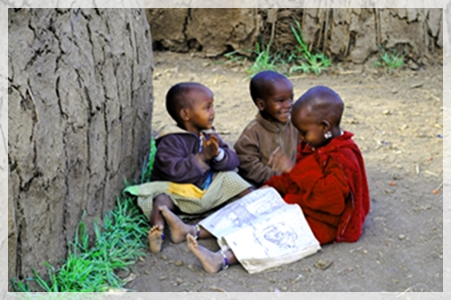
Masai 17WEB
Give freely and spontaneously. Don’t have a stingy heart. The way you handle matters like this triggers God, your God’s, blessing in everything you do, all your work and ventures. There are always going to be poor and needy people among you. So I command you: Always be generous, open purse and hands, give to your neighbors in trouble, your poor and hurting neighbors. [Deuteronomy 15:10-11 (MSG)]

We recently celebrated my mother-in-law’s 98th birthday; how blessed we are that she is still spry and alert. Since my husband’s father lived until the age of ninety-six and many of his other relatives lived well into their nineties, we were curious about his life expectancy. According to an on-line calculation, it’s likely my seventy-one year old spouse will live until he’s at least ninety; he has a 25% chance of living beyond ninety-five. That’s not as old as Methuselah, Abraham, or Jacob, but he probably has several good years ahead. Clearly, he comes from good genes. Those long and healthy life spans, however, are probably due more to an accident of birth: he and his family were born in the right place. Living in one of the wealthiest nations in the world, even during difficult times, they were never without shelter, safe water, enough food, or good medical care. Unfortunately, that’s not true for many children today, even children in our own country.

Granted, if we lived in Monaco, Switzerland or even Canada, my husband’s life expectancy would be even higher. If, however, he was born today in sub-Sahara Africa, he could expect to live only forty-seven years. If, by good fortune, he’d made it into his sixties, he certainly wouldn’t have gotten that heart stent a few years back, so I would probably be widowed by now. If we lived in a third world country, other members of my family would also be missing. Grandma most certainly would never have lived this long. If she’d survived giving birth, surely her asthma, heart attack, stroke, broken bones, and abscessed teeth would have caused her demise. A granddaughter would be absent as well. She’s alive today only because of the surgical intervention of pediatric cardiologists; she wouldn’t have had that kind of care in a developing country. Then again, she might never have been born if her mother hadn’t survived a bout of pneumonia as a girl, something made possible with a simple regimen of antibiotics, so plentiful here and so rare elsewhere. Another grandchild and her mother probably wouldn’t have survived childbirth without the emergency Caesarian section that made a safe birth possible. Of course, that’s assuming my son lived long enough to become a father, something that wouldn’t have happened without the lifesaving surgery for a ruptured spleen he had several years earlier. In many parts of the world, he would have died from internal bleeding. The bout of diarrhea that landed one of my babies in the hospital and on IVs would have been fatal in places like Sierra Leone or Chad. Of course, all this assumes that my husband and I could have lived long enough to have children. Because of readily available medical care and good nutrition, we easily survived bouts of the flu, measles, mumps, chicken pox, strep and other assorted infections and diseases. In a developing country, that wouldn’t have been the case. Because of immunizations, my children and grands, unlike so many children in the third world, will never even have most of those illnesses.

I apologize for moving from the joyful celebration of a birthday to such depressing thoughts. As Christians, however, we can’t turn away from the facts simply because they are unpleasant. It is horrifying that more than 20,000 children die each and every day from the silent killers of poverty, hunger, easily preventable diseases and illnesses, and related causes. One child dies every four seconds; that’s over 7 million deaths a year, with the vast majority occurring in sub-Sahara Africa and South Asia. More than a quarter of all children in developing countries are underdeveloped or stunted; they simply don’t have enough to eat. Add malnutrition to the lack of shelter, medical care and safe water, and you have the recipe for disaster. As Christians, we must take notice. As Christians, we must do something.

Father, forgive us when we turn away from unpleasant truths. Don’t let us take the blessings of shelter, food, clean water, and health care for granted. Guide us as we prayerfully consider what it is we can do to improve the lives of our brothers and sisters both here and abroad. Don’t let us stop at prayer, Lord; empower us to act on your behalf.

If you stop your ears to the cries of the poor, your cries will go unheard, unanswered. [Proverbs 21:13 (MSG)]

Learn to do good. Work for justice. Help the down-and-out. Stand up for the homeless. Go to bat for the defenseless. [Isaiah 1:17 (MSG)]

BRAGGING RIGHTS

And so they do what they should not do. …They are rude, proud, and brag about themselves. [Romans 1:28b,30b (ERV)]

“Whoever boasts should boast only about the Lord.” What people say about themselves means nothing. What counts is whether the Lord says they have done well. [2 Corinthians 10:17-18 (ERV)]

It’s that time of year again: Christmas card and letter season! Years ago, two Chicago radio personalities had great fun during their “Merry Medical Christmas” specials reading medical tidbits from holiday letters. You know the ones I’m talking about: the letters that tell in great and gruesome detail about passing kidney stones, colonoscopies, allergic reactions to shellfish, and getting Montezuma’s revenge while on holiday. They use words like “pus,” “seepage,” “mucous” and “festering:” words that definitely do not evoke the spirit of Christmas! Reading these missives gives the impression that enduring medical maladies gives one bragging rights!

Fortunately, most people skip the health details in their Christmas letters; unfortunately, many do use their holiday letters to brag about everything else in their lives. They begin with their exceptionally attractive and brilliant children and continue with their even more extraordinarily beautiful and gifted grandchildren. What follows next is a list of their fabulous trips to exotic destinations, their outstanding strategies and many stellar accomplishments at work and in the community, their latest expensive purchases, their magnificent homes and furnishings, and even the number of Christmas ornaments and holiday lights on their tree. Granted, Christmas letters are a great way to share our lives with friends far and near, but many of these letters are nothing more than self-aggrandizement. The Bible is pretty clear about boastfulness: bragging about ourselves isn’t countenanced! Bragging about God, however, is! God is always pleased when we tell others about the glorious things He’s done in our lives.

Will you be sending a Christmas letter this year? After writing this devotion, I must admit that I had to rewrite mine. Has God done anything good for you lately? Do you have any of God’s Good News to share?

I will praise the Lord at all times. I will never stop singing his praises. Humble people, listen and be happy, while I brag about the Lord. Praise the Lord with me. Let us honor his name. [Psalm 34:1-3 (ERV)]

“But if someone wants to brag, then let them brag about this: Let them brag that they learned to know me. Let them brag that they understand that I am the Lord, that I am kind and fair, and that I do good things on earth. I love this kind of bragging.” This message is from the Lord. [Jeremiah 9:24 (ERV)]